


Siding Replacement in Auburn, MA
If the vinyl on your Auburn ranch or split-level is cracked, bowed, or missing whole panels after a windstorm, patching it is a short-term fix. Most of what we tear off in Auburn is first-generation vinyl put up in the late 1970s or 1980s, often nailed straight over the original wood clapboard that came with the house. That clapboard is usually still under there, and what condition it’s in decides whether this is a straightforward re-side or a job that needs sheathing repair first. We won’t know which one your house is until the old siding comes off, and neither will you.
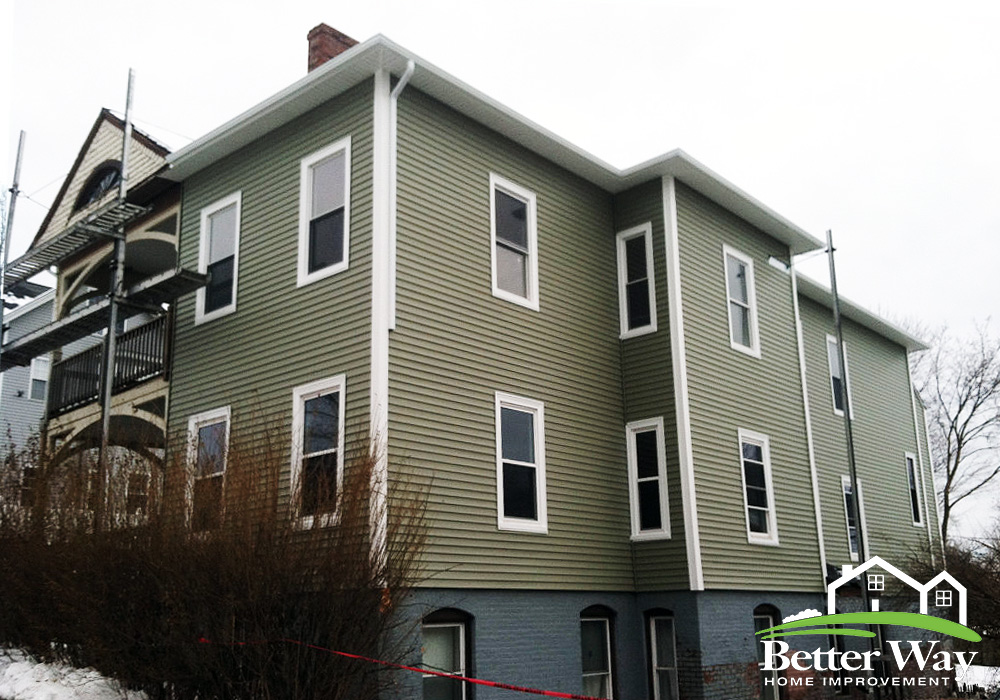
What Siding Replacement looks like in Auburn
Auburn’s housing stock splits pretty evenly between two eras, and it changes how a replacement job goes. Around the village center and along the older streets off Southbridge and Auburn Streets, you’ve got Victorians and Colonial Revivals with wood clapboard as the original wall, sometimes with a layer of asbestos or asphalt shingle siding under a later vinyl job. Out toward the newer subdivisions and along the Route 12 corridor, it’s ranches and split-levels built or re-sided in the 1970s and 1980s, with vinyl that’s now 40-plus years old and simply worn out — brittle, faded, and pulling away at the corners.
Both situations get torn off the same way: full removal, not a wrap-over. We strip the old siding down to the sheathing, inspect the wall, and deal with whatever we find before anything new goes up. On the older village houses that means checking for old clapboard that’s rotted at the sills and around window casings from decades of trapped moisture behind vinyl that was never supposed to be permanent in the first place. On the newer ranches it usually means checking OSB or plank sheathing for water staining around old J-channel and butt joints where the original installer cut corners.
A full replacement is the point where you also decide what goes back up — standard vinyl, thicker insulated panels, or James Hardie fiber cement if you want something that won’t be back in this position in another 40 years. That product decision is covered on our siding replacement page. This page is about what comes off your house and what we do with what’s underneath.
What we account for on Auburn homes
Older vinyl over original clapboard
A common Auburn replacement starts with vinyl that was installed over older wood siding. During removal, the crew checks what is underneath rather than assuming the original siding can simply be covered again. If the old clapboard is sound and the planned siding system allows it, it becomes part of the preparation decision. If it is damaged or no longer suitable as the base, the affected material is dealt with before the new siding goes on.
Sheathing and hidden wood damage
Water can reach the wall through failed siding, trim, flashing, or openings around windows and doors. By the time the exterior looks damaged, some deterioration may already be behind it. Tear-off provides an opportunity to inspect those areas. Soft or damaged sheathing and localized rot are repaired before the replacement siding covers the wall again. The purpose is simple: do not put a new exterior over a problem that should have been fixed first.
Older village homes and exterior details
Auburn's village areas include older Victorian and Colonial Revival housing with more trim and architectural detail than a basic ranch. Those details affect removal, preparation, measurements, and installation. The replacement plan accounts for corners, window and door openings, trim, transitions, and other areas where a simple wall panel approach does not work. Older homes also deserve a closer look before removing material that may be part of the original exterior.
Removal, disposal, and site access
Replacement creates a different cleanup requirement from a repair. The old siding has to be removed, sorted and taken away, and the work area has to remain accessible while the exterior is open. The estimate accounts for removal and disposal rather than treating tear-off as an afterthought. On a typical Auburn home, the crew works through the exterior in sections so the project can move from removal to preparation and then into the replacement phase.
What we account for on Auburn homes
Site visit, replacement estimate
Auburn’s mix of older colonials and mid-century ranches means no two siding jobs look the same. We look closely at the existing wall assembly, trim details, and how the house has weathered before pricing anything.
- Sheathing condition beneath the current siding
- Trim, corner boards, and window details
- Moisture or rot around entry points
- Insulation gaps affecting energy loss
Tear-off and wall inspection
Original wood clapboard under old vinyl
On the village-center Victorians and Colonial Revivals, the vinyl is rarely the first siding. There’s usually old clapboard underneath, and it’s been sealed in behind vinyl and foam backer for decades with no way to dry out. We expect soft or rotted boards at the bottom courses and around window sills, and we price sheathing and board repair as a line item once we can see the actual damage — not before.
Replacement and cleanup
Lead paint on pre-1978 houses
A lot of Auburn’s older homes predate 1978 and carry lead paint on that original clapboard. Once we expose it during tear-off, we follow EPA RRP lead-safe work practices for containment and cleanup. It’s standard procedure on this housing stock, not an upcharge surprise, and we flag it up front if your house’s age puts it in that window.
End-of-life vinyl on 1970s-80s ranches and splits
The outlying ranches and split-levels re-sided decades ago are often on their second siding job already, sometimes with foil-backed foam insulation underneath that’s compressed flat and doing nothing anymore. We remove it along with the vinyl and check the sheathing for the water staining that collects around old, undersized flashing at doors and window heads.
Wind exposure on open lots near Route 20 and Route 12
Houses on more open lots along the Route 20 and Route 12 corridors take more direct wind than the tree-sheltered village streets. We use starter strips and fastening patterns rated for higher wind exposure on those properties, and we check corner posts and J-channel for gaps that let wind get behind panels — a common failure point on the original 1980s installs.
Frequently Asked Questions
How much does siding replacement cost in Auburn, MA?
Most single-family homes run in the range of several thousand up to the low twenty-thousands depending on size, product choice (vinyl versus James Hardie fiber cement), and how much sheathing or rot repair is needed once the old siding comes off. We give a firm written number after seeing the house, not a phone estimate.
How long does a full siding replacement take?
A typical Auburn home takes three to five days from tear-off to finished installation. Homes with more extensive sheathing repair, or larger colonials in the village center, can run closer to a week.
What happens if you find rot or damage behind my old siding?
We stop and show you before proceeding. On Auburn's mix of 1970s-80s vinyl over original clapboard, finding some rotted boards or water-damaged sheathing is common, not rare. We repair only what's actually damaged and add it to your quote as a clear line item before installation continues.
Is lead paint a concern on older Auburn homes?
If your house was built before 1978, the original clapboard under later vinyl siding may have lead paint. We follow EPA-certified lead-safe practices for containment and cleanup during tear-off on those homes as standard procedure.
Should I replace vinyl siding with vinyl again, or switch to something else?
Plenty of Auburn homeowners stick with vinyl for cost. Others switch to James Hardie fiber cement during a full tear-off since the wall is already open and it's the easiest time to upgrade. We'll walk through both options and their real cost difference during your estimate.
How the job runs
Estimate and tear-off plan
We come out, look at the current siding, and give you a written quote that covers the base tear-off and re-side. If there’s visible rot or old damage we can already see — sagging sections, soft spots you can push in with a hand — we note it as a likely additional cost so there’s no blind-side later.
Removal, sheathing check, and repair
Tear-off on a typical single-family home runs one to two days. Once the old siding and any old sheathing are off, we inspect the wall in full and repair or replace damaged boards or OSB before anything new gets installed. This is the step that determines the real timeline — a clean wall moves fast, a wall with rot in several spots adds a day or more.
Installation and cleanup
New siding, trim, and flashing go up over the repaired wall. Most Auburn homes — an average single-family house, not an oversized colonial — run three to five days total from tear-off through finished installation, weather depending. We haul away every scrap of old siding and debris; nothing gets left in a dumpster on your lawn for a week.
Recent work in and around Auburn
A typical call we get from Auburn is a split-level or ranch off Southbridge Street or near the Auburn Mall area with siding from the 1980s that’s chalking badly, cracking at the corners, and no longer keeping water out at the seams. We tear it off, usually find a few sections of sheathing near the foundation or under a leaking gutter that need replacing, and re-side with new vinyl or Hardie panels depending on what the homeowner wants and what the budget allows. On the older village homes closer to the town common, the job more often turns up original wood clapboard in decent shape structurally but rough in appearance — sometimes worth saving under new trim work rather than a full wall rebuild. Every house is a little different once the old siding is off, which is exactly why we quote the tear-off and the repair separately.
Other services we provide in Auburn
Siding replacement often turns up other things worth fixing at the same time. If your siding is only starting to fail — a few cracked panels, no widespread rot — a full tear-off may not be necessary yet, and our Auburn siding contractor team can walk through repair versus replacement with you directly. We also install James Hardie fiber cement for homeowners who want a longer-lived product than vinyl, handle seamless gutters that often need replacing alongside old fascia and trim, and install replacement windows and doors when a re-side is a good time to swap out old, drafty units before the new siding goes up around them.
Free estimates in Auburn
We’re based at 152 Sutton Ave in Auburn, about 5.5 miles from Auburn — a short drive, not an outside contractor passing through. Better Way Home Improvement has been an Angie’s List Super Service Award winner from 2013 through 2019, and we’re licensed and insured for every job we quote. Call (508) 506-8957 for a free estimate. We’ll come look at your siding, tell you honestly what we expect to find once it’s off, and give you a written quote before anything gets torn open.