


James Hardie Siding in Woodstock, CT
Woodstock has a lot of houses that are older than the vinyl siding market itself — antique capes and farmhouses on wide rural lots, with long tree-lined drives and original board sheathing that was never built for a synthetic cladding. If you own one of those and you’re looking at fiber cement instead of another round of vinyl, you’re asking the right question. James Hardie siding is heavier, harder to damage, and holds paint and color the way old-growth clapboard used to. It costs more up front than vinyl. On a Woodstock property with real tree cover, exposed foundation gaps, and decades of settling, that extra weight and rigidity is usually the reason people switch.
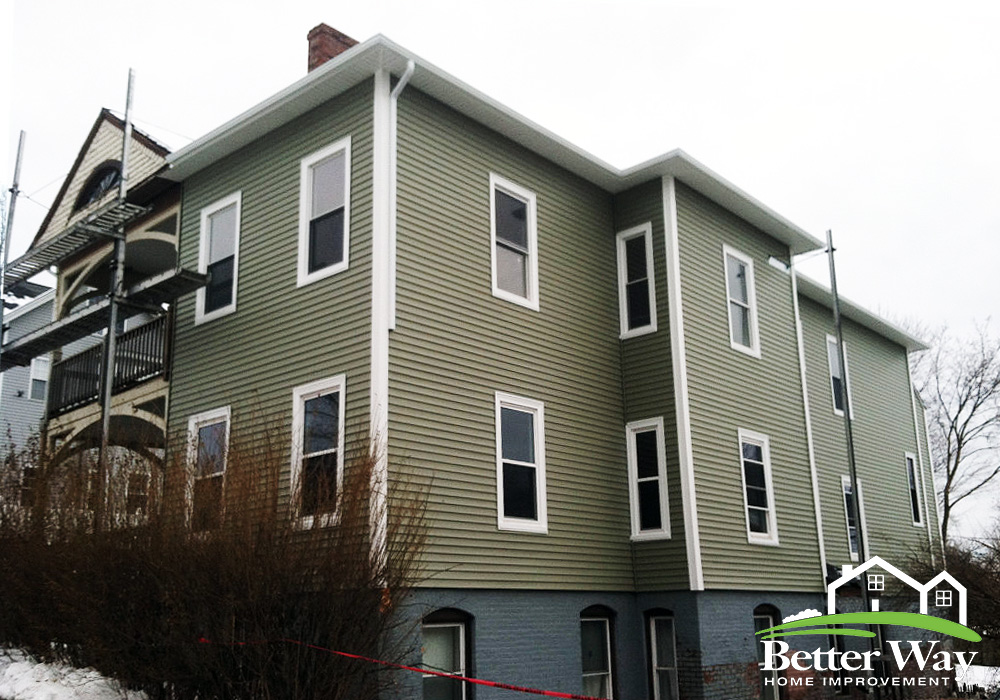
What James Hardie Siding looks like in Woodstock
Most of the Hardie jobs we run in Woodstock are on homes built well before 1980 — capes, colonials, and converted farmhouses with clapboard, board-and-batten, or even original wood shingle underneath a layer or two of something else. Fiber cement fits this housing stock because it reads as a real building material, not a plastic skin. HardiePlank lap siding with a smooth or cedar-textured finish sits close to what these houses originally had, and it holds a straight reveal line even over a wall that isn’t perfectly true — which matters on a lot of these older frames.
Weight is the first thing people notice once the material shows up. A square of Hardie plank runs roughly two and a half times heavier than vinyl. That’s good for wind resistance and impact resistance — branches and hail don’t dent it the way they dent thin vinyl — but it also means the crew is working off a full scaffold or lift system more often than a ladder, and fastening schedules are tighter and more specific. On the long, tree-shaded lots common out here, we’re also cutting more of the board on site than we would on an open subdivision lot, because mature trees and outbuildings change the wall dimensions house to house.
Color is the other decision point. ColorPlus finish is baked on at the factory, warrantied separately from the substrate, and holds up better against UV and moisture than a field-applied paint job. On a heavily wooded lot with a lot of shade and damp bark mulch against the foundation — which describes a good share of Woodstock properties — ColorPlus is usually worth the upcharge because repainting a fiber cement wall later is a real job, not a weekend project.
What we account for on Woodstock homes
Older clapboard behind the existing exterior
One of the first things to check on an older Woodstock house is what sits behind the current siding. A 1970s or 1980s exterior may have been installed over original wood clapboard. Removing it can reveal damaged boards, uneven areas, or sections that need repair before the new siding can be installed. The condition of that layer is part of the project, not something to ignore until the end.
Heavy material on an older wall
Fiber cement is heavier than the lightweight siding it may be replacing. That means the wall surface and fastening locations need to be considered before installation. The crew accounts for the existing substrate, checks areas where the old exterior has failed, and plans the installation around the actual condition of the house rather than assuming every wall is sound.
Cutting and dust control
Fiber cement needs to be cut to fit around windows, doors, corners, and other details. Cutting produces dust, so the work area has to be managed accordingly. That means using appropriate cutting methods and keeping dust from spreading unnecessarily around the property. The goal is to keep the installation controlled while producing accurate cuts for the exterior details.
ColorPlus or field-applied paint
Woodstock homeowners have two basic finish approaches to consider. ColorPlus siding arrives with a factory-applied finish, while primed siding can be painted after installation. James Hardie says ColorPlus finishes are cured in a controlled factory environment and are designed to provide consistent color and improved resistance to UV-related fading. The right choice depends on the look you want, the available colors, and how you want the finished project handled. We can price the options as part of the estimate.
What we account for on Woodstock homes
Site visit and scope
Woodstock properties range from older farmhouses to newer builds, each with its own quirks. We factor in existing wall assemblies, roofline transitions, window and door trim, and how weather exposure has treated the current exterior before recommending a James Hardie approach that fits the house.
Remove, Prepare, Install
Substrate condition on antique housing stock
Board sheathing, balloon framing, and layers of old siding are common on Woodstock’s older homes. Before Hardie goes up, we pull test sections to see what’s actually under there. If the sheathing is soft, delaminated, or was never designed to carry the extra weight of fiber cement, we address it before installation — not after the crew has already fastened a wall’s worth of board to a bad substrate.
Detail work and final check
Cut and dust management on rural lots
Cutting Hardie produces silica dust, and the health guidance on that is specific — OSHA and Hardie both require dust controls, not just a dust mask. On Woodstock’s larger, more spread-out lots we set up cutting stations away from wells, gardens, and outdoor living space, and we use saws with vacuum attachment or score-and-snap methods to keep airborne dust down, especially near older homes that may still have lead paint in the original siding layer.
Which state's contractor rules apply
Woodstock is Connecticut, and Connecticut runs its own Home Improvement Contractor registration and permitting process — it is not the same system as Massachusetts, even though our shop is just across the state line. Before we quote a Woodstock job we confirm our HIC registration and any local permit requirements are in order for that specific town. This gets missed by contractors who mostly work Massachusetts towns and treat the border as a formality. We don’t.
Long driveways and access logistics
A lot of Woodstock properties sit at the end of quarter-mile gravel drives with limited turnaround room. That changes how we stage material delivery, where the dumpster or trailer sits, and how many trips the crew makes hauling Hardie board and tear-off debris. We walk this with you before the crew shows up so delivery trucks aren’t trying to back down a driveway they can’t turn around in.
Frequently Asked Questions
Does Better Way's Connecticut HIC registration cover work in Woodstock?
Yes. Connecticut requires its own Home Improvement Contractor registration separate from Massachusetts licensing, and we confirm that coverage plus any Woodstock-specific permit requirements before we quote a job, not after.
What's usually found once old siding comes off a Woodstock house?
On homes built before 1980, it's common to find board sheathing in fair-to-poor condition, old wood shingle left under a later siding layer, or lead paint on the original clapboard. We address sheathing repairs as part of the quote and follow standard lead-safe work practices where applicable, since this is common enough on this housing stock that we plan for it rather than treat it as a surprise change order.
How much does James Hardie siding cost compared to vinyl in this area?
Fiber cement typically runs higher than vinyl on materials and labor, since the board is heavier, requires different fastening, and takes longer to install. Exact numbers depend on your home's size, the profile and ColorPlus color chosen, and how much sheathing repair is needed, so we give a firm number after the site walk rather than a ballpark over the phone.
How long does a full Hardie siding job take on a typical Woodstock home?
Material lead time runs 2 to 4 weeks for special-order ColorPlus colors, and installation itself typically takes 5 to 9 working days depending on house size and how much tear-off is involved.
Should I choose ColorPlus finish or have the siding field-painted?
ColorPlus is factory-applied, carries its own warranty, and holds color better against sun and moisture than field paint, which matters on shaded, damp lots common in Woodstock. Field-painted Hardie is cheaper up front but will need repainting sooner, and repainting fiber cement later is more labor than repainting wood.
How the job runs
Site walk and measurement
We walk the exterior, check the substrate at a few test points, measure elevations, and note anything specific to the lot — tree clearance, driveway access, power line proximity for staging equipment. This is also when we confirm Connecticut HIC coverage and pull the required permit for the town.
Material order and prep
Hardie board is special-order in most colors and profiles, so lead time runs longer than a vinyl job — typically 2 to 4 weeks depending on the ColorPlus color and profile chosen. During this window we handle any sheathing repair identified during the site walk.
Installation and closeout
Installation on a typical Woodstock house runs 5 to 9 working days depending on size, layout complexity, and how much of the old material has to come off first. Given the added weight of fiber cement and the more deliberate fastening pattern it requires, this runs a bit longer than a comparable vinyl job. We do a final walk-through with you before we consider the job closed.
Recent work in and around Woodstock
A common job type out here is a full re-side of a pre-1970s farmhouse or cape where the existing siding is either original wood in poor condition or a 1980s-era vinyl install that’s cracked and faded. These jobs typically involve tear-off down to the sheathing, sheathing repair or replacement in a few spots, and a full HardiePlank lap installation in a ColorPlus finish chosen to match the house’s period look. On properties with detached garages or barns, we’re often asked to quote those structures in the same visit to get one crew mobilization instead of two.
Other services we provide in Woodstock
Not every Woodstock home is a fit for fiber cement, and not every project is a full re-side. We also handle vinyl siding installation for homeowners who want a lower up-front cost, siding repair for storm damage or isolated failures, and full siding replacement when the whole exterior needs to come off regardless of material. Beyond siding, we install and repair seamless gutters sized for the heavier runoff these tree-covered lots produce, and we handle replacement windows and doors, which we often coordinate with a siding job so trim and flashing get done once instead of twice.
Free estimates in Woodstock
Our shop is in Woodstock, about 12.5 miles from Woodstock, and we quote Quiet Corner jobs regularly. The estimate is free, we’ll look at the substrate and access conditions on your specific property, and give you a straight number for Hardie versus other options before you decide anything. Call (508) 506-8957. After you call, we’ll set up a site visit, walk the house with you, and follow up with a written quote — no pressure to sign that day.