


James Hardie Siding in Webster, MA
If you own a place on or near Webster Lake, you already know what the water side of the house does to siding. Sustained wind off the lake drives rain sideways into that elevation for hours at a time, and a lot of the cottages that got converted to year-round homes back in the 60s through the 80s were never built to take it. James Hardie fiber cement siding is the material we install most often on those water-facing walls now, because it holds up to that exposure in a way vinyl and old wood clapboard don’t.

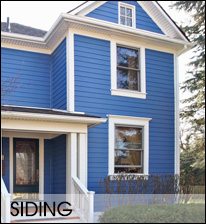
What James Hardie Siding looks like in Webster
Webster’s housing stock splits into two groups, and they need different things from a siding job. There’s the year-round neighborhood housing off Route 16 and around Lake Parkway, mostly framed like standard New England homes with normal stud spacing and at least some sheathing. Then there’s the seasonal cottage stock ringing the lake itself, a lot of it converted from summer camps decades ago without much regard for what would happen when someone tried to heat the place through a February on the water.
On the standard homes, James Hardie is a straightforward upgrade over failing vinyl or old aluminum. We install HardiePlank lap siding in a smooth or cedarmill texture, usually with ColorPlus factory finish so the color is baked on and warrantied against fading, rather than field-painted after the fact. Field paint has its place — it’s what you use when you need a custom color match the ColorPlus palette doesn’t cover — but for most Webster jobs ColorPlus saves you a repaint in 10-15 years that vinyl never needed and field-painted fiber cement eventually will.
On the lake-facing cottages, the calculation changes. Fiber cement is heavier than vinyl — roughly 300 pounds per square versus vinyl’s 30-40 — and it doesn’t flex with wind the way vinyl panels do. That’s an advantage on a wall taking direct wind-driven rain, because there’s no panel flutter for water to work behind. But it means the wall assembly underneath has to actually hold fastener load, and on a lot of these converted camps, it doesn’t without some correction first.
What we account for on Webster homes
Older clapboard behind the existing exterior
One of the first things to check on an older Webster house is what sits behind the current siding. A 1970s or 1980s exterior may have been installed over original wood clapboard. Removing it can reveal damaged boards, uneven areas, or sections that need repair before the new siding can be installed. The condition of that layer is part of the project, not something to ignore until the end.
Heavy material on an older wall
Fiber cement is heavier than the lightweight siding it may be replacing. That means the wall surface and fastening locations need to be considered before installation. The crew accounts for the existing substrate, checks areas where the old exterior has failed, and plans the installation around the actual condition of the house rather than assuming every wall is sound.
Cutting and dust control
Fiber cement needs to be cut to fit around windows, doors, corners, and other details. Cutting produces dust, so the work area has to be managed accordingly. That means using appropriate cutting methods and keeping dust from spreading unnecessarily around the property. The goal is to keep the installation controlled while producing accurate cuts for the exterior details.
ColorPlus or field-applied paint
Webster homeowners have two basic finish approaches to consider. ColorPlus siding arrives with a factory-applied finish, while primed siding can be painted after installation. James Hardie says ColorPlus finishes are cured in a controlled factory environment and are designed to provide consistent color and improved resistance to UV-related fading. The right choice depends on the look you want, the available colors, and how you want the finished project handled. We can price the options as part of the estimate.
What we account for on Webster homes
Site visit and scope
Webster’s mix of older New England construction and newer builds means every house has its own quirks. We factor in wall orientation, existing moisture issues, and how nearby trees or weather exposure affect a home before recommending a James Hardie siding plan.
- Sun and wind exposure by wall
- Trim, soffit, and flashing condition
- Drainage around the foundation
Remove, Prepare, Install
How the job runs
Detail work and final check
Cut, dust, and site handling
Fiber cement has to be cut with dust-collecting saws and HEPA-filtered shears, not a standard circular saw, because the crystalline silica dust is a real respiratory hazard for the crew and for anyone standing nearby. On tight lake lots where houses sit close together, we set up cutting stations away from windows and outdoor living space and run collection on every cut. This isn’t optional gear we bring when we remember it — it’s how the job gets set up from the first morning.
Recent work in and around Webster
A typical James Hardie job we run in Webster is a full re-side on a converted lake cottage: strip the old siding down to the studs, deal with whatever rot or framing issues turn up on the water side, add proper sheathing and a drainable house wrap where there wasn’t one, then install HardiePlank with ColorPlus finish on all four elevations. On the water-facing wall specifically, we pay extra attention to flashing at every window and door opening and to the starter strip at the foundation, since that’s where driven rain finds its way in fastest. We don’t publish customer names or addresses, but if you’re on the lake road and wondering whether that’s what happened at the place down the street with new siding this summer, it probably was.
Other services we provide in Webster
James Hardie isn’t the right call for every house in town, and we tell people that on the estimate visit rather than after signing a contract. If your framing and sheathing are sound and you want a lower-cost, lower-maintenance option, our vinyl siding installation service covers that ground. If your existing siding just needs a section fixed — storm damage, a cracked panel, a spot where the lake wind has worked something loose — that’s a job for siding repair, not a full tear-off. And if you’re already committed to a full re-side and weighing materials, our siding replacement page walks through the tear-off process and decision points in more depth. We also handle seamless gutters and replacement windows and doors, both of which usually come up in the same conversation once we’re looking at a lake-facing wall anyway.
Frequently Asked Questions
How is James Hardie siding different from vinyl for a lake house in Webster?
It's heavier and doesn't flex in wind, which matters on a water-facing wall taking sustained gusts and driven rain. It's also non-combustible and holds paint or its factory ColorPlus finish far longer than vinyl holds its color. The tradeoff is cost and installation time — it's a bigger job than a vinyl re-side.
My cottage was converted from a summer camp — will you check what's behind the siding before quoting?
Yes, and we insist on it for lake-facing walls specifically. A lot of Webster's converted cottages have undersized framing or no vapor control behind the original siding, and we'd rather find that at the estimate than mid-job.
Should I get ColorPlus factory finish or field paint?
ColorPlus is baked on at the factory and comes with its own fade warranty, so for most homeowners it's the better long-term choice and saves a repaint down the road. Field paint only makes sense if you need a specific custom color outside the ColorPlus lineup.
What does a James Hardie re-side cost and how long does it take?
Most single-family homes in the Webster area run several days into two weeks depending on size and what we find under the old siding. Cost runs higher than vinyl per square foot due to material and labor, and we give an exact number only after seeing the house — anyone quoting a firm price over the phone hasn't seen your walls.
What happens if you find rot or bad framing once the old siding is off?
We stop and show you before doing anything further. On this housing stock it happens often enough that we build the possibility into the schedule, and we'll give you a revised, itemized cost for the repair before continuing — no surprise charges after the fact.
Free estimates in Webster
Webster is about 4.7 miles from our shop on Sutton Ave in Webster, so getting a crew out to look at your house doesn’t take scheduling gymnastics. We give free estimates, and on lake and pond properties we’ll walk the water-facing wall specifically and tell you what we see behind the old siding before we quote anything. Call (508) 506-8957. After you call, we’ll set a time to come look at the house, give you a written quote with the material and labor broken out, and if you want to move forward we’ll get you on the schedule — we don’t pressure anyone to sign on the spot.