


Vinyl Siding Installation in Killingly, CT
Most of the siding calls we get from Killingly are on farmhouses, converted mill worker cottages, and ranch homes on big rural lots off Route 101 or out toward Ballouville and East Killingly. A lot of that housing stock still has its original wood clapboard under a layer of vinyl from the 1980s or 90s, or in some cases no wraparound vinyl at all — just old clapboard that’s been painted over one too many times. Long driveways and heavy tree cover on these lots also change how we stage a job. If you’re asking what a full vinyl siding installation costs and involves on a property like that, here’s the straight answer.
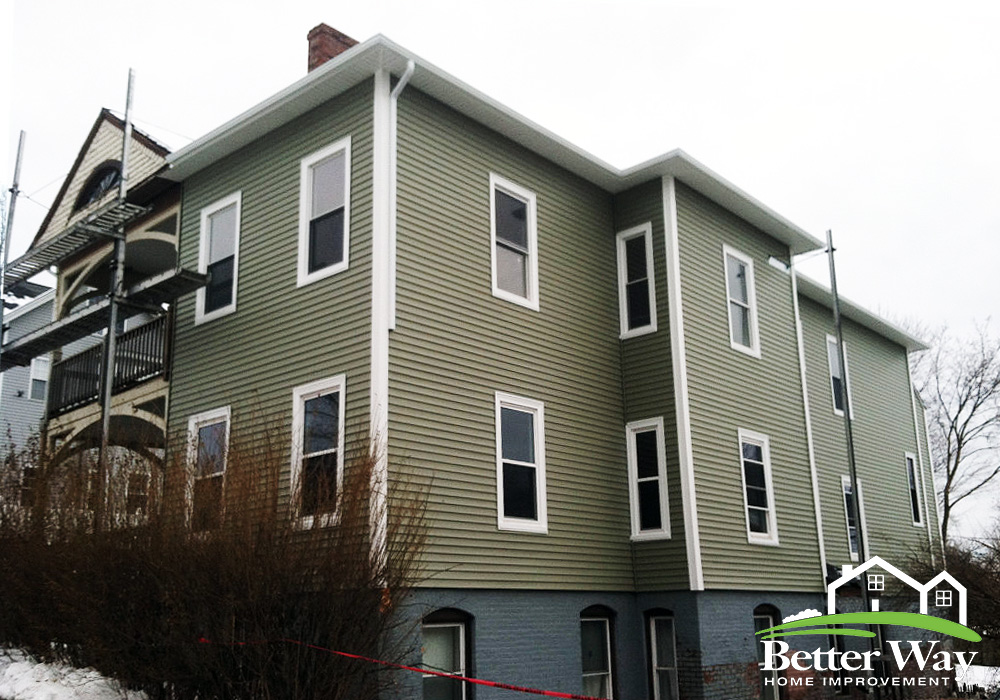
What Vinyl Siding Installation looks like in Killingly
A full installation starts with the wall, not the panel. On Killingly’s older homes — antique capes, farmhouses, and post-war ranches — we’re usually installing over board sheathing or old clapboard, not modern OSB. That changes what fastening pattern and furring we use, and it’s the first thing we check before we quote a number.
For panel selection, most homeowners here land on a .044 or .046 gauge double-4 or double-5 clapboard profile — thick enough to resist the wind that comes off open farm fields without oil-canning. On homes with a lot of exposed wall (long ranches, big farmhouse additions) we push insulated vinyl over standard hollow-back panel. It stiffens the wall, cuts down on drafts through old board sheathing, and doesn’t cost a dramatic amount more over the life of the job.
Color retention matters more out here than it does on a shaded suburban lot. A lot of Killingly properties sit in full sun with no street trees blocking the south and west walls. We spec panel with a real fade warranty, not just a base-grade builder color, and we talk homeowners through what that warranty actually covers versus what it doesn’t.
Detail work is where installs succeed or fail. That means properly bent J-channel around window and door returns, corner posts set plumb even when the original framing isn’t, and new housewrap and flashing at every penetration — not just patched around the old paper. On a full-wall project we replace the water-resistive barrier as part of the job. Reusing 30-year-old building paper under new siding is a shortcut that shows up as a rot problem in five years.
What we account for on Killingly homes
Original clapboard under older vinyl
One common condition on older Killingly homes is original clapboard underneath later vinyl siding. The existing layers need to be checked before new siding is installed. If the underlying material is sound and suitable, the installation can be planned around it. If there is deterioration or an uneven surface, that condition needs to be addressed before the new siding goes on.
Victorian and Colonial Revival details
Village-center homes often have more exterior details than a basic ranch. Porches, trim, windows, and changes in wall depth can affect how siding panels and accessories need to be laid out. J-channel, corner posts, and other trim are installed around those features so the new siding follows the house instead of making the house conform to a generic layout.
Aging 1970s and 1980s vinyl
Older vinyl can become brittle, faded, warped, or difficult to match. Replacement siding also gives homeowners an opportunity to update the panel profile, color, insulation, and exterior trim. The crew checks the existing siding and the areas around windows, doors, corners, and other transitions before establishing the installation plan.
Housewrap and flashing
Vinyl siding is not the waterproofing layer of the wall. Proper flashing and housewrap help manage water behind the siding. Before the panels are installed, the wall assembly and openings are considered so moisture problems are not simply hidden behind a new exterior.
What we account for on Killingly homes
Measure and plan
Killingly’s mix of older farmhouses and mill-village homes each bring their own quirks. We check wall flatness, moisture in older sheathing, window and door flashing, and how corners and trim line up before recommending panel style and thickness.
Prepare the exterior
Original board sheathing, not plywood
Many Killingly homes built before 1960 have horizontal board sheathing under the old siding, sometimes with gaps or old knot holes. That means different fastener spacing and, often, a layer of foam or furring strip to give the new panel a flat, even surface to hang on. We check this at the estimate, not on install day, so the number we quote doesn’t change once we start pulling old siding off.
Complete the details
Long, tree-covered driveways and setbacks
A lot of properties out here sit well back from the road with a single-lane gravel or dirt drive and heavy tree cover overhead. That affects where we can stage the trailer, dumpster, and material drop, and how much hand-carrying the crew does versus running material straight to the wall. We walk the access with the homeowner before the job is scheduled so there’s no surprise on start day.
Connecticut licensing and permitting, not Massachusetts rules
Killingly is in Connecticut, and Connecticut runs its own Home Improvement Contractor (HIC) registration and permitting rules, separate from Massachusetts. Before we quote a Killingly job we confirm our HIC registration and any required local permit cover the scope of work — full-wall siding replacement typically requires a permit pulled with the Town. We handle that paperwork; homeowners don’t have to chase it themselves.
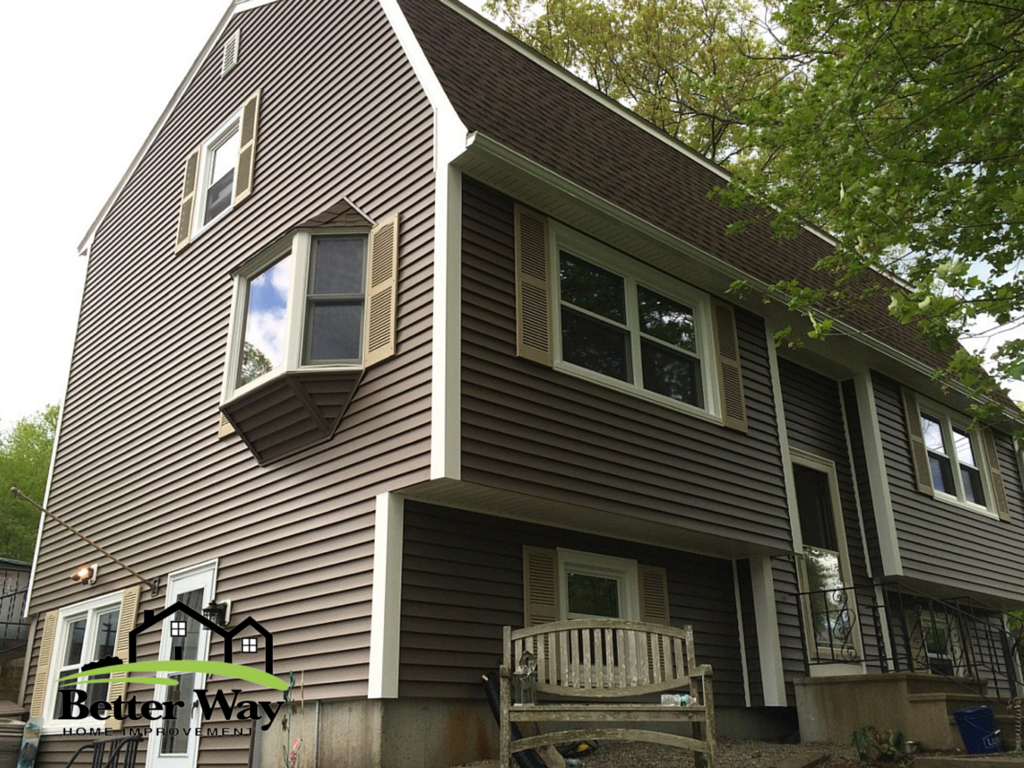
What's usually behind the old siding on this stock
On homes with 1970s-90s vinyl over original wood, we commonly find soft or delaminated sheathing around old window flashing, knob-and-tube wiring stubs that need an electrician’s sign-off, or wasp and squirrel nests that took up residence in a gap nobody noticed. We flag anything structural before we close the wall back up, with photos, so the homeowner sees exactly what we found and what it costs to fix — no guessing after the fact.
Frequently Asked Questions
How much does vinyl siding installation cost in Killingly, CT?
Most full-wall installations on Killingly homes run in the range of several thousand dollars to the low five figures, depending on square footage, whether we're adding insulated panel, and how much sheathing repair is needed once the old siding comes off. We give a firm written number after the walkthrough, not a phone estimate.
How long does a full vinyl siding installation take?
A typical single-family home in Killingly takes 3 to 6 working days from tear-off to finished trim. Larger farmhouses, homes with a lot of wall detail, or jobs where we find sheathing damage can run longer.
Is this job covered under Connecticut or Massachusetts contractor licensing?
Connecticut. Killingly work falls under Connecticut's Home Improvement Contractor (HIC) rules and local permitting, not Massachusetts. We confirm our HIC registration and pull any required Town permit before we quote the job.
What if you find rot or old wiring behind the siding?
On homes with original 1970s-90s vinyl over wood siding, it happens often. We stop, photograph what we found, and tell you what it costs to fix before we close the wall. Common finds are soft sheathing around old window flashing and abandoned knob-and-tube wiring stubs that need an electrician.
Do you install insulated vinyl on older Killingly homes?
Yes, and we recommend it on a lot of these properties. Insulated panel stiffens the wall and helps with drafts through old board sheathing, which is common on homes built before 1960 in this area.
Will my long driveway or tree cover be a problem for the crew?
How the job runs
Walkthrough and measurement
We measure every wall, check the sheathing type, and confirm access for staging given the driveway and tree cover. This is also when we confirm the Connecticut HIC and permit requirements for the specific address. Most Killingly walkthroughs run 45 minutes to an hour.
Tear-off and wall prep
Old siding comes off down to the sheathing. We replace housewrap, repair or add furring where the wall isn’t flat, and re-flash windows and doors. Any rot or pest damage we find gets addressed before a single new panel goes up.
Install and detail work
Panel goes up with corner posts, J-channel, and starter strip set first, then field panel. A typical single-family full-wall install in Killingly runs 3 to 6 working days depending on square footage, wall condition, and how much of the original sheathing needs repair before we can hang panel.
Recent work in and around Killingly
A common job type out here is a 1,800 to 2,400 square foot farmhouse or ranch with original vinyl from the 80s or 90s failing at the seams and fading unevenly on the sun-facing walls. We tear off down to sheathing, find and fix the soft spots around old window flashing that are almost always there on a house that age, install new housewrap, and hang insulated double-4 panel with new corner posts and trim. We don’t publish customer names or addresses, but if you’re picturing a similar house, that’s the scope and timeline you should expect from us.
Other services we provide in Killingly
Full-wall installation isn’t the only siding work we do in Killingly. If your siding is mostly sound but a section is cracked, missing, or storm-damaged, our siding repair service handles that without tearing off the whole wall. If your existing siding is failing broadly and you’re deciding between a repair and a full tear-off, our siding replacement page walks through that decision. We also install James Hardie fiber cement siding for homeowners who want a non-vinyl option, along with seamless gutters and replacement windows and doors as part of the same exterior project. For a broader look at how we handle siding contracting across the area, see our siding contractor in Killingly page, or our main vinyl siding installation page for how we approach the product across our whole service area.
Free estimates in Killingly
We’re based in Killingly, Massachusetts, about 18.8 miles from Killingly. That’s a normal drive for our crews and doesn’t change our pricing or scheduling. Call (508) 506-8957 for a free estimate. We’ll set a time to walk the property, measure the walls, check the sheathing and access, and give you a written quote before any work starts. If you’re comparing quotes from a few contractors, we’re glad to be one of them.