


James Hardie Siding in Worcester, MA
Worcester’s three-deckers are the reason we get so many James Hardie calls out of that city. A wood-frame triple-decker with original clapboard or a layer of 1960s aluminum bolted over it is a heavy, tall, wind-exposed building, and it needs siding that can carry paint, resist impact from the street-facing side yards, and survive three stories of New England weather without the panels racking loose the way vinyl can. Fiber cement holds up to that in a way most other materials on these buildings don’t.
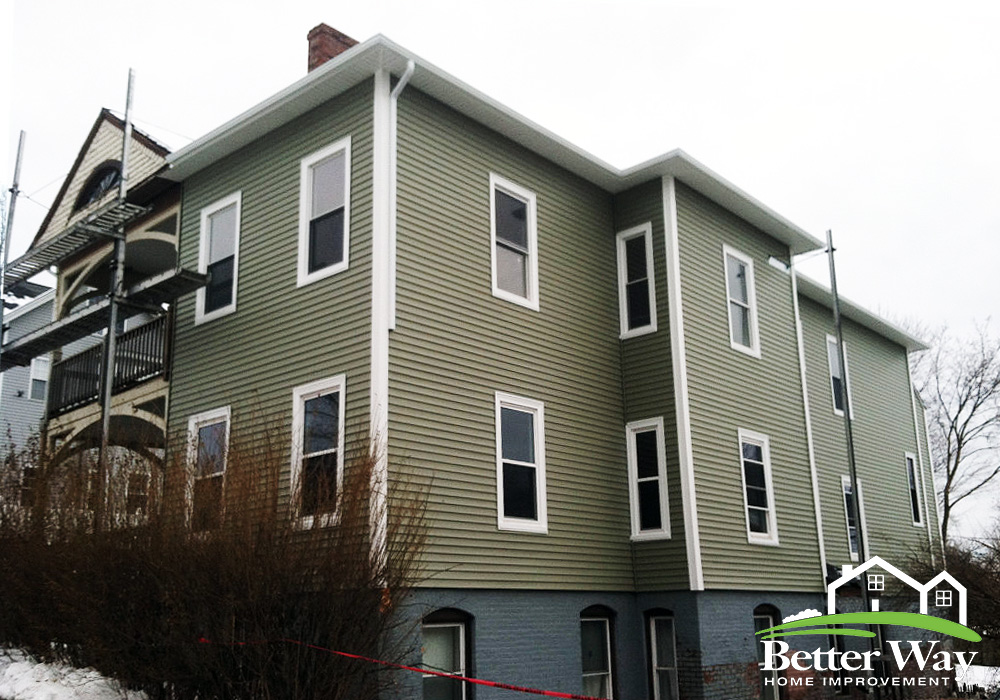
What James Hardie Siding looks like in Worcester
On a Worcester project, James Hardie almost always means one of two things: HardiePlank lap siding replacing failed clapboard or old aluminum on a triple-decker, or a mix of lap and HardieShingle on a Tatnuck or West Side single-family with more architectural detail to match. Both jobs start the same way — figuring out what’s actually on the wall before we order material, because a lot of this housing stock has been re-sided once or twice already and nobody wrote down what’s underneath.
We spec ColorPlus prefinished panels on almost every Worcester job. A three-story building with limited access for repainting is not a building you want to have to scaffold again in eight years for a field-paint touch-up. ColorPlus carries a baked-on finish with a longer color warranty than site-applied paint, and it holds up better against the soot and road grime that collects on siding a few blocks off Main South or near the interstate spurs. Field paint still has its place — matching an odd trim color, or blending a repair into an older run — but on full re-sides we steer owners toward factory finish.
Weight is the other thing people underestimate. Fiber cement runs heavier per square than vinyl, which matters on a triple-decker with three separate structural walls and, in some cases, questionable sheathing underneath decades of prior siding layers. We check fastening substrate before we quote the job, not after we’ve opened the wall.
What we account for on Worcester homes
Older clapboard behind the existing exterior
One of the first things to check on an older Worcester house is what sits behind the current siding. A 1970s or 1980s exterior may have been installed over original wood clapboard. Removing it can reveal damaged boards, uneven areas, or sections that need repair before the new siding can be installed. The condition of that layer is part of the project, not something to ignore until the end.
Heavy material on an older wall
Fiber cement is heavier than the lightweight siding it may be replacing. That means the wall surface and fastening locations need to be considered before installation. The crew accounts for the existing substrate, checks areas where the old exterior has failed, and plans the installation around the actual condition of the house rather than assuming every wall is sound.
Cutting and dust control
Fiber cement needs to be cut to fit around windows, doors, corners, and other details. Cutting produces dust, so the work area has to be managed accordingly. That means using appropriate cutting methods and keeping dust from spreading unnecessarily around the property. The goal is to keep the installation controlled while producing accurate cuts for the exterior details.
ColorPlus or field-applied paint
Worcester homeowners have two basic finish approaches to consider. ColorPlus siding arrives with a factory-applied finish, while primed siding can be painted after installation. James Hardie says ColorPlus finishes are cured in a controlled factory environment and are designed to provide consistent color and improved resistance to UV-related fading. The right choice depends on the look you want, the available colors, and how you want the finished project handled. We can price the options as part of the estimate.
What we account for on Worcester homes
Site visit and scope
Every Worcester property comes with its own set of constraints. These are the ones that come up most.
Three-story staging and scaffold
Second and third-floor work on a triple-decker is not a ladder job. We stage proper scaffold or use lift equipment where the yard allows it, because working fiber cement — cutting, fitting, fastening — from an extension ladder three stories up is how panels get installed wrong and how people get hurt. This adds setup time to the schedule, and we build it into the estimate up front instead of surprising the homeowner mid-job.
Tight side yards, street staging
A lot of Worcester’s older neighborhoods were platted for horse-and-buggy lot widths. Side yards between three-deckers are often too narrow for a material lift or a dumpster to sit next to the house, which means we stage from the street — cutting station on the sidewalk or curb, material laid out in the front, debris hauled out the same way it came in. We coordinate this with the homeowner or property manager ahead of time, and where the city requires a permit for a dumpster or staging in the right-of-way, we handle that paperwork.
Historic district and permitting review
Parts of Worcester — sections near Crown Hill, Salisbury Street, and a few other pockets — fall under local historic district review, which can affect exterior material and color choices even for a straightforward re-side. We check the address against the district map before we quote, and if a permit or design review is required, we walk the homeowner through what that adds to the timeline.
Original clapboard and lead paint assumptions
Worcester’s building stock is old enough that pre-1978 lead paint is the standing assumption on original clapboard, not the exception. Our crews are trained for EPA RRP lead-safe work practices — containment, cleanup, disposal — on any tear-off where lead paint is a reasonable assumption. This is standard on our end; it’s just more relevant here than it is on newer construction.
Remove, Prepare, Install
How the job runs
A Worcester James Hardie project generally runs in three stages. First is the site visit and quote — we look at wall condition, access, staging space, and whether the address sits in a historic review area, and we give a written estimate before any deposit changes hands. Second is tear-off and substrate check, where we strip the old material down to sheathing, address anything we find (rot, old damage, insufficient fastening surface), and confirm the wall is ready for fiber cement. Third is installation and finish — cutting and fastening the Hardie panels, trim, and flashing detail, then cleanup and a final walk-through. A full three-decker re-side typically runs one to two weeks depending on scaffold needs and weather; a single-family job with simpler access can move faster.
Detail work and final check
Absentee landlords and owner-occupants buy this job differently, and we quote it differently too. A landlord managing a Worcester triple-decker from out of town usually wants a straightforward scope, a clear price, and photo updates during the job because they can’t walk over and look. An owner-occupant living in the building during the work wants more say in color and product line, and often wants the crew to work around specific units or tenant schedules. We ask which situation applies before we write the estimate, not after.
Recent work in and around Worcester
Cut and dust handling is worth mentioning on its own, separate from the lead-paint issue. Fiber cement produces silica dust when cut with the wrong tool, and OSHA has specific rules about it. We cut with HardieBlade saws fitted with dust collection or shears, not a standard blade kicking dust into a tight side yard next to somebody’s kitchen window. On a street-staged Worcester job with houses eight feet apart, that’s not optional.
Recent work in and around Worcester
A typical recent Worcester job for us: a three-story triple-decker on the west side of the city, original clapboard on two floors and a mismatched aluminum re-side from a prior decade on the third. The owner wanted a single consistent material top to bottom and was tired of repainting. We tore off both layers, found sound sheathing under most of the wall with a section of rot near a leaking gutter line that we replaced before closing it up, and installed HardiePlank in ColorPlus finish across all three stories with scaffold staged from the front yard. That mix — mismatched prior siding, a hidden repair, and a push for a factory finish to avoid future repainting — is close to the median James Hardie job we run in this city.
Frequently Asked Questions
Is James Hardie siding worth the extra cost over vinyl on a Worcester triple-decker?
On a three-story building, yes for most owners. Fiber cement holds paint or factory finish longer, resists impact and wind better at height, and doesn't oil-can or rack loose the way vinyl can on a tall wood-frame wall. It costs more per square than vinyl, but on a building you don't want to re-side again in ten years, the math usually favors Hardie.
Does Worcester's historic district review affect James Hardie installations?
It can, depending on the address. Some neighborhoods near Crown Hill and a few other pockets require design review for exterior material and color changes. We check the district map before quoting and factor any required review into the timeline.
What if you find rot or lead paint behind the old siding?
On Worcester's older housing stock, finding something behind the old siding is common, not rare. Rot gets replaced before we close the wall back up, and pre-1978 buildings are treated as lead paint until proven otherwise, with EPA RRP containment and cleanup as standard practice. Either issue gets flagged to the homeowner with a price before we proceed, not after.
How long does a James Hardie re-side take on a Worcester three-decker?
Most full triple-decker re-sides run one to two weeks, depending on scaffold staging, weather, and what we find once the old siding comes off. A single-family home with easier access can move faster.
Do you offer ColorPlus prefinished panels or only field-painted Hardie?
We install ColorPlus on most Worcester jobs because it holds up longer without repainting, which matters most on multi-story buildings where repainting means scaffolding again. Field paint is still an option for color matching or blending repairs into an existing run.
Other services we provide in Worcester
James Hardie is one piece of what we do for Worcester homeowners. If your siding is vinyl and just needs patching or a section replaced, our siding repair work in Worcester handles that without a full tear-off. If you’re comparing a full re-side and haven’t settled on material yet, our siding replacement page in Worcester covers that decision. Plenty of Worcester owners stick with vinyl siding installation instead of fiber cement, and we quote both the same day if you want a side-by-side. We also handle seamless gutters and replacement windows and doors on the same properties, which is common on a full exterior job where old gutters or single-pane windows get addressed at the same time as the siding.
Free estimates in Worcester
We’re based at 152 Sutton Ave in Worcester, about 10.5 miles from most of Worcester, and we quote jobs in the city on a regular basis. Call (508) 506-8957 for a free estimate. We’ll ask a few questions about the building — stories, access, what’s currently on the wall — then set up a time to walk the property. You get a written estimate before anything is scheduled, and no pressure to sign that day.