


Siding Repair in Putnam, CT
If a windstorm off the Quinebaug River peeled a few panels off your house, or you found soft, dark wood when you pulled a cracked piece of siding away from the wall, you do not need a full re-side to fix it. Putnam’s housing stock runs old — mill worker cottages, converted Victorians, farmhouses on long rural drives off Route 44 and Kennedy Drive — and most of it was sided with vinyl sometime in the 80s or 90s that has since faded, chalked, or gone brittle. Repair works when the damage is local and the rest of the wall is sound. It stops working when the rot or the failure is spread across the whole elevation, and we will tell you which one you have.
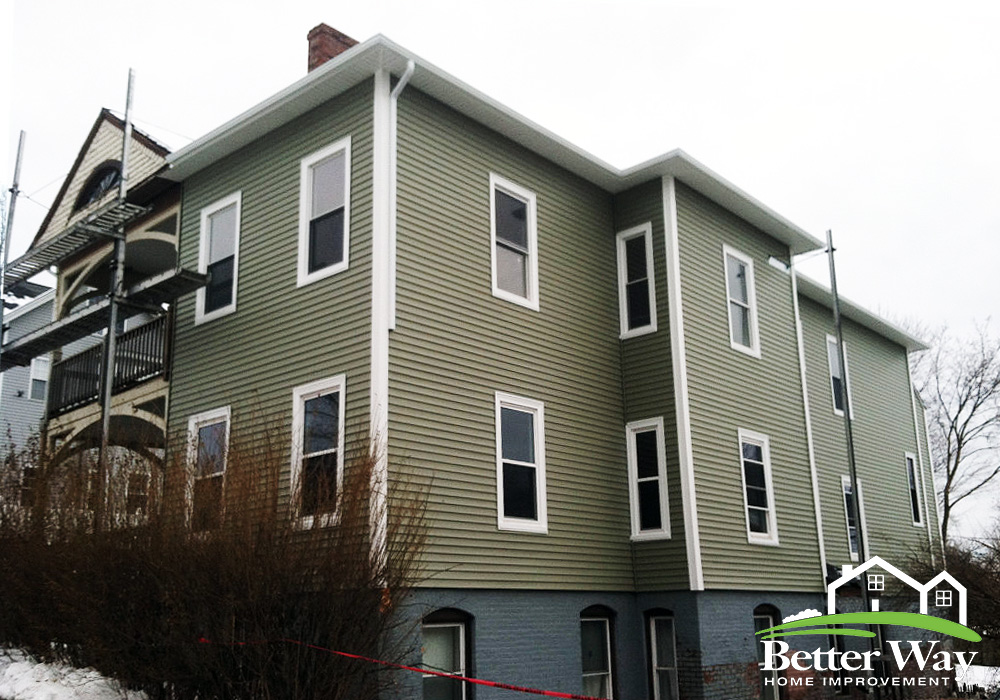
What Siding Repair looks like in Putnam
Most repair calls we get from Putnam fall into three buckets. First, storm damage — high wind off open farm fields or a falling limb from the heavy tree cover common on Putnam’s larger lots cracks a few courses or tears a panel loose entirely. Second, age failure — panels that have gone brittle from thirty-plus years of UV exposure crack when someone leans a ladder against them or when a storm door swings into the wall. Third, and the one that takes longest to diagnose, is rot found behind the panel when we pull siding to make a repair and find soft board sheathing or water-stained wrap underneath.
Putnam’s antique housing stock means we see plank sheathing more often than the OSB you’d find behind newer construction in the Worcester suburbs. Old plank sheathing holds moisture differently and it is not unusual to find a section that has been wet for years without anyone knowing, because the vinyl on top hid it. When that happens, the job stops being a simple panel swap and becomes a sheathing repair with new siding over it. We explain that difference on site, before we quote, because it changes both the price and the timeline.
Color matching is the other recurring headache. A lot of Putnam homes were sided with profiles and colors that have been discontinued for a decade or more. We keep a working list of what’s still in production versus what has to be approximated, and we tell you straight if an exact match is not possible so you can decide whether to patch a less visible elevation or re-side the whole wall to keep the color even.
What we account for on Putnam homes
Older vinyl over original clapboard
Some Putnam houses have several layers of exterior work, including older vinyl installed over original clapboard. We do not assume that the material underneath is sound. When the damaged section comes off, we check what is exposed before closing the wall back up. If the original wood is sound, the repair can continue. If there is deterioration, the affected area needs to be addressed before the new siding goes back on.
1970s and 1980s vinyl
A large amount of older vinyl siding around Putnam is now well into its service life. Years of sun, cold, snow, and temperature changes can make panels brittle. That affects the repair itself. Older panels may break while being removed, and replacement material may not match the original profile exactly. We look at the existing reveal, texture, colour, and profile before selecting replacement material.
Victorian and Colonial Revival details
Village-centre homes can have more exterior detail than a basic ranch. Corners, trim, windows, additions, and changes in wall depth can make a small siding repair more complicated. The repair needs to follow those existing lines rather than treating the damaged area as a flat section of wall. We take the surrounding trim and siding layout into account before replacing the damaged material.
Storm and impact damage
Wind, branches, ladders, equipment, and other impacts can crack or remove individual panels. Leaving the opening exposed can allow water to reach the wall behind the siding. For storm-related repairs, we first determine how much material is actually affected. A small damaged section may be repaired without touching sound siding around it. If the damage extends farther than it first appears, we explain that before the work proceeds.
What we account for on Putnam homes
Inspect the damaged area
Putnam’s mix of older mill-village houses and newer builds means siding profiles, exposure, and fastening methods vary block to block. We factor in sun exposure, older wall assemblies, and how prior repairs were done before recommending a fix that holds up long-term.
Match repair, complete work
Long driveways and rural access
A lot of the properties we work on around Putnam sit well back from the road, some with a quarter mile of gravel or dirt drive before you reach the house. We factor that into scheduling — a crew that has to shuttle materials down a long drive multiple times loses real time, so we plan the trailer load and staging before the truck ever leaves Putnam.
Check the finished section
Tree cover and debris damage
Heavy tree canopy is normal on Putnam lots, and it means falling limbs are a recurring cause of siding damage, not a once-in-a-decade event. We inspect for related damage to trim, soffit, and fascia any time a tree limb is the cause, because the siding panel is rarely the only casualty.
Connecticut licensing and permitting
Putnam is Connecticut, not Massachusetts, and the rules are different. Home improvement work here falls under Connecticut’s Home Improvement Contractor law, not the Massachusetts HIC program we operate under for our Worcester County jobs. Before we quote a Putnam repair, we confirm our registration covers the specific scope of work and pull any permit the Town of Putnam requires. We handle that step — homeowners do not need to chase it themselves.
Insurance claim documentation
When the damage came from wind, a fallen limb, or ice, we photograph and document the site before touching anything, in a format that holds up with an adjuster. A fair number of Putnam repair calls end up going through homeowners insurance, and having clean documentation from the start avoids a second visit later to prove what happened.
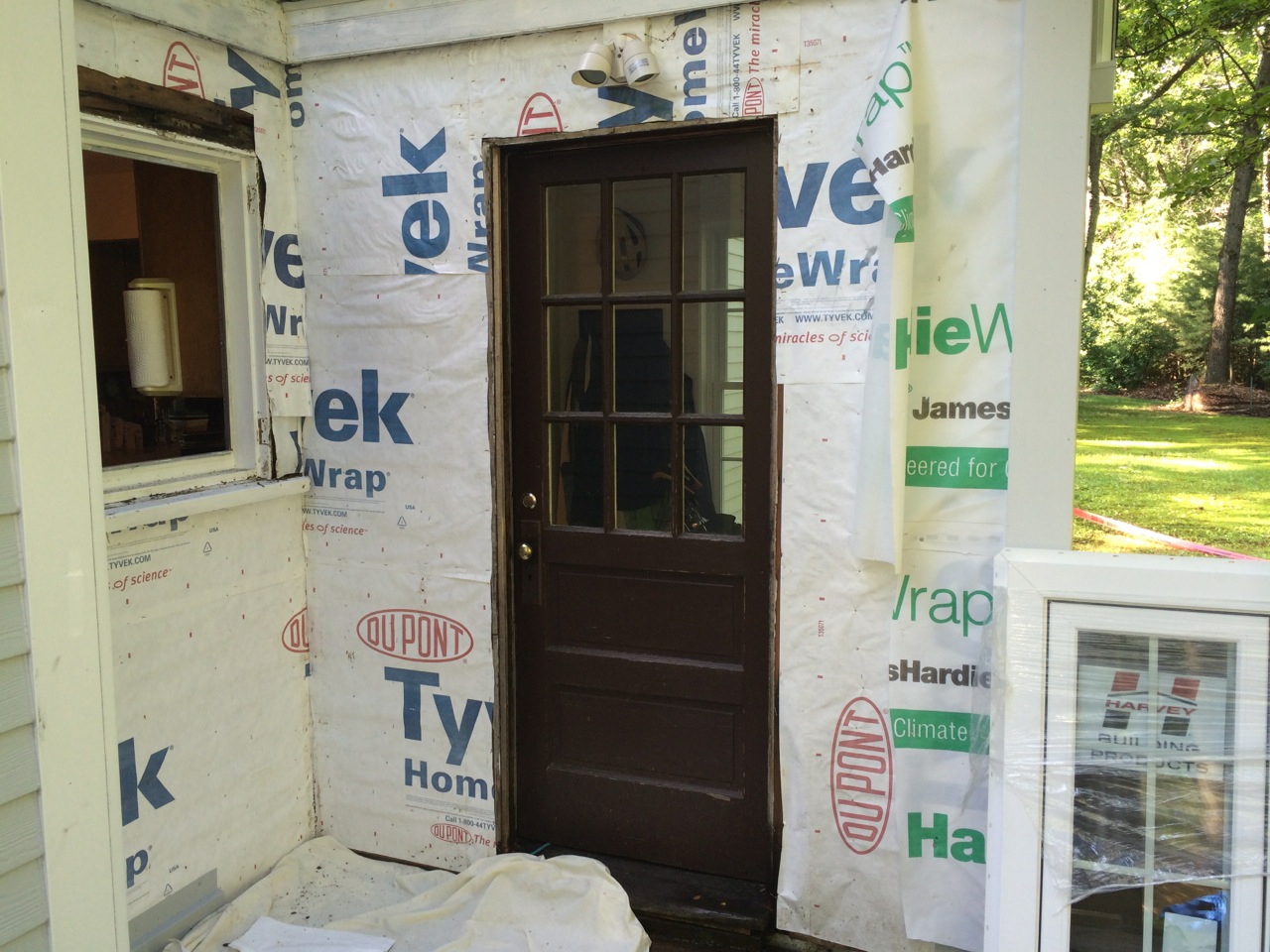
How the job runs
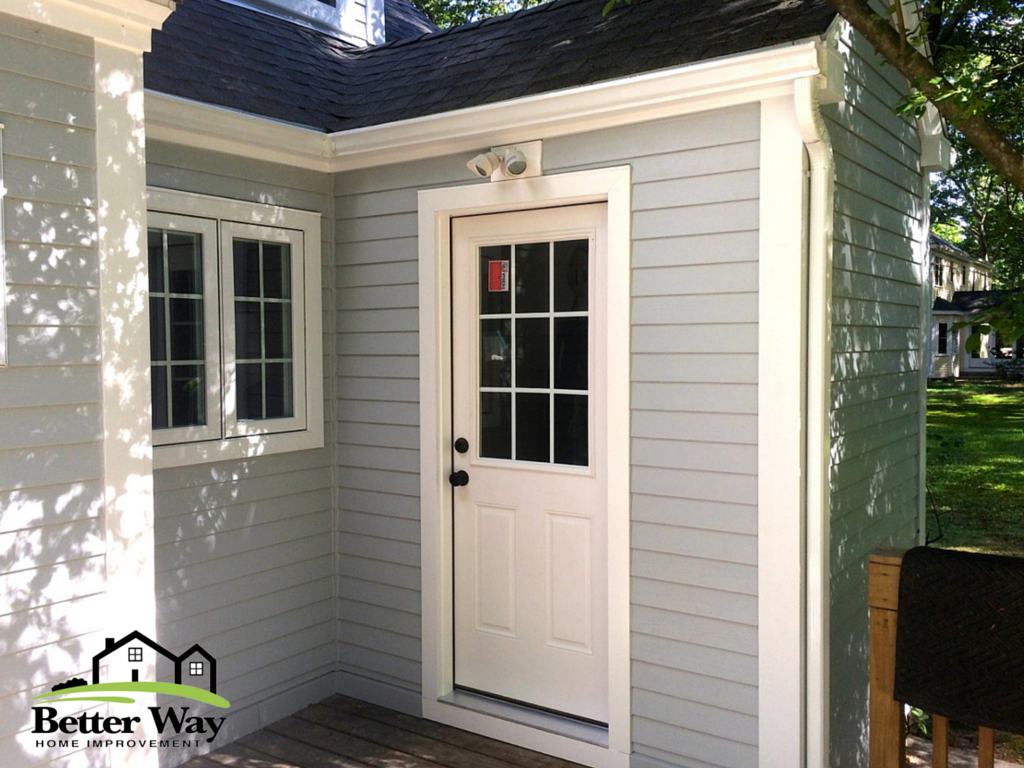
First visit and diagnosis
We come out, pull the damaged panel or panels, and look at what’s underneath before quoting anything. This is the step that separates a $400 patch from a $4,000 sheathing repair, and we do not guess at it from the ground.
Frequently Asked Questions
Does Connecticut licensing apply to a repair done in Putnam?
Yes. Putnam is in Connecticut, so the job falls under Connecticut's Home Improvement Contractor rules, not Massachusetts. We confirm our registration covers the scope before we quote, and we pull any permit the Town of Putnam requires.
How much does siding repair cost in Putnam?
A simple panel replacement typically runs a few hundred dollars for materials and labor. Jobs that uncover rotten sheathing or require re-siding a full elevation to match color run into the low thousands. We won't know which situation you're in until we pull the damaged panel and look.
How long does a siding repair job take?
Straightforward panel swaps are usually done in a half-day to a day. If we find rot behind the siding, plan on one to three days depending on how much sheathing has to be rebuilt before new siding goes back on.
What if you find rot or water damage behind the old siding?
It's common on Putnam's older housing stock. We stop, show you what we found, and quote the sheathing repair separately from the siding patch. We do not close a wall back up over damage without telling you first.
Can you match my old siding if the color or profile is discontinued?
Sometimes. We check current production lines first. If your siding is discontinued, we'll tell you honestly whether a close match is good enough for a less visible wall, or whether re-siding that elevation is the better call for an even color.
Sourcing the match
If your siding is still in production, we order the matching panel and color. If it’s discontinued, we tell you the realistic options — a close approximation on a rear or side wall, or re-siding the affected elevation so the color reads even. This step can take anywhere from two days to two weeks depending on the profile.
Repair and cleanup
Most straightforward panel repairs are a half-day to one-day job. Jobs that uncover rotten sheathing run one to three days depending on how much wall has to be opened up and rebuilt. We haul debris off site the same day we finish — nothing left for the homeowner to deal with.
Recent work in and around Putnam
A common job type in this area: a homeowner calls after a windstorm knocks three or four panels off the side of an older farmhouse or cottage. We pull the loose panels, find the wrap intact but the bottom course cracked from age, and replace just that section. On roughly one in four of these calls, pulling the damaged panel reveals sheathing that’s been wet behind the siding for years — usually near a downspout, a window sill, or a spot where old caulking failed decades ago. When that happens, the job grows to include cutting out and replacing the affected sheathing before new siding goes back on. We do not pad quotes with hypothetical extra work, but we also do not close up a wall over rot and pretend it isn’t there.
Other services we provide in Putnam
Siding repair is not always the right call. If the damage is spread across more than one elevation, or the siding is old enough that matching panels are no longer practical anywhere, a full siding replacement is usually the more honest recommendation, and we’ll say so rather than patch a wall that needs a full re-side. We also install James Hardie fiber cement siding for homeowners moving away from vinyl, plus seamless gutters, repair or new, and replacement windows and doors — the other systems that take the same weather beating as your siding on a Putnam property. If you’re not sure which service fits your situation, our general siding contractor page for Putnam is a good place to start.
Free estimates in Putnam
Our shop is in Putnam, Massachusetts, about 14.2 miles from Putnam. That’s a normal service run for us — we’re out in the Quiet Corner regularly and we build Putnam calls into the schedule the same as any town closer to home. Call (508) 506-8957 for a free estimate. We’ll ask what you’re seeing — cracked panels, storm damage, a spot that looks discolored or soft — and get a time on the calendar to come look at it in person. If it’s a simple panel swap, we’ll quote it on the spot. If we need to open the wall to see what’s behind it, we’ll tell you that too, before any work starts.