


Siding Repair in Thompson, CT
If a nor’easter peeled panels off your farmhouse on Route 200 or a fallen limb cracked the siding on a barn-style garage out toward Quaddick, you don’t need a full re-side to fix it. Thompson’s older homes — antique capes, converted mill housing, and colonial farmhouses set well back on long, tree-lined drives — usually need targeted repair, not replacement. The trick is finding panels that match what’s already up there, since a lot of this stock was sided in the 1980s and 90s with colors and profiles nobody stocks anymore.
What Siding Repair looks like in Thompson
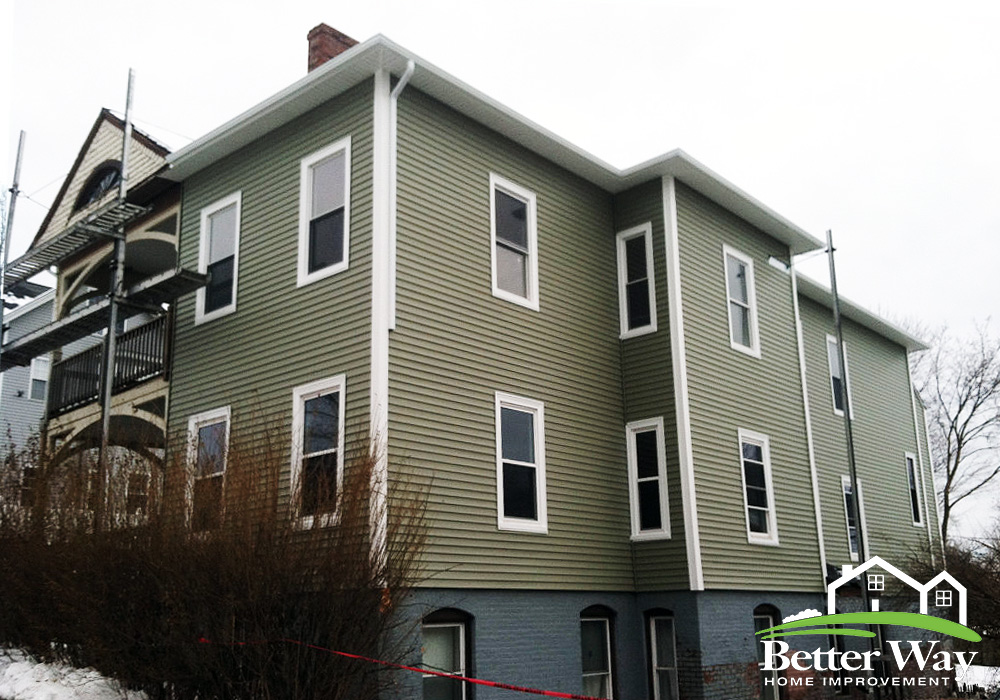
Most repair calls in Thompson start with storm damage or a single problem area, not a whole house that’s failing. We see wind-lifted courses along the eaves where old nailing hem has worked loose over 30 years, cracked panels from tree limbs or falling ice, and gaps at corners where the caulk has dried out and let water behind the wall. Because a lot of Thompson’s housing sits on rural lots with heavy oak and pine cover, we also get calls where a branch strike splits three or four courses at once, which looks worse than it is — usually it’s a section replacement, not a tear-off.
Color and profile matching is the recurring headache here. A house sided in 1988 with a double-4 clapboard profile in a shade like Colonial Beige doesn’t have a factory match anymore. We keep a stock of weathered and discontinued-adjacent panels for patch work, and where we can’t get an exact match, we pull panels from a rear elevation or under a porch roof where the color has faded less, and use fresh stock in the spot that won’t be seen from the road. That’s a judgment call we make on site, not something we guess at over the phone.
We’re also honest about when repair stops making sense. If more than a third of a wall is cracked, chalked out, or brittle enough to snap when we unhook it, patching becomes a losing bet — you’ll pay for labor twice inside a couple of years. On houses where the original siding is past 1998 and shows that kind of wear across multiple elevations, we’ll tell you straight that replacement is the better dollar-for-dollar move, and we’ll quote both so you can compare.
What we account for on Thompson homes
Older vinyl over original clapboard
Some Thompson houses have several layers of exterior work, including older vinyl installed over original clapboard. We do not assume that the material underneath is sound. When the damaged section comes off, we check what is exposed before closing the wall back up. If the original wood is sound, the repair can continue. If there is deterioration, the affected area needs to be addressed before the new siding goes back on.
1970s and 1980s vinyl
A large amount of older vinyl siding around Thompson is now well into its service life. Years of sun, cold, snow, and temperature changes can make panels brittle. That affects the repair itself. Older panels may break while being removed, and replacement material may not match the original profile exactly. We look at the existing reveal, texture, colour, and profile before selecting replacement material.
Victorian and Colonial Revival details
Village-centre homes can have more exterior detail than a basic ranch. Corners, trim, windows, additions, and changes in wall depth can make a small siding repair more complicated. The repair needs to follow those existing lines rather than treating the damaged area as a flat section of wall. We take the surrounding trim and siding layout into account before replacing the damaged material.
Storm and impact damage
Wind, branches, ladders, equipment, and other impacts can crack or remove individual panels. Leaving the opening exposed can allow water to reach the wall behind the siding. For storm-related repairs, we first determine how much material is actually affected. A small damaged section may be repaired without touching sound siding around it. If the damage extends farther than it first appears, we explain that before the work proceeds.
What we account for on Thompson homes
Inspect the damaged area
Thompson’s building stock and geography force a few decisions that don’t come up the same way in denser MA towns closer to our shop.
Match repair, complete work
Connecticut licensing and permitting, not Massachusetts rules
We’re based in Thompson, Massachusetts, but Thompson is Connecticut, and Connecticut runs its own Home Improvement Contractor registration and permitting rules through the town and the state DCP. Before we quote a repair job here, we confirm our HIC registration covers the scope of work and that we’re pulling whatever local permit Thompson requires for the job. We don’t assume Massachusetts paperwork carries over, because it doesn’t.
Check the finished section
Rot found behind older panels
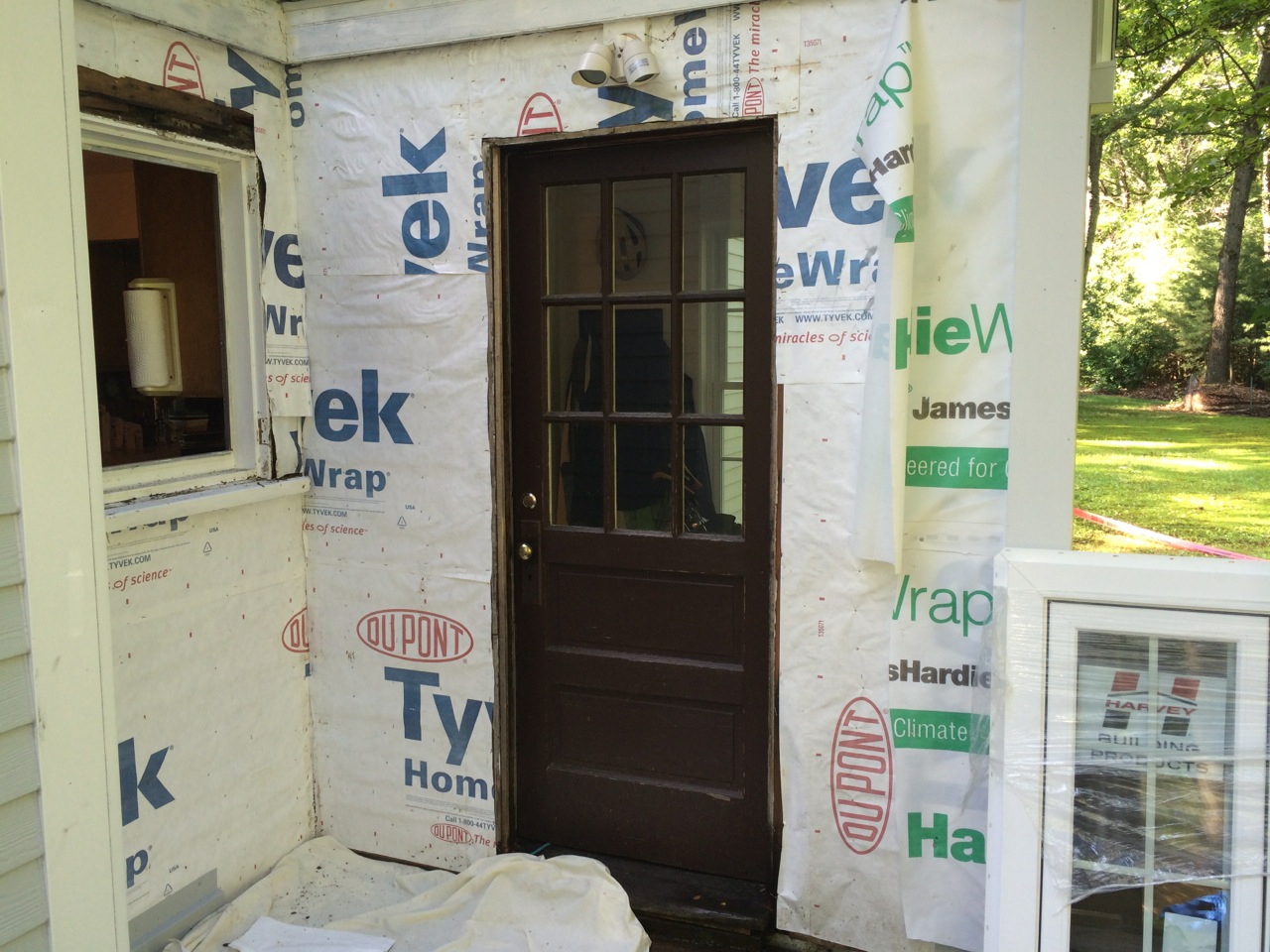
A good number of Thompson’s homes were sided over original wood clapboard or board sheathing decades ago, sometimes without a proper weather barrier underneath. When we pull damaged vinyl off an older farmhouse or converted mill worker’s cottage, we routinely find soft sheathing, old fastener holes that let moisture track in, or in a few cases evidence of old lead paint on the original wood beneath. We stop, document it with photos, and give you the honest number to fix what’s underneath before any new siding goes back up. We won’t cover it over.
Long service drives and rural access
Plenty of Thompson properties sit at the end of a quarter-mile gravel drive or behind heavy tree cover with no close parking near the house. We plan extra time into the schedule for material staging and ladder access on these jobs, and we bring what we need in one trip rather than making the crew and truck do multiple round trips down a long driveway.
Distance-adjusted scheduling from Thompson
At 11 miles from our shop, Thompson is one of our farther-out CT stops. We batch repair calls out here where we can so a crew isn’t driving 20-plus minutes each way for a single half-day patch job, and we’re upfront on the phone about what week we can realistically get to you rather than promising next-day service we can’t back up.
How the job runs
Site visit and assessment. We look at the damaged section, check what’s behind it where we can, and identify the panel profile and closest available color match. This usually takes 30-45 minutes and we’ll tell you on the spot whether we’re looking at a repair or something bigger.
Quote and material sourcing. For common profiles we can quote on the spot. For older or discontinued colors, we may need a few days to source close-match stock or confirm a donor-panel plan from a hidden elevation.
Repair and cleanup. Most single-elevation repairs are a half-day to full-day job. If we find rot or sheathing damage, that adds time and gets priced separately before we proceed. We haul away the damaged material and leave the site clean.
Recent work in and around Thompson
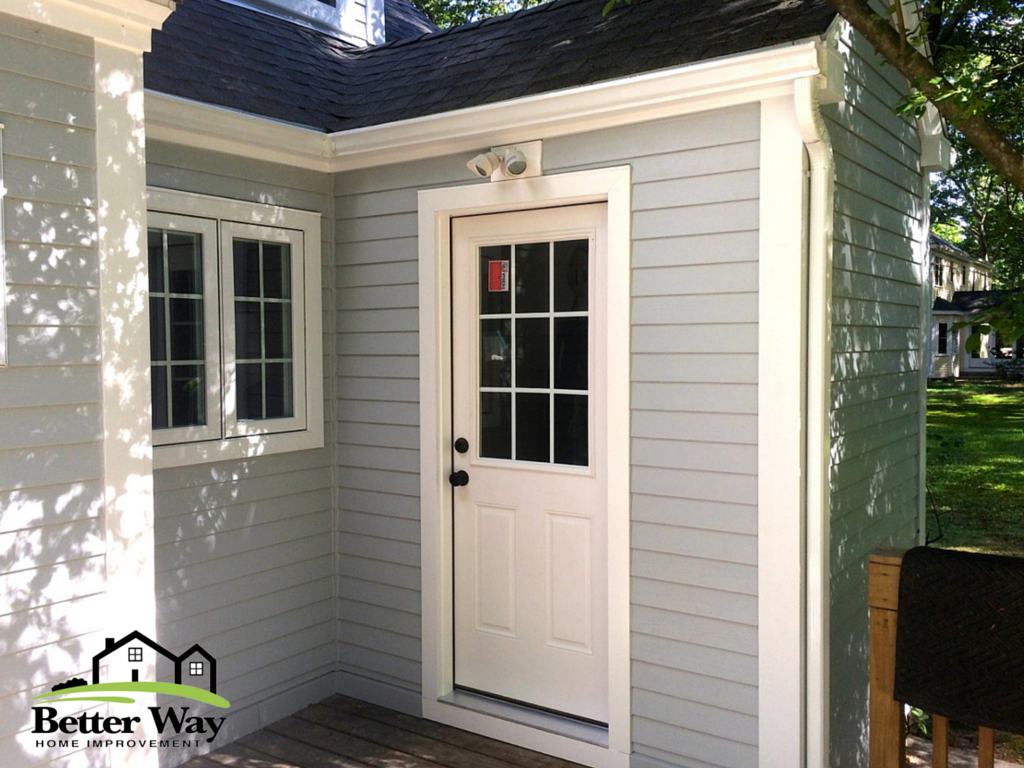
A typical call out here is a farmhouse or ranch off Thompson Road or near the Quinebaug River that took wind damage in a fall storm — two or three courses of vinyl lifted or cracked along one gable end, with the rest of the house in decent shape. We’ve also handled a fair share of impact repairs where a dead tree limb came down on a garage or shed wall during ice season. On the older housing near the town center, we’ve found original wood clapboard under 1980s vinyl more than once, which turns a simple patch into a short conversation about what’s underneath before we close the wall back up.
Frequently Asked Questions
Do you need a Connecticut license to do siding repair in Thompson, or does your Massachusetts license cover it?
Connecticut requires its own Home Improvement Contractor (HIC) registration for work done in the state, separate from Massachusetts licensing. We confirm our HIC registration covers the scope of the job before we quote anything in Thompson.
How much does siding repair cost in Thompson, CT?
A single-elevation patch job with common vinyl is typically a few hundred to around a thousand dollars depending on how many courses need replacing and whether we're sourcing a color match. If rot or sheathing damage turns up underneath, that's priced separately once we can see the extent of it.
Can you match the color and profile on my old vinyl siding?
Sometimes exactly, sometimes closely. Profiles and colors from the 1980s and 90s are often discontinued. Where we can't get a factory match, we'll pull panels from a rear or hidden elevation and put new stock where it's less visible, or we'll tell you honestly that a full re-side is the cleaner fix.
What if you find rot or old wood siding behind the vinyl?
It happens often on Thompson's older housing stock, some of which was sided over original wood clapboard or board sheathing decades ago. We stop, show you what we found with photos, and quote the sheathing or wood repair separately before any new siding goes back on.
How long does a typical siding repair take in Thompson?
Most single-elevation repairs run a half-day to a full day once we're on site with the right materials. Sourcing an older or discontinued color match can add a few days to scheduling before the repair itself even starts.
Other services we provide in Thompson
If your siding damage turns out to be more widespread than a patch can fix, we also handle full siding repair and replacement work across the Quiet Corner, along with new vinyl and James Hardie fiber cement installation. Storm damage to siding often shows up alongside damaged gutters, so we also do seamless gutter repair and installation on the same trip when it makes sense. If your windows or entry doors took damage in the same event, we handle replacement windows and doors too, so one call can cover the whole exterior. For general contractor info and background on our Thompson work, see our siding contractor in Thompson, CT page.
Free estimates in Thompson
We’re 11.0 miles from Thompson out of our Thompson, MA shop, and we run free estimates out here on a regular schedule. Call (508) 506-8957 and tell us what happened and roughly where on the house. We’ll ask a few questions to figure out if it’s a quick patch or something that needs a closer look, then get a crew out to assess it in person. After that visit you get a written quote before any work starts, and if we find something behind the old panels, we’ll show you before we close it back up.