


James Hardie Siding in New Braintree, MA
New Braintree has almost no commercial strip and almost no new construction. What it has is pre-1900 farmhouses and capes set back on long dirt or gravel driveways, with open hayfields and pasture on at least one side. There is no next-door house to break the wind, and a lot of these places take weather straight off open ground. If you are looking at James Hardie fiber cement here, it is usually because thirty-year-old vinyl has cracked, bowed, or blown off in a gust, and you want something that will not do that again. Fiber cement is heavier, it is rigid, and it holds paint and caulk lines the way clapboard did a hundred years ago. That is the appeal on a house like this.
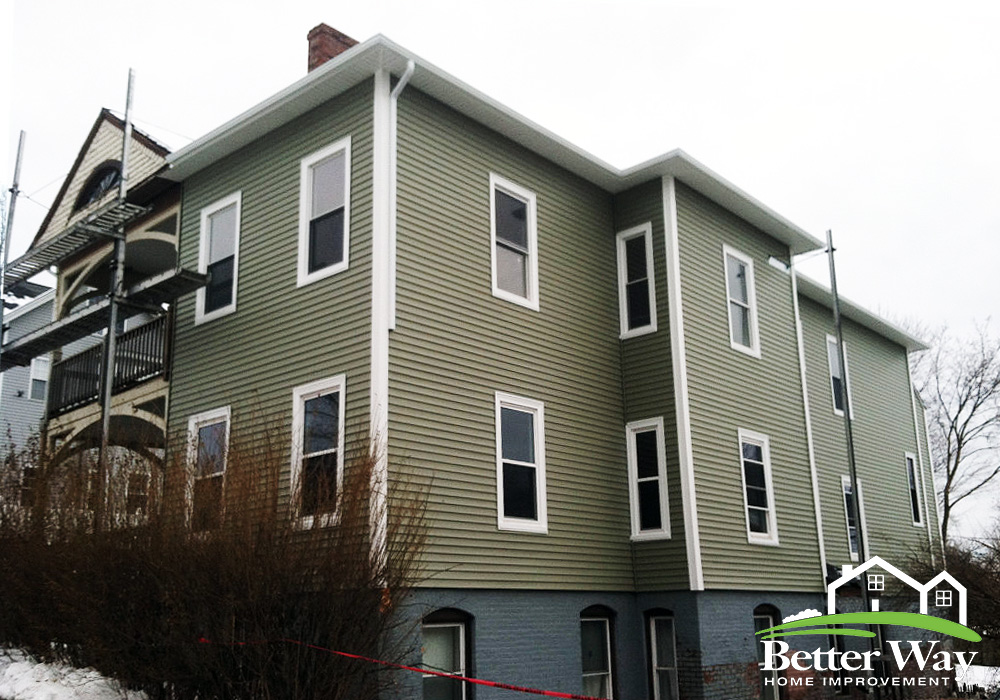
What James Hardie Siding looks like in New Braintree
Most of the housing stock in New Braintree is post-and-beam or balloon-frame construction, often with board sheathing instead of plywood, and wall planes that have moved over a century or more. On these houses, James Hardie siding is installed over a code-compliant water-resistive barrier with furring where the wall is out of plane enough to need it. We use HardiePlank lap siding in a 5 or 6.25-inch exposure on most of these homes because it reads closest to the original clapboard, which matters if the house sits inside or near a local historic overlay.
Because fiber cement is dense — a single 12-foot plank can run close to 100 pounds depending on profile — the crew plans staging and cutting differently than they would for lighter material. Boards get cut outside with HEPA-shrouded saws or fiber cement shears, never inside near open windows, because the silica dust from dry-cutting this product is a real jobsite hazard, not a formality. Fastening follows Hardie’s published schedule for the wind exposure category of the site, which on an open New Braintree lot without windbreak often means tighter nail spacing than a sheltered in-town lot would need.
On the finish side, most owners choose ColorPlus prefinished siding rather than field-applied paint. ColorPlus is baked on at the factory, it comes with its own touch-up system, and it holds color longer than a field-painted board exposed to full sun on an unshaded lot. Field painting is still available and sometimes required to match an existing trim color exactly, but we walk every owner through the tradeoff before ordering material.
What we account for on New Braintree homes
Older clapboard behind the existing exterior
One of the first things to check on an older New Braintree house is what sits behind the current siding. A 1970s or 1980s exterior may have been installed over original wood clapboard. Removing it can reveal damaged boards, uneven areas, or sections that need repair before the new siding can be installed. The condition of that layer is part of the project, not something to ignore until the end.
Heavy material on an older wall
Fiber cement is heavier than the lightweight siding it may be replacing. That means the wall surface and fastening locations need to be considered before installation. The crew accounts for the existing substrate, checks areas where the old exterior has failed, and plans the installation around the actual condition of the house rather than assuming every wall is sound.
Cutting and dust control
Fiber cement needs to be cut to fit around windows, doors, corners, and other details. Cutting produces dust, so the work area has to be managed accordingly. That means using appropriate cutting methods and keeping dust from spreading unnecessarily around the property. The goal is to keep the installation controlled while producing accurate cuts for the exterior details.
ColorPlus or field-applied paint
New Braintree homeowners have two basic finish approaches to consider. ColorPlus siding arrives with a factory-applied finish, while primed siding can be painted after installation. James Hardie says ColorPlus finishes are cured in a controlled factory environment and are designed to provide consistent color and improved resistance to UV-related fading. The right choice depends on the look you want, the available colors, and how you want the finished project handled. We can price the options as part of the estimate.
What we account for on New Braintree homes
Site visit and scope
New Braintree’s mix of rural farmhouses and older New England construction means no two siding jobs look alike. We factor in original wall framing, rural exposure to wind and moisture, and how the existing exterior was built before planning a James Hardie installation.
- Wall and framing condition
- Moisture and weather exposure
- Trim, openings, and existing siding layers
Remove, Prepare, Install
Out-of-square framing on antique houses
A cape or farmhouse built before 1900 was framed by eye, not by laser level, and the walls have settled unevenly since. We check every elevation with a straightedge before ordering material. Where the wall is off by more than what furring strips can correct with standard fasteners, we adjust the furring pattern rather than forcing flat siding onto a wavy wall, which is what causes visible waviness and stress cracking a few years later.
Detail work and final check
Wind exposure with no windbreak
Open approaches and treeless lots mean full wind load on every elevation, not just the front. We follow Hardie’s fastening requirements for the actual exposure category of the site rather than defaulting to a standard in-town schedule, and we pay particular attention to inside and outside corners and the last course under the eave, which are the failure points on exposed sites.
Historic district and commission review
Sections of New Braintree fall under local historic review, and even outside a formal district, abutters and the town notice a change to a two-hundred-year-old facade. We can supply cut sheets, exposure widths, and color samples for a commission submission before material is ordered, and we will hold the schedule if approval is still pending.
Board sheathing and hidden rot behind old siding
Many of these houses still have their original board sheathing under one or two later layers of siding. Once we strip back to that layer we routinely find soft boards around old window flashing, sill areas, and anywhere a gutter has been dumping water against the wall for years. We price the base job on what we can see and treat any sheathing repair as a separate, itemized add so there is no surprise on the invoice.
Frequently Asked Questions
Why choose James Hardie fiber cement over vinyl for a New Braintree house?
Fiber cement is heavier and more rigid than vinyl, so it holds a straight line on an old, slightly wavy wall and does not bow or rattle in the open wind these lots see. It also carries a Class A fire rating and better impact resistance, which matters on rural properties without close neighbors or hydrants nearby.
Does New Braintree require historic commission approval for siding changes?
Parts of town fall under local historic review, and some homes outside a formal district still draw abutter or town attention given the age of the housing stock. We can prepare cut sheets, exposure width, and color samples for a submission before ordering material, and we will hold the install date if approval is pending.
What does James Hardie siding cost on a typical New Braintree home?
Cost depends on wall square footage, how much furring and sheathing repair the old walls need, and whether you choose ColorPlus prefinished or field-painted siding. Older farmhouses with out-of-square framing and hidden sheathing damage generally run higher than the cost per square foot you would see on a newer, squarer house. We give a firm written number after the site walk, not before.
How long does a full siding job take on an antique house?
A straightforward house runs one to two weeks from tear-off to finished trim. Homes with more out-of-square wall correction, sheathing repair, or a historic commission review in progress can take longer. We give you a specific timeline once we have measured the walls and checked what is behind the old siding.
What happens if you find rot or damage behind my old siding?
On houses this age it happens often enough that we plan for it. We price the base siding job on what is visible, then treat any sheathing repair, framing repair, or flashing correction as a separate itemized cost we show you before we proceed, not after the invoice.
How the job runs
Site walk and measurement
We walk the whole exterior, check wall plane with a straightedge, note wind exposure, trim details, and anything that looks like an existing moisture problem. If the house is in a historic review area we talk through what the commission will want to see.
Tear-off and sheathing check
Old siding comes off in sections, not all at once, so the house is never fully exposed overnight. We inspect the sheathing as we go and flag anything that needs repair before the new water-resistive barrier goes on.
Install and finish detail
Furring, barrier, and James Hardie planks go up following the fastening schedule for that site’s exposure. Trim, corners, and flashing get finished last. A full New Braintree house with average complexity typically runs one to two weeks; older homes with more prep or a historic submission in progress can run longer.
Recent work in and around New Braintree
A typical job we see in this area is a pre-1900 cape with a single layer of aging vinyl over original board sheathing, installed sometime in the 1980s or 90s to cover deteriorating clapboard. Once that vinyl comes off, the board sheathing underneath is usually intact but weathered, with soft spots near a bathroom vent or an old sill flashing detail that was never sealed properly. The fix is straightforward: patch or replace the affected boards, correct the flashing, then install HardiePlank in a lap profile that matches the historic clapboard reveal. Owners in this situation usually choose ColorPlus in a traditional New England color rather than field paint, since there is no existing paint match to protect.
Other services we provide in New Braintree
If your siding needs are smaller than a full fiber cement job, we also handle siding repair and general siding contractor work in New Braintree for spot damage, storm repair, and vinyl sections that just need patching rather than replacing. We also install and repair seamless gutters, which matter more on an exposed lot like most New Braintree properties, since a failing gutter is often the reason sheathing rots behind old siding in the first place. And if your windows or doors are original single-pane units losing their seals, we handle replacement windows and doors as part of the same exterior scope, which can save a trip charge and keep trim details consistent across the whole house.
Free estimates in New Braintree
New Braintree is about 19.4 miles from our shop in New Braintree, and it is a routine drive for our crews. We give free, no-pressure estimates for James Hardie siding here, and we will tell you honestly if your existing siding is a better candidate for repair than full replacement. Call (508) 506-8957. After you call, we set a time to walk the house, check the wall and sheathing where we can, and give you a written estimate before any material is ordered.