


Siding Repair in Milford, MA
If a storm ripped a few panels off your house near the Bellingham line, or you’ve got a cracked run of siding on a condo unit off West Fountain Street, the question is whether it can be patched or whether the whole wall needs to come off. Most of the time on Milford’s postwar streets and its townhouse and condo developments, a repair is the right call. The harder part is matching color and profile on siding that’s been on the wall since the 1980s or 1990s, and getting the fix past an association review board before we start.
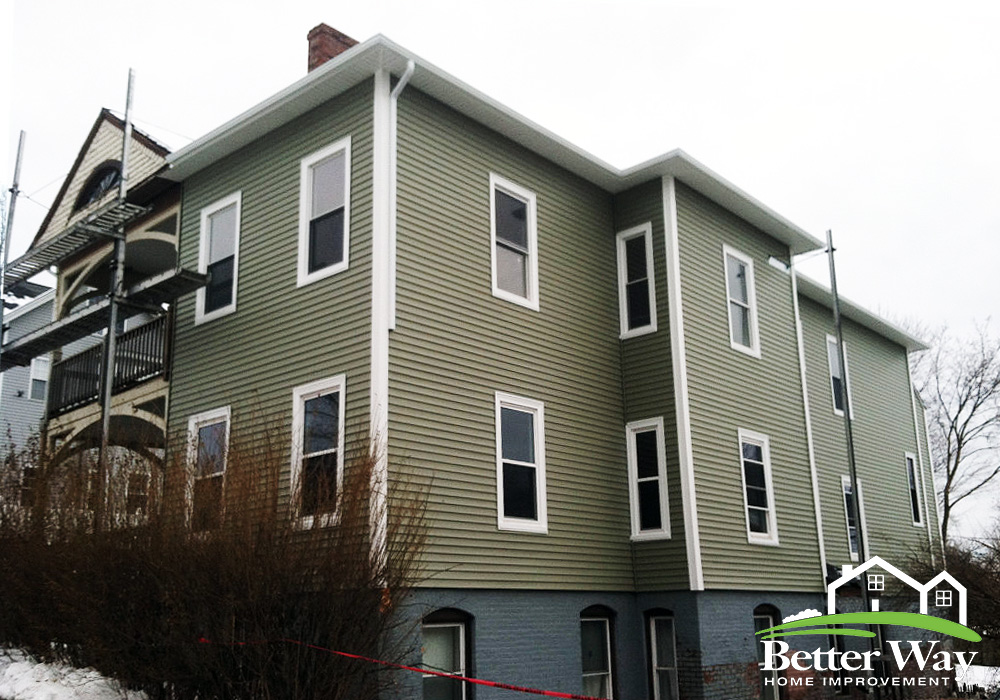
What Siding Repair looks like in Milford
Milford is denser than most of the towns we work in west of here. You’ve got tight-lot postwar houses off Congress Street and Purchase Street, and a real concentration of condo and townhouse associations closer to the Bellingham line. That mix changes what a repair job actually involves before we ever touch a panel.
On the single-family postwar stock, the usual call is wind damage — a gust catches a loose panel and either cracks it or pulls it off the nailing strip entirely. We also see impact damage from tree limbs and the occasional lawn equipment mishap, plus panels that have simply gone brittle from 30-plus years of sun exposure and crack the moment something taps them. Once a panel is off, we’re looking behind it. Sheathing on houses from this era is sometimes still original, and moisture that’s been getting behind failed caulk or a gapped J-channel for years shows up as soft wood or staining.
On the condo and townhouse side, the job looks different. These are shared walls and shared exteriors, which means the association usually has a say in what color and material go back up, and sometimes in who’s allowed to do the work. We treat that as part of the estimate, not an afterthought — we’d rather find out on day one that a color is off the approved list than order material and get stopped at inspection.
Either way, the goal of a repair is the same: fix what’s actually broken, match what’s still good, and not tear off siding that has years of life left in it just because a few panels failed.
What we account for on Milford homes
Older vinyl over original clapboard
Some Milford houses have several layers of exterior work, including older vinyl installed over original clapboard. We do not assume that the material underneath is sound. When the damaged section comes off, we check what is exposed before closing the wall back up. If the original wood is sound, the repair can continue. If there is deterioration, the affected area needs to be addressed before the new siding goes back on.
1970s and 1980s vinyl
A large amount of older vinyl siding around Milford is now well into its service life. Years of sun, cold, snow, and temperature changes can make panels brittle. That affects the repair itself. Older panels may break while being removed, and replacement material may not match the original profile exactly. We look at the existing reveal, texture, colour, and profile before selecting replacement material.
Victorian and Colonial Revival details
Village-centre homes can have more exterior detail than a basic ranch. Corners, trim, windows, additions, and changes in wall depth can make a small siding repair more complicated. The repair needs to follow those existing lines rather than treating the damaged area as a flat section of wall. We take the surrounding trim and siding layout into account before replacing the damaged material.
Storm and impact damage
Wind, branches, ladders, equipment, and other impacts can crack or remove individual panels. Leaving the opening exposed can allow water to reach the wall behind the siding. For storm-related repairs, we first determine how much material is actually affected. A small damaged section may be repaired without touching sound siding around it. If the damage extends farther than it first appears, we explain that before the work proceeds.
What we account for on Milford homes
Inspect the damaged area
Every town in our service area has its own quirks. Here’s what actually changes the plan on a Milford job.
Match repair, complete work
Association approval before we order anything
A meaningful share of Milford’s housing stock is condo or townhouse associations with their own rules on approved colors and sometimes approved materials. We ask for the association’s siding guidelines up front, before we quote a color match. Ordering the wrong shade because we skipped that step wastes everyone’s time.
Check the finished section
Color matching on discontinued profiles
A lot of Milford’s vinyl went up in the 1970s through 1990s. Manufacturers have changed profiles and colors several times since then, so an exact match on 20 or 30-year-old siding is often not possible. We’re honest about that at the estimate — sometimes the fix is matching as close as current lines allow and accepting a slight difference on a rear or side wall where it won’t be as visible, and sometimes it means re-siding the whole elevation to keep it uniform.
What's behind the panel on postwar sheathing
Houses built in the postwar boom years around Milford often have board sheathing rather than modern OSB, and older paint layers underneath that can be lead-based. When we pull damaged panels, we check what’s behind them before closing anything back up. If we find rot, staining, or older painted wood, we flag it and explain the options rather than nailing new siding over a problem.
Denser lot lines and shared walls
Milford’s postwar neighborhoods and its condo developments both mean less room to work than on a rural half-acre lot. Scaffolding, staging, and material drop-off get planned around tight driveways and shared property lines, and on attached units we coordinate timing so we’re not disrupting a neighbor’s unit unnecessarily.
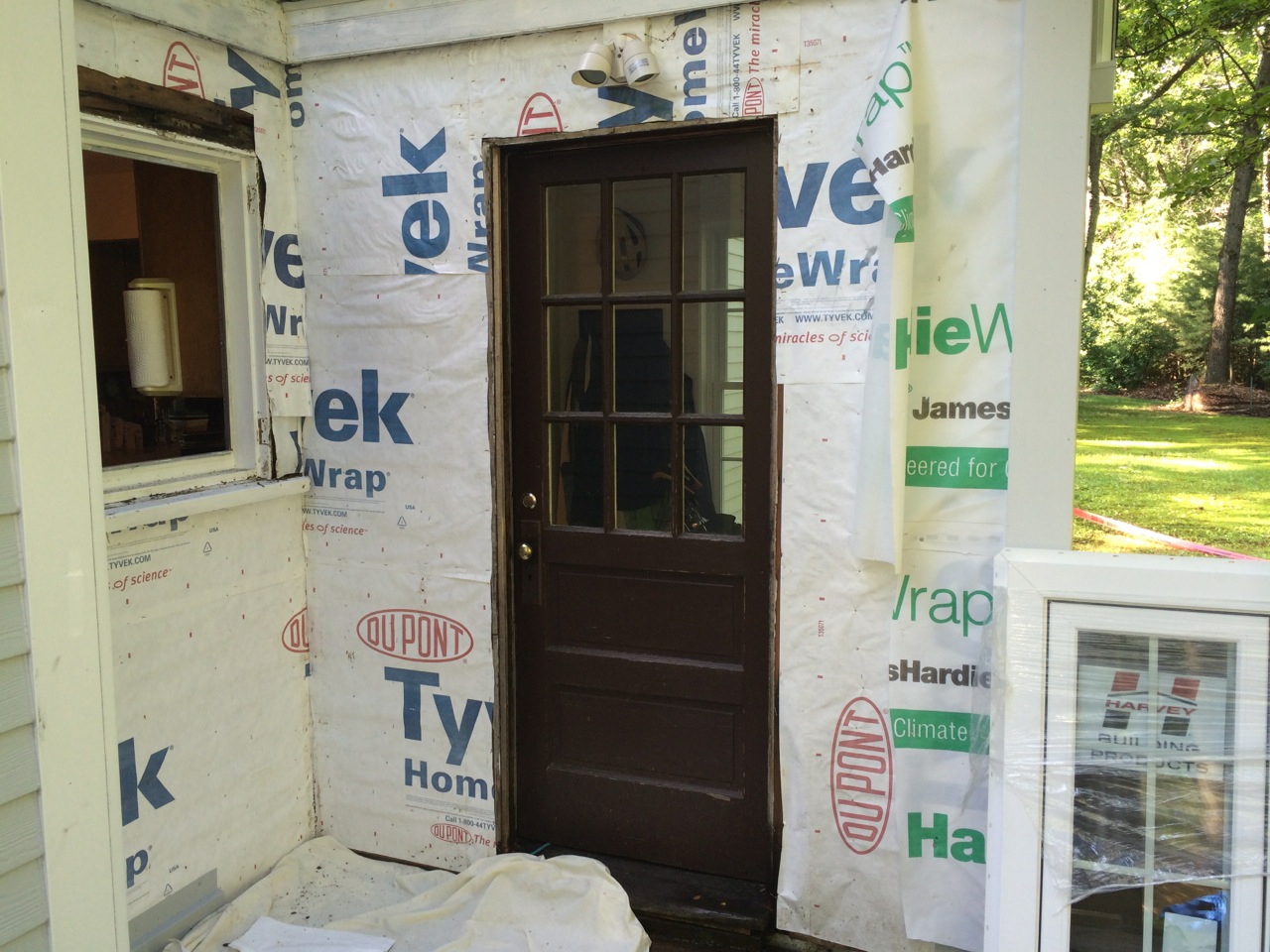
How the job runs
A repair call in Milford usually moves in three stages. First, we come out and look at the actual damage — not just the panel that’s obviously cracked or missing, but the surrounding courses, the trim, and what’s likely underneath. If it’s a condo or townhouse, we also confirm what the association requires before we quote. Second, once you approve the estimate, we order matching material. If it’s a common profile still in production, that can take a few days. If it’s discontinued, we may need to source reclaimed stock or discuss a partial re-side instead. Third is the repair itself: remove the damaged panels, address anything found underneath, install the match, and reset the courses so the reveal lines stay even. Most straightforward repair jobs — storm damage, a handful of cracked panels, a section blown loose — run one day. Jobs that turn up rot or sheathing damage take longer because that work has to be done right before any new siding goes back on.
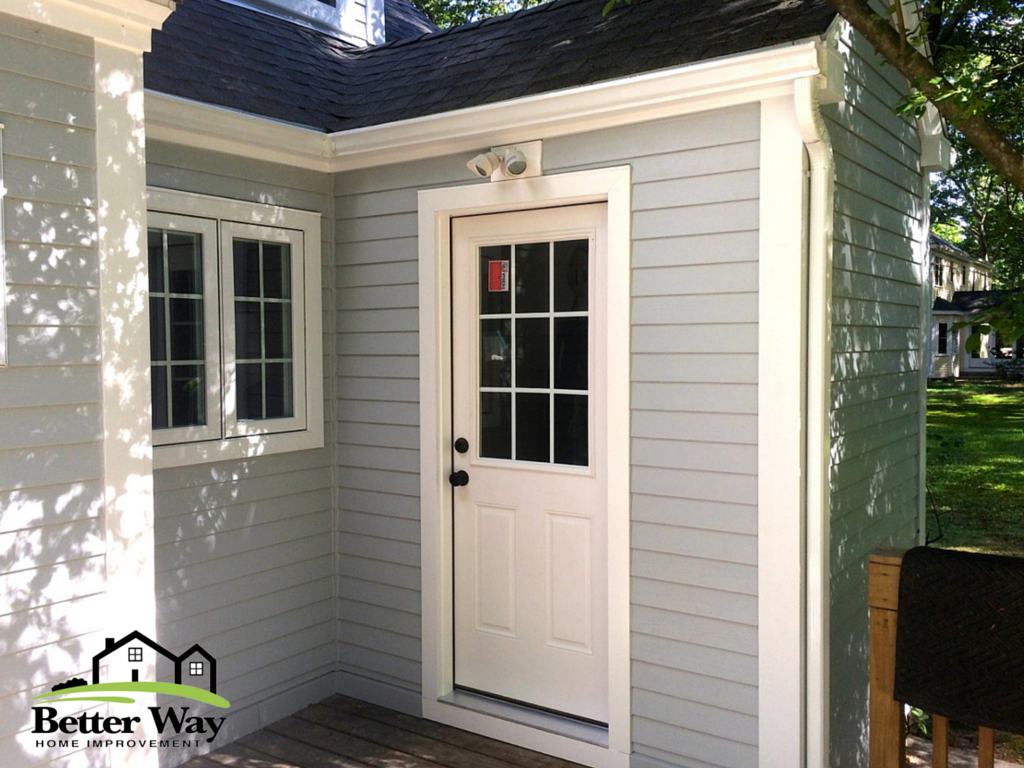
Recent work in and around Milford
A typical job we run in this area is storm-related: a section of siding on the windward side of a house comes loose or cracks during a high-wind event, sometimes with an insurance claim attached. We document the damage with photos before we touch anything, which the adjuster typically wants, then handle the repair once the claim is settled or the homeowner decides to move ahead on their own. We also do a fair number of jobs on condo and townhouse units where one owner’s siding failed and the fix has to match not just the original color but whatever the association currently has on file as approved. Those jobs take a bit more coordination up front but aren’t more complicated to actually install.
Frequently Asked Questions
Can you match my old vinyl siding, or will it look patched?
It depends on the age and profile. Siding from the 1970s through 1990s is often discontinued, so an exact match isn't always possible. We'll match as close as current product lines allow, and if the difference would be too visible on a front-facing wall, we'll tell you honestly whether a repair or a partial re-side makes more sense.
Does my condo or townhouse association need to approve the repair?
Often, yes. A lot of Milford's housing stock is condo and townhouse associations with approved color and material lists, and sometimes approval requirements for contractors. We ask for those guidelines before we finalize the quote so we're not ordering material that gets rejected at inspection.
What if you find rot or damage behind the old siding?
We stop and show you before closing anything up. On this era of housing it's common to find soft sheathing, moisture staining, or old painted wood behind failed panels. We'll explain what we found, what it means for the repair, and what it costs to address before doing any additional work.
How much does a typical siding repair cost in Milford?
A small repair covering a few panels usually runs a few hundred dollars. Jobs involving a full section, trim work, or sheathing repair behind the panels run higher, generally into the low thousands. We give an exact number after seeing the damage in person, not before.
How fast can you get to a storm-damaged house?
For active leaks or exposed sheathing after a storm, we try to get out within a day or two to assess and, if needed, tarp or temporarily seal the area. The full repair typically follows within a week or two depending on material availability.
Other services we provide in Milford
If the damage turns out to be more than a repair can reasonably fix — full elevations that have gone brittle, or siding that’s failed in enough places that patching would look worse than a fresh installation — we’ll say so and talk through siding replacement instead of pushing a repair that won’t hold up. We also install vinyl and James Hardie fiber cement siding new, put up and repair seamless gutters, and replace windows and doors on the same houses and condo units we’re already working on in Milford. If you’re not sure which of those you need, our Milford siding contractor page is a good place to start, or just call and describe what you’re seeing.
Free estimates in Milford
We’re based at 152 Sutton Ave in Milford, about 17.9 miles from Milford, and we run estimates out this way regularly. Call (508) 506-8957 and tell us what happened — storm damage, cracked panels, something an association flagged — and we’ll set up a time to look at it in person. Estimates are free. After the visit, you get a written quote covering the repair scope, the material match, and a timeline, with no pressure to book on the spot. We’re licensed, insured, and have carried Angie’s List’s Super Service Award every year from 2013 through 2019.