


James Hardie Siding in Spencer, MA
Spencer has more antique colonials and farmhouses per mile than most towns west of Worcester, and a lot of them sit on open lots with no windbreak — old farm fields, long driveways, hilltop lots off Route 9 and the back roads toward Leicester. That combination of pre-1900 framing and real wind exposure is exactly the case James Hardie fiber cement was built for. If you’re comparing it to vinyl because your current siding rattles, cracks, or has blown off in a gust more than once, you’re asking the right question. Here’s what the job actually involves on a Spencer house.
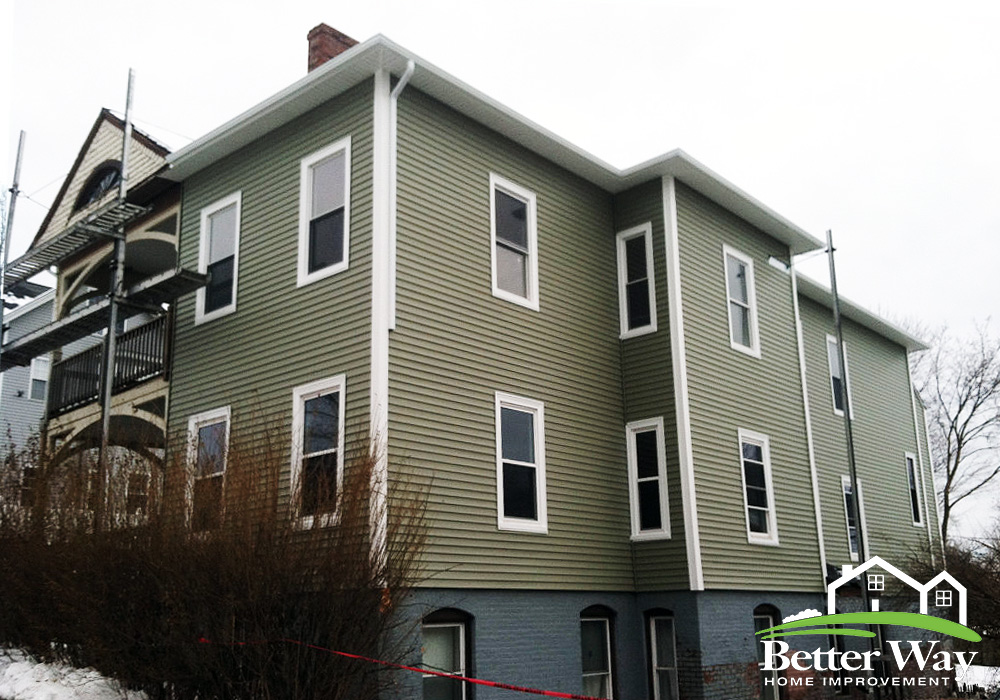
What James Hardie Siding looks like in Spencer
Fiber cement is heavier than vinyl by a wide margin, and that changes the job before a single board goes up. A single 12-foot lap plank of James Hardie siding weighs several times what a vinyl equivalent does, so the fasteners, the sheathing underneath, and the crew handling it all have to be sized for that. On a lot of Spencer’s older homes, the original sheathing is board, not plywood, and it’s often been through a century of settling. We check it for soundness before we plan the fastening pattern, because fiber cement wants a solid nailing surface every 16 or 24 inches, no exceptions.
The other difference homeowners ask about is finish. James Hardie’s factory-baked ColorPlus finish holds color longer and resists fading better than field-applied paint, and it comes with its own warranty separate from the substrate. On a house with a lot of trim detail — window returns, corner boards, a bracketed farmhouse eave — ColorPlus also saves a painting step down the road. Some Spencer homeowners in the historic district around the Common still choose factory-primed boards with a custom field-painted color to match a specific historic tone the local commission wants. Either way works with Hardie board. It’s a longer conversation than picking a vinyl color chip, and we have it with every customer before we quote.
Fire and impact performance are the other reason people move up from vinyl out here. Fiber cement doesn’t melt against a hot grill or a brush-pile fire the way vinyl can, and it takes a hit from a thrown branch or a ladder bump without cracking the way older, thinner vinyl does. On properties with real acreage and wood heat, that matters more than it does in a tight subdivision.
What we account for on Spencer homes
Older clapboard behind the existing exterior
One of the first things to check on an older Spencer house is what sits behind the current siding. A 1970s or 1980s exterior may have been installed over original wood clapboard. Removing it can reveal damaged boards, uneven areas, or sections that need repair before the new siding can be installed. The condition of that layer is part of the project, not something to ignore until the end.
Heavy material on an older wall
Fiber cement is heavier than the lightweight siding it may be replacing. That means the wall surface and fastening locations need to be considered before installation. The crew accounts for the existing substrate, checks areas where the old exterior has failed, and plans the installation around the actual condition of the house rather than assuming every wall is sound.
Cutting and dust control
Fiber cement needs to be cut to fit around windows, doors, corners, and other details. Cutting produces dust, so the work area has to be managed accordingly. That means using appropriate cutting methods and keeping dust from spreading unnecessarily around the property. The goal is to keep the installation controlled while producing accurate cuts for the exterior details.
ColorPlus or field-applied paint
Spencer homeowners have two basic finish approaches to consider. ColorPlus siding arrives with a factory-applied finish, while primed siding can be painted after installation. James Hardie says ColorPlus finishes are cured in a controlled factory environment and are designed to provide consistent color and improved resistance to UV-related fading. The right choice depends on the look you want, the available colors, and how you want the finished project handled. We can price the options as part of the estimate.
What we account for on Spencer homes
Site visit and scope
Out-of-square walls on pre-1900 framing
A lot of Spencer’s capes and colonials have settled unevenly over a hundred-plus years. Wall planes aren’t flat, and corners aren’t square. We furring-strip out the low spots before siding goes on, because fiber cement telegraphs a wavy wall worse than vinyl does — it’s a rigid board, not a flexible skin. This furring and prep step is a bigger share of labor on these houses than the siding installation itself.
Wind exposure on open lots
Houses set back on old farm fields or up on a rise with no tree line take wind loads that a sheltered in-town lot never sees. We follow James Hardie’s fastening specs for high-wind zones on these jobs — closer nail spacing, correct edge clearance, blocking at exposed corners — rather than the minimum spec that works fine on a sheltered street.
Historic district review
The area around Spencer’s town common and a few of the older neighborhoods fall under local historic guidelines. Where that applies, we help homeowners select a Hardie profile, reveal, and color that will pass commission review before we ever order material, so there’s no redo after the fact.
What’s behind the old siding
Pulling siding off a house this old almost always turns up something — old board sheathing with gaps, evidence of past water intrusion around window heads, sometimes a layer of original wood clapboard still nailed on underneath a later vinyl job. We stop and show you what we find before we close anything up, and price any repair as a separate, itemized line so you’re never guessing what you’re paying for.
Remove, Prepare, Install
How the job runs
Walkthrough and measure
We look at the whole exterior — wall planes, trim condition, what’s under the current siding where it’s already exposed at corners or edges — and take exact measurements for a real quote, not a rough estimate. On historic-district homes we also check what profile and color the commission will accept.
Tear-off and prep
Old siding comes off, sheathing gets inspected and repaired where needed, and out-of-square walls get furred true. This step runs longer on Spencer’s older housing stock than on newer construction — plan on it taking real time, because rushing prep is where fiber cement jobs go wrong.
Installation and finish
Boards go up to James Hardie’s fastening spec for the wind exposure on your specific lot, trim and flashing details get closed up, and we walk the finished job with you before we call it done. A typical Spencer home runs several days to just over a week depending on size and how much prep the walls need.
Detail work and final check
Cutting fiber cement generates fine silica dust, and it’s a real jobsite consideration, not a footnote. We cut boards using saws fitted with dust-collection shrouds and vacuum attachments, and we do it away from open windows, gardens, and outdoor living areas. On tighter in-town Spencer lots where a house sits close to a neighbor’s yard, we plan the cutting station location as part of the walkthrough, not as an afterthought on install day.
Recent work in and around Spencer
We’re straightforward about cost because most Spencer homeowners calling us have already gotten a vinyl quote and are trying to figure out if the jump to fiber cement is worth it for their house. Fiber cement runs higher than vinyl per square foot, both in material and install labor, because of the weight, the cutting requirements, and the finish work. For a house with sound sheathing and reasonably square walls, that premium is mostly material. For a house needing significant furring and sheathing repair — which describes a fair number of Spencer’s older homes — labor becomes the bigger share. We give you both numbers separately in the quote so you can see where your money’s going.
Recent work in and around Spencer
A common job type in this area is a mid-1800s farmhouse or cape with failing 1980s vinyl over original board sheathing. The vinyl usually gets pulled to find gaps between boards, some soft spots near old window openings, and occasionally a layer of the original wood clapboard still underneath. We repair or replace sheathing sections as needed, fur the wall true, and install Hardie lap siding with ColorPlus finish in a color that works with the home’s trim and roofline. On homes near the historic district, we’ve matched Hardie profiles and colors to satisfy commission guidelines while still giving the homeowner a low-maintenance exterior going forward. We don’t publish customer names or addresses, but this is the job we run most often out this way.
Frequently Asked Questions
Is James Hardie siding worth the extra cost over vinyl for a Spencer home?
It depends on the house. On an exposed, wind-heavy lot or a home with heavy trim detail you want to preserve, fiber cement's impact resistance and factory finish often justify the premium. On a sheltered in-town lot with a simpler profile, vinyl can be the more practical choice. We'll give you honest numbers for both during the walkthrough.
Does Spencer's historic district restrict what siding I can install?
Areas near the town common and some older neighborhoods fall under local historic guidelines that can dictate profile, reveal, and color. We check this before ordering material and help select a James Hardie option that will pass review, so you're not stuck redoing the job.
What happens if you find rot or old sheathing problems once the siding is off?
On homes this old, we usually find something — soft board sheathing, old water staining around windows, sometimes original wood clapboard underneath a later layer. We show you what's there before closing anything up and price any repair as a separate line item, not a surprise add-on.
How long does a James Hardie siding job take on a typical Spencer house?
Most jobs run from several days to just over a week. Homes needing significant furring or sheathing repair because of out-of-square framing take longer than newer, straighter-walled houses. We give you a realistic timeline based on your specific walls, not a generic estimate.
Can you match James Hardie's ColorPlus finish to my home's existing trim colors?
Yes. ColorPlus comes in a range of factory colors, and we can also order primed boards for field painting if you need an exact custom match to trim or a historic-district color requirement.
Other services we provide in Spencer
Not every Spencer home is a fiber cement candidate, and not every siding problem needs a full replacement. If your existing siding just needs a section fixed, see our siding repair work. If you’re leaning toward a straightforward, budget-conscious material instead of fiber cement, we also handle vinyl siding installation. Full tear-off jobs where the decision is bigger than one material choice are covered on our siding replacement page. Beyond siding, we install and repair seamless gutters, and we replace windows and doors — often on the same trip if a project touches both.
Free estimates in Spencer
Spencer is about 10.8 miles from our shop in Spencer, and we quote jobs out this way regularly. Call (508) 506-8957 for a free estimate. We’ll set up a walkthrough, look at your specific walls and trim, and give you a written quote that breaks out material and labor so you know exactly what you’re paying for and why. After that, you decide when to move forward — no pressure, no expiration gimmick on the quote.