


James Hardie Siding in Paxton, MA
Paxton sits up on the ridge west of Worcester, and that elevation means wind. Homes along Pleasant Street, Richards Avenue, and the older farmhouse lots out toward Asnebumskit have no real windbreak for long stretches, which is why we see fiber cement holding up better than vinyl on the exposed sides of these properties. A lot of the housing stock here is pre-1900 cape and farmhouse construction, with wall planes that have shifted over a century of settling. James Hardie siding is the material most of our Paxton customers land on once they understand what it takes to keep an old, exposed house looking straight and staying dry.
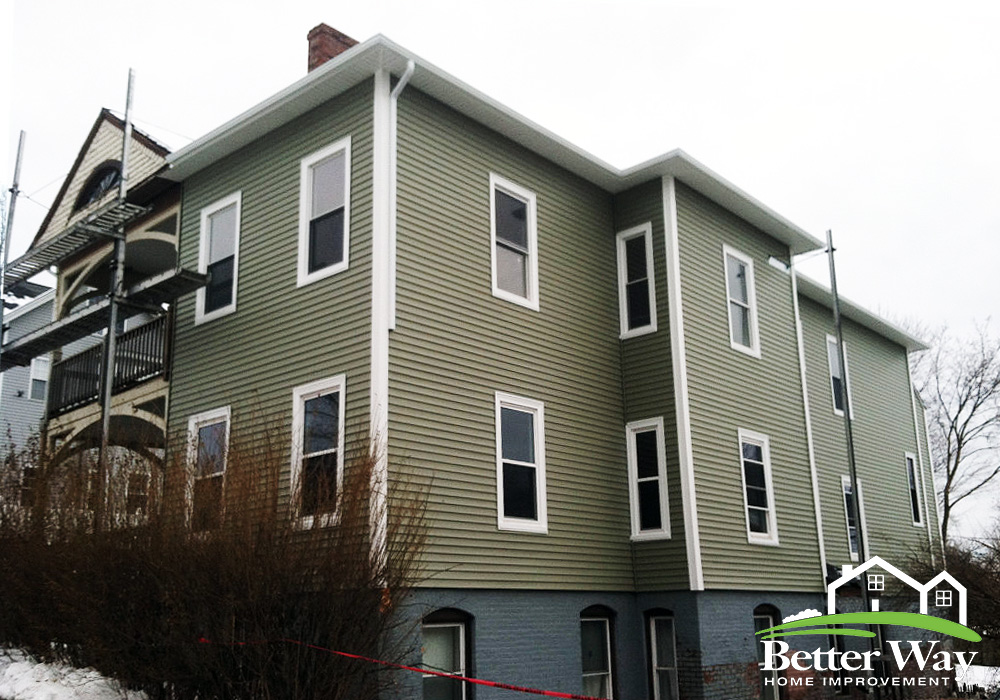
What James Hardie Siding looks like in Paxton
On a typical Paxton job we’re not just swapping one siding for another. We’re usually correcting for a wall that was never perfectly square to begin with, adding furring or shims where the original sheathing has settled unevenly, and building out a plane that will actually read as straight once the new siding goes up. James Hardie’s fiber cement boards are heavier than vinyl — a full board can run three to four times the weight per square — so the fastening schedule and the condition of the substrate matter more here than on a newer, squarer house.
Most Paxton homeowners choose HardiePlank lap siding in a factory ColorPlus finish rather than field-painted primed boards. On a hilltop town with this much sun and wind exposure, ColorPlus holds color longer than a job-site paint job will, and it saves you the repaint cycle that field-painted fiber cement eventually needs. We also see interest in HardieShingle for the gable ends and dormers on the older capes, paired with smooth lap on the main walls — a combination that reads right on a house built before 1900 without looking like a vinyl-era retrofit.
Cutting fiber cement on site produces silica dust, and we handle that with shears and vacuum-shrouded saws rather than dry cutting in the open, especially important on older Paxton lots where cutting near original windows, foundation plantings, or a neighbor’s well isn’t something we want to be careless about. Fire and impact performance is part of the conversation too — Hardie board doesn’t ignite from an ember or ding from a wind-thrown branch the way vinyl can, which matters on properties backed up to woods, which describes a good share of Paxton’s rural lots.
What we account for on Paxton homes
Older clapboard behind the existing exterior
One of the first things to check on an older Paxton house is what sits behind the current siding. A 1970s or 1980s exterior may have been installed over original wood clapboard. Removing it can reveal damaged boards, uneven areas, or sections that need repair before the new siding can be installed. The condition of that layer is part of the project, not something to ignore until the end.
Heavy material on an older wall
Fiber cement is heavier than the lightweight siding it may be replacing. That means the wall surface and fastening locations need to be considered before installation. The crew accounts for the existing substrate, checks areas where the old exterior has failed, and plans the installation around the actual condition of the house rather than assuming every wall is sound.
Cutting and dust control
Fiber cement needs to be cut to fit around windows, doors, corners, and other details. Cutting produces dust, so the work area has to be managed accordingly. That means using appropriate cutting methods and keeping dust from spreading unnecessarily around the property. The goal is to keep the installation controlled while producing accurate cuts for the exterior details.
ColorPlus or field-applied paint
Paxton homeowners have two basic finish approaches to consider. ColorPlus siding arrives with a factory-applied finish, while primed siding can be painted after installation. James Hardie says ColorPlus finishes are cured in a controlled factory environment and are designed to provide consistent color and improved resistance to UV-related fading. The right choice depends on the look you want, the available colors, and how you want the finished project handled. We can price the options as part of the estimate.
What we account for on Paxton homes
Site visit and scope
Paxton’s mix of hillside lots, older farmhouses, and newer builds each bring their own quirks. We look at elevation and tree cover, roofline details, moisture patterns around foundations, and how the existing wall assembly was built before recommending a James Hardie approach that actually fits the house.
Remove, Prepare, Install
Out-of-square framing on pre-1900 capes and farmhouses
A house built in 1870 rarely sits perfectly plumb 150 years later. We check wall planes at multiple points before ordering material, and we shim and furr out low spots so the finished lap line runs straight instead of following the house’s actual lean. Skipping this step is the single most common reason a fiber cement job looks wrong two years later — the siding is straight, but the wall underneath isn’t, and it shows.
Detail work and final check
Wind exposure with no windbreak
Long open approaches on ridge lots and farm parcels mean sustained wind loads that a sheltered subdivision house never sees. We follow James Hardie’s fastening specs for exposure category rather than the minimum spacing, and we pay particular attention to corner boards and starter strips, which are where wind-driven siding failures usually begin.
Historic district and town center review
Paxton’s older village center has properties where an exterior change can trigger local historic review, even for a material swap that doesn’t alter the footprint. We can work with you on documentation and color selection that satisfies a commission’s expectations for a colonial or farmhouse profile — Hardie’s board profiles and ColorPlus palette generally give us more historically appropriate options than vinyl does.
What turns up once old siding comes off
On houses this old, removing the existing siding regularly uncovers board sheathing instead of modern OSB, sometimes with old paint layers underneath, occasional rot at sill lines, or gaps in the original wall assembly that were never insulated. We stop and show you what we find before covering it back up, and we price any remediation as a separate, itemized add rather than folding a surprise into the original number.
Frequently Asked Questions
How is James Hardie siding different from vinyl for a Paxton house?
Fiber cement is heavier, doesn't melt or crack in cold like vinyl can, and holds paint or factory color far longer under direct sun and wind exposure. It costs more upfront and takes longer to install because the substrate prep matters more, but it holds up better on exposed ridge lots than vinyl does.
Will a historic district review affect my project in Paxton's town center?
Some properties near Paxton's older village center fall under local historic guidelines even for a like-for-like siding swap. We can help document the project and choose a board profile and color that satisfies a commission's review before work starts.
What does James Hardie siding cost in Paxton?
Fiber cement runs higher than vinyl per square foot, and the final number depends heavily on how much wall prep an older Paxton house needs. A straightforward re-side on a smaller cape costs less than a farmhouse with settled framing and multiple additions. We give you a written, itemized estimate before any work begins so there's no guessing.
How long does a James Hardie siding job take?
Most Paxton homes take one to two weeks from tear-off to final trim, depending on size and how much furring or substrate repair the walls need. Older, out-of-square houses run toward the longer end of that range.
What happens if you find rot or old sheathing behind my siding?
On houses this old it happens often. We stop, show you what we found, and give you a separate itemized price for the fix before covering it back up. It never gets folded silently into the original quote.
How the job runs
Walkthrough and measurement
We walk the exterior, check wall planes with a level and string line, note trim, window and gutter tie-ins, and flag anything that looks like it’ll need extra prep. This is also when we talk through board profile, whether ColorPlus or field paint makes sense for your house, and where a historic review might apply. You get a written estimate, not a verbal number.
Prep and furring
Old siding comes off, sheathing gets inspected, and any rot or settling gets corrected before a single new board goes up. On the older Paxton homes this stage often takes as long as the siding install itself, because the wall has to be brought true before fiber cement can go on correctly.
Installation and finish work
Boards go up to Hardie’s fastening spec for your home’s wind exposure, trim and corners get finished, and we do a final walk with you to check lines, caulking, and paint match before we call the job done. A typical Paxton house runs one to two weeks depending on size and how much prep the walls need.
Recent work in and around Paxton
A common job for us in Paxton is a full re-side on a cape or farmhouse still wearing its original 1980s or 90s vinyl, or in some cases older wood clapboard that’s been patched for decades. The pattern is usually the same: exposed ridge or field siting, a wall plane that needs correcting before install, and a homeowner who wants a material that won’t need this kind of attention again for thirty years. We’ve also handled smaller Hardie additions — wrapping a new dormer or mudroom addition in matching board and color to tie into an existing Hardie exterior. We don’t publish customer names or addresses, but if you want to see finished work near you, we’re happy to point you to a nearby job during your estimate.
Other services we provide in Paxton
Fiber cement isn’t the only work we do in town. If your existing siding just needs patch repair rather than a full replacement, our siding repair service handles that without the full tear-off. If you’re leaning toward a full re-side but haven’t decided on material yet, our siding replacement page walks through the tear-off and decision process. Homeowners sticking with a vinyl budget instead of fiber cement should look at our vinyl siding installation service. We also install seamless gutters and replacement windows and doors, both of which are worth scheduling alongside a siding project since the trim and flashing work overlaps.
Free estimates in Paxton
We’re based in Paxton, 13.7 miles from Paxton, and we run estimates out this way regularly. Call (508) 506-8957 for a free, no-pressure estimate. We’ll walk the exterior with you, talk through board profile and ColorPlus versus field paint, and give you a written number before we leave. If you decide to move forward, we’ll schedule the tear-off and install around your timeline, not ours.