


Siding Replacement in Grafton, MA
Grafton’s older neighborhoods, especially the streets in and around the Common and down toward the Blackstone Valley, still carry a lot of original wood clapboard nailed straight over board sheathing. No housewrap, no synthetic barrier, just boards on boards from the 1800s or early 1900s. If your siding is that vintage, or if it’s a 1970s-1990s vinyl job someone slapped over that same wall without ever dealing with what was underneath, a replacement isn’t cosmetic. It’s the only way to find out what’s actually going on with the wall before it gets worse.
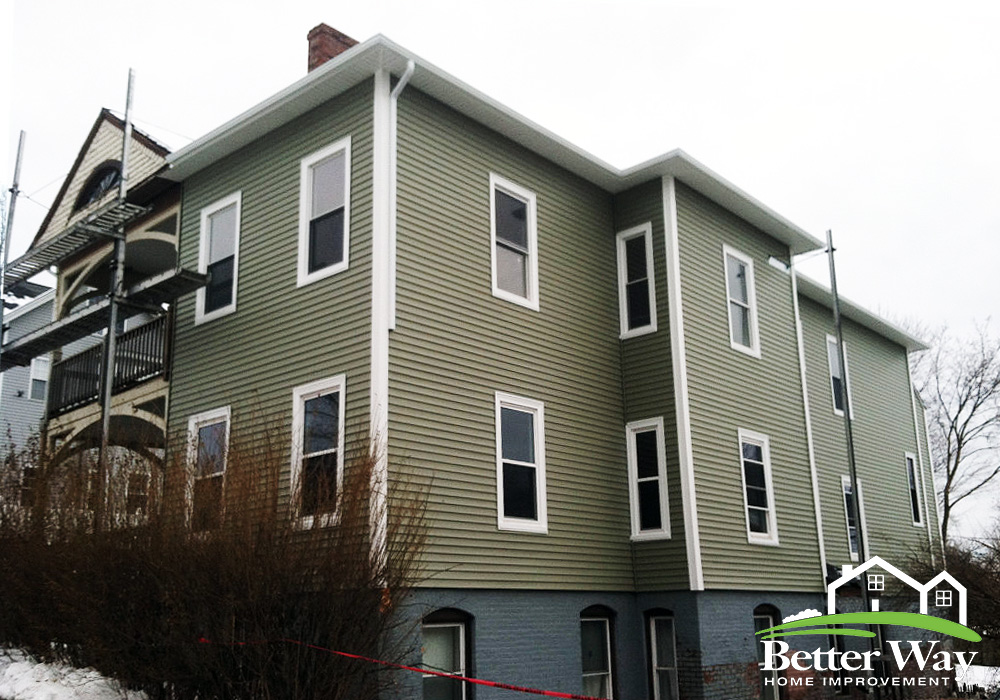
What Siding Replacement looks like in Grafton
A siding replacement is a full tear-off, not a re-cover. We pull every course down to the sheathing, which on a lot of Grafton’s mill-era houses and worker cottages means old board sheathing with gaps between planks rather than plywood or OSB. That matters because it changes how we flash, how we house-wrap, and how much rot repair we run into before the new siding goes up.
On these older lots the tear-off usually turns up one of three things: sound sheathing that just needs housewrap and starting strip, soft or delaminated boards near the sills and corners that need to be cut out and replaced, or old asbestos-cement shingle siding hiding under a layer of vinyl from a previous owner’s quick fix. Any of those changes the scope, and we don’t guess at it from the driveway. We open a test section during the estimate so the number we give you accounts for what’s actually behind the wall, not just what a generic square-footage price assumes.
Replacement also means a real decision point: vinyl siding again, or James Hardie fiber cement, which holds up better against the freeze-thaw cycles that crack old clapboard around here. We’ll walk both options with you, including what each does to your timeline and your quote, before any material gets ordered.
What we account for on Grafton homes
Older vinyl over original clapboard
A common Grafton replacement starts with vinyl that was installed over older wood siding. During removal, the crew checks what is underneath rather than assuming the original siding can simply be covered again. If the old clapboard is sound and the planned siding system allows it, it becomes part of the preparation decision. If it is damaged or no longer suitable as the base, the affected material is dealt with before the new siding goes on.
Sheathing and hidden wood damage
Water can reach the wall through failed siding, trim, flashing, or openings around windows and doors. By the time the exterior looks damaged, some deterioration may already be behind it. Tear-off provides an opportunity to inspect those areas. Soft or damaged sheathing and localized rot are repaired before the replacement siding covers the wall again. The purpose is simple: do not put a new exterior over a problem that should have been fixed first.
Older village homes and exterior details
Grafton's village areas include older Victorian and Colonial Revival housing with more trim and architectural detail than a basic ranch. Those details affect removal, preparation, measurements, and installation. The replacement plan accounts for corners, window and door openings, trim, transitions, and other areas where a simple wall panel approach does not work. Older homes also deserve a closer look before removing material that may be part of the original exterior.
Removal, disposal, and site access
Replacement creates a different cleanup requirement from a repair. The old siding has to be removed, sorted and taken away, and the work area has to remain accessible while the exterior is open. The estimate accounts for removal and disposal rather than treating tear-off as an afterthought. On a typical Grafton home, the crew works through the exterior in sections so the project can move from removal to preparation and then into the replacement phase.
What we account for on Grafton homes
Site visit, replacement estimate
Lead paint on pre-1978 siding
Most of Grafton’s mill housing and cottage-style homes predate 1978, which means lead paint is assumed, not tested for as an afterthought. Our crews are trained in lead-safe work practices for tear-off and containment, and we plan the job around it rather than treating it as a surprise mid-project.
Board sheathing with no housewrap
Original board sheathing was never designed to pair with modern vinyl or fiber cement without a water-resistive barrier behind it. Once we strip the old siding we install proper housewrap over the board sheathing before anything new goes on, closing a gap that’s been open on some of these houses for over a century.
Undersized rakes and window returns
A lot of the older cottages and triple-deckers in town were built with narrow rake boards and trim returns that don’t match modern siding profiles. We either build out the trim to accept the new material cleanly or use matching accessory trim so the finished look doesn’t have gaps or reveal lines that weren’t there before.
Rot at the sill where grade has risen
Decades of mulch, pavement, and soil buildup have pushed grade up against a lot of Grafton foundations, and that means the sill and bottom courses are often the softest part of the wall. We cut out and sister or replace rotted sill framing and starter boards before any new siding closes the wall back up, so you’re not covering a problem instead of fixing it.
Tear-off and wall inspection
How the job runs
Estimate and test opening
We walk the exterior, measure, and open a small test section of siding in one or two spots to check sheathing condition and look for hidden rot or old layers of material. This is what makes the quote real instead of a guess.
Tear-off, disposal, and repair
Old siding, trim, and any rotted sheathing come off and go straight into a dumpster or trailer staged on-site. On tighter Grafton lots with narrow driveways, we figure out placement for that dumpster or staging area before the crew ever shows up, since it’s often the first logistical problem to solve on these older streets. Rot repair happens here, before anything new gets installed.
Housewrap and new siding installation
Once the wall is sound we install housewrap, flashing, and the new siding — vinyl or Hardie fiber cement — with correct trim and accessories. A typical single-family tear-off and re-side runs three to five days depending on square footage and how much sheathing repair we find; larger homes or triple-deckers can run longer.
Replacement and cleanup
Recent work in and around Grafton
A common job type in Grafton is an older cottage or worker’s house near the town center with original wood clapboard that’s been painted over a dozen times and is now cracking, cupping, or peeling faster than paint can keep up. The tear-off on these usually turns up board sheathing in decent shape structurally but with soft spots at the sills and around old window flashing that was never sealed correctly. We’ve also worked on triple-decker style homes on tighter lots where staging space is limited and the job has to be sequenced carefully to keep a dumpster and material staging out of a shared driveway. Every job like this gets priced after we’ve actually opened the wall, not before.
Other services we provide in Grafton
If your siding is holding up in most places but failing in a few spots, a full replacement may be more than you need — our siding repair service in Grafton handles targeted fixes without tearing off the whole house. When you’re ready to install new material after tear-off, our vinyl siding installation covers the product and installation details specifically. We also install seamless gutters, which often make sense to replace at the same time as siding since both come off the fascia and roofline together, and we handle replacement windows and doors for homes where the siding job exposes old, failing window flashing. For a broader look at how we approach siding contracting in town generally, see our Grafton siding contractor page.
Free estimates in Grafton
Better Way Home Improvement is based in Grafton, about 11.1 miles from Grafton center. We give free, no-pressure estimates and always open a test section of siding before quoting a full replacement, so the number you get is based on what’s actually behind your wall. Call (508) 506-8957 to set up a time. After you call, we’ll schedule a walk-through, take measurements, and open a test area on-site. You’ll get a written quote that spells out tear-off, repair allowances, and material options before you decide anything.
Frequently Asked Questions
How much does siding replacement cost in Grafton?
Most single-family tear-off and re-side jobs in Grafton run in the range of a typical Worcester County project, but the final number depends heavily on how much sheathing repair we find once the old siding comes off. We give a written estimate after opening a test section, not a flat per-square-foot number over the phone.
Is lead paint an issue on my Grafton house?
If your home was built before 1978, which describes a large share of Grafton's mill-era and cottage housing stock, we assume lead paint is present and follow lead-safe work practices for containment and disposal during tear-off.
What happens if you find rot or damage behind my old siding?
We stop and show you what we found before covering it up. On Grafton's older board-sheathed walls it's common to find soft sill boards or gaps in the sheathing. We price the repair separately from the siding install so you know exactly what you're paying for and why.
How long does a full siding replacement take?
A typical single-family home takes three to five working days from tear-off to finished trim. Homes with more extensive rot repair, or triple-deckers with more wall area, can take longer.
Do you have to remove all the old siding, or can you go over it?
For a true replacement, yes, we remove everything down to the sheathing. Going over old siding without checking what's underneath is how rot and moisture problems get hidden instead of fixed, especially on houses with board sheathing and no housewrap.
Ready to talk siding in Grafton?
Every Grafton property has its own mix of rooflines, trim details, and exposure to weather, so we take time to look closely before recommending a siding plan. Whether you’re dealing with cracked, faded, or storm-damaged siding, our team walks the exterior with you, explains what’s driving the wear, and lays out material and color options that fit the home.
- Straightforward, honest recommendations
- No pressure to decide on the spot
- Options that match your budget and goals