


James Hardie Siding in Auburn, MA
Auburn has more houses than most people realize sitting on original wood clapboard with a layer of 1970s or 1980s vinyl nailed over it, and that vinyl is now brittle, faded, and pulling away at the corners. If you’re looking at James Hardie fiber cement instead of another round of vinyl, it’s usually because you’ve had enough of panels that crack in a cold snap or fade unevenly on the sun side of the house near Pakachoag Street or out toward the Stoneville Road ranches. Hardie board is heavier, it’s cut differently, and it holds paint and color in a way vinyl never will. Here’s what that actually means for a house in this town.
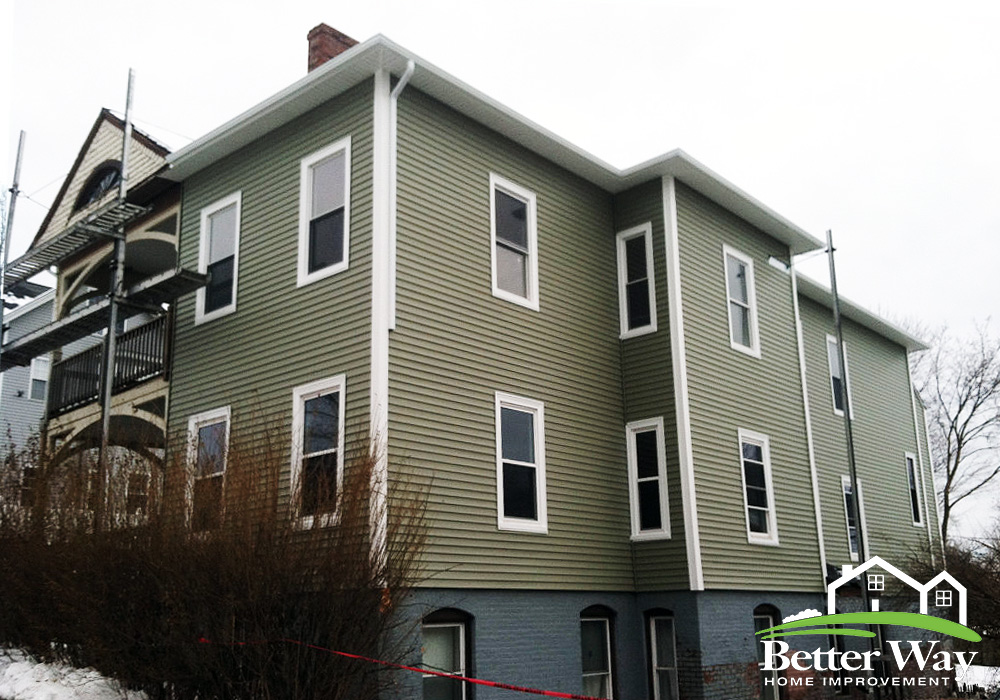
What James Hardie Siding looks like in Auburn
Auburn’s housing stock is split three ways. There are Victorian and Colonial Revival homes in the older village pockets near the town center, with detailed trim, window casings, and cornices that vinyl always cheapened. There are ranches and split-levels built in the postwar decades out toward the Millbury and Auburn lines, plain-walled and straightforward. And there’s a large chunk of housing from the 1970s and 1980s where the original owners put up first-generation vinyl over the existing clapboard, and that vinyl is now at the end of its life — warped, chalky, or simply outdated.
On the Victorians and Colonial Revivals, James Hardie’s board-and-batten and lap profiles let us keep the trim detail sharp instead of burying it under thick J-channel, and factory-primed or ColorPlus finishes hold up on window and cornice returns that vinyl always looked cheap against. On the ranches and split-levels, a straight run of HardiePlank lap siding gives a flatter, more finished look than vinyl and doesn’t show waviness the way thin panels do over an uneven old wall. On the 1970s and 1980s vinyl-over-clapboard houses, tearing off gives us a chance to see what’s actually under there — old cedar or pine clapboard, sometimes sound, sometimes not — before we build out a new water-resistive barrier and hang fiber cement that won’t need replacing again in fifteen years.
The tradeoff homeowners need to understand going in: Hardie board is roughly four times heavier per square foot than vinyl, it has to be cut with a shear or a saw fitted with a dust-collecting blade because dry-cutting it kicks up silica dust, and it costs more per square than vinyl both in material and labor. What you get back is a product that won’t melt from a grill flare-up, won’t dent from a hailstorm the way vinyl does, and — with ColorPlus factory finish — holds color for far longer than field-painted board or vinyl ever will.
What we account for on Auburn homes
Older clapboard behind the existing exterior
One of the first things to check on an older Auburn house is what sits behind the current siding. A 1970s or 1980s exterior may have been installed over original wood clapboard. Removing it can reveal damaged boards, uneven areas, or sections that need repair before the new siding can be installed. The condition of that layer is part of the project, not something to ignore until the end.
Heavy material on an older wall
Fiber cement is heavier than the lightweight siding it may be replacing. That means the wall surface and fastening locations need to be considered before installation. The crew accounts for the existing substrate, checks areas where the old exterior has failed, and plans the installation around the actual condition of the house rather than assuming every wall is sound.
Cutting and dust control
Fiber cement needs to be cut to fit around windows, doors, corners, and other details. Cutting produces dust, so the work area has to be managed accordingly. That means using appropriate cutting methods and keeping dust from spreading unnecessarily around the property. The goal is to keep the installation controlled while producing accurate cuts for the exterior details.
ColorPlus or field-applied paint
Auburn homeowners have two basic finish approaches to consider. ColorPlus siding arrives with a factory-applied finish, while primed siding can be painted after installation. James Hardie says ColorPlus finishes are cured in a controlled factory environment and are designed to provide consistent color and improved resistance to UV-related fading. The right choice depends on the look you want, the available colors, and how you want the finished project handled. We can price the options as part of the estimate.
What we account for on Auburn homes
Site visit and scope
Original wall assemblies from before 1950
The Victorian and Colonial Revival homes near the town center were built with board sheathing, not plywood or OSB. Fastener patterns and flashing details for Hardie board have to change over board sheathing versus modern sheathing, and we check which one we’re dealing with before we order material, not after.
Vinyl-over-clapboard from the 1970s and 1980s
This is the single most common condition we find in Auburn. Once that old vinyl comes off, there’s original clapboard underneath that’s been trapped behind house wrap or, more often, nothing at all for decades. We inspect it before closing the wall back up, because what’s under there decides whether we can furr out and go straight to new sheathing or need to address rot first.
Lead paint on pre-1978 trim and clapboard
A meaningful share of Auburn’s older housing predates the 1978 lead paint ban. Our crews are trained and equipped for EPA RRP lead-safe work practices — containment, HEPA vacuum cleanup, and proper disposal — any time we’re disturbing painted surfaces on a home built before that cutoff.
Weight load on older fascia and window trim
Because Hardie board is heavier than vinyl, we check that fascia boards, window trim, and corner boards can carry the additional load, particularly on older homes where trim has already taken on some rot or softening over the decades. Where it can’t, we replace or reinforce before the new siding goes up, not after it’s hung.
Remove, Prepare, Install
How the job runs
Walkthrough and material selection
We inspect the existing siding and, where possible, get an idea of what’s underneath before we quote. We’ll go over lap versus board-and-batten profiles, ColorPlus factory finish versus field paint, and what that means for your maintenance schedule down the road.
Tear-off and substrate check
Old siding comes off, sheathing gets inspected, and any rot or lead paint work gets handled before a single piece of Hardie board goes up. This is the stage where surprises show up on Auburn’s older vinyl-over-clapboard houses, and we deal with them here rather than covering them back up.
Installation and finish
Fiber cement is cut on-site with shears or dust-collecting saws, fastened per manufacturer spec for the wall type, and finished at trim, corners, and window returns. A full Auburn house typically runs one to two weeks depending on size, trim complexity, and what we find once the old siding is off.
Detail work and final check
Recent work in and around Auburn
A typical Auburn job we run is a full tear-off on a 1970s or 1980s split-level or ranch where the original vinyl has gone brittle and started pulling off in wind. We strip it back to the original wood clapboard, find out whether that clapboard is salvageable or needs to come off too, replace or repair sheathing as needed, and install HardiePlank lap siding with a factory ColorPlus finish so the color’s baked in rather than painted on-site. On the older Colonial Revival and Victorian homes closer to the center of town, the more common job is matching Hardie board-and-batten or lap profiles into existing trim detail so the house still reads as a period home once the new material is up, not a flattened-out version of itself.
Other services we provide in Auburn
Not every Auburn house needs a full fiber cement upgrade. If your vinyl siding just took storm damage or has a handful of cracked panels, our siding repair service handles that without a full tear-off. If you’re set on staying with vinyl for cost reasons, we still do straight vinyl siding installation and full siding replacement work. While the crew’s on-site, it’s common to bundle in seamless gutters or replacement windows and doors, since staging and access are already set up for exterior work.
Free estimates in Auburn
We’re based in Auburn, about 5.5 miles from Auburn, so getting a crew out for a look doesn’t take long to arrange. Call (508) 506-8957 for a free estimate. We’ll walk the exterior with you, talk through Hardie board profiles and finish options against your budget, and give you a written quote — no pressure, no follow-up calls every other day. If you move forward, we’ll get you on the schedule and confirm a start date once material is ordered, since Hardie board is typically special-ordered per project rather than kept in stock.
Frequently Asked Questions
How is James Hardie siding different from vinyl for an Auburn home?
It's heavier, roughly four times the weight of vinyl per square foot, and it's cut with shears or a dust-collecting saw rather than snapped or scored. It holds paint and ColorPlus factory finish far longer than vinyl holds color, and it won't melt, dent, or crack the way vinyl does in a Massachusetts winter or from a stray grill flare-up.
My house has vinyl siding over the original clapboard — what happens when you tear it off?
We inspect the clapboard underneath before doing anything else. In Auburn's 1970s and 1980s housing stock this is the most common situation we run into. Sometimes the old clapboard is sound enough to leave as backing; other times it has rot or damage that needs addressing before we install new sheathing and Hardie board. We won't close the wall back up without telling you what we found.
Is lead paint a concern on older Auburn homes?
Yes, on anything built before 1978. Our crews follow EPA RRP lead-safe practices, including containment and HEPA cleanup, whenever we're disturbing old painted trim or clapboard on pre-1978 homes, which covers a good share of the housing near Auburn's older neighborhoods.
What does James Hardie siding cost and how long does installation take?
Cost depends heavily on house size, trim complexity, and whether we find substrate problems once tear-off starts, so we don't quote a number sight unseen. A full house installation typically runs one to two weeks. Get a free walkthrough estimate and we'll give you a written number specific to your house.
Should I choose ColorPlus finish or field-painted James Hardie board?
ColorPlus is factory-applied and baked on, so it resists fading and chipping far longer than paint applied on-site after installation, and it typically carries a longer finish warranty. Field paint gives more color flexibility later but requires more maintenance. We'll go over both options during your estimate based on what you want long term.
Why Auburn homeowners choose James Hardie
James Hardie fiber cement siding holds up against New England weather while keeping its shape and color far longer than vinyl. Auburn homeowners like that it resists moisture, pests, and cracking without constant upkeep.
- Withstands wind, rain, and temperature swings
- Won’t warp, rot, or attract insects
- Available in multiple styles and colors