


Vinyl Siding Installation in Marlborough, MA
Most of the vinyl siding on Marlborough’s colonials and split-level homes from the 1980s and 1990s is due, not damaged beyond use, but chalky, faded, or brittle enough that it cracks in a cold snap. If your panels are the original builder-grade siding and you’re seeing gaps at the corners or a color that used to be white and is now closer to gray, you’re looking at a full replacement, not a patch job. A properly installed insulated vinyl system with a real fade warranty will outlast what’s on the house now by decades.
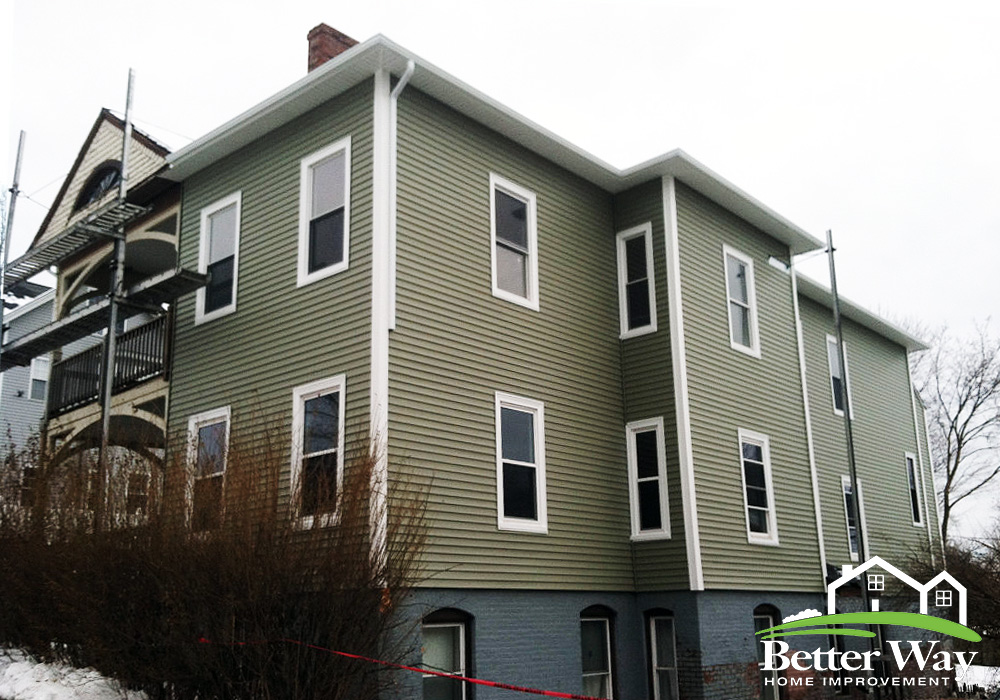
What Vinyl Siding Installation looks like in Marlborough
Marlborough’s housing stock runs from postwar capes near the old downtown to colonials and larger ranches built out through the 1980s and 2000s in the newer subdivisions off Route 20 and around Hosmer Street. Almost all of it is already sided in vinyl, which means this is rarely a first-time install on bare wood. It’s a re-side over sheathing that’s been covered for thirty or forty years, and what’s underneath tells you what the job actually needs.
We install .044 to .046 gauge panels as the standard, and we push clients who are comparing quotes toward that number specifically, because a lot of the lowest bids in this market are built on thinner .040 panel that will oil-can and show waviness within a few years. Insulated vinyl with a foam backer is worth the upgrade on capes and ranches with minimal wall cavity insulation, which describes a good share of the pre-1980 housing here. It adds R-value and it stiffens the panel so it holds a flatter line.
Color retention matters more to Marlborough buyers than almost anywhere else we work. This is a town where people are getting three and four quotes before they sign, and they’re asking about fade warranties by name. We use manufacturers that back their colors for the life of the panel against fade, not just against cracking or warping, and we go over exactly what that warranty covers before you pick a color, not after.
What we account for on Marlborough homes
Original clapboard under older vinyl
One common condition on older Marlborough homes is original clapboard underneath later vinyl siding. The existing layers need to be checked before new siding is installed. If the underlying material is sound and suitable, the installation can be planned around it. If there is deterioration or an uneven surface, that condition needs to be addressed before the new siding goes on.
Victorian and Colonial Revival details
Village-center homes often have more exterior details than a basic ranch. Porches, trim, windows, and changes in wall depth can affect how siding panels and accessories need to be laid out. J-channel, corner posts, and other trim are installed around those features so the new siding follows the house instead of making the house conform to a generic layout.
Aging 1970s and 1980s vinyl
Older vinyl can become brittle, faded, warped, or difficult to match. Replacement siding also gives homeowners an opportunity to update the panel profile, color, insulation, and exterior trim. The crew checks the existing siding and the areas around windows, doors, corners, and other transitions before establishing the installation plan.
Housewrap and flashing
Vinyl siding is not the waterproofing layer of the wall. Proper flashing and housewrap help manage water behind the siding. Before the panels are installed, the wall assembly and openings are considered so moisture problems are not simply hidden behind a new exterior.
What we account for on Marlborough homes
Measure and plan
Mixed-era construction on the same street
A block in Marlborough can have a 1950s cape next to a 1990s colonial. Wall dimensions, sheathing type, and window trim depth all vary house to house, which means J-channel and corner post sizing gets measured per job, not assumed from the last one we did two doors down.
Original sheathing hidden under 30-40 year old vinyl
When we strip the old panels we’re usually finding plank or fiberboard sheathing that’s never been seen since the first siding job. If it’s soft, delaminated, or water-stained around window heads, we address it before a single new panel goes up. New housewrap goes over sound sheathing; anything compromised gets cut out and replaced first.
Larger lots, easier staging
Marlborough’s suburban lots give us room to stage material, set up cutting stations, and run scaffolding without blocking a shared driveway or squeezing between houses. That translates to a faster install than we get on tighter in-town lots elsewhere in the county.
Quote-comparing buyers
Homeowners here are price-aware and they’re reading the fine print on panel gauge, insulation, and warranty terms. We write estimates that spell out gauge, whether it’s insulated or standard, and what the fade warranty actually promises, so it’s a real comparison against other bids and not two different products described the same way.
Prepare the exterior
How the job runs
Walkthrough and measure
We measure every wall, check trim and window depth, and look at what we can see of the existing siding condition from the ground and from a ladder at corners and butt joints. This is also when we talk gauge, insulated vs. standard, and color options against your budget.
Tear-off and wall inspection
Old panels come off in sections so the crew can inspect sheathing as they go rather than stripping the whole house blind. Housewrap goes on over sound sheathing, flashing gets set at every window and door, and any soft sheathing gets flagged and repaired before panels go back up.
Install and detail work
Panels go up working around windows, doors, and corners last, so J-channel and corner posts get cut to the actual house dimensions instead of a standard template. A typical Marlborough colonial or cape runs 3 to 5 working days depending on wall area, number of corners, and whether we’re doing standard or insulated panel.
Complete the details
Every full re-side gets the same walk-through at the end: we check reveal lines are consistent, corners are tight, and J-channel isn’t gapping anywhere before we call it done. Nothing gets left for you to find later.
Recent work in and around Marlborough
We’re licensed and insured in Massachusetts, and we’ve carried Angie’s List Super Service Awards every year from 2013 through 2019. That’s not a marketing line, it’s what happens when a crew shows up when they say they will and the work holds up.
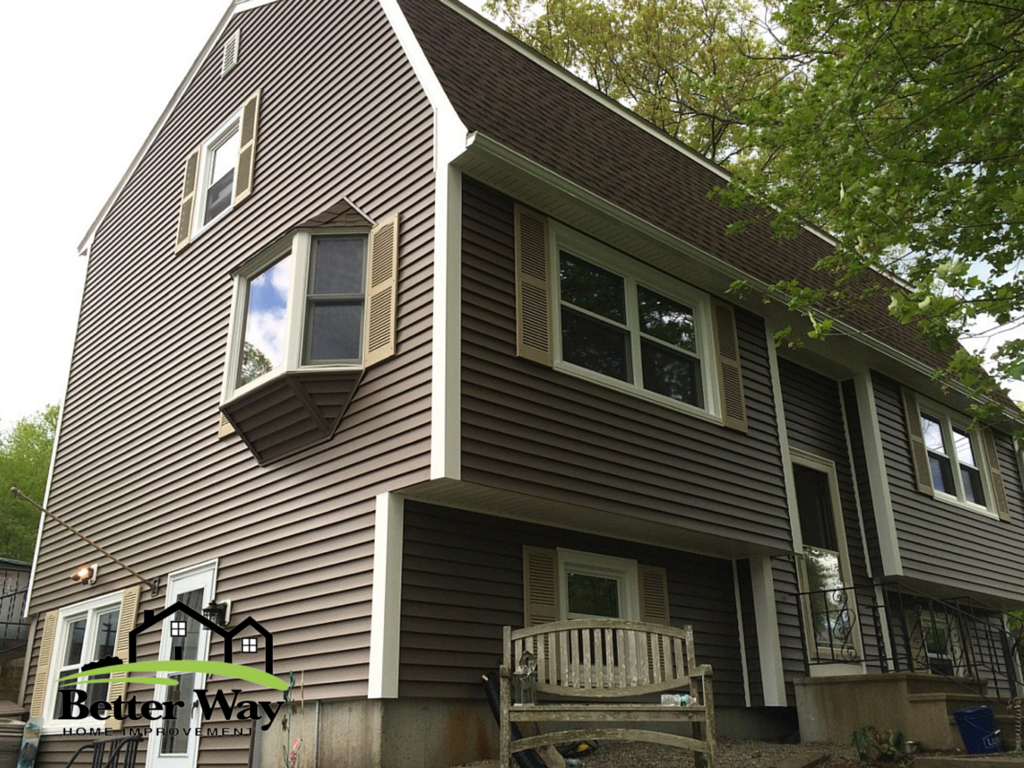
Recent work in and around Marlborough
A common job type in this town is a full re-side on a 1980s or 1990s colonial where the original builder-grade vinyl has gone chalky and a few panels have cracked from age and weather. The tear-off usually reveals fiberboard or plank sheathing that’s sound but never been wrapped properly, so a new housewrap layer goes on before insulated panel goes up in a color the homeowner picked after comparing swatches against the trim and roof. These jobs typically run under a week from tear-off to final walk-through, weather permitting.
Frequently Asked Questions
How much does vinyl siding installation cost in Marlborough?
Most full re-sides on Marlborough capes and colonials run in a broad range depending on square footage, panel gauge, and whether you choose insulated or standard vinyl. We give exact numbers only after measuring the walls, but we'll always break the quote down by material and labor so you can compare it line by line against other bids.
What panel gauge and profile do you recommend for Marlborough homes?
We install .044 to .046 gauge as our standard, which holds a flatter line and resists wind damage better than the thinner .040 panel some competitors quote. Insulated panel is worth the upgrade on pre-1980 capes and ranches with minimal wall insulation.
What if you find damage under the old siding?
On homes with thirty-plus year old siding, we usually find some soft or water-stained sheathing, especially around window heads. We stop, show you what we found, and quote the repair separately before continuing, rather than covering it up and having it fail again in a few years.
How long does a full siding installation take?
A typical Marlborough colonial or cape runs 3 to 5 working days from tear-off to final walk-through, depending on wall area, corner count, and whether it's standard or insulated panel. Weather can push that out a day or two.
Does your fade warranty actually cover color change over time?
We use manufacturers whose warranties cover fade specifically, not just cracking or warping, and we walk through what that warranty promises in writing before you pick a color, since this is often the deciding factor for homeowners comparing quotes in this area.
Other services we provide in Marlborough
If your siding is more patch than full replacement, our siding repair service handles storm damage, cracked panels, and localized failures without a full re-side. Homeowners deciding between a repair and a full siding replacement can get both scoped in the same visit. We also install James Hardie fiber cement siding for owners who want a different material profile than vinyl. Beyond siding, we handle seamless gutter installation and repair, and replacement windows and doors, both of which often come up in the same conversation as a siding project since trim and flashing details overlap.
Free estimates in Marlborough
Marlborough is about 22.5 miles from our shop in Marlborough, and it’s regular territory for us, not a stretch trip. Call (508) 506-8957 for a free estimate. We’ll set a time to walk the house, measure the walls, and give you a written quote that spells out panel gauge, insulation, and warranty terms so you can actually compare it against other bids. There’s no pressure and no obligation to sign anything on that first visit.