


Vinyl Siding Installation in Grafton, MA
If you’re pricing vinyl siding installation for a Grafton home, the first question is usually what’s under the old siding. A lot of houses around Grafton Common, North Grafton, and the streets off Route 140 still carry original wood clapboard nailed straight to board sheathing, no housewrap, built decades before that became standard practice. Some of the worker cottages and older farmhouses near the old mill sites have had one layer of siding go up over that original wood without anyone stripping it first. That changes how we bid the job, what we plan to find at tear-back, and how the new panels get flashed and wrapped.
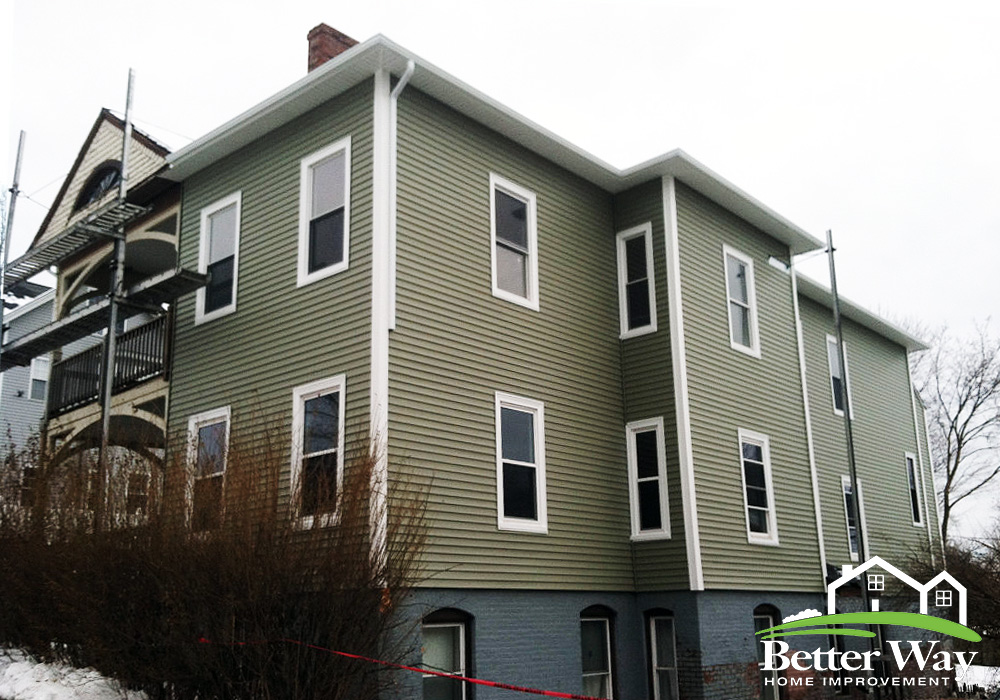
What Vinyl Siding Installation looks like in Grafton
Most Grafton installs start with a .044 to .046-gauge panel, thicker than the builder-grade stuff that was common in the 1970s and 80s when a lot of this town’s houses got their first vinyl. On a house with real wind exposure, or one where the owner wants a straighter, more rigid wall, we’ll spec an insulated panel with a foam backer instead of a hollow standard panel. That adds a bit of R-value and takes wall waviness out of the equation on the older, less-plumb frames you find on pre-1940 construction here.
Color matters more than people expect. Grafton has a lot of HOA-adjacent streets and historic-district-adjacent lots where a homeowner wants a specific tone to match the neighborhood, and darker colors need a resin formulation with real UV inhibitors or they’ll fade unevenly within a few years. We only install product with a documented color-retention warranty, and we go over what that warranty actually covers before you sign anything, not after.
Trim work is where a lot of Grafton jobs get decided. Original wood-clapboard homes usually have narrow rake boards and window returns that were never sized for modern J-channel. We either custom-bend the trim coil to match the original proportions or use a wider, purpose-made trim system so the reveal doesn’t look bulked-out against a 19th-century roofline. Housewrap goes on over any bare sheathing we expose, and every window, door, and utility penetration gets new flashing before a single panel is hung. That’s not an upsell — it’s what keeps water out of a wall that may not have had a drainage plane in over a hundred years.
What we account for on Grafton homes
Original clapboard under older vinyl
One common condition on older Grafton homes is original clapboard underneath later vinyl siding. The existing layers need to be checked before new siding is installed. If the underlying material is sound and suitable, the installation can be planned around it. If there is deterioration or an uneven surface, that condition needs to be addressed before the new siding goes on.
Victorian and Colonial Revival details
Village-center homes often have more exterior details than a basic ranch. Porches, trim, windows, and changes in wall depth can affect how siding panels and accessories need to be laid out. J-channel, corner posts, and other trim are installed around those features so the new siding follows the house instead of making the house conform to a generic layout.
Aging 1970s and 1980s vinyl
Older vinyl can become brittle, faded, warped, or difficult to match. Replacement siding also gives homeowners an opportunity to update the panel profile, color, insulation, and exterior trim. The crew checks the existing siding and the areas around windows, doors, corners, and other transitions before establishing the installation plan.
Housewrap and flashing
Vinyl siding is not the waterproofing layer of the wall. Proper flashing and housewrap help manage water behind the siding. Before the panels are installed, the wall assembly and openings are considered so moisture problems are not simply hidden behind a new exterior.
What we account for on Grafton homes
Measure and plan
Lead paint on pre-1978 siding
Most of the housing stock in and around the old mill village and Grafton Common predates 1978. Any wood siding or trim we remove or disturb on those houses gets treated as lead-safe work: containment, plastic sheeting, HEPA vacuum cleanup, and disposal that follows EPA RRP rules. We tell you upfront if your house falls into this category, because it affects both the timeline and how the job site gets set up.
No housewrap behind the original clapboard
On houses where the sheathing was never wrapped, we don’t just cover it up. We install housewrap as we go, panel section by section, so the wall gets a proper drainage plane it never had. This is standard on our Grafton jobs, not an add-on.
Sill rot from grade creep
Decades of mulch beds, driveway repaving, and lawn buildup have raised the grade against a lot of Grafton foundations, which pushes soil up against the sill plate. When we pull the bottom courses of old siding and find soft or rotted sill material — and on older homes we usually do — we stop, show you what we found, and price the repair before continuing, rather than sidewalling new material over a compromised base.
Tight lots and narrow driveways
A lot of the triple-deckers and mill-era cottages sit close together on lots that were laid out for horse-and-buggy access, not a construction dumpster and a trailer. Before we schedule your start date, we walk the property to figure out where the dumpster sits, where material gets staged, and how we keep a path clear for you and your neighbors during the job.
Prepare the exterior
How the job runs
Site walk and measurement
We measure every wall, check the sheathing condition where we can access it, and flag anything we expect to find once tear-off starts — old paint layers, soft trim, missing flashing. This is also when we settle on panel gauge, insulated versus standard, and color.
Tear-off and wall prep
Old siding comes off in sections, not all at once, so the wall isn’t exposed to weather any longer than it has to be. Rotted sheathing gets replaced, housewrap goes up, and every window and door opening gets flashed before we move to the next section.
Panel installation and trim
Panels go up starting at a level starter strip, working up the wall with corner posts, J-channel, and trim set first. A typical Grafton single-family full-wall job runs 3 to 5 working days depending on square footage, trim complexity, and what we find once the old siding comes off. Multi-family and triple-decker jobs run longer because of the additional wall area and staging logistics.
Complete the details
Recent work in and around Grafton
A common job we run in this area is a full tear-off on a single-family home built in the 1920s to 1950s, where the owner is replacing failed vinyl that was installed over the original wood sometime in the 1980s or 90s. Once that second layer comes off, we typically find the original clapboard still in place with no housewrap, and often some rot at the water table where old caulk joints failed. The scope ends up being tear-off, sheathing repair as needed, full housewrap, new flashing at every opening, and insulated or standard panel depending on the homeowner’s budget and how exposed the walls are to wind. We’ve also done smaller wall-section jobs on Grafton triple-deckers where only the street-facing elevation needed replacement after storm damage, matched to the existing panel where the manufacturer’s line was still available.
Other services we provide in Grafton
Siding is usually one piece of a bigger exterior job. If your existing siding still has useful life left but needs patching, cracked panel replacement, or loose trim fixed, our siding repair service handles that without a full tear-off. If you’re weighing a full teardown against a longer-term upgrade, our siding replacement page covers that decision in more detail. Some Grafton homeowners choose James Hardie fiber cement siding instead of vinyl, especially on historic-district-adjacent streets where a heavier, paintable material fits the neighborhood better. We also install and repair seamless gutters, and replace windows and doors — often bundled into the same project as a siding job since the crew and staging are already on site. For a general overview of how we approach siding work across town, see our Grafton siding contractor page, or the main vinyl siding installation page for specs that apply across our whole service area.
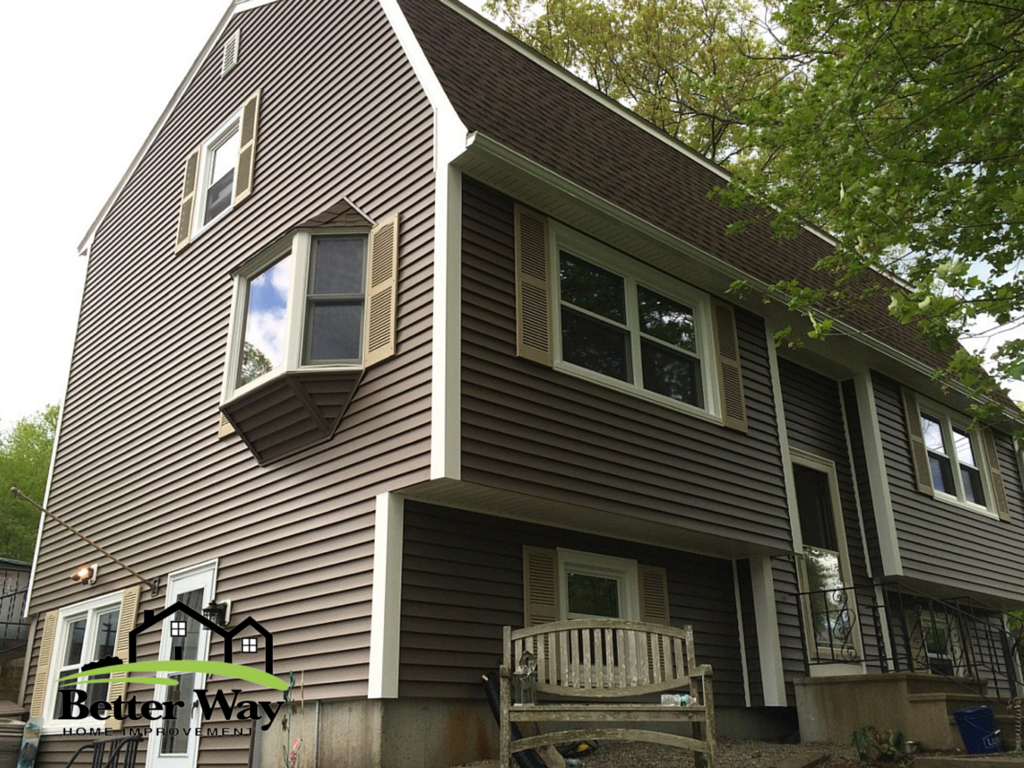
Free estimates in Grafton
We’re based at 152 Sutton Ave in Grafton, about 11.1 miles from Grafton Common. We give free, no-pressure estimates for vinyl siding installation anywhere in Grafton, including North Grafton and South Grafton. Call (508) 506-8957 to set one up. When you call, we’ll ask a few questions about your house — age, current siding, and any known issues — and schedule a site visit where we measure the walls, check what we can see of the sheathing, and give you a written quote before we leave. No obligation, and no follow-up pressure calls. We’re a Licensed and insured contractor and an Angie’s List Super Service Award winner for 2013 through 2019.
Frequently Asked Questions
How much does vinyl siding installation cost in Grafton?
Most full-wall vinyl siding jobs in Grafton run in the range of several thousand dollars up to the mid-teens depending on square footage, panel gauge, and whether we find sill or sheathing rot once the old siding comes off. We give a firm written number after a free on-site measurement, not a phone estimate.
Will you find lead paint on my Grafton house?
If your home was built before 1978, which describes most of the older housing near Grafton Common and the mill village, we treat any disturbed wood siding or trim as lead-safe work by default. That means containment and HEPA cleanup following EPA RRP procedures, whether or not a test comes back positive.
What happens if you find rot or damage behind my old siding?
On this housing stock we usually find something — rotted sill material, missing flashing, or bare sheathing with no housewrap. We stop, show you the damage, and give you a price for the repair before continuing. We don't cover known damage with new panels without your sign-off.
How long does a vinyl siding installation take?
A typical single-family full-wall job in Grafton takes 3 to 5 working days. Multi-family homes and triple-deckers take longer due to additional wall area and tighter staging on narrow lots.
Do you install housewrap on old houses that never had it?
Yes. A lot of original wood-clapboard homes in Grafton were built with no drainage plane behind the siding. We install housewrap as part of every full-wall job on this type of construction, not as an optional add-on.
Vinyl Siding Options for Grafton Homes
Grafton homeowners choose from a range of durable vinyl siding styles and colors designed to hold up against New England weather while boosting curb appeal.
- Traditional lap siding
- Dutch lap profiles
- Shake and shingle accents
- Insulated vinyl options
We help you pick the right fit for your home’s style and budget.