


Vinyl Siding Installation in Blackstone, MA
Most of the housing stock in Blackstone is original wood clapboard nailed straight to board sheathing, no housewrap, going back to when this was a mill town full of worker cottages and triple-deckers on narrow lots. If your house was built before 1978 there’s a good chance that clapboard is carrying lead paint, which changes how a crew has to handle tear-off. New vinyl siding installation here has to account for what’s underneath before it ever gets to panel color.
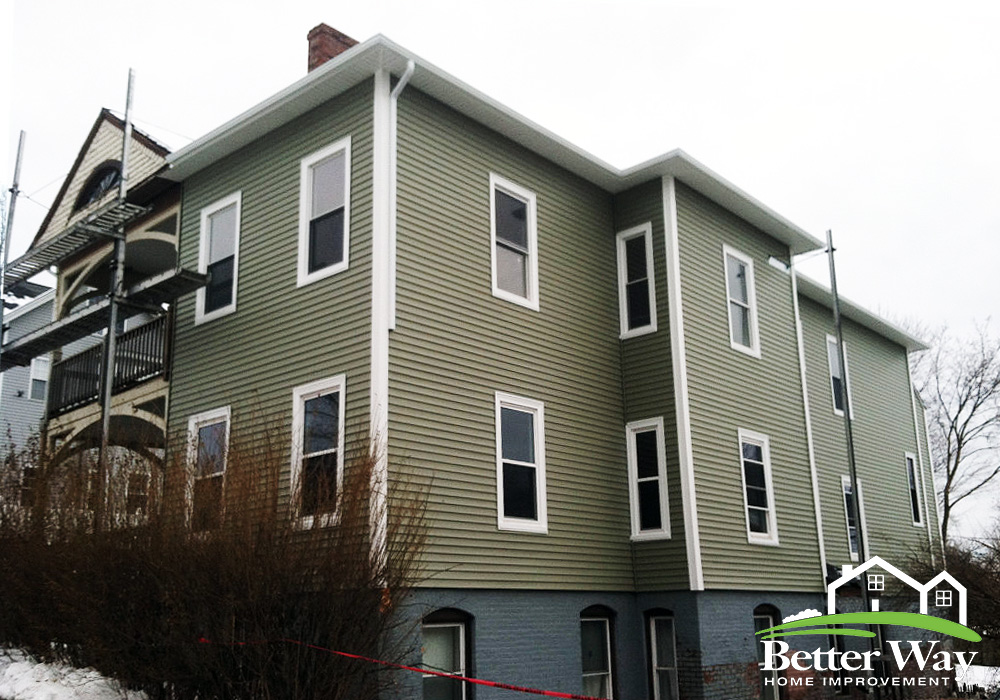
What Vinyl Siding Installation looks like in Blackstone
On a Blackstone job we’re almost always installing over old wood clapboard, not over a modern OSB wall. That means the first real decision is the panel gauge and profile. We install .044 to .046 gauge double 4 or double 5 clapboard profile on most of these houses because the walls are already a little wavy from a century of settling, and a heavier panel hides that instead of showing every ripple. On triple-deckers and worker cottages with tight overhangs, we run insulated vinyl siding more often than not — it adds a layer of rigid foam behind the panel that stiffens the wall and buys a couple points of R-value on houses that were never insulated on the exterior to begin with.
Color retention matters more here than in newer subdivisions, because a lot of these homes get repainted or re-sided once a generation and the owner wants the next thirty years handled. We install panels with a lifetime, non-prorated fade warranty backed by the color-retention formulation the manufacturer bakes into the resin, not just a painted-on finish. J-channel and corner posts get sized to the actual wall thickness we find once the old clapboard comes off — on a lot of these mill-era houses the original trim is undersized by modern standards, and a corner post that doesn’t match throws the whole wall out of square visually. Housewrap goes on every wall we open up, lapped and taped at every seam, with new flashing at every window and door head. That’s not optional on a house that’s never had a drainage plane behind the siding at all.
What we account for on Blackstone homes
Original clapboard under older vinyl
One common condition on older Blackstone homes is original clapboard underneath later vinyl siding. The existing layers need to be checked before new siding is installed. If the underlying material is sound and suitable, the installation can be planned around it. If there is deterioration or an uneven surface, that condition needs to be addressed before the new siding goes on.
Victorian and Colonial Revival details
Village-center homes often have more exterior details than a basic ranch. Porches, trim, windows, and changes in wall depth can affect how siding panels and accessories need to be laid out. J-channel, corner posts, and other trim are installed around those features so the new siding follows the house instead of making the house conform to a generic layout.
Aging 1970s and 1980s vinyl
Older vinyl can become brittle, faded, warped, or difficult to match. Replacement siding also gives homeowners an opportunity to update the panel profile, color, insulation, and exterior trim. The crew checks the existing siding and the areas around windows, doors, corners, and other transitions before establishing the installation plan.
Housewrap and flashing
Vinyl siding is not the waterproofing layer of the wall. Proper flashing and housewrap help manage water behind the siding. Before the panels are installed, the wall assembly and openings are considered so moisture problems are not simply hidden behind a new exterior.
What we account for on Blackstone homes
Measure and plan
Blackstone’s mix of older mill-village houses and newer construction means each home gets a close look. We account for wall condition, moisture history, roofline transitions, and how the existing structure was built before recommending a siding approach.
Prepare the exterior
Lead paint on pre-1978 clapboard
If your house was built before 1978, we test the existing paint before we touch it. If it comes back positive, our crew follows EPA RRP lead-safe work practices — plastic containment at grade, no dry scraping or sanding, and disposal as lead-contaminated debris. This adds a step to the schedule but it’s not optional and it protects your family and ours.
Complete the details
Board sheathing with no housewrap
Pull the clapboard off a Blackstone worker cottage and you’re usually looking straight at board sheathing with gaps between the boards and nothing behind it. We install a full housewrap system across every wall we open, taped and lapped, before a single panel goes up. It’s the single biggest upgrade in moisture protection this house will ever get.
Undersized rakes and returns
A lot of the original trim on these mill-era houses is narrower than what modern vinyl trim expects to butt against. We build out the rake boards and returns with new trim stock sized to the vinyl system so the corners and eaves read clean instead of looking pieced together.
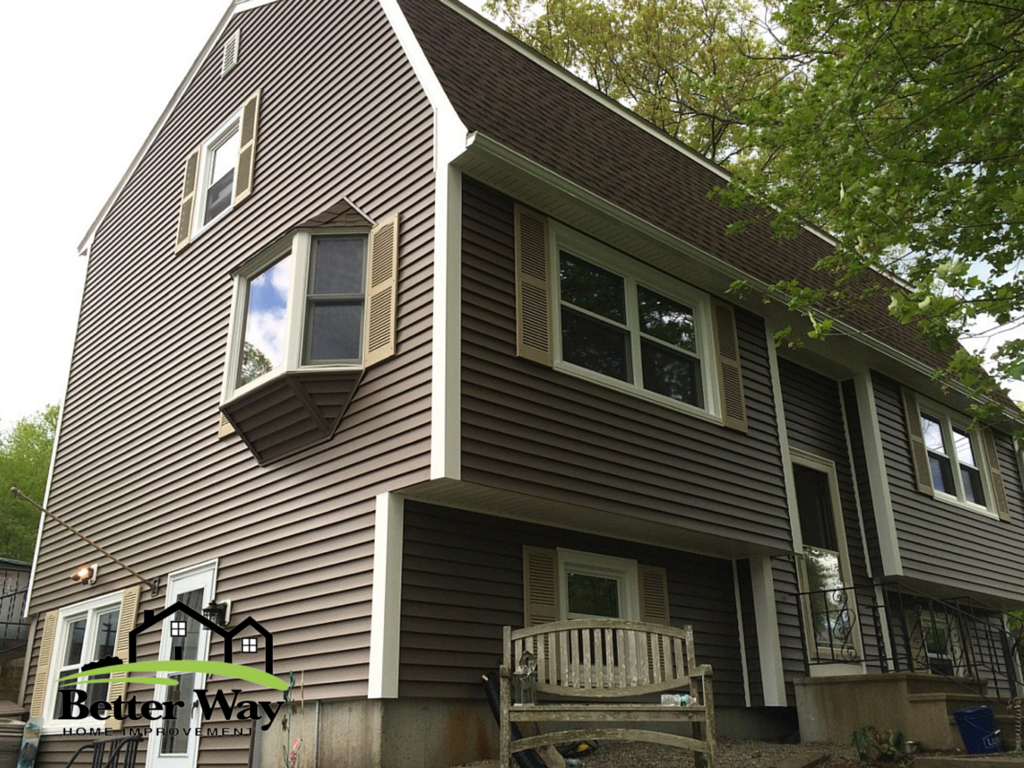
Rot at the sill where grade has crept up
Decades of driveway paving, mulch, and yard grading push soil up against the sill on a lot of these lots. We check the sill and bottom plate on every wall before siding goes back on, and where we find soft wood we cut it out and replace it rather than sealing rot behind new siding.
Frequently Asked Questions
How much does vinyl siding installation cost in Blackstone?
Most full-wall vinyl siding jobs in Blackstone run in the range of $9,000 to $18,000 depending on square footage, panel choice, and how much wall repair we find once the old clapboard comes off. Insulated panel and lead-safe tear-off both add cost over a straightforward re-side. We give a firm written number after the walkthrough, not a phone estimate.
How long does a siding job take on a Blackstone house?
A single-family house or one unit of a triple-decker usually takes 3 to 5 working days. A full triple-decker with three exposures typically takes 7 to 10 days. Weather and how much rotted sheathing we find can push that out.
My house is pre-1978 — does that change the job?
Yes. We test the old paint before we touch it. If it tests positive for lead, our crew follows EPA RRP lead-safe work practices, including plastic containment at ground level and no dry sanding or scraping. It adds time and a disposal step, but it's required and it's part of the quote, not an add-on surprise.
What if you find rot or bad sheathing behind my old siding?
On houses this age we usually do find something, most often soft sill wood where grade has risen over the years, or gapped board sheathing with no housewrap behind it. We stop, show you what we found, and price the repair before continuing. We don't cover rot with new siding and hope it holds.
Can you fit a dumpster and staging on a tight Blackstone lot?
We plan dumpster placement and material staging during the initial walkthrough, before the crew shows up. Narrow driveways and tight lots are normal for this town, so we work out street permits or driveway staging in advance instead of figuring it out on day one.
How the job runs
Walkthrough and staging plan
Blackstone’s tight lots and narrow driveways mean staging and dumpster placement get worked out before the crew shows up, not on day one. We walk the property, measure every wall, test paint for lead if the house predates 1978, and figure out where material, scaffolding, and the dumpster can sit without blocking the street or the neighbor’s driveway.
Tear-off and wall repair
Old clapboard comes off one wall section at a time. We inspect sheathing as we go, cut out and replace any rotted sill or sheathing, and correct any framing that’s out of plane before housewrap goes up. This is where most of the surprises on these older houses show up, and it’s why we build a repair allowance into the estimate rather than pretending the wall is perfect.
Housewrap, trim, and panel installation
Housewrap goes on taped and lapped, then new flashing at every window and door. J-channel, corner posts, and starter strip go up sized to the actual wall. Panels run last, working around the trim rather than jamming trim in around finished panel. A typical single-family or worker cottage runs 3 to 5 working days start to finish; a triple-decker with three exposures usually runs closer to 7 to 10.
Recent work in and around Blackstone
A typical call we get from Blackstone is a worker cottage or a half of a triple-decker with the original clapboard failing at the same spots every time — south and west walls sun-baked and cracking, north wall showing black mold streaking, and the bottom two feet along the foundation soft or missing where grade built up over the years. We re-side the full building, replace the sill sections that need it, wrap the whole wall in housewrap for the first time in the building’s history, and install insulated double 4 clapboard panel with new J-channel and corner posts sized to the house. We don’t publish customer names or addresses, but if you want to see finished work nearby, ask when you call and we’ll point you to a job in the area.
Other services we provide in Blackstone
Siding is rarely the only thing going on with a house this age. If your existing vinyl or clapboard is more patch-worthy than full-replacement, look at our siding contractor page for Blackstone for repair and general contracting options, or read about the difference between a repair and a full tear-off on our main vinyl siding installation page. We also install James Hardie fiber cement siding for owners who want a non-vinyl option, replace and repair seamless gutters, and install replacement windows and doors — all of which come up naturally on a full-wall siding project since window and door flashing has to be redone anyway.
Free estimates in Blackstone
We’re based at 152 Sutton Ave in Blackstone, about 18.0 miles from Blackstone. Call (508) 506-8957 for a free estimate. We’ll set up a walkthrough, measure the house, test for lead paint if it’s pre-1978, and give you a written quote that accounts for what we expect to find behind the old siding. No pressure, no obligation to sign anything on the spot.