


Siding Repair in Grafton, MA
Grafton has a lot of nineteenth-century mill housing, worker cottages, and triple-deckers packed onto tight lots, and most of it was built with wood clapboard over board sheathing, not the housewrap and OSB combination you get in newer construction. When that original siding was covered over with vinyl decades later, or replaced once already in the 1980s, the fixes tend to be more involved than a quick panel swap. If a section is cracked, blown off, or hiding rot the last contractor never mentioned, this page tells you what actually happens and when repair stops making sense.
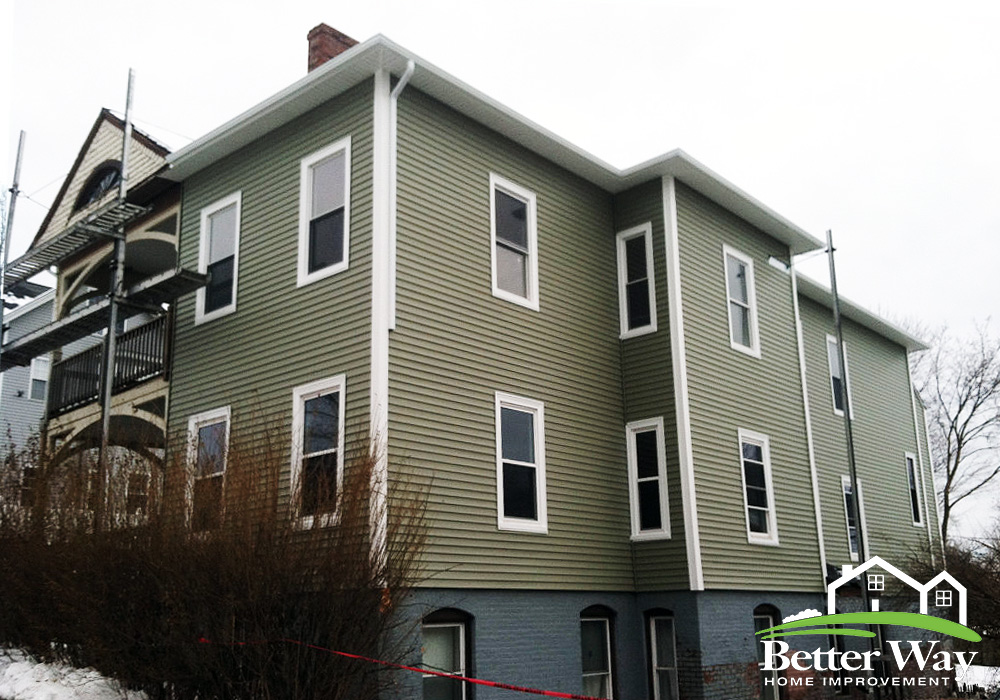
What Siding Repair looks like in Grafton
Most repair calls in Grafton fall into one of four buckets: wind and impact damage from a storm, panels that have cracked or gone brittle with age and popped loose, color mismatches on discontinued profiles where a homeowner needs three or four panels replaced and the rest of the house is a shade that hasn’t been manufactured in ten years, and rot discovered once a damaged panel comes off and the sheathing behind it is exposed. On the older housing stock around South Grafton and North Grafton village, we also get calls where a previous owner sided directly over old wood clapboard with no housewrap at all, which means moisture that gets behind a cracked panel has nowhere to go and sits against the board sheathing.
Repair is the right call when the damage is localized, the underlying wall is sound, and we can source a reasonable panel match. It is the wrong call when we pull a panel and find soft sheathing across a wide run, when the siding is old enough that matching colors and profiles would leave a visible patchwork, or when storm damage has hit multiple elevations and insurance is already treating it as a full loss. We will tell you straight which category your house is in before we quote anything. A patch job that fails again in two years isn’t a favor to anyone.
For insurance claims, we document damage with photos before touching anything, provide a written scope and cost breakdown adjusters can work from, and repair to match existing siding where a match exists. Where it doesn’t, we’ll say so and lay out the options rather than let you find out mid-job.
What we account for on Grafton homes
Older vinyl over original clapboard
Some Grafton houses have several layers of exterior work, including older vinyl installed over original clapboard. We do not assume that the material underneath is sound. When the damaged section comes off, we check what is exposed before closing the wall back up. If the original wood is sound, the repair can continue. If there is deterioration, the affected area needs to be addressed before the new siding goes back on.
1970s and 1980s vinyl
A large amount of older vinyl siding around Grafton is now well into its service life. Years of sun, cold, snow, and temperature changes can make panels brittle. That affects the repair itself. Older panels may break while being removed, and replacement material may not match the original profile exactly. We look at the existing reveal, texture, colour, and profile before selecting replacement material.
Victorian and Colonial Revival details
Village-centre homes can have more exterior detail than a basic ranch. Corners, trim, windows, additions, and changes in wall depth can make a small siding repair more complicated. The repair needs to follow those existing lines rather than treating the damaged area as a flat section of wall. We take the surrounding trim and siding layout into account before replacing the damaged material.
Storm and impact damage
Wind, branches, ladders, equipment, and other impacts can crack or remove individual panels. Leaving the opening exposed can allow water to reach the wall behind the siding. For storm-related repairs, we first determine how much material is actually affected. A small damaged section may be repaired without touching sound siding around it. If the damage extends farther than it first appears, we explain that before the work proceeds.
What we account for on Grafton homes
Inspect the damaged area
Grafton’s mix of older farmhouses and newer builds means siding, flashing, and trim details vary block to block. We check panel type, wall assembly, drainage paths, and existing repairs before matching materials so the fix holds up against local weather.
Match repair, complete work
No housewrap behind original siding
A lot of Grafton’s older homes went straight from board sheathing to siding with no building paper or housewrap in between. When we open up a wall for repair, we check the sheathing condition before closing it back up, and where it makes sense we add a water-resistive barrier behind the new panel even though it wasn’t there before. It’s a small add during a repair and it buys real protection against the next leak.
Check the finished section
Lead paint on pre-1978 construction
Grafton has plenty of housing built well before 1978, and once repair work disturbs old painted wood trim or clapboard, federal RRP rules apply. We follow lead-safe work practices on any pre-1978 property: containment, minimal disturbance, and proper cleanup. This isn’t optional and we don’t skip it to save time.
Undersized rakes and returns
A lot of the older cottage and mill-house rooflines in Grafton were built with rake boards and trim returns sized for wood clapboard, not the thicker profile of modern vinyl or fiber cement. When we’re repairing siding that meets these details, we check that the replacement panel still tucks correctly under the rake trim instead of leaving a gap or forcing an ugly reveal.
Rot at the sill from grade creep
On a lot of these lots, decades of mulch, pavement, and yard grading have crept up against the foundation, and the bottom courses of siding sit closer to soil than they should. That traps moisture at the sill and the starter strip rots from the inside out. We check sill condition any time we’re repairing bottom-course panels and flag grade issues even when they’re outside the scope of the siding repair itself.
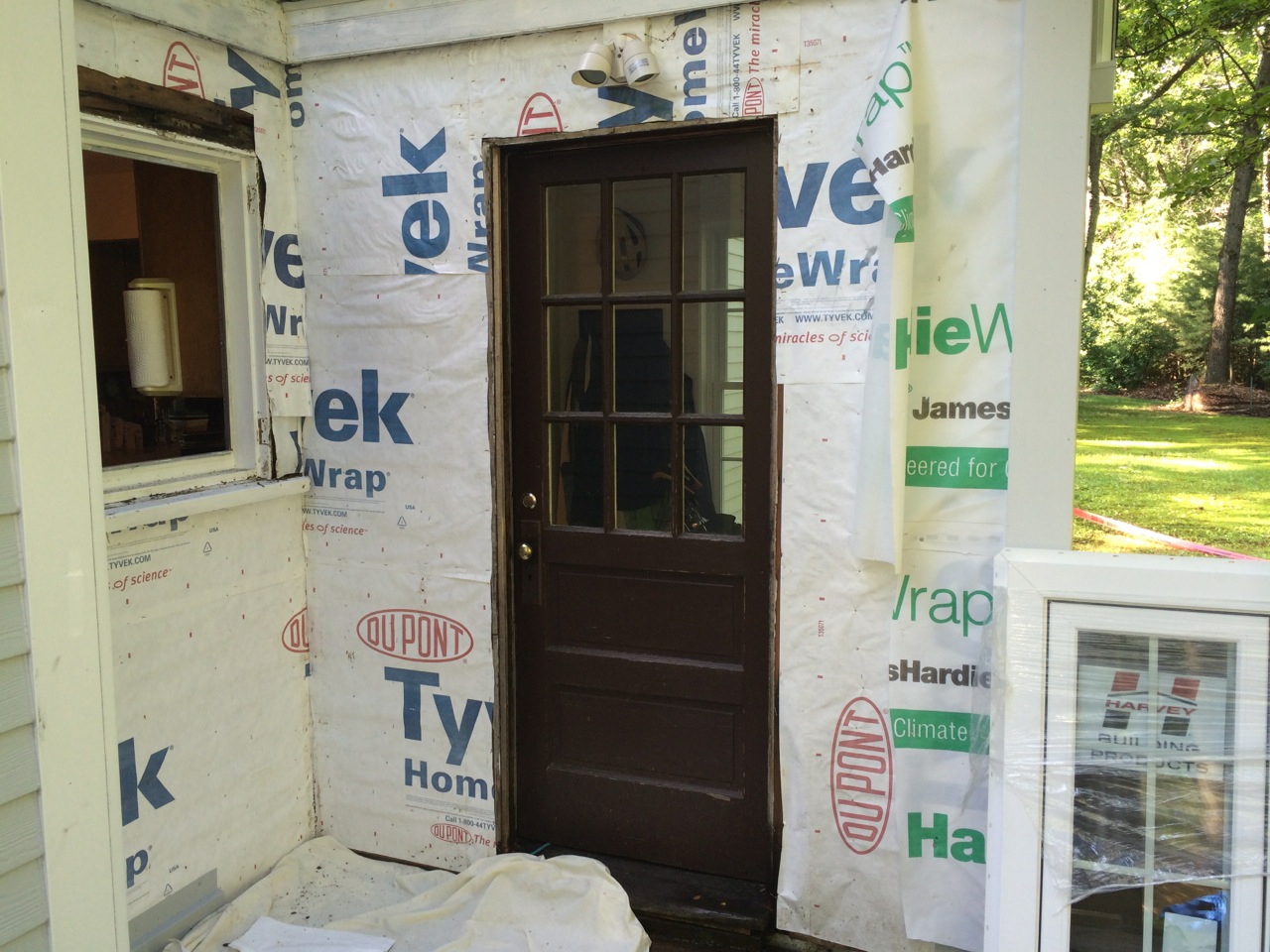
How the job runs
First we look at the damage in person, pull a sample panel if needed to check what’s behind it, and give you a written quote before any work starts. Most repair jobs on a Grafton property run one to three days depending on how much sheathing repair is needed underneath. Narrow driveways and tight lots common to the older village sections mean we plan material staging and any dumpster placement before the crew shows up, not the morning of. On multi-family and triple-decker properties we coordinate access with tenants directly so nobody’s blindsided by a ladder outside their window.
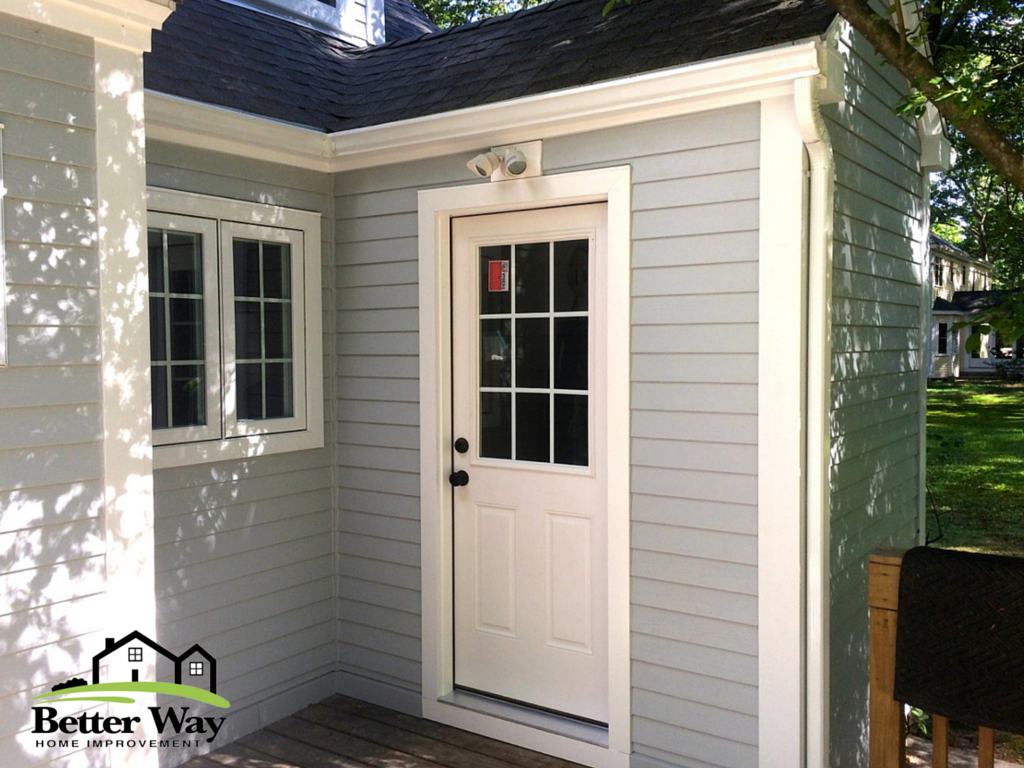
Recent work in and around Grafton
A typical job we see in this area: a homeowner with 1980s vinyl calls after a windstorm knocks three or four panels loose on the gable end. We pull the damaged panels, find the sheathing dry but the panels themselves too brittle and sun-faded to reuse, and end up sourcing a close color match for a partial re-side of that one elevation rather than patching with mismatched panels. On the mill-house side of town, a common variation is a homeowner replacing a rotted band of siding near the foundation who asks us to check the sill while we’re in there, and we usually find some degree of moisture damage that needs a carpenter’s attention before the new panel goes back on.
Frequently Asked Questions
Can you match siding on an older Grafton home if the original profile is discontinued?
Sometimes. Manufacturers change profiles and colors over the years, and a lot of Grafton's vinyl is old enough that an exact match isn't available. When that happens we look at whether a close match on one elevation will read acceptably, or whether it makes more sense to re-side that whole wall or the full house so the mismatch isn't visible.
What if you find rot or no housewrap when you pull off the damaged panel?
It's common on this town's older housing stock, since a lot of it was sided directly over board sheathing decades ago with no moisture barrier. We stop, show you what we found, and quote the sheathing repair and housewrap addition separately from the siding patch itself so you know exactly what you're paying for and why.
Do you handle lead paint disturbance on pre-1978 Grafton homes?
Yes. A lot of Grafton housing predates 1978, and any repair that disturbs old painted trim or clapboard falls under federal lead-safe work rules. We follow proper containment and cleanup procedures on every pre-1978 property, no exceptions.
How much does siding repair cost in Grafton?
Small panel repairs generally run a few hundred dollars. Jobs that involve sheathing repair, sill rot, or a partial re-side to match color run higher, often into four figures. We give you a firm number after seeing the damage in person, not a phone estimate.
How long does a typical siding repair take?
Most repair jobs finish in one to three days. It depends on how much of the wall we need to open up and whether there's carpentry work behind the siding, not just on the panel count.
Other services we provide in Grafton
If a repair inspection turns up damage across more than one or two elevations, or the existing siding is too old to patch cleanly, we’ll talk you through full siding replacement instead. Some Grafton homeowners use a repair or replacement project as the point to upgrade to James Hardie fiber cement siding, which holds up better against the moisture issues common in this town’s older housing stock. We also handle seamless gutter repair and installation, since failing gutters are often what’s driving water into the wall in the first place, and replacement windows and doors for homes where the trim around openings needs attention alongside the siding. For a broader look at everything we do in town, see our Grafton siding contractor page, or our main siding repair page for how we handle this work across our whole service area.
Free estimates in Grafton
We’re about 11.1 miles from Grafton, out of Grafton, and we quote repair jobs in person, not over the phone, because color matching and sheathing condition can’t be judged from a photo. Estimates are free and there’s no obligation. Call (508) 506-8957 and tell us what you’re seeing — cracked panels, a storm hit, or rot you found by accident. We’ll set a time to come look, give you a written quote on the spot or within a day, and if you go ahead we’ll get you on the schedule and confirm the timeline before we start.