


Vinyl Siding Installation in Hopedale, MA
Hopedale sits at the eastern edge of our service area, near the Milford and Bellingham line, and the housing here is denser than the mill towns further west. You’ve got postwar single-families, a good number of condo and townhouse associations, and blocks where every house went up within a few years of each other. That means two things when you’re pricing vinyl siding: your neighbor’s job is probably a decent preview of cost and timeline, and if you’re in an association, someone else has to sign off on color and material before we can quote a final number.
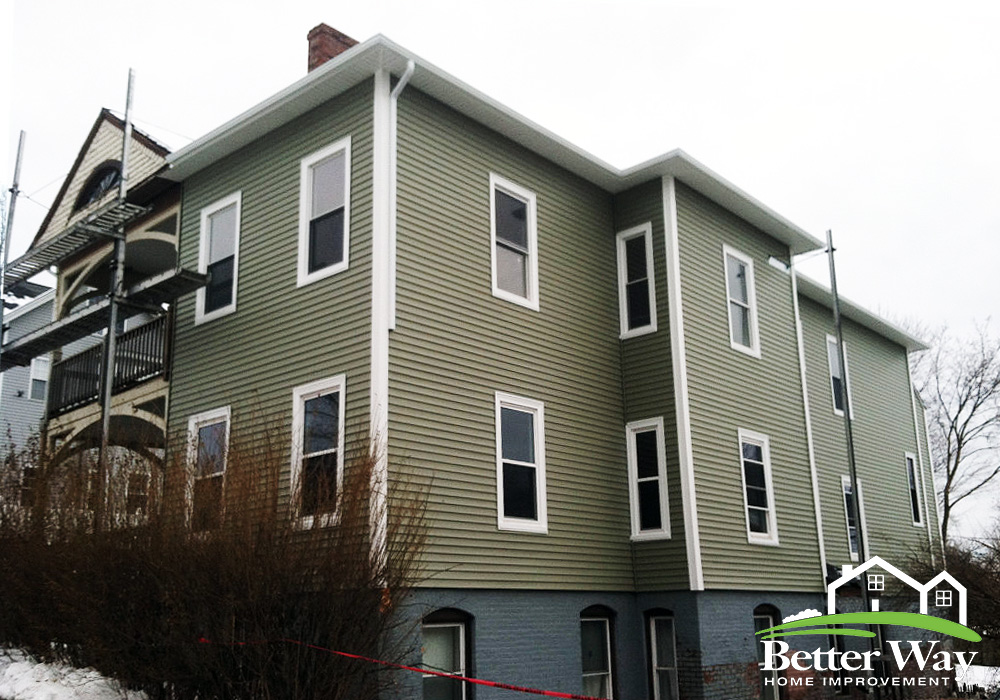
What Vinyl Siding Installation looks like in Hopedale
Most of the calls we get from Hopedale are for full tear-off and reside, not spot repair. The postwar stock here was built with plain plank or clapboard originally, then re-sided once already in the 1970s-1990s with siding that’s now chalking, buckling, or cracked at the corners. When we install, we’re putting up .044-.046 gauge panels in most cases — thick enough to resist wind load and impact without the wavy look you get from cheap .040 stock. On homes where the buyer wants a tighter, quieter wall or is trying to close gaps in an older assembly, we’ll spec insulated panel with a rigid foam backer instead of hollow panel, which also helps flatten out minor wall irregularities that are common on 60- and 70-year-old framing.
Color retention matters more in Hopedale than in some of the shadier western towns because a lot of these lots get full sun exposure with fewer mature trees than the older mill neighborhoods. We steer people toward manufacturers with a real fade warranty backed by resin formulation, not just a paint-based color coat, especially for darker color choices that take the most UV abuse. Every job gets new J-channel, proper corner posts, and starter strip run level off a chalk line, not off the old siding’s bottom edge, which is usually the reason older installs look wavy from the street. We also run new housewrap and flash every window and door opening as we go, since the old assemblies on these homes were rarely flashed correctly the first time.
What we account for on Hopedale homes
Original clapboard under older vinyl
One common condition on older Hopedale homes is original clapboard underneath later vinyl siding. The existing layers need to be checked before new siding is installed. If the underlying material is sound and suitable, the installation can be planned around it. If there is deterioration or an uneven surface, that condition needs to be addressed before the new siding goes on.
Victorian and Colonial Revival details
Village-center homes often have more exterior details than a basic ranch. Porches, trim, windows, and changes in wall depth can affect how siding panels and accessories need to be laid out. J-channel, corner posts, and other trim are installed around those features so the new siding follows the house instead of making the house conform to a generic layout.
Aging 1970s and 1980s vinyl
Older vinyl can become brittle, faded, warped, or difficult to match. Replacement siding also gives homeowners an opportunity to update the panel profile, color, insulation, and exterior trim. The crew checks the existing siding and the areas around windows, doors, corners, and other transitions before establishing the installation plan.
Housewrap and flashing
Vinyl siding is not the waterproofing layer of the wall. Proper flashing and housewrap help manage water behind the siding. Before the panels are installed, the wall assembly and openings are considered so moisture problems are not simply hidden behind a new exterior.
What we account for on Hopedale homes
Measure and plan
Association approval before the estimate firms up
A real share of Hopedale properties fall under condo or townhouse association rules that restrict siding color, sometimes profile, and occasionally manufacturer. We ask early whether you’re in an association and get the approved palette or spec sheet before we finalize a quote, so you’re not waiting on a second estimate after a board rejects the first one.
Dense lot lines and shared walls
Postwar developments here often put homes closer together than the older farmhouse lots further west. That changes how we stage material, scaffold, and manage debris — less room to spread out, more care around a neighbor’s driveway or fence line, and sometimes a need to schedule around shared access.
Mixed original wall assemblies
Some Hopedale homes still have the original wood clapboard under a later vinyl layer, others have gone straight to board sheathing with no wood siding at all. We check what’s underneath during the walkthrough, not after we’ve started, because the housewrap and furring approach differs depending on what’s there.
Full-sun exposure on treeless lots
Newer subdivisions in town tend to have younger trees and more open exposure than the shaded lots in older parts of the region. That pushes us toward better fade-resistant color lines, particularly on south and west-facing walls, so the color match holds up over the first five to ten years.
Prepare the exterior
How the job runs
Walkthrough and measurement
We measure every wall, check what’s under the existing siding at a few test spots, and confirm whether you’re subject to association rules. This is also when we talk panel gauge, insulated versus standard, and color options that are actually available to you.
Material order and scheduling
Once you approve a quote, we order the panels, trim, housewrap, and flashing to spec. Lead time on standard colors runs one to two weeks in-season; special-order colors or profiles can run longer, and we’ll tell you that number up front rather than let it surprise you later.
Installation and walk-through
A typical single-family in Hopedale runs three to five working days depending on square footage, number of corners, and window and door count. We handle tear-off, housewrap, flashing, and panel install in sequence, and we walk the finished job with you before we call it done.
Complete the details
We don’t pad quotes with extra trim work you didn’t ask for, and we don’t downsell you into thin panel to win a bid. If a wall needs extra prep — soft sheathing, a rotted band board, a window that was never flashed — we’ll show you the spot and price the fix separately before we cover it up.
Recent work in and around Hopedale
Angie’s List named us a Super Service Award winner every year from 2013 through 2019. We’re licensed and insured, and that coverage is active on every crew we send to Hopedale, not just the ones working the bigger jobs.
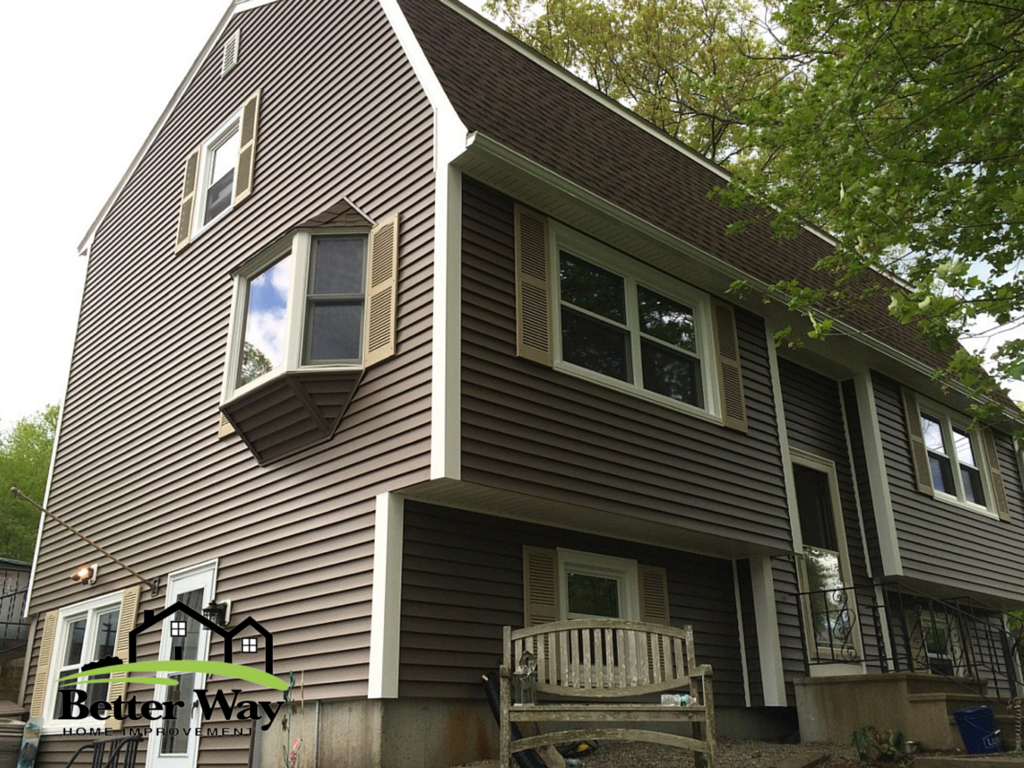
Recent work in and around Hopedale
A common job type in this part of town is a full reside on a 1960s or 1970s ranch or split-level, replacing failed aluminum or first-generation vinyl with a heavier modern panel and new insulated wrap. On the condo side, we’ve worked jobs where the whole building or a cluster of units needed matching color and profile approved by the association board before a single panel went up. Both job types run the same core process — tear-off, wrap, flash, install — but the condo work adds a documentation step for board approval that a standalone single-family doesn’t need.
Frequently Asked Questions
Do I need association approval before getting an estimate in Hopedale?
If your property is in a condo or townhouse association, yes, generally. We can still walk the house and take measurements without approval, but we recommend getting the board's approved color and material list before we finalize the quote, since some associations restrict panel color or manufacturer.
What's under the old siding on these postwar Hopedale homes?
It varies. Some houses still have original wood clapboard under a later vinyl layer, others were built straight over board sheathing. We check a few test spots during the walkthrough so the housewrap and trim plan matches what's actually there, not a guess.
How much does vinyl siding installation cost in Hopedale?
Cost depends on square footage, panel gauge, insulated versus standard panel, and how many corners, windows, and doors the crew has to trim around. We give exact numbers after a free walkthrough rather than a phone estimate, since guessing off square footage alone is usually wrong in either direction.
How long does a full siding installation take?
Most single-family homes in Hopedale take three to five working days once material is on site. Condo or multi-unit jobs with board approval steps can take longer to schedule even though the physical install time per unit is similar.
What happens if you find rot or damage once the old siding comes off?
On homes this age it's common. We stop, show you the exact spot, and price the repair separately before we close the wall back up. We don't cover over soft sheathing or rotted trim just to keep the schedule moving.
Other services we provide in Hopedale
If your siding job turns up rot, soft trim, or an old window that’s never been properly flashed, we handle that in the same visit rather than sending you to find another contractor. We install vinyl siding and James Hardie fiber cement for homeowners who want a heavier, more fire-resistant wall material. We also do seamless gutter installation and repair, and replacement windows and doors, all sized to match the siding project so trim lines come out clean. For a broader look at how we approach siding work across Hopedale, including repair versus full replacement, see our siding contractor in Hopedale page.
Free estimates in Hopedale
We’re based in Hopedale, about 17.0 miles from Hopedale, and we run estimates out this way regularly. A free estimate gets you a real number based on your walls, your association’s rules if you have any, and the panel gauge that actually fits your house — not a phone quote guessed off square footage. Call (508) 506-8957. After you call, we schedule a walkthrough, measure the house, check what’s under the existing siding, and send a written quote. No pressure to sign on the spot.