


Window & Door Replacement in Grafton, MA
If you own one of Grafton’s nineteenth-century mill cottages or a triple-decker near the Blackstone River, the windows you’re replacing were probably never energy-code windows to begin with. They’re old wood sash, maybe re-covered once with a storm track, set into board sheathing with no housewrap behind it. Swapping them for a code-compliant, full-frame unit is a different job than it is in a subdivision built in 1995, and it usually turns up more at the sill and jamb than the homeowner expected.
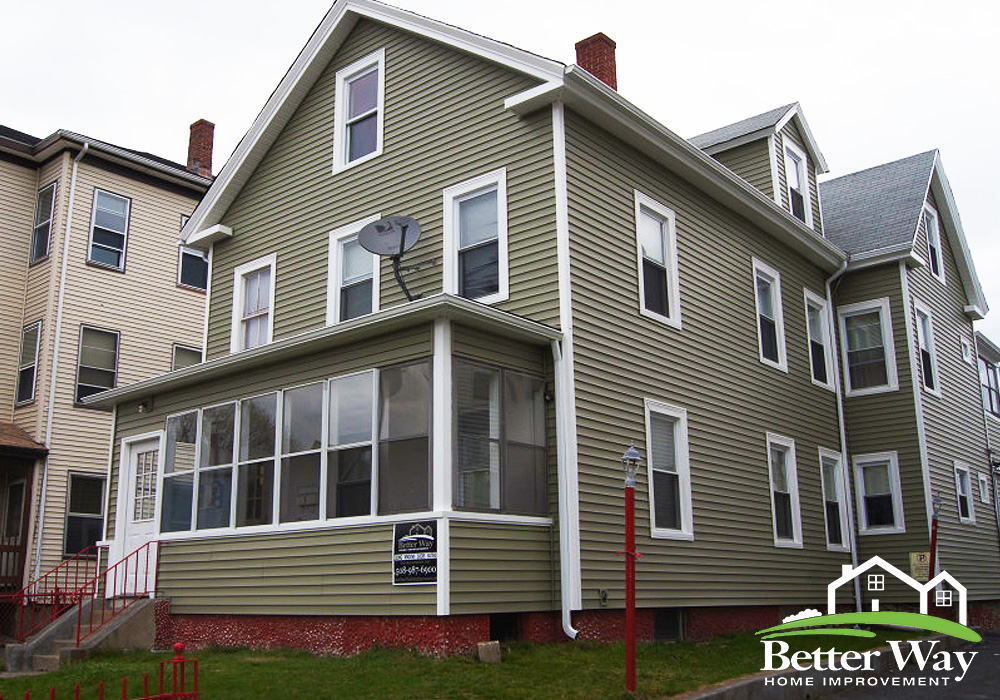
What Window & Door Replacement looks like in Grafton
Most of the calls we get in Grafton fall into two buckets: a homeowner replacing failed 1970s-1990s vinyl windows that have fogged, warped, or won’t lock right anymore, and a homeowner tackling original wood windows in a house that predates 1978. Both jobs end at the same place — a code-compliant replacement window sized to meet the Massachusetts energy code’s U-factor requirements — but they get there differently.
On the mill housing and worker cottages that make up a lot of Grafton’s older neighborhoods, we’re often working with narrow rough openings, undersized rakes, and returns that were never built to modern trim dimensions. That pushes us toward full-frame replacement more often than insert windows, because the existing frame is frequently rotted at the sill or too far out of square to trust an insert to seal properly. Insert windows work fine when the existing frame is sound — square, dry, no rot — which we do see in Grafton’s mid-century additions and some of the better-maintained triple-deckers. But on a house with board sheathing and no weather barrier, we’d rather open it up, check the framing, and do it right than drop an insert into a frame that’s already failing.
Entry doors and patio doors on these lots come with their own wrinkle: exterior grade has often crept up over 100-plus years, burying the original sill and rotting the framing behind it. We address that at the door threshold before anything gets set, not after.
What we account for on Grafton homes
Older clapboard behind later siding
A newer layer of vinyl does not always tell the full story. Some Grafton homes have original clapboard underneath. When an opening is exposed, the surrounding material is checked before the new unit is installed.
Older village homes
Victorian and Colonial Revival homes can have different window proportions, trim depths, and exterior details than newer houses. Measurements and finish details need to account for the existing construction.
Ranches and split-levels
Many Grafton homes from the 1970s and 1980s have larger window groupings, picture windows, sliding doors, and multiple opening sizes. Each opening is measured rather than assuming every unit is the same.
Siding and window sequencing
If siding is being replaced at the same time, the work needs to be planned together. Window and door installation can be completed before the new siding so the exterior finish meets the openings correctly.
What we account for on Grafton homes
Measure and inspect
Grafton’s housing stock spans antique colonials near the town common, mid-century capes, and newer builds off Route 140, so we look closely at each opening before recommending a fix. That includes wall thickness, framing condition, existing drainage, and how the unit ties into siding or masonry.
- Wood, vinyl, or fiber-cement exteriors
- Historic sightlines and trim profiles
- Energy performance for New England winters
Order and prepare
Lead paint on pre-1978 trim
A lot of Grafton’s housing stock — the worker cottages especially — predates 1978, which means lead-safe work practices are not optional. Our crews are trained for EPA RRP-compliant containment: plastic sheeting, HEPA vacuum cleanup, and proper disposal of any painted wood or trim we remove. We don’t skip this to save an afternoon.
Install and finish
Board sheathing with no housewrap
Original construction in this part of the Blackstone Valley used board sheathing, not modern OSB with housewrap. When we open up a rough opening, there’s often no weather-resistant barrier behind the old siding at all. We install proper flashing and a water-resistive barrier around every new window and door opening as we go, which is the single biggest performance upgrade on these houses regardless of what the window itself is rated for.
Sill rot from grade creep
Over a century or more, dirt, mulch, and pavement have crept up against a lot of these foundations, and that means moisture sits against the sill longer than it should. We check every sill for rot before we set a new unit, and where we find it, we cut it out and rebuild with pressure-treated or borate-treated lumber before the window or door goes back in.
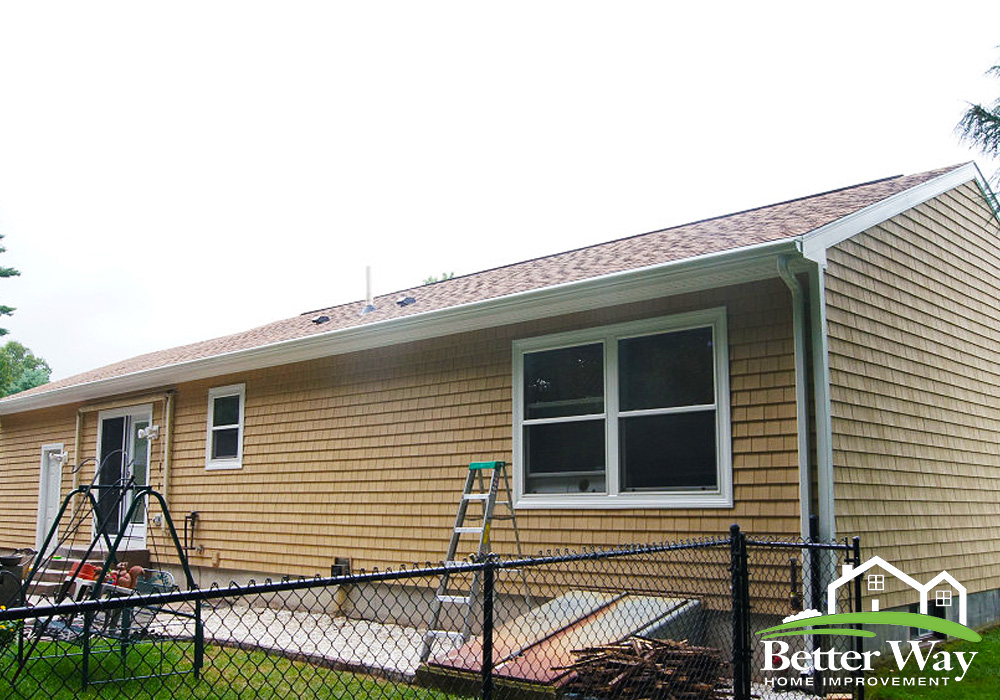
Narrow driveways and tight lots
Grafton’s older streets weren’t laid out for construction dumpsters and staging areas. Before we schedule a start date, we walk the property and figure out where materials, the dumpster, and crew vehicles actually fit without blocking a neighbor’s driveway or the street. On tight lots that usually means staging in the backyard or scheduling deliveries in stages instead of dropping everything at once.
Frequently Asked Questions
Do you replace windows with inserts or full-frame units on Grafton's older houses?
It depends on the condition of the existing frame. If the frame is square, dry, and free of rot, an insert window is a faster, less invasive option. On Grafton's mill-era cottages and pre-1978 houses, we more often find rot or an out-of-square frame, which means full-frame replacement is the more reliable choice. We'll tell you which one your house needs during the walkthrough, not guess from the street.
My house was built before 1978 — does that change the job?
Yes. Any pre-1978 house is assumed to have lead paint on original trim and sash under EPA rules. Our crews follow lead-safe work practices, including containment and HEPA cleanup, on every window and door removal in a house that age. This adds a little time but is not optional, and any contractor telling you it doesn't matter is skipping a legally required step.
What happens if you find rot or damage once the old siding or trim comes off?
On Grafton's older housing stock, we find something behind the siding or trim on a meaningful share of jobs — usually sill rot from grade creep, or missing weather barrier behind board sheathing. We stop, show you what we found, and give you a straightforward price to fix it before we close the wall back up. We don't cover it over and hope it holds.
How much does window and door replacement cost in Grafton?
It depends on the number of openings, whether you need insert or full-frame replacement, and how much hidden repair we find at the sill or frame. A handful of window replacements on a sound frame costs a lot less than a full-house job with rot repair and lead-safe containment. We give you a firm number after the walkthrough, not a phone estimate.
How long does a typical job take?
A full-house replacement — 10 to 14 windows plus one or two doors — usually runs three to five days from removal through final trim, assuming no major framing surprises. Smaller jobs of a few windows can often be done in a single day.
How the job runs
Walkthrough and measurement
We measure every rough opening by hand, not from a spec sheet, because on a house this old no two openings are the same size. This is also when we check for rot, lead paint, and whether an opening is a candidate for insert or full-frame replacement. Usually done in under an hour, no obligation.
Removal and framing repair
Old units come out, and if the frame or sill is rotted we rebuild it before anything new goes in. On a typical Grafton house with 8-12 windows and a door or two, this stage runs one to two days depending on how much hidden repair we find.
Install, flash, and trim
New windows and doors get set, shimmed, and flashed with a proper water-resistive barrier — often the first one that section of wall has ever had. We cap exterior trim in aluminum where it makes sense so you’re not repainting wood trim every few years. Most full jobs finish in three to five days total, weather and material lead times allowing.
Recent work in and around Grafton
A common job for us in Grafton is a full-frame replacement on a worker cottage or mill-era house built before 1900: 10 to 14 double-hung windows, a front entry door, and sometimes a rear or side door, all original wood units on board sheathing with no housewrap. We typically find sill rot on at least one or two openings, especially on the side of the house that gets the most weather, and lead paint containment is standard on the trim. These jobs usually run in tandem with siding work when the homeowner is doing both at once, since it’s far more efficient to flash the openings and side the wall in the same visit than to do it twice.
Other services we provide in Grafton
Window and door work in Grafton often overlaps with siding, and we’ll flag that during your estimate if it applies to your house. If your existing vinyl siding is chalking, cracking, or pulling away at the corners, take a look at our siding contractor services in Grafton page — replacing siding and windows in the same visit means one crew, one dumpster, and flashing that ties into the new wall instead of getting patched around old siding. We also install seamless gutters and handle gutter repair, which matters here specifically because a lot of the sill rot we find traces back to gutters that have been dumping water against the foundation for years. If you’re weighing full siding replacement against a repair, our general window and door replacement page covers the product and code side in more detail.