


James Hardie Siding in Warren, MA
Warren sits along the Quaboag River with open farmland and long approaches on the roads leading into the village center, and that means a lot of houses here take wind straight on with no tree line or neighboring structure to break it. If you’re weighing James Hardie fiber cement against another vinyl reside on an old cape or farmhouse near Route 67, the honest answer is that Hardie holds up better on exposed sites like this and takes paint the way these older homes were originally built to look. We install it in Warren the way it’s meant to go on a pre-1900 wall: furred out true, cut wet to control dust, and flashed for wind-driven rain, not just installed to spec on paper.
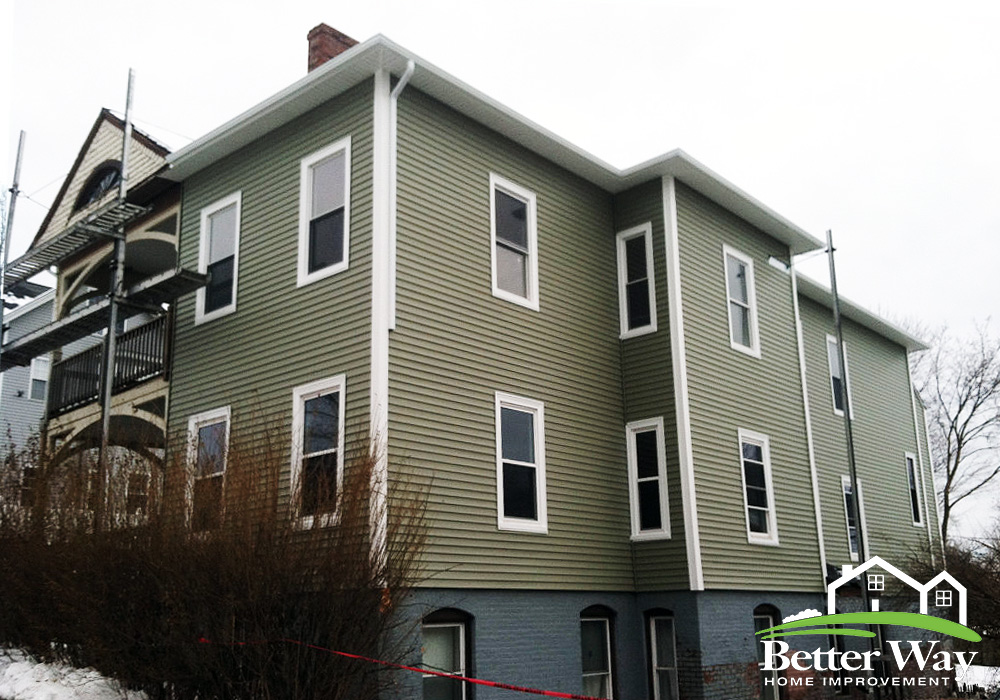
What James Hardie Siding looks like in Warren
Most of the calls we get from Warren are homeowners who already looked at vinyl once and decided they wanted something with more weight and a longer paint life, especially on a colonial or farmhouse that’s been through a few sidings already. James Hardie fiber cement is heavier than vinyl by a wide margin, and on these older wood-framed houses that weight is actually part of the appeal. It doesn’t oil-can or ripple in the sun, it holds a straight reveal line on long wall runs, and it doesn’t rattle in the wind the way a loose piece of vinyl will on an exposed farmhouse gable.
We install both ColorPlus prefinished panels and field-painted Hardie in Warren, and which one makes sense depends on the house. ColorPlus comes baked-on at the factory with a finish warrantied against fading and chipping, and it’s the right call on a straightforward cape or ranch where the color scheme is simple. Field paint gives more flexibility on a historic farmhouse where the trim colors need to match an existing scheme exactly, or where a homeowner is working with a historic district’s approved palette. Either way, the board itself is the same non-combustible cement composite — it doesn’t feed a fire, it shrugs off hail and wind-blown debris a lot better than vinyl, and it’s rated for direct wind exposure that would flex or crack a thinner product.
Cutting fiber cement produces silica dust, so on every Warren job we cut outside with HardieBlade saws and dust-collecting shrouds, away from windows and any garden beds. It’s a heavier, dustier install than vinyl, and it takes longer per square — that’s the tradeoff for a product that’s going to outlast the vinyl reside it’s replacing.
What we account for on Warren homes
Older clapboard behind the existing exterior
One of the first things to check on an older Warren house is what sits behind the current siding. A 1970s or 1980s exterior may have been installed over original wood clapboard. Removing it can reveal damaged boards, uneven areas, or sections that need repair before the new siding can be installed. The condition of that layer is part of the project, not something to ignore until the end.
Heavy material on an older wall
Fiber cement is heavier than the lightweight siding it may be replacing. That means the wall surface and fastening locations need to be considered before installation. The crew accounts for the existing substrate, checks areas where the old exterior has failed, and plans the installation around the actual condition of the house rather than assuming every wall is sound.
Cutting and dust control
Fiber cement needs to be cut to fit around windows, doors, corners, and other details. Cutting produces dust, so the work area has to be managed accordingly. That means using appropriate cutting methods and keeping dust from spreading unnecessarily around the property. The goal is to keep the installation controlled while producing accurate cuts for the exterior details.
ColorPlus or field-applied paint
Warren homeowners have two basic finish approaches to consider. ColorPlus siding arrives with a factory-applied finish, while primed siding can be painted after installation. James Hardie says ColorPlus finishes are cured in a controlled factory environment and are designed to provide consistent color and improved resistance to UV-related fading. The right choice depends on the look you want, the available colors, and how you want the finished project handled. We can price the options as part of the estimate.
What we account for on Warren homes
Site visit and scope
Warren’s mix of older farmhouses and newer builds each bring their own quirks. Before any James Hardie siding goes up, we take stock of wall condition, moisture points, and trim details unique to the property.
- Existing exterior condition
- Moisture and ventilation gaps
- Trim, corners, and window details
Remove, Prepare, Install
Out-of-square framing on pre-1900 walls
A lot of the housing stock around Warren center and out along the back roads predates modern framing standards, and walls settle unevenly over 100-plus years. Fiber cement doesn’t forgive an out-of-square wall the way vinyl does — it’s rigid, so any wave in the sheathing telegraphs straight through the reveal lines. We furr and shim each wall plane individually before a single board goes up, checking level and plumb section by section instead of assuming the last course sets the line for the whole run.
Detail work and final check
Board sheathing and what's underneath
Houses built before the 1960s in this part of the county were commonly sheathed in board sheathing rather than plywood or OSB, sometimes with a layer of old fiberboard or even original clapboard still under a later vinyl reside. That changes how we fasten — Hardie needs to hit solid framing or sheathing rated for the fastener schedule, and board sheathing with gaps or rot needs patching before we can run siding over it reliably.
Wind exposure on open approaches
Homes set back on long open lots along routes like West Brimfield Road or out toward the Brimfield line take wind with nothing to slow it down. We follow Hardie’s higher-wind fastening spec on these exposures — tighter fastener spacing, proper starter strip, and correct nail penetration depth — rather than the minimum schedule that’s fine on a sheltered in-town lot.
Historic district review
Warren’s center has older homes that may fall under local historic guidelines depending on location, and several surrounding towns run active historic commissions. Where that applies, we plan the job around what a commission will approve — board profile, exposure width, and trim detail — before ordering material, so there’s no rework after the fact.
Frequently Asked Questions
Why choose James Hardie over vinyl for a house in Warren?
Weight and wind resistance mostly. Warren has a lot of open, exposed lots with no windbreak, and fiber cement holds up to sustained wind and wind-driven rain better than vinyl. It also takes paint the way an older colonial or farmhouse was originally finished, which matters if you're keeping a historic look.
Will a historic district in Warren affect what siding I can install?
It can, depending on where the house sits. Some town centers in this area run active historic commissions that review exterior changes including siding profile and exposure. We check this at the estimate visit and plan the board choice around what will get approved before we order material.
What do you usually find when you tear off old siding on a Warren house?
On pre-1900 stock it's often board sheathing with gaps, sometimes original clapboard still nailed underneath a later vinyl reside, and occasionally soft or rotted sections around window openings. We inspect and patch that before any new siding goes on, and we'll show you what we find before we proceed.
How much does a James Hardie reside cost in Warren?
It runs higher than vinyl per square foot because of the material and the labor to cut and install it correctly. Exact pricing depends on square footage, how much prep the walls need, and ColorPlus versus field paint. We give a written quote after the measure visit rather than a phone estimate.
How long does a James Hardie install take on a typical Warren home?
Most single-family jobs run one to two weeks from tear-off to finish. Older farmhouses with out-of-square walls or sheathing repairs needed can run longer on the prep side before the siding itself goes up.
How the job runs
Site visit and measure. We walk the whole exterior, check wall planes with a level, look at what’s under any existing siding where we can access it, and talk through ColorPlus versus field-painted options. This is also where we flag anything that looks like it’ll need historic district sign-off. Most Warren estimates take under an hour.
Prep and tear-off. Old siding comes off, we inspect the sheathing underneath, replace anything soft or rotted, house wrap goes on, and any out-of-square wall gets furred true before trim starts. On older farmhouses this stage often takes as long as the siding install itself.
Install and finish. Boards go up furred and shimmed level, all cutting happens outside with dust control, trim and flashing get detailed around every window and door, and we walk the finished job with the homeowner before we call it done. A typical Warren home runs one to two weeks depending on size and how much the prep stage turns up.
Recent work in and around Warren
A common job type we see out this way is a mid-1900s farmhouse that’s already had one vinyl reside fail — usually bowed panels on the sun-exposed side or wind damage on an open gable. The tear-off on those jobs regularly uncovers board sheathing with gaps that need patching and sometimes older clapboard still nailed underneath, which adds a day or two to prep before any Hardie goes up. We don’t quote these sight unseen for that reason — the measure visit is where we find out what’s actually behind the wall.
Other services we provide in Warren
James Hardie is one option among several we install in Warren. If a homeowner wants to compare cost against a lighter product, we also handle vinyl siding installation on the same style of home. If the existing siding just needs patching rather than a full reside, we do siding repair as its own job. For houses where the whole exterior needs work, we pair siding with seamless gutters and replacement windows and doors so the trim details match front to back.
Free estimates in Warren
We’re based in Warren, about 18.0 miles from Warren, and we run estimates out this way regularly. The visit is free, it’s not a sales pitch, and you’ll get a written number before we leave. Call (508) 506-8957 to set a time. After that call, we schedule the site visit, measure and inspect what’s there, and send a quote that spells out ColorPlus versus field-painted pricing so you can compare it against whatever else you’ve had bid.