


James Hardie Siding in Blackstone, MA
Most of the calls we get from Blackstone start the same way: the house is a mill-era worker cottage or a triple-decker on a tight lot, the clapboard is original wood over board sheathing with no housewrap behind it, and the paint has been failing for years. If the place was built before 1978, that paint is almost certainly lead-based, which changes how we strip and stage the job before a single course of siding goes up. Fiber cement is a common upgrade choice here because it holds paint, resists the moisture these old walls have never been protected from, and doesn’t dent the way a lot of the 1970s and 1980s vinyl on these streets already has.
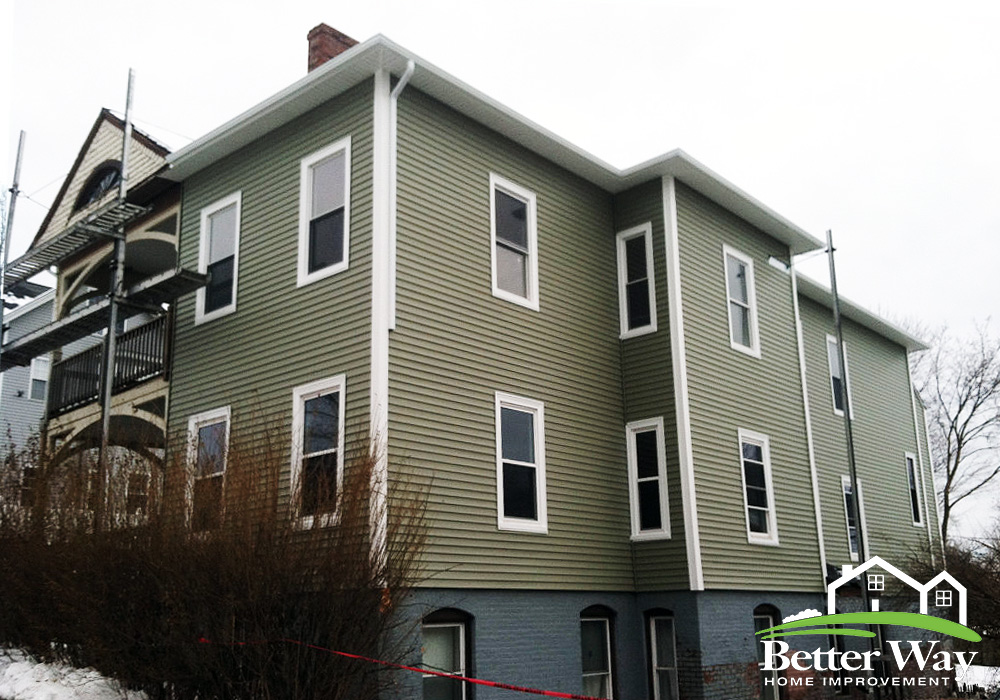
What James Hardie Siding looks like in Blackstone
James Hardie fiber cement is heavier and denser than vinyl or the original wood clapboard it usually replaces, which matters on Blackstone’s older framing. We check the wall assembly before we quote, not after, because a house built to hold up light wood siding needs the right fastening schedule and, in some cases, minor structural attention at the sill or band board before it can carry Hardie board properly.
Cutting fiber cement produces silica dust, and on these narrow mill-town lots — houses ten or fifteen feet from the neighbor’s porch — that’s not something you can just let drift. We cut with shrouded saws tied to HEPA vacuums and stage cutting stations away from windows and outdoor living space. On streets where three houses share one narrow driveway, that planning happens before the crew ever shows up with material.
Most Blackstone jobs go with factory-finished ColorPlus rather than field-painted Hardie. ColorPlus is baked on at the plant, holds color longer than site-applied paint, and comes with its own finish warranty — worth paying for on a house where you’re trying to get out from under a repaint cycle every five to seven years. Fiber cement also carries a Class A fire rating and takes impact better than vinyl, which is a real consideration on lots this close together where a neighbor’s grill, a stray baseball, or ladder work from your own gutter cleaning can crack lighter material.
What we account for on Blackstone homes
Older clapboard behind the existing exterior
One of the first things to check on an older Blackstone house is what sits behind the current siding. A 1970s or 1980s exterior may have been installed over original wood clapboard. Removing it can reveal damaged boards, uneven areas, or sections that need repair before the new siding can be installed. The condition of that layer is part of the project, not something to ignore until the end.
Heavy material on an older wall
Fiber cement is heavier than the lightweight siding it may be replacing. That means the wall surface and fastening locations need to be considered before installation. The crew accounts for the existing substrate, checks areas where the old exterior has failed, and plans the installation around the actual condition of the house rather than assuming every wall is sound.
Cutting and dust control
Fiber cement needs to be cut to fit around windows, doors, corners, and other details. Cutting produces dust, so the work area has to be managed accordingly. That means using appropriate cutting methods and keeping dust from spreading unnecessarily around the property. The goal is to keep the installation controlled while producing accurate cuts for the exterior details.
ColorPlus or field-applied paint
Blackstone homeowners have two basic finish approaches to consider. ColorPlus siding arrives with a factory-applied finish, while primed siding can be painted after installation. James Hardie says ColorPlus finishes are cured in a controlled factory environment and are designed to provide consistent color and improved resistance to UV-related fading. The right choice depends on the look you want, the available colors, and how you want the finished project handled. We can price the options as part of the estimate.
What we account for on Blackstone homes
Site visit and scope
Blackstone’s mix of older New England construction and newer builds means every home needs its own look. We factor in wall exposure, moisture patterns near the Blackstone River valley, existing trim details, and how the house sits against neighboring properties before recommending a James Hardie profile and finish.
Remove, Prepare, Install
How the job runs
Detail work and final check
Recent work in and around Blackstone
A typical Blackstone project we run is a full tear-off on a 19th-century worker cottage or half of a triple-decker: strip original clapboard down to board sheathing, address rot at the sill where soil and old driveway paving have crept up over the decades, add housewrap and proper flashing where none existed, and install Hardie lap siding with ColorPlus finish. On triple-deckers we often coordinate with the other units or the building owner on staging, since dumpster and material placement on a shared narrow lot has to work for everybody, not just the unit we’re sided that week. We don’t publish invented customer names or addresses here — every job is different, and we’d rather describe honestly what the work involves than dress it up with a fake testimonial.
Other services we provide in Blackstone
Fiber cement isn’t the right fit for every Blackstone budget or every house, and we quote it alongside vinyl siding installation so you can compare real numbers before deciding. If your existing siding just needs a section repaired rather than a full replacement, our siding repair work in Blackstone covers rot, impact damage, and failed panels without tearing off the whole wall. For houses that need everything pulled and redone, our siding replacement service in Blackstone handles the full tear-off, sheathing repair, and reinstall. We also install seamless gutters sized to actually keep water off these old sills, and replacement windows and doors that pair with a new siding job instead of getting swapped out separately a few years later.
Free estimates in Blackstone
We’re based at 152 Sutton Ave in Blackstone, about 18.0 miles from Blackstone, and we quote Hardie jobs in this town regularly. An estimate is free and gets you a real look at your walls, not just a number pulled off a square-footage chart. Call (508) 506-8957 and tell us the age of the house and what siding is on it now. We’ll set a time to walk the exterior, check the sheathing and sills where we can get eyes on them, and give you a written quote before we leave. If you decide to move forward, we’ll schedule the tear-off and material delivery around your driveway and lot constraints from day one.
Frequently Asked Questions
Is James Hardie siding worth the extra cost over vinyl in Blackstone?
On the older mill housing common in Blackstone, yes for a lot of owners. Fiber cement holds paint longer, resists moisture better on walls that were never wrapped, and won't dent like vinyl does when lots are this close together. It costs more upfront and takes more labor to install, so we quote both and let you compare against your actual budget.
What happens if you find lead paint or rotted sheathing once the old siding comes off?
On pre-1978 Blackstone homes, we plan for it before we start. We follow lead-safe work practices for containment and disposal, and if we find rot at the sill or soft sheathing once the old clapboard is off, we stop, show you the damage, and quote the repair before continuing. This is common enough on this housing stock that we build a contingency conversation into every estimate.
How long does a James Hardie siding job take on a typical Blackstone house?
A single-family cottage usually runs one to two weeks from tear-off to final trim, depending on how much sheathing repair is needed underneath. A triple-decker or a job with significant rot at the sill can run longer. We give you a specific timeline after the walk-through, not before.
Can you fit equipment and a dumpster on a narrow Blackstone driveway?
We look at driveway width and lot access as part of the estimate, not as a surprise on day one. On tight mill-town lots we often stage material curbside or schedule delivery in smaller loads, and on shared driveways with multiple units we coordinate placement with neighbors ahead of time.
What does James Hardie siding cost for a house like mine in Blackstone?
Cost depends on square footage, how much of the old wall needs repair once siding is off, and whether you choose ColorPlus factory finish or field paint. We won't quote a number over the phone without seeing the house, but we'll give you a written estimate on the same visit so you can compare it against other bids.
Why homeowners in Blackstone choose Hardie
Blackstone’s mix of older homes and newer builds face real New England weather swings, and James Hardie fiber cement siding is built to handle it. It resists moisture, won’t warp or rot, and holds its color far longer than vinyl alternatives.
- Withstands freeze-thaw cycles
- Low maintenance upkeep
- Wide range of colors and textures