


James Hardie Siding in Union, CT
Union sits at the top of the Quiet Corner, and most of the housing here is spread out on big wooded lots off Route 190 and the back roads toward Bigelow Hollow — antique capes, old farmhouses, and newer builds set way back on long gravel drives. That kind of lot means more sun and moisture swings than a tight neighborhood, and it means our trucks sometimes have a quarter mile to haul material before work even starts. James Hardie fiber cement holds up to the swings in a way old wood clapboard and worn-out vinyl don’t, and it’s a common upgrade choice for owners here who are done patching.
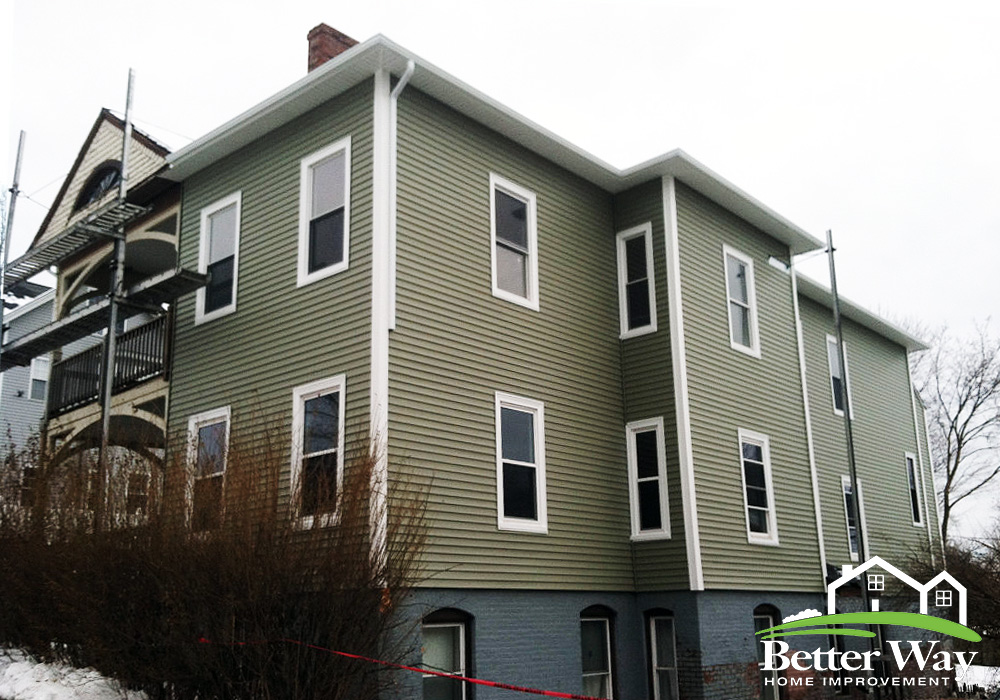
What James Hardie Siding looks like in Union
On a lot with heavy tree cover, the big difference between fiber cement and vinyl shows up over time, not on install day. Union homes sit under a lot of oak and pine canopy, which means damp shade on the north and west walls for long stretches of the year. Vinyl can warp or grow mildew streaks in those conditions. James Hardie board doesn’t expand and contract with humidity the same way, and it takes a ColorPlus factory finish that resists the mildew staining we see on shaded gables around town.
Weight is the other real factor. Fiber cement runs roughly two to three times heavier per square than vinyl siding, which matters on some of the older Union farmhouses where the original sheathing is board, not plywood. Before we quote the job we check what’s under the existing siding, because board sheathing needs different fastener spacing and sometimes a layer of new sheathing to give the Hardie plank something solid to grab. We don’t skip that step to save a day on the schedule.
Most Union jobs we run are HardiePlank lap siding in a ColorPlus finish, since the factory-cured color holds up better than field paint against the intense UV a cleared, sun-facing lot gets once the tree line opens up on one side. For homes closer to the state forest edge where wildfire risk gets asked about more than it used to, fiber cement’s noncombustible core is a selling point we hear directly from homeowners, not something we have to push.
What we account for on Union homes
Older clapboard behind the existing exterior
One of the first things to check on an older Union house is what sits behind the current siding. A 1970s or 1980s exterior may have been installed over original wood clapboard. Removing it can reveal damaged boards, uneven areas, or sections that need repair before the new siding can be installed. The condition of that layer is part of the project, not something to ignore until the end.
Heavy material on an older wall
Fiber cement is heavier than the lightweight siding it may be replacing. That means the wall surface and fastening locations need to be considered before installation. The crew accounts for the existing substrate, checks areas where the old exterior has failed, and plans the installation around the actual condition of the house rather than assuming every wall is sound.
Cutting and dust control
Fiber cement needs to be cut to fit around windows, doors, corners, and other details. Cutting produces dust, so the work area has to be managed accordingly. That means using appropriate cutting methods and keeping dust from spreading unnecessarily around the property. The goal is to keep the installation controlled while producing accurate cuts for the exterior details.
ColorPlus or field-applied paint
Union homeowners have two basic finish approaches to consider. ColorPlus siding arrives with a factory-applied finish, while primed siding can be painted after installation. James Hardie says ColorPlus finishes are cured in a controlled factory environment and are designed to provide consistent color and improved resistance to UV-related fading. The right choice depends on the look you want, the available colors, and how you want the finished project handled. We can price the options as part of the estimate.
What we account for on Union homes
Site visit and scope
Long driveways and material staging
Union properties often have three hundred feet or more of driveway before you reach the house. We plan staging and cutting stations close to the work, not at the road, so crews aren’t hauling 12-foot Hardie boards by hand any farther than they have to.
Cut dust and site containment
Fiber cement produces silica dust when cut, and Union’s wooded, well-adjacent properties mean we’re careful where that dust lands. We use dust-reducing shears and vacuum-assisted saws on site and keep cutting stations away from wellheads and gardens, which matters more out here than it does on a tight village lot.
Board sheathing behind old siding
A fair number of Union’s older homes were built with board sheathing under the original wood or vinyl siding, not OSB or plywood. We check fastener holding power on that sheathing before installing Hardie plank, since fiber cement’s weight needs a solid nailing surface. If it’s soft or gapped, we address it before the new siding goes up.
Connecticut licensing and permitting
Union is Connecticut, not Massachusetts, and the rules that apply are Connecticut’s Home Improvement Contractor law and local building permit requirements, not the ones across the border in Worcester County. We confirm our HIC registration covers the job and pull the correct Union or Tolland County permit before any material gets ordered.
Remove, Prepare, Install
How the job runs
Estimate and site check
We walk the exterior, check the sheathing type where it’s exposed at trim and corners, and measure for material. For a typical Union home this takes under an hour, and we give a written estimate before we leave or within a couple of days.
Tear-off, prep, and install
Old siding comes off in sections so the crew can check sheathing condition as they go rather than guessing from a corner peek. A full HardiePlank installation on an average Union home runs three to six working days depending on size, trim detail, and how much sheathing repair is needed underneath.
Trim, cleanup, and walkthrough
We finish corners and trim, caulk and touch up ColorPlus fastener heads, then do a full site cleanup — magnetic sweep for nails included, which matters on gravel drives and lawns where kids or pets are around. We walk the job with the homeowner before calling it done.
Detail work and final check
Recent work in and around Union
A common job type in Union is a farmhouse or cape built in the 1950s to 1970s, re-sided once already in vinyl that’s now chalking, cracked at the corners, or pulling away from the wall in wind. We strip the old vinyl, inspect and repair the board sheathing underneath where needed, and install HardiePlank in a ColorPlus finish. On lots with heavy tree cover we usually recommend a shadow-line or beaded profile that shows well even in low light under a canopy, rather than a flat panel that can look washed out in shade most of the day.
We don’t publish customer names or addresses, but if you want to see finished work near Union before you commit, ask during the estimate — we’re glad to point out a nearby completed job from the road.
Other services we provide in Union
Not every Union home is a fit for fiber cement, and not every project starts with a full re-side. If your siding just needs patching after storm damage or a woodpecker problem, our siding repair service handles it without a full tear-off. If you’re weighing a full siding replacement against a repair, we’ll give you an honest read on which makes sense for the age of your walls. For homeowners who want the lower upfront cost of vinyl siding installation instead of fiber cement, we install that too and can walk you through the tradeoffs. We also handle seamless gutters and replacement windows and doors, which often get bundled into a Union siding project since the scaffolding and access are already set up.
Free estimates in Union
Union is about 17.8 miles from our Union shop, which is a normal run for us out into the Quiet Corner. We build that drive into scheduling rather than tacking on a surprise trip charge. If you want a straight answer on what James Hardie siding would cost for your Union home, call (508) 506-8957. We’ll set a time to walk the property, check the sheathing, and give you a written estimate — no pressure to sign that day. After you call, expect us to confirm a visit within a few days and follow up with the estimate in writing so you can compare it against other quotes at your own pace.
Frequently Asked Questions
Is James Hardie siding worth the extra cost over vinyl in Union?
For homes with heavy shade, wet ground, or board sheathing that's already showing its age, most Union homeowners find the added durability and fire resistance worth the higher upfront price. If your budget is tight and your walls are in decent shape, vinyl is still a reasonable option — we'll give you honest numbers on both during the estimate.
Do you need a Connecticut contractor license to do this work in Union?
Yes. Union falls under Connecticut's Home Improvement Contractor law, separate from Massachusetts rules. We confirm our HIC registration covers the job and pull the correct local permit before ordering material — we don't start on a Massachusetts-only assumption.
What if you find rot or bad sheathing when you pull the old siding off?
On Union's older housing stock it happens often enough that we plan for it. We stop, show you what we found with photos, and give you a price to repair or replace the damaged section before continuing. We don't cover it up and re-side over a problem.
How long does a full James Hardie installation take on a typical Union home?
Most jobs run three to six working days, depending on the size of the house, trim complexity, and whether we find sheathing issues that need addressing first. Long driveways and material staging can add a bit of time compared to a village-lot job.
How much does James Hardie siding cost for a Union home?
Cost depends on square footage, trim detail, sheathing condition, and profile choice, so we don't quote a flat number without seeing the house. We'll give you a written, itemized estimate after a site visit so you can compare it against other bids.
Why Union Homeowners Choose James Hardie
Union’s mix of rural properties and wooded lots means siding takes a beating from moisture, sun, and seasonal swings. James Hardie fiber cement resists rot, won’t attract pests, and holds its color far longer than vinyl alternatives.
- Built to handle New England weather
- Low-maintenance, long-lasting finish
- Wide range of colors and textures