


James Hardie Siding in Hopedale, MA
Hopedale sits on the eastern edge of our service area, close enough to Milford and Bellingham that a lot of the streets here look more like suburban subdivision than the mill-town centers further west. That means postwar colonials and capes on tighter lots, several condo and townhouse associations with their own exterior rules, and homeowners who care as much about matching a neighbor’s approved palette as they do about the material underneath it. James Hardie fiber cement siding fits that mix well, but only if someone checks the association paperwork before the crew shows up with a truckload of board.
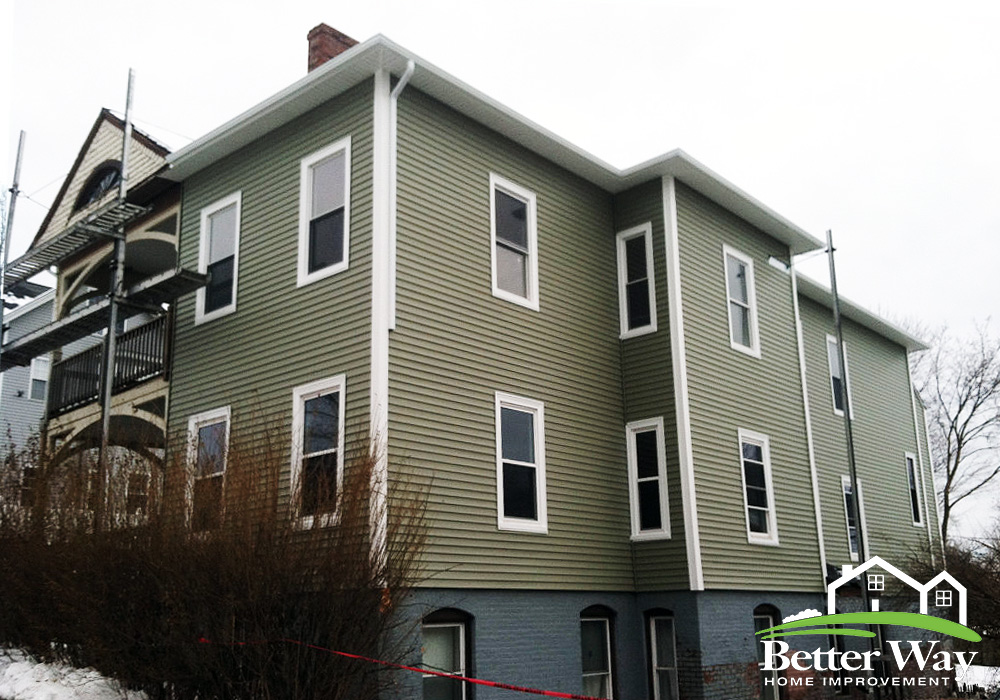
What James Hardie Siding looks like in Hopedale
On a Hopedale job we’re usually replacing siding that’s failed after 25 to 40 years — either original wood clapboard on the older capes near the town common, or a first generation of vinyl that’s cracked, faded, or bowed off the wall. Fiber cement is a different animal than either one. It’s heavier, it doesn’t flex the way vinyl does in July heat, and it holds a factory finish instead of a field-painted one if you go with ColorPlus.
For Hopedale specifically, that finish question matters more than in most towns. A good share of the housing here is inside an association — condo clusters off Hopedale Street, townhouse groups near the lake, a few smaller developments scattered through town. Associations that regulate color almost always have a short approved list, and ColorPlus finishes come pre-matched to standard architectural palettes, which makes approval faster than submitting a custom field-paint sample. We also see straightforward single-family capes and colonials with no association at all, where the only real decision is trim profile and reveal width to match what’s already on the street.
Fire and impact performance come up in conversation here more than in some of the smaller towns, mostly because a share of Hopedale’s stock is close-set — narrower side yards, shared driveways, homes built closer to the lot line than you’d find on a large rural parcel. Fiber cement’s noncombustible core and resistance to hail and wind-driven debris are a real selling point for people who’ve looked at the lot spacing and the insurance bill together.
What we account for on Hopedale homes
Older clapboard behind the existing exterior
One of the first things to check on an older Hopedale house is what sits behind the current siding. A 1970s or 1980s exterior may have been installed over original wood clapboard. Removing it can reveal damaged boards, uneven areas, or sections that need repair before the new siding can be installed. The condition of that layer is part of the project, not something to ignore until the end.
Heavy material on an older wall
Fiber cement is heavier than the lightweight siding it may be replacing. That means the wall surface and fastening locations need to be considered before installation. The crew accounts for the existing substrate, checks areas where the old exterior has failed, and plans the installation around the actual condition of the house rather than assuming every wall is sound.
Cutting and dust control
Fiber cement needs to be cut to fit around windows, doors, corners, and other details. Cutting produces dust, so the work area has to be managed accordingly. That means using appropriate cutting methods and keeping dust from spreading unnecessarily around the property. The goal is to keep the installation controlled while producing accurate cuts for the exterior details.
ColorPlus or field-applied paint
Hopedale homeowners have two basic finish approaches to consider. ColorPlus siding arrives with a factory-applied finish, while primed siding can be painted after installation. James Hardie says ColorPlus finishes are cured in a controlled factory environment and are designed to provide consistent color and improved resistance to UV-related fading. The right choice depends on the look you want, the available colors, and how you want the finished project handled. We can price the options as part of the estimate.
What we account for on Hopedale homes
Site visit and scope
Association-approved colors and materials
Before we quote anything in a Hopedale condo or townhouse association, we ask for the exterior guidelines document. Some associations specify ColorPlus by name; others just list approved hues and leave the material open. We confirm the requirement in writing before the estimate goes final, not after the order is placed.
Substrate weight on older framing
Fiber cement runs roughly two to three times heavier per square than vinyl. On the older capes near the town center, we check the sheathing and framing condition before assuming it’ll carry the load without extra fastening or furring. Most homes handle it fine; a few older ones need a quick reinforcement pass first.
Cut and dust control on tight lots
Cutting fiber cement releases silica dust, and a lot of Hopedale properties sit close to a neighbor’s fence line or a shared driveway. We cut with saws fitted for dust capture and stage cutting away from windows, decks, and anywhere a neighbor’s laundry line or grill might be in use.
What’s behind the old siding
Postwar Hopedale homes were built in an era where board sheathing and older building paper were standard, and it’s not unusual to find both under the existing siding once it comes off. We check for that during the estimate walk-around when we can, and we price a contingency line for what we can’t see until tear-off starts.
Remove, Prepare, Install
How the job runs
Estimate and association check
We walk the exterior, measure, and if the property is part of an association we confirm what color and material are approved before we finalize the quote. This step alone can add a few days to the schedule in Hopedale compared to towns with no association rules, so we build it in up front rather than surprise you later.
Tear-off and prep
Old siding and any damaged sheathing come off, house wrap goes up, and we address anything unexpected — rot, old board sheathing, out-of-date flashing — before a single piece of Hardie board goes on the wall.
Installation and finish
Boards are cut, fastened per manufacturer spec, and trimmed out. A standard single-family Hopedale home typically runs 4 to 7 working days depending on size and complexity; a larger colonial or one with detailed trim work can run longer. Weather and association approval timing are the two things most likely to shift that window.
Detail work and final check
Recent work in and around Hopedale
A typical recent job type in this part of our territory is a postwar cape or colonial coming out of its second siding job — original wood or a first-generation vinyl install from the 1980s or 90s, both showing their age. We also handle association units where the board needs to match an approved ColorPlus color exactly, since a mismatch between units in the same cluster gets noticed fast. We don’t publish customer names or addresses, but if you want to see finish samples or talk through what a similar home in your neighborhood required, we’re glad to walk through it on the estimate visit.
Other services we provide in Hopedale
Fiber cement isn’t the right fit for every budget or every home, and we quote it alongside vinyl siding installation so you can compare both side by side. If your current siding just needs patching rather than a full tear-off, our siding repair service covers cracked panels, storm damage, and trim issues without a full-scale project. When it’s time to replace the whole exterior, our siding replacement page covers the tear-off and decision process in more depth. We also install seamless gutters and replacement windows and doors, both of which are worth bundling into a siding project if your gutters or window trim are due anyway.
Free estimates in Hopedale
Hopedale is about 17.0 miles from our shop in Hopedale, and we run estimates out that way regularly. If you’ve got an association to satisfy or just want a straight comparison against vinyl, call (508) 506-8957 and we’ll set up a time to walk the property. After that visit you’ll get a written quote covering material, labor, and any board-sheathing or association contingencies we flagged on site — no pressure to decide on the spot, and no charge for the visit itself.
Frequently Asked Questions
Does my Hopedale condo or townhouse association need to approve James Hardie siding before we start?
Most likely yes, if your unit is part of an association with exterior guidelines. We ask for that document during the estimate and confirm approved colors or ColorPlus finishes before we finalize your quote, so there's no rework or resubmission needed later.
What's the price difference between James Hardie fiber cement and vinyl for a Hopedale home?
Fiber cement typically runs higher than vinyl on both material and labor, since it's heavier to handle and requires different fastening and cutting methods. We quote both side by side on request so you can see the actual numbers for your home rather than a general rule of thumb.
How long does a James Hardie install take on a typical Hopedale house?
A standard single-family home runs about 4 to 7 working days once tear-off starts. Association approval steps or larger colonials with detailed trim can extend that timeline, which we'll flag during the estimate.
What happens if you find rot or old board sheathing once the siding comes off?
We stop, show you what we found, and price the repair before moving forward. A lot of postwar Hopedale homes still have original board sheathing or aging building paper underneath, so we build a contingency into the quote rather than treat it as a surprise change order.
Is ColorPlus finish required, or can I have the boards field-painted instead?
Either works structurally. ColorPlus comes with a factory finish that holds up longer and is easier to get approved quickly in an association, since it's typically pre-matched to standard palettes. Field paint gives you more color flexibility but needs repainting sooner and takes longer for approval if your association reviews custom colors.
Why Hopedale homeowners choose James Hardie
Hopedale’s mix of older New England homes and newer builds means siding needs to handle humidity, temperature swings, and coastal-influenced weather. James Hardie fiber cement resists moisture damage, won’t attract pests, and holds its color far longer than vinyl. It’s a durable option for homeowners who want lasting curb appeal without constant upkeep.
- Resists cracking and warping
- Fire-resistant material
- Long-lasting color retention