


James Hardie Siding in West Brookfield, MA
If you own one of West Brookfield’s antique capes or a farmhouse off Route 9 with a wall plane that has settled a half inch over 150 years, you already know why plain vinyl doesn’t sit right on it. James Hardie fiber cement siding is heavier, holds a straight line better over an uneven wall, and takes the wind coming across the open fields around the Common without oil-canning or rattling loose. That weight and rigidity are exactly why homeowners here move up from vinyl to Hardie in the first place.
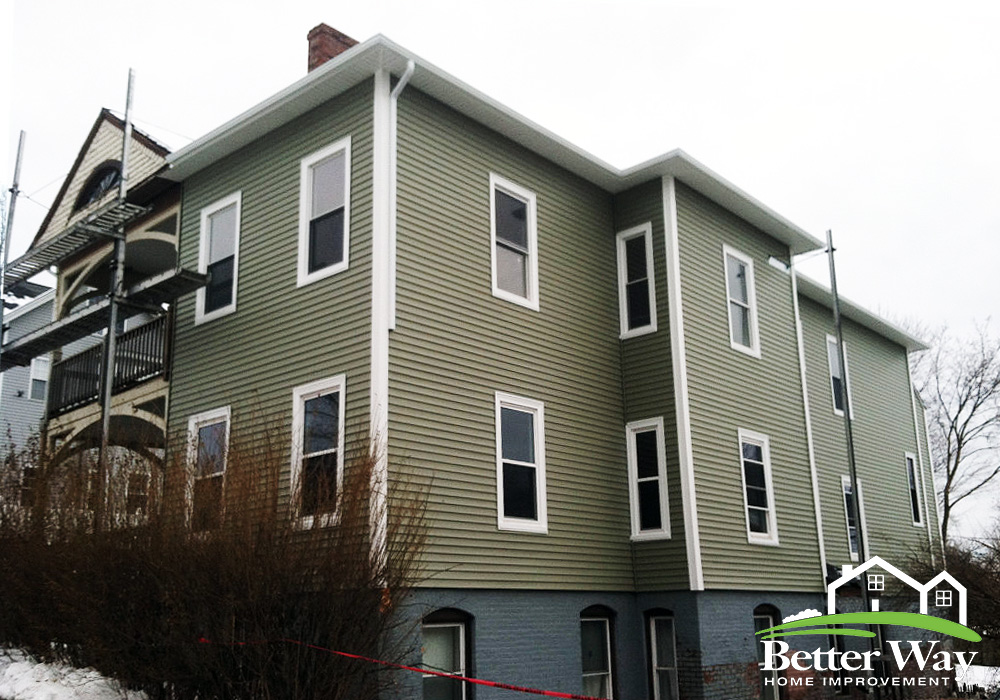
What James Hardie Siding looks like in West Brookfield
Most of the houses we work on in West Brookfield are pre-1900 colonials, capes, and center-chimney farmhouses, with a handful of Greek Revivals near the town center where the historic district has a say in exterior appearance. Fiber cement fits that housing stock better than most people expect. It’s not a plastic panel trying to look old — it’s a cement and cellulose board that takes paint and profile the way the original wood clapboard did, which matters when you’re within sight lines of the historic commission.
We install primarily HardiePlank lap siding in a 7-inch exposure to match the clapboard reveal you’ll see on most pre-1900 New England homes, with HardieTrim at the corners and window casings to keep the proportions right. On the open, wind-exposed lots along Long Hill Road and out toward the Brookfield line, that extra board weight — Hardie runs roughly 2.5 to 3 times heavier per square foot than vinyl — keeps the wall quiet in a way lighter siding doesn’t.
ColorPlus factory finish is the call for most of these jobs. It’s baked on, it doesn’t chalk the way field paint can after a few New England winters, and it means you’re not repainting an antique home every six or seven years. Some owners with strict historic-district color requirements still choose field paint so they can match an approved palette exactly — we’ll tell you honestly which route fits your situation instead of pushing the higher-margin option.
Fire and impact performance come up more here than in newer subdivisions, mostly because of the wood stoves and older electrical panels common in these older farmhouses. Fiber cement doesn’t support flame spread the way vinyl or wood clapboard can, and it holds up to hail and branch strikes from the mature trees that line most of these older lots.
What we account for on West Brookfield homes
Older clapboard behind the existing exterior
One of the first things to check on an older West Brookfield house is what sits behind the current siding. A 1970s or 1980s exterior may have been installed over original wood clapboard. Removing it can reveal damaged boards, uneven areas, or sections that need repair before the new siding can be installed. The condition of that layer is part of the project, not something to ignore until the end.
Heavy material on an older wall
Fiber cement is heavier than the lightweight siding it may be replacing. That means the wall surface and fastening locations need to be considered before installation. The crew accounts for the existing substrate, checks areas where the old exterior has failed, and plans the installation around the actual condition of the house rather than assuming every wall is sound.
Cutting and dust control
Fiber cement needs to be cut to fit around windows, doors, corners, and other details. Cutting produces dust, so the work area has to be managed accordingly. That means using appropriate cutting methods and keeping dust from spreading unnecessarily around the property. The goal is to keep the installation controlled while producing accurate cuts for the exterior details.
ColorPlus or field-applied paint
West Brookfield homeowners have two basic finish approaches to consider. ColorPlus siding arrives with a factory-applied finish, while primed siding can be painted after installation. James Hardie says ColorPlus finishes are cured in a controlled factory environment and are designed to provide consistent color and improved resistance to UV-related fading. The right choice depends on the look you want, the available colors, and how you want the finished project handled. We can price the options as part of the estimate.
What we account for on West Brookfield homes
Site visit and scope
West Brookfield’s mix of farmhouses, older colonials, and open rural lots means every siding job is a little different. We look at wall condition, moisture history, and how much wind and weather a home actually faces before recommending a James Hardie product and installation approach.
Remove, Prepare, Install
Out-of-square framing on pre-1900 structures
A house built in 1840 was never perfectly square, and 180 years of settling hasn’t helped. Hardie doesn’t flex to hide a bowed wall the way vinyl can. We furring-strip and shim the plane before a single course goes up, which on these older frames often takes longer than hanging the siding itself. We price that prep separately so you know what you’re paying for before we start.
Detail work and final check
Wind exposure with no windbreak
Long open approaches on roads like Old Warren Road and out past the reservoir give the wind a straight run at the house with no tree line or neighboring structure to break it. We use the fastening schedule and clip spacing Hardie specifies for high-exposure walls, not the standard interior-lot pattern, so panels stay tight through winter nor’easters instead of working loose at the nail line.
Historic district review in the town center
Homes near West Brookfield Common and along Central Street can fall under local historic district guidelines that govern siding profile, exposure, and trim detail. We’ve been through this process enough times to know what documentation a board typically wants to see, and we’ll help you put together the sample and color submission before we schedule the install, so the job doesn’t stall waiting on approval.
Cutting and dust control on occupied homes
Fiber cement cutting throws silica dust, and Massachusetts contractors are required to control it. We cut outdoors with HEPA-shrouded saws and keep cutting stations away from garden beds, AC condensers, and open windows — a real consideration on these smaller in-town lots where the house next door might be twenty feet away.
Frequently Asked Questions
How is James Hardie siding different from vinyl for an antique West Brookfield home?
Fiber cement is heavier and more rigid, so it sits flatter and straighter on an out-of-square 19th-century wall than vinyl does, and it holds paint or factory ColorPlus finish the way original clapboard did. It costs more installed but resists impact, fire, and wind far better, which matters on the older, more exposed lots common in West Brookfield.
Does West Brookfield's historic district affect what siding I can install?
Homes near the Common and parts of Central Street can fall under local historic district review, which may govern siding profile, exposure, and color. We'll help you prepare the sample and documentation the review board typically wants before we schedule the install.
What happens if you find rot or old lead paint behind my siding?
On homes of this age it's common. We stop, document what we find, and go over options before proceeding — that usually means replacing damaged sheathing or framing, and handling any lead-painted material under proper containment and disposal practices. We build this possibility into the estimate as a contingency rather than surprising you with it mid-job.
How much does James Hardie siding cost in West Brookfield and how long does it take?
Cost depends heavily on how much wall prep an older frame needs, but fiber cement runs higher per square foot than vinyl due to material and labor. A typical single-family install takes 4 to 7 working days once tear-off and prep are done; antique homes with more furring work can run longer.
Do you handle the wind exposure on open lots outside the village center?
Yes. Homes on longer, open approaches with no windbreak get a tighter fastening schedule and clip spacing than a standard interior lot, following Hardie's high-exposure installation specs, so panels stay secure through winter storms.
How the job runs
Walkthrough and measurement
We measure every wall plane, check for square, and note trim details, window casing style, and any historic district requirements. On an antique home this step runs longer than on a modern build because we’re mapping out where furring will be needed before we quote it.
Tear-off and substrate prep
Old siding and any failed sheathing come off down to the studs where needed. This is where out-of-square walls get shimmed and furred flat. On a typical West Brookfield antique home, prep can run one to two days longer than a comparable job on a squarer, newer structure.
Hardie installation and trim
Plank goes up with the fastening pattern matched to your site’s wind exposure, followed by trim, corners, and caulking at joints. A standard single-family install runs 4 to 7 working days depending on square footage and how much prep the walls needed; larger farmhouses with wraparound porches run longer.
We don’t quote a flat number over the phone for fiber cement, because the prep variable on a 19th-century frame is too big to guess at from a photo. What we can tell you honestly is that fiber cement installed cost typically runs higher than vinyl per square foot — the material, the crew time, and the prep all add up — but it holds paint, resists impact, and outlasts vinyl by a wide margin, which is why it’s the right call on a lot of these older homes even at the higher ticket.
Better Way has been doing this kind of work in Worcester County long enough to earn Angie’s List Super Service Awards every year from 2013 through 2019. We’re licensed and insured, and we show up when we say we will — the thing homeowners tell us matters most after they’ve been burned by a contractor who didn’t.
Recent work in and around West Brookfield
A common job type out here is a center-chimney cape built before 1900, original clapboard long since covered over with aluminum or vinyl sometime in the 70s or 80s, now failing. We strip back to sheathing, find out what’s actually behind the old siding, address any rot or moisture damage at the sills and window bucks, then install HardiePlank with ColorPlus finish in a traditional white or historic color to match the town’s aesthetic. These jobs usually run larger than a standard ranch or colonial re-side because of the extra prep the old frame needs, and because many of these homes have farmer’s porches or ells that add wall area and cutting complexity.
Other services we provide in West Brookfield
Not every home needs the fiber cement upgrade — plenty of West Brookfield homeowners get a full re-side with quality vinyl siding installation instead, especially on homes without historic district restrictions. If your siding just needs patching rather than a full replacement, we handle siding repair too, and when it’s time for a full tear-off job on failed siding of any material, that’s covered under siding replacement. We also install and repair seamless gutters, which matter on these older homes where the original gutter lines rarely match up to a new siding profile, and we handle replacement windows and doors for owners doing a fuller exterior update at the same time as their siding.
Free estimates in West Brookfield
We’re based in West Brookfield, about 16.4 miles from West Brookfield Common, and we run estimates out this way regularly. Call (508) 506-8957 for a free, no-pressure estimate. We’ll come look at your walls, measure, check the framing, and give you a real number in writing — not a phone quote. After that, you decide on your timeline. No pressure to sign the day we’re there.