


James Hardie Siding in Holden, MA
Most calls we get from Holden start the same way: a homeowner on a colonial off Main Street or a ranch near Eagle Lake has vinyl siding from the 80s or 90s that’s chalking, bowing, or cracked from a hailstorm, and they want to know if fiber cement is worth the jump in price. It is, for the right house. Holden has a lot of larger lots with room to stage a lift and stack material, which keeps fiber cement installs moving without the tight-yard problems we run into closer to the city. If you’re comparing a vinyl re-side against James Hardie board, the difference shows up in wind rating, fire resistance, and how the color holds after ten New England winters.
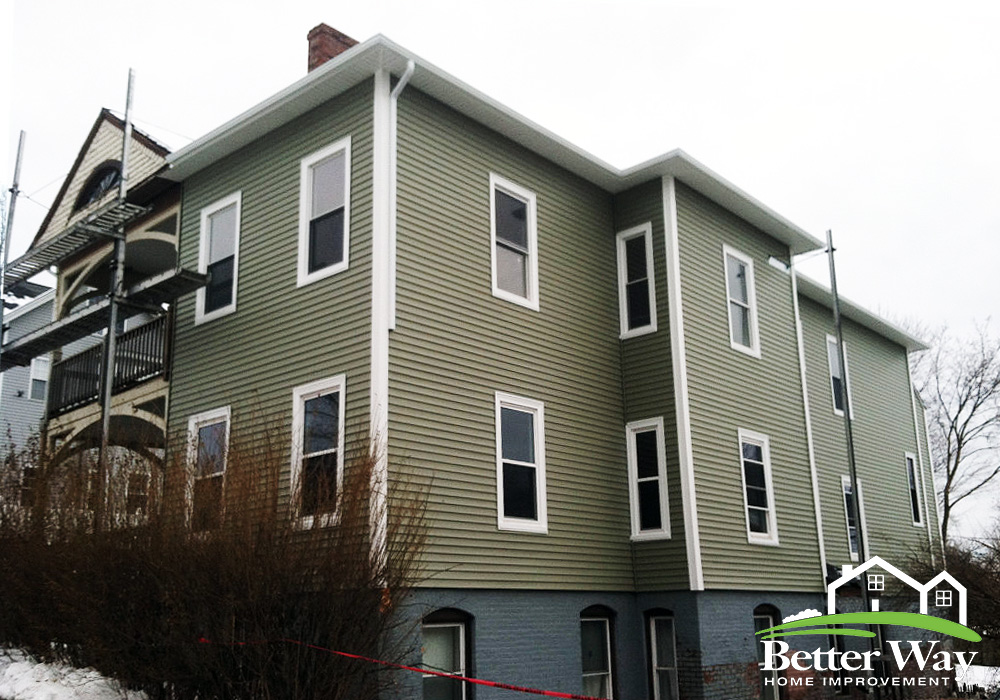
What James Hardie Siding looks like in Holden
Holden’s housing stock runs from postwar capes near the town center to colonials and larger builds out toward Chaffins and the Rutland line. A good share of that stock is already sided in vinyl, and a lot of it is starting to show its age — fading, warping in direct sun, or panels that popped loose in the last big nor’easter. When a homeowner here switches to James Hardie, they’re usually doing it because they want something that won’t need replacing again in fifteen years.
We install HardiePlank lap siding most often on Holden jobs, in either a smooth or cedar-mill texture depending on the house style. Colonials and capes with traditional trim tend to look right with a 7-inch exposure; some of the newer builds on the larger lots take a wider reveal well. We spec ColorPlus prefinished panels on almost every job unless the homeowner specifically wants a custom field-painted color to match existing trim — ColorPlus holds its finish far longer than site-applied paint and it’s baked on at the factory, so there’s no waiting on cure time before the crew can handle and cut boards on site.
Fiber cement is heavier and denser than the vinyl most Holden homes already have, which is exactly why it holds up to impact and doesn’t rattle in wind the way lighter panels can. It also carries a Class A fire rating, which some homeowners here care about given how many houses back up to wooded lots and stone-wall tree lines. The tradeoff is installation: it has to be cut with the right blade and dust controls, fastened correctly, and flashed at every transition, or the warranty doesn’t mean much. That’s the part that separates a contractor who’s done fifty of these from one who’s done five.
What we account for on Holden homes
Older clapboard behind the existing exterior
One of the first things to check on an older Holden house is what sits behind the current siding. A 1970s or 1980s exterior may have been installed over original wood clapboard. Removing it can reveal damaged boards, uneven areas, or sections that need repair before the new siding can be installed. The condition of that layer is part of the project, not something to ignore until the end.
Heavy material on an older wall
Fiber cement is heavier than the lightweight siding it may be replacing. That means the wall surface and fastening locations need to be considered before installation. The crew accounts for the existing substrate, checks areas where the old exterior has failed, and plans the installation around the actual condition of the house rather than assuming every wall is sound.
Cutting and dust control
Fiber cement needs to be cut to fit around windows, doors, corners, and other details. Cutting produces dust, so the work area has to be managed accordingly. That means using appropriate cutting methods and keeping dust from spreading unnecessarily around the property. The goal is to keep the installation controlled while producing accurate cuts for the exterior details.
ColorPlus or field-applied paint
Holden homeowners have two basic finish approaches to consider. ColorPlus siding arrives with a factory-applied finish, while primed siding can be painted after installation. James Hardie says ColorPlus finishes are cured in a controlled factory environment and are designed to provide consistent color and improved resistance to UV-related fading. The right choice depends on the look you want, the available colors, and how you want the finished project handled. We can price the options as part of the estimate.
What we account for on Holden homes
Site visit and scope
Larger lots, easier staging, but longer carries
Holden lots give us room to set up scaffolding and stage full pallets of board without blocking a neighbor’s driveway, which is a real advantage over tighter in-town properties. The tradeoff is that houses set back from the road mean longer material carries from the truck to the wall — we plan crew size around that up front so it doesn’t slow the job down.
Mixed housing ages mean mixed substrates
A 1950s cape and a 2005 colonial in the same neighborhood can have completely different wall assemblies underneath the existing siding. We check sheathing condition — plywood, OSB, or older board sheathing on some of the postwar capes — before we quote, because that determines whether we’re doing a straight re-side or need to address rot or delamination first.
Cut and dust handling on occupied lots
Fiber cement produces silica dust when cut, and Holden’s larger yards mean we can set up cutting stations away from the house, gardens, and any pool or patio area rather than working right against the siding line. We use dust-collecting saws and keep cutting downwind of the house whenever the property allows it.
Storm exposure on higher ground
Parts of Holden sit at higher elevation than the Worcester basin, and that means more direct wind-driven rain and hail exposure on some builds, especially those near Wachusett or on more open lots. We flash and seal every joint and penetration with that in mind rather than relying on caulk alone.
Remove, Prepare, Install
How the job runs
Estimate and measure — day one
We walk the exterior, check the sheathing where we can access it, measure for material, and talk through panel profile and color. You get a written quote before we leave, not a follow-up call three days later.
Tear-off and prep — typically 1-2 days
Old siding comes off, sheathing gets inspected and repaired where needed, and we house-wrap before a single Hardie board goes up. This is the step that catches problems early instead of after the new siding is on.
Install and finish — usually 3-6 days depending on house size
Board goes up with proper fastening and flashing at every window, door, and corner. A full HardiePlank re-side on an average Holden colonial or cape typically runs about a week start to finish, weather permitting. Larger homes or ones needing more sheathing repair take longer.
Detail work and final check
Recent work in and around Holden
A typical job we see in Holden is a full tear-off and re-side on a colonial or larger cape where the original vinyl, installed in the 80s or 90s, has faded unevenly and started cracking at the corners. The homeowner wants something with a longer service life and better storm resistance, and often wants a color change rather than matching the old vinyl tone. We pull the old siding, check the sheathing — sometimes it’s fine, sometimes there’s water damage around old window flashing that needs to be addressed first — then install HardiePlank with ColorPlus finish and rebuild the trim details to match the house’s style. We don’t publish customer names or addresses, but this profile covers a good share of the calls we get from that town.
Other services we provide in Holden
Fiber cement isn’t the right call for every Holden budget, and it’s not the only work we do in town. If you’re not ready for the jump to James Hardie, we also handle straightforward vinyl siding installation for homeowners who want a lower-cost re-side, and siding repair for storm damage, loose panels, or spot fixes that don’t call for a full tear-off. When a full re-side makes more sense than patching, our siding replacement page covers how we handle that decision. We also install seamless gutters and replacement windows and doors, which often get bundled into a siding project since the crew and staging are already on site.
Free estimates in Holden
We’re based in Holden, about 16.1 miles from Holden, and we run estimates out that way regularly. Call (508) 506-8957 and we’ll set a time to walk your house, measure, and talk through panel profile and color options. You’ll get a written quote on the spot, not a callback days later. After that, it’s your call whether to move forward — no pressure, no expiration-date gimmicks on the price.
Frequently Asked Questions
Why choose James Hardie over vinyl for a Holden home?
Fiber cement is heavier, denser, and carries a Class A fire rating that vinyl doesn't. It holds color longer with ColorPlus finish, resists impact and wind better, and doesn't warp or fade the way a lot of the 80s and 90s vinyl on Holden homes has. It costs more up front and takes longer to install, but it lasts longer between replacements.
How much does James Hardie siding cost in Holden?
Most full re-sides run higher than a comparable vinyl job because of material cost and installation labor. Exact pricing depends on house size, trim detail, and whether sheathing repair is needed, so we quote after walking the specific property rather than giving a number that doesn't fit your house.
What happens if you find rot or damage behind the old siding?
On homes with vinyl from the 80s or 90s, it happens often enough that we plan for it. We stop, show you the damaged area, and quote the repair separately before we close the wall back up. We don't install new siding over sheathing we know is compromised.
How long does a James Hardie installation take on a typical Holden house?
A full tear-off and re-side on an average colonial or cape usually takes about a week, including tear-off, sheathing repair if needed, and installation. Larger homes or ones with more trim detail can take longer.
Should I choose ColorPlus finish or field paint?
ColorPlus is factory-baked and holds its color far longer than paint applied on site after installation. We use it on nearly every Holden job unless a homeowner needs a specific custom color to match existing trim, in which case field paint is the only option.
Ready to talk siding for your Holden home?
Thinking about James Hardie siding for your Holden property? We’re happy to come take a look, walk the exterior with you, and talk through color and profile options that fit your home. There’s no obligation and no pressure — just a straightforward conversation about what a new fiber cement siding job would involve for your house.