


James Hardie Siding in Holland, MA
Homes around Hamilton Reservoir and Holland Pond take a different kind of weather than the rest of Worcester County. Wind drives rain sideways across the water and hits the lake-facing walls hard, year after year. A lot of the houses on that side of town started as camps and got closed in for year-round living somewhere along the way, which means the wall behind the siding is often not what it looks like from the street. James Hardie fiber cement holds up to that exposure better than most materials we install, but it has to go on over a wall that’s actually sound, and on a lot of Holland homes that’s the part that needs attention first.
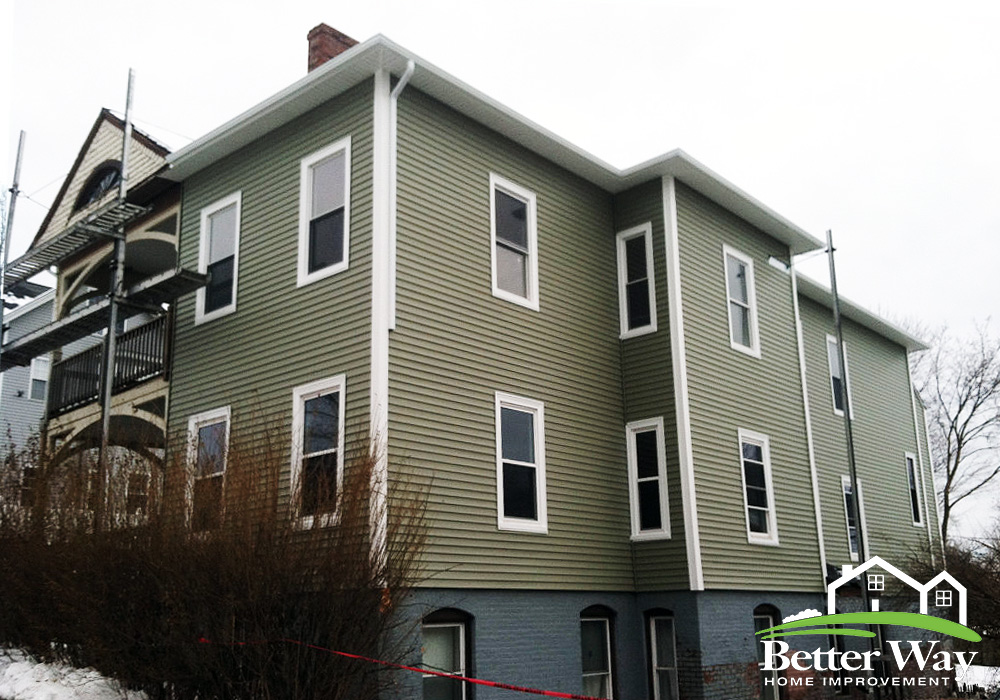
What James Hardie Siding looks like in Holland
Fiber cement is heavier than vinyl, roughly four to five times the weight per square, and that changes how it gets handled on site. It ships in bundles that take two people to move, it gets cut with a shear or a dust-collecting saw instead of a snap and score, and it needs a wall that can actually carry the load without sagging over a few seasons. On the lake side of Holland, where houses face open water and catch the full run of wind off the reservoir, that weight and rigidity is exactly why homeowners choose it over vinyl. It doesn’t flex, oil-can, or rattle in a gust the way lighter siding can on an exposed elevation.
We install pre-primed and ColorPlus finished boards on most Holland jobs. ColorPlus is baked on at the factory and carries its own finish warranty separate from the substrate, which matters here because a field-painted board on a water-facing wall will show wear at the caulk lines and cut edges years before a factory finish will. For homeowners who want a specific custom color to match a lake-community palette, field paint is still an option, but we walk through the tradeoff honestly before the quote goes out.
Fire and impact performance come up more in Holland than in some of our other towns because a fair number of these are seasonal-turned-year-round properties near wooded lots with limited setback from neighbors. Fiber cement carries a Class A fire rating and resists hail and wind-driven debris better than vinyl, which some owners weigh heavily given the tree cover around the reservoir.
What we account for on Holland homes
Older clapboard behind the existing exterior
One of the first things to check on an older Holland house is what sits behind the current siding. A 1970s or 1980s exterior may have been installed over original wood clapboard. Removing it can reveal damaged boards, uneven areas, or sections that need repair before the new siding can be installed. The condition of that layer is part of the project, not something to ignore until the end.
Heavy material on an older wall
Fiber cement is heavier than the lightweight siding it may be replacing. That means the wall surface and fastening locations need to be considered before installation. The crew accounts for the existing substrate, checks areas where the old exterior has failed, and plans the installation around the actual condition of the house rather than assuming every wall is sound.
Cutting and dust control
Fiber cement needs to be cut to fit around windows, doors, corners, and other details. Cutting produces dust, so the work area has to be managed accordingly. That means using appropriate cutting methods and keeping dust from spreading unnecessarily around the property. The goal is to keep the installation controlled while producing accurate cuts for the exterior details.
ColorPlus or field-applied paint
Holland homeowners have two basic finish approaches to consider. ColorPlus siding arrives with a factory-applied finish, while primed siding can be painted after installation. James Hardie says ColorPlus finishes are cured in a controlled factory environment and are designed to provide consistent color and improved resistance to UV-related fading. The right choice depends on the look you want, the available colors, and how you want the finished project handled. We can price the options as part of the estimate.
What we account for on Holland homes
Site visit and scope
Water-facing wind and driven rain
Any elevation that faces Hamilton Reservoir or Holland Pond gets treated as a high-exposure wall. We use a heavier fastening schedule and pay close attention to flashing and water-resistive barrier lap on those sides, because that’s where sustained wind pushes rain past gaps that would never be a problem on a sheltered wall.
Cottage-to-year-round conversions
A lot of Holland’s housing stock started as a seasonal camp and got winterized in stages over the decades. When we open up the old siding on these we regularly find framing sized for a summer structure, not a four-season one. We flag undersized studs and framing issues before we button up new siding over them, not after.
Missing insulation and vapor control
Converted cottages frequently have no insulation in the walls and no vapor barrier at all. Fiber cement doesn’t fix that on its own. We talk through adding rigid insulation or a proper WRB during tear-off, because closing up a wall that still has none of that is a missed chance that won’t come around again for twenty years.
Rot at the water side
Sustained moisture exposure on lake-facing walls means we check for rot in the sheathing and framing before we ever write the quote, not during the job. If we find soft wood, we tell you what it will take to fix it and price it separately so there’s no surprise once the old siding is off.
Remove, Prepare, Install
How the job runs
Walk-through and quote
We inspect the exterior, pay close attention to any water-facing walls, and check accessible spots for rot or moisture damage before we quote anything. You get a written estimate, not a verbal number.
Tear-off and wall check
Old siding comes off, and we assess the sheathing, framing and existing insulation underneath. On conversion-era Holland homes this is where we usually find out what’s really behind the wall. Anything unexpected gets priced and discussed before we move forward.
Install and finish
Fiber cement panels go up with the fastening and flashing detail suited to the wall’s exposure, trim and corners get finished to match, and we do a final walk-through with you. Most Holland jobs of typical single-family size run three to five working days once the wall is confirmed sound; a job with unexpected rot repair or full insulation retrofit runs longer, and we tell you that upfront, not partway through.
Detail work and final check
Fiber cement is a bigger investment than vinyl up front, and homeowners comparing quotes in Holland want to know why. The honest answer is the wall assembly and the material both cost more, but on an exposed lake elevation it holds paint, shape and fastener grip longer than lighter siding does, which matters more here than it does on a sheltered inland street.
Recent work in and around Holland
A common job type on the Holland Pond and Hamilton Reservoir side of town is a full siding replacement on a converted cottage where the owner wants the house to actually perform through a New England winter, not just look finished. That usually means removing the original siding, finding out the wall has no insulation and thin framing, and having a real conversation about whether to upgrade the wall assembly while it’s open before fiber cement goes back on. On the inland side of Holland, where houses were built as year-round homes from the start, jobs run more straightforward: sound sheathing, standard fastening schedule, and a finish upgrade from aging vinyl or old wood clapboard to Hardie panel or plank.
Other services we provide in Holland
Not every Holland home is a fit for fiber cement right away, and not every job is a full re-side. We also handle general siding contracting for homeowners who want a broader look at their exterior before deciding on material, along with seamless gutters sized for the runoff a lake-adjacent roof sheds during spring melt and summer storms. We install replacement windows and doors too, which often gets discussed at the same time as siding on conversion-era homes since the old window flashing is usually part of what’s driving the water problems in the first place. If you’re not sure whether your situation calls for repair, a full replacement, or something else, we’ll tell you straight during the walk-through instead of upselling the bigger job.
Frequently Asked Questions
Why choose James Hardie fiber cement over vinyl for a Holland lake property?
Fiber cement is heavier and more rigid, so it holds up better on wind- and rain-exposed elevations facing Hamilton Reservoir or Holland Pond. It also carries a Class A fire rating and resists impact damage better, which matters on wooded lots with limited clearance.
Our house started as a camp and was closed in for year-round use. Does that affect the siding job?
Yes. Conversion-era homes in Holland often have undersized framing, no insulation, and no vapor barrier behind the old siding. We check for this during tear-off and discuss options for improving the wall before new siding goes back on, since it's the best chance to fix it without opening the wall again.
What if you find rot behind our old siding?
On lake-facing walls in Holland, finding some rot or moisture damage during tear-off is common, not rare. We stop, show you exactly what we found, and give you a separate price for the repair before continuing. We don't cover it up and move on.
How much does James Hardie siding cost compared to vinyl, and how long does it take?
Fiber cement runs higher than vinyl on materials and labor because of the weight and finish work involved. A typical single-family re-side in Holland runs three to five working days once the wall is confirmed sound; jobs with rot repair or an insulation retrofit take longer. Exact pricing depends on square footage, trim detail and what we find once the old siding is off, which is why we quote in person.
Should we choose ColorPlus finish or field-painted siding for a house on the water?
For water-facing walls we generally recommend ColorPlus, the factory-baked finish, because it holds up to sustained wind-driven rain longer than field paint, especially at cut edges and caulk lines. Field paint is still available if you need a custom color to match a specific look.
Free estimates in Holland
Holland is about 15.5 miles from our shop at 152 Sutton Ave in Holland, and we quote jobs out this way regularly. Call (508) 506-8957 for a free estimate. We’ll set a time to walk the exterior, check the water-facing walls for rot or moisture issues, and give you a written quote before anything is scheduled. We’re licensed and insured, and we’ve held Angie’s List Super Service Awards from 2013 through 2019.