


James Hardie Siding in Putnam, CT
Putnam’s older neighborhoods — the mill-worker triple deckers off Front Street, the antique capes out toward Route 44, the farmhouses on big wooded lots with long gravel drives — carry a lot of original wood clapboard and, on the houses that already got a facelift, a layer of thin vinyl over board sheathing that never quite hid the waves in the wall. Homeowners looking at James Hardie fiber cement in Putnam are usually trying to solve two problems at once: a wall that’s out of square from age, and a desire for something that won’t dent, buckle, or need replacing again in fifteen years. Fiber cement is heavier, it cuts differently than vinyl, and it holds paint in a way vinyl never will. That’s the whole pitch, and it’s worth walking through honestly before you commit to it.
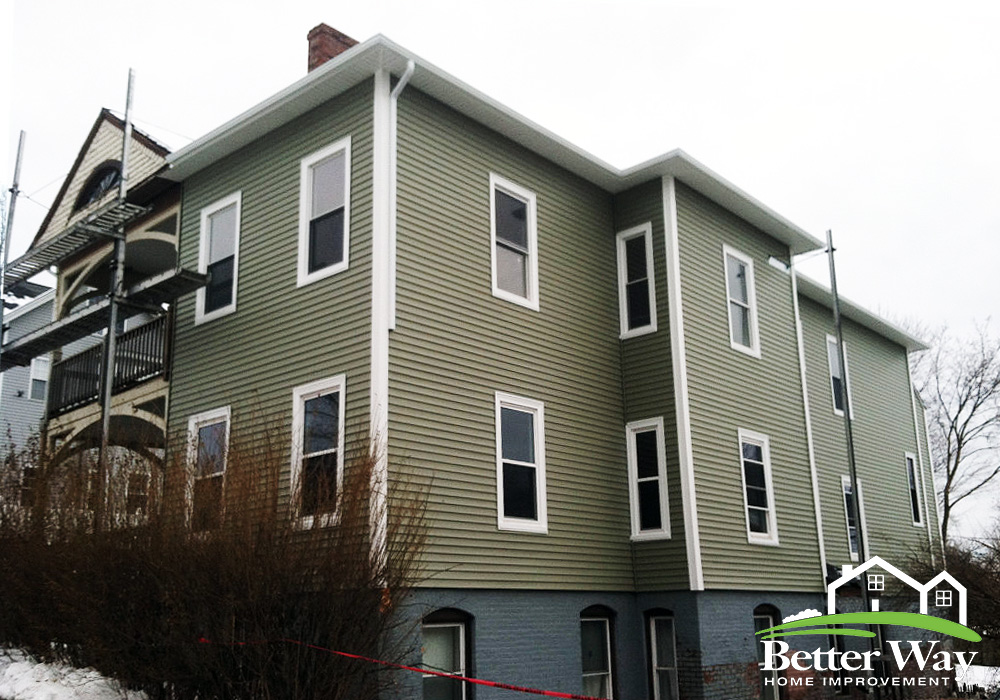
What James Hardie Siding looks like in Putnam
Fiber cement is cement, sand, and cellulose fiber pressed into a plank. A single 12-foot piece of HardiePlank runs close to 3 pounds per square foot installed, versus under a pound for vinyl. That weight matters on Putnam’s older homes because it does two things: it telegraphs less of the wall’s imperfections than a thin, flexible product would, and it puts more load on fasteners and sheathing that may be 60-100 years old. We check the sheathing before we quote, not after we’ve torn siding off and found out the hard way.
Cutting fiber cement produces silica dust, which is a real jobsite hazard, not a talking point. On occupied lots — and most Putnam lots have a house next door, a garden, or kids’ toys in the yard — we use saws with HEPA-filtered dust collection or score-and-snap methods outdoors, away from windows and air intakes. This is standard practice for us, not an upcharge.
On finish: ColorPlus prefinished plank comes with a factory-baked acrylic finish and a longer color warranty than anything you can get from a field-painted board. Field paint costs less upfront and lets you match a specific historic color scheme, which matters on some of Putnam’s older housing stock where the town or a homeowners’ preference calls for a particular shade. We’ll tell you straight which option fits your house and your budget instead of pushing the higher-margin one.
What we account for on Putnam homes
Older clapboard behind the existing exterior
One of the first things to check on an older Putnam house is what sits behind the current siding. A 1970s or 1980s exterior may have been installed over original wood clapboard. Removing it can reveal damaged boards, uneven areas, or sections that need repair before the new siding can be installed. The condition of that layer is part of the project, not something to ignore until the end.
Heavy material on an older wall
Fiber cement is heavier than the lightweight siding it may be replacing. That means the wall surface and fastening locations need to be considered before installation. The crew accounts for the existing substrate, checks areas where the old exterior has failed, and plans the installation around the actual condition of the house rather than assuming every wall is sound.
Cutting and dust control
Fiber cement needs to be cut to fit around windows, doors, corners, and other details. Cutting produces dust, so the work area has to be managed accordingly. That means using appropriate cutting methods and keeping dust from spreading unnecessarily around the property. The goal is to keep the installation controlled while producing accurate cuts for the exterior details.
ColorPlus or field-applied paint
Putnam homeowners have two basic finish approaches to consider. ColorPlus siding arrives with a factory-applied finish, while primed siding can be painted after installation. James Hardie says ColorPlus finishes are cured in a controlled factory environment and are designed to provide consistent color and improved resistance to UV-related fading. The right choice depends on the look you want, the available colors, and how you want the finished project handled. We can price the options as part of the estimate.
What we account for on Putnam homes
Site visit and scope
Board sheathing behind old siding
A lot of Putnam’s pre-1950 homes were built with board sheathing instead of plywood or OSB. Fiber cement needs a flat, sound nailing surface. Where board sheathing has cupped or separated, we furr it out or add a layer of structural panel before the Hardie plank goes on. Skipping this step is how you get fastener pops and hairline cracks in year two.
Tree cover and moisture
Putnam has heavy tree canopy in a lot of its residential streets and out toward the lake roads. Shaded walls stay damp longer after rain. We hold to Hardie’s minimum clearances above grade, roofs, and decks, and we flash penetrations tighter than code minimum on north-facing and heavily shaded elevations, because that’s where moisture problems actually start.
Long service drives and site access
Several properties we’ve worked on around Putnam sit at the end of long private drives or gravel lanes. That changes how we stage material delivery — fiber cement comes on pallets and needs a place to sit flat and dry before installation, so we confirm staging and drop-off access before the crew is scheduled, not the morning of.
Connecticut licensing and permitting
Putnam is Connecticut, not Massachusetts, and the rules are different. Home improvement work here falls under Connecticut’s Home Improvement Contractor (HIC) registration and consumer protection statutes, and permitting runs through the Town of Putnam’s building department, not a Massachusetts municipality. We confirm our HIC registration covers the specific scope of your job and pull the correct local permit before any material shows up. If a contractor quoting your job can’t answer a direct question about which state’s licensing applies, that’s worth asking about before you sign anything.
Remove, Prepare, Install
How the job runs
Site visit and measure
We walk the exterior, check the sheathing condition where we can access it, measure elevations, and talk through ColorPlus versus field-painted options. This is also when we confirm site access for a long driveway or tight lot, since that affects scheduling. You get a written estimate, not a verbal number.
Tear-off and substrate repair
Old siding comes off, and we address whatever the wall tells us — rotten sheathing, old flashing, out-of-square framing. This is the phase that takes longer on Putnam’s older homes than on a 1990s build, and we build that into the schedule up front rather than surprising you mid-job.
Install and finish
Fiber cement plank goes on with corrosion-resistant fasteners at Hardie’s specified spacing, trim and flashing details get closed up, and if you’ve gone with field paint, that happens once the boards are hung and caulked. A typical single-family Putnam home runs 4 to 7 working days depending on size, substrate condition, and weather. Because we’re coming from Putnam, we schedule Putnam jobs in blocks rather than one-offs, which keeps callback response reasonable if you need us back for a warranty item.
Detail work and final check
Recent work in and around Putnam
A common job we see in this area is a two-story farmhouse or converted mill-district home where the owner has vinyl siding installed sometime in the 1980s over original clapboard, and the vinyl has started to bow or crack from decades of sun and freeze-thaw. The tear-off exposes board sheathing with some soft spots near ground level and around old window flashing. We replace the compromised sheathing sections, correct the flashing, and install ColorPlus fiber cement in a color that reads close to the original clapboard tone the house had before it was ever covered in vinyl. That’s not a one-off story — it’s close to the default scope on a lot of this housing stock, which is why we quote a contingency line for sheathing repair rather than assuming the wall underneath is clean.
Other services we provide in Putnam
Fiber cement isn’t the only path for Putnam homeowners weighing siding options — some houses are better candidates for straightforward vinyl siding installation depending on budget and the condition of the wall. If your current siding just needs targeted fixes rather than a full tear-off, our siding repair service handles cracked panels, water damage, and loose trim without a full replacement job. When the whole exterior is due, siding replacement covers the tear-off and decision-making process in more depth than this page does. We also install and repair seamless gutters, which matter more than usual on Putnam’s tree-heavy lots, and we handle replacement windows and doors if you’re touching the exterior anyway and want to deal with drafty old sash at the same time.
Free estimates in Putnam
Putnam is about 14.2 miles from our shop at 152 Sutton Ave in Putnam, and it’s inside our regular Quiet Corner service area. Call (508) 506-8957 for a free estimate. We’ll set a time to walk the house, check the wall condition, and give you a written number before we leave — no pressure to sign that day. If you move forward, we confirm the Connecticut permit and schedule the crew, and you’ll know the start date and rough timeline before any material is ordered.
Frequently Asked Questions
Why choose James Hardie fiber cement over vinyl for a Putnam home?
Fiber cement holds its shape better on older, slightly out-of-square walls, resists impact and fire better than vinyl, and holds paint or a factory ColorPlus finish longer without fading or warping. It costs more installed than vinyl, mainly because of the material weight and cutting requirements, but it lasts longer and needs less maintenance.
Does Connecticut licensing apply even though your shop is in Massachusetts?
Yes. Any work we do in Putnam falls under Connecticut's Home Improvement Contractor rules and the Town of Putnam's permitting process, not Massachusetts law. We confirm our HIC registration covers your specific job and pull the correct local permit before starting, regardless of where our shop is based.
What happens if you find rot or bad sheathing behind my old siding?
On Putnam's older housing stock, finding some rotted board sheathing or old, incorrect flashing during tear-off is common, not rare. We stop, show you what we found, and give you a price to repair it before continuing. We build a contingency allowance into most quotes for this stock so it isn't a total surprise if it happens.
How long does a James Hardie siding job take on a typical Putnam house?
A single-family home usually runs 4 to 7 working days, depending on size, how much substrate repair is needed, and weather. Older homes with board sheathing and unpredictable framing tend to run toward the longer end of that range.
What does James Hardie siding cost compared to vinyl in this area?
Fiber cement generally costs more than vinyl per square foot installed, due to material price, weight, and specialized cutting and fastening. Exact pricing depends on your home's size, trim detail, and whether you choose ColorPlus prefinished or field-painted boards. We give a specific written number after walking the house — we don't quote off square footage alone.
Why Putnam homeowners choose James Hardie
Putnam’s mix of older homes and newer builds face harsh New England winters, humidity, and coastal-influenced storms. James Hardie fiber cement siding resists moisture damage, won’t warp or rot, and holds paint far longer than wood or vinyl alternatives.
- Built to withstand freeze-thaw cycles
- Resists pests and moisture
- Long-lasting color retention