


James Hardie Siding in Upton, MA
If you own a townhouse or a postwar colonial near the Milford or Bellingham line and your association or your own eye has ruled out vinyl, James Hardie fiber cement is the usual next call. Upton’s eastern edge has more condo and townhouse developments than the rural western part of town, and a good number of them carry association rules that specify material and color before anyone touches the exterior. Fiber cement holds a painted or ColorPlus finish flatter than vinyl, resists dents from lawn equipment and hail, and meets fire ratings some associations now ask for in writing. We install it across Upton, and the estimate always starts with a call to find out what your association actually allows.
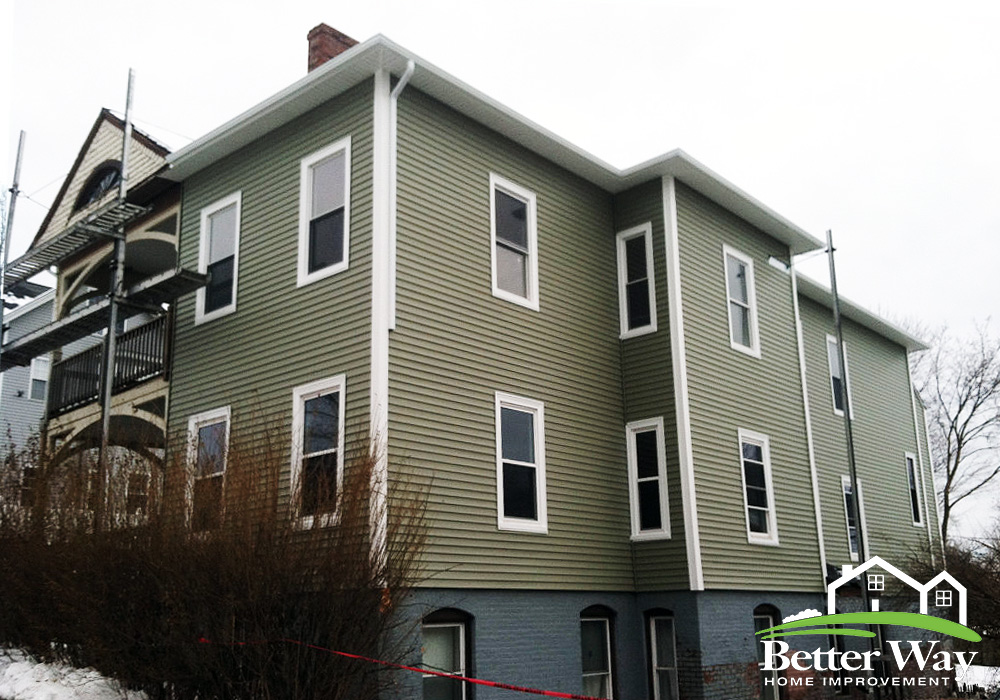
What James Hardie Siding looks like in Upton
Most of the Hardie work we do in Upton falls into two categories: full replacement on a postwar single-family house shedding its original vinyl or old wood clapboard, and matched exterior work on a townhouse unit inside an association that has already approved the product and a color palette for the whole complex. The two jobs run differently. On a standalone house, we’re choosing the profile, the trim width, and the finish from scratch with the homeowner. On a townhouse unit, we’re often matching an existing specification exactly, down to the reveal size and the exact ColorPlus color code, because the building next door was already done and the association will not approve a mismatch.
Fiber cement is heavier and denser than vinyl, which is exactly why people choose it for this area. It doesn’t oil-can in the sun, it doesn’t crack in a hard freeze the way older vinyl does after twenty winters, and it holds a straight line against brick foundations and stone accents that are common on the nicer lots near Elm Street and Milford Road. It also takes an impact from a stray baseball or a ladder bump without the visible dent that vinyl shows. For a denser part of town where units sit closer together and exteriors are more visible to neighbors, that consistency matters more than it does on a spread-out rural lot.
What we account for on Upton homes
Older clapboard behind the existing exterior
One of the first things to check on an older Upton house is what sits behind the current siding. A 1970s or 1980s exterior may have been installed over original wood clapboard. Removing it can reveal damaged boards, uneven areas, or sections that need repair before the new siding can be installed. The condition of that layer is part of the project, not something to ignore until the end.
Heavy material on an older wall
Fiber cement is heavier than the lightweight siding it may be replacing. That means the wall surface and fastening locations need to be considered before installation. The crew accounts for the existing substrate, checks areas where the old exterior has failed, and plans the installation around the actual condition of the house rather than assuming every wall is sound.
Cutting and dust control
Fiber cement needs to be cut to fit around windows, doors, corners, and other details. Cutting produces dust, so the work area has to be managed accordingly. That means using appropriate cutting methods and keeping dust from spreading unnecessarily around the property. The goal is to keep the installation controlled while producing accurate cuts for the exterior details.
ColorPlus or field-applied paint
Upton homeowners have two basic finish approaches to consider. ColorPlus siding arrives with a factory-applied finish, while primed siding can be painted after installation. James Hardie says ColorPlus finishes are cured in a controlled factory environment and are designed to provide consistent color and improved resistance to UV-related fading. The right choice depends on the look you want, the available colors, and how you want the finished project handled. We can price the options as part of the estimate.
What we account for on Upton homes
Site visit and scope
Upton’s mix of older farmhouses and newer builds means each home presents its own quirks. We look at wall orientation, moisture exposure, and existing trim details before recommending a James Hardie plank or panel style.
- Sun and weather exposure by side of house
- Existing moisture or ventilation issues
- Trim, window, and corner details
Remove, Prepare, Install
Association approval and color matching
A meaningful share of Upton’s east-side housing sits inside a condo or townhouse association with a written exterior standard. Before we quote the job, we ask for the association’s approved materials list and color palette, or we help you find it. ColorPlus finishes are baked on at the factory and come in a fixed range of colors, so we confirm the association’s approved code matches an actual ColorPlus option before ordering. If it doesn’t, we quote field-painted Hardie panel instead, which costs more in labor but lets us hit any custom color the board requires.
Detail work and final check
Substrate weight and structural fasteners
Fiber cement runs roughly 2.5 to 3 times heavier per square than vinyl. On older postwar framing, especially houses built quickly in the 1950s and 60s boom years common in this part of Massachusetts, we check that the wall can carry the extra load and that fastener spacing meets Hardie’s published schedule for our wind zone. We don’t shortcut nailing patterns to save time — under-fastened fiber cement is the number one cause of call-backs on this product.
Cut and dust handling on occupied streets
Cutting fiber cement generates silica dust, and Upton’s townhouse rows and closer-set single-family lots don’t give us much room to work away from neighbors. We cut outside using a saw fitted with a HEPA vacuum shroud, or we score-and-snap smaller pieces, to keep dust off cars, decks, and shared walkways. On tight association properties we also coordinate cutting locations with the property manager ahead of time.
ColorPlus versus field paint
ColorPlus finish is factory-applied, carries its own warranty against fading and chipping, and is the faster install because there’s no on-site painting to schedule around weather. Field-painted panel costs more up front in labor and repainting cycles down the road, but it’s the only route when an association demands a custom color outside the ColorPlus range, or when a homeowner is matching trim already on the house. We quote both so you can see the real cost difference before deciding.
Frequently Asked Questions
Does James Hardie siding need association approval in Upton?
If your property is part of a condo or townhouse association, almost certainly yes. We ask for the approved materials and color list before quoting, and if your unit already has neighbors done in Hardie, we match the existing spec exactly rather than guessing.
Is James Hardie siding worth the extra cost over vinyl in Upton?
It depends on how long you plan to own the house and what your association requires. Fiber cement costs more upfront but holds paint and color longer, resists dents and cracking better in New England winters, and is often the only option associations approve for shared-look developments.
What do you find when you tear off old siding on Upton's postwar houses?
On houses from the 1950s-60s boom we often find board sheathing instead of plywood, some moisture damage around old flashing, and occasionally older paint layers on original trim. We flag anything we find, quote the repair separately, and don't proceed until you've approved it.
How long does a James Hardie siding job take on a typical Upton house?
A standard single-family home runs four to six working days once we start. Townhouse units with matched trim to a neighboring unit can take a day or two longer because of the precision matching required.
Do I need to be home during the installation?
No, but we like a walkthrough at the start and end so you can see the work and ask questions. We'll call ahead each morning we're on site.
How the job runs
Site visit and association check
We measure the house, check the substrate, and if you’re in an association, confirm what’s approved before we write the quote. This step alone can take longer in Upton than in towns without associations, so we build that time in up front rather than finding out mid-project.
Tear-off and prep
Old siding comes off, sheathing gets inspected, and any rot or moisture damage gets repaired before the new material goes up. On a typical single-family home in Upton this takes one to two days depending on how much of the original wall we’re exposing.
Installation and trim
Panels, trim, and fascia go up according to Hardie’s fastening schedule for our wind exposure. A standard single-family house runs four to six working days start to finish; a townhouse unit with matched trim and tighter access can run a day or two longer. Weather and material lead time are the two things that move that window, and we tell you both before we start, not after.
Recent work in and around Upton
A representative job on this side of town is a 1960s ranch or split-level near the Milford line that’s had one round of vinyl since it was built and is now cracked or faded past matching. The homeowner wants something that will outlast a second siding job in their lifetime, and fiber cement with a factory finish is the material that gets specified most often for that reason. On the townhouse side, the more common call is a unit inside an association that has already standardized on Hardie for the whole complex, where our job is precise color and profile matching rather than picking a look from scratch. We don’t publish customer names or addresses, but that split — standalone replacement versus association-matched unit work — describes most of what we’ve done in Upton.
Other services we provide in Upton
Fiber cement isn’t the right fit for every Upton project or budget, and we install and repair standard vinyl siding in town as well, along with straightforward siding repair for houses that just need a section fixed rather than a full tear-off, and full siding replacement when the whole exterior has reached the end of its life. We also handle seamless gutters and replacement windows and doors, which often get scheduled alongside a siding job so the crew is only on your property once.
Free estimates in Upton
Upton is about 14.0 miles from our shop in Upton, and we quote jobs there regularly. Call (508) 506-8957 for a free estimate. We’ll ask a few questions about your house and, if you’re in an association, what’s already been approved, then set a time to come measure and inspect. You’ll get a written quote that spells out material choice, ColorPlus versus field paint if that applies, and a real timeline before you sign anything.