


James Hardie Siding in Brookfield, MA
Brookfield’s older homes are mostly capes, colonials and farmhouses set well back from the road on open lots, many with no tree line or barn to break the wind coming off the surrounding hills and farmland. That kind of exposure is hard on siding that isn’t rigid, and it’s hard on old furring strips and sheathing that have already taken a hundred winters. James Hardie fiber cement holds its shape in wind that would rack a lighter product, and it gives us a surface we can actually flatten out over a wall that has settled unevenly since it was framed by hand.
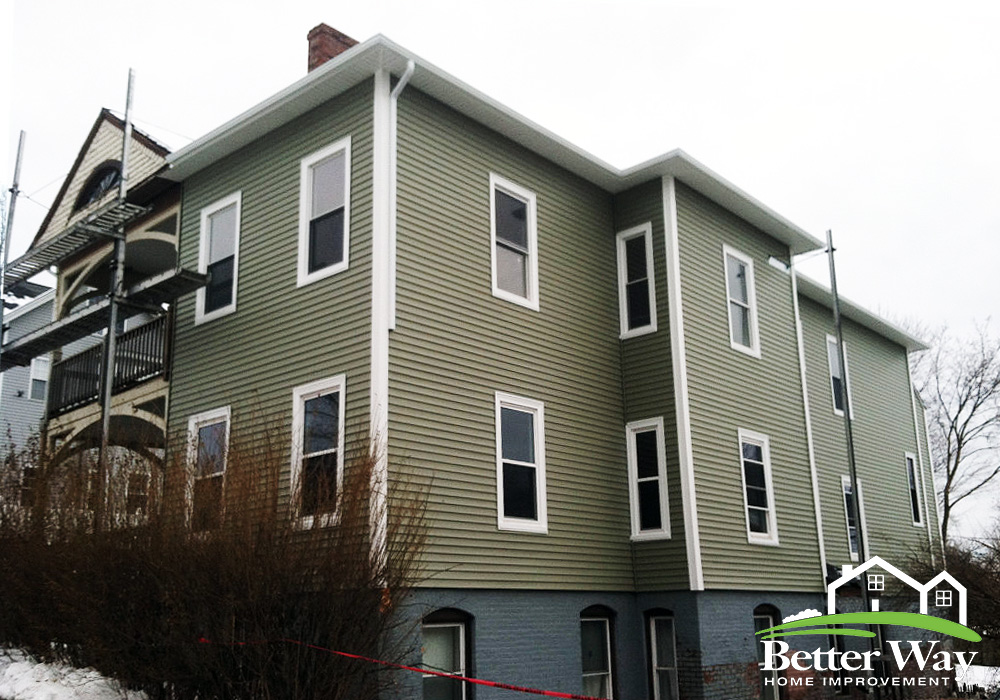
What James Hardie Siding looks like in Brookfield
Most of the calls we get from Brookfield start with a homeowner who’s tired of vinyl that’s bowed, cracked, or rattling loose after a windy night on an exposed lot. Fiber cement is the fix for that specific complaint. It’s heavier than vinyl by a wide margin — a full board can run four to five times the weight per square — which is exactly why it doesn’t flex and pop off a wall the way panel siding does out on Brookfield’s open roads.
On a pre-1900 farmhouse or cape, that weight also means the wall underneath has to be ready for it. We’re not fastening into thin studs on 24-inch centers here. A lot of these homes have full board sheathing instead of plywood, and that sheathing has taken on its own shape over the decades. We shim and fur as needed to get a plane the Hardie boards can sit flat against, because fiber cement doesn’t forgive a wavy wall the way a floppier product might.
We also talk homeowners through ColorPlus versus field-applied paint early, because it changes the math on this job. ColorPlus is baked on at the factory with a finish that’s warrantied against fading and chipping for longer than site paint will hold up, and it means no repainting for years. Field paint costs less up front and gives you more color flexibility, which matters if you’re trying to match a historic palette in one of Brookfield’s older sections. Either way, you get a product rated noncombustible and resistant to woodpeckers, hail, and impact in a way vinyl simply isn’t — a real consideration on lots backed up to woods.
What we account for on Brookfield homes
Older clapboard behind the existing exterior
One of the first things to check on an older Brookfield house is what sits behind the current siding. A 1970s or 1980s exterior may have been installed over original wood clapboard. Removing it can reveal damaged boards, uneven areas, or sections that need repair before the new siding can be installed. The condition of that layer is part of the project, not something to ignore until the end.
Heavy material on an older wall
Fiber cement is heavier than the lightweight siding it may be replacing. That means the wall surface and fastening locations need to be considered before installation. The crew accounts for the existing substrate, checks areas where the old exterior has failed, and plans the installation around the actual condition of the house rather than assuming every wall is sound.
Cutting and dust control
Fiber cement needs to be cut to fit around windows, doors, corners, and other details. Cutting produces dust, so the work area has to be managed accordingly. That means using appropriate cutting methods and keeping dust from spreading unnecessarily around the property. The goal is to keep the installation controlled while producing accurate cuts for the exterior details.
ColorPlus or field-applied paint
Brookfield homeowners have two basic finish approaches to consider. ColorPlus siding arrives with a factory-applied finish, while primed siding can be painted after installation. James Hardie says ColorPlus finishes are cured in a controlled factory environment and are designed to provide consistent color and improved resistance to UV-related fading. The right choice depends on the look you want, the available colors, and how you want the finished project handled. We can price the options as part of the estimate.
What we account for on Brookfield homes
Site visit and scope
Every one of these jobs runs into the same handful of local realities. Here’s how we handle them.
Remove, Prepare, Install
Out-of-square framing on older houses
Hand-framed capes and farmhouses were rarely built dead plumb, and a hundred-plus years of settling hasn’t helped. Before any board goes up we run strings and check the walls for high and low spots. Furring and shimming take real time on these houses — often more of the schedule than the actual siding install — but skipping that step is how you end up with a wavy reveal line that shows every flaw in the wall behind it.
Detail work and final check
Wind exposure with no windbreak
A lot of Brookfield properties sit on long open approaches with fields or pasture on one or more sides. We follow Hardie’s fastening schedule for high-exposure zones, which usually means tighter nail spacing and blind-nailing where the wall detail allows it, so the wall performs in wind that would loosen a standard install.
Cutting and dust control
Fiber cement cuts generate silica dust, and that’s not something we’re casual about, especially working close to a house where people live and garden. We cut with dust-collecting saws and shears outside the work zone, and on windy days we adjust where and how we stage cuts so it isn’t blowing back across the yard or a neighbor’s property.
Historic district and commission review
Parts of Brookfield’s town center fall under local historic review, and siding material and color can be part of that conversation. We’ve been through this process before and can tell you early whether your address is likely to need a filing, and we’ll spec ColorPlus colors or trim profiles that tend to clear review without a fight.
Frequently Asked Questions
Why choose James Hardie fiber cement over vinyl for a Brookfield house?
Fiber cement doesn't flex, warp, or crack in the wind exposure common on Brookfield's open lots the way vinyl panels can. It's also noncombustible and holds up better against impact from hail or woodpeckers, and it gives you a straighter, flatter finish on a wall that's out of square, which is common on this town's older housing stock.
Does Brookfield's historic district affect what siding I can install?
Some properties in Brookfield's town center fall under local historic review, which can weigh in on siding material and color. We'll flag this during the estimate if your address is likely affected and can spec ColorPlus colors and trim that typically clear review without delay.
What do you find behind old siding on Brookfield's older homes?
On houses built before 1900, it's common to find board sheathing instead of plywood, out-of-square framing, and sometimes rot or old insulation that needs to come out. We check for this at the estimate stage where we can, and any issues found once the old siding is off get addressed as part of the job rather than treated as a surprise.
How much does James Hardie siding cost in Brookfield?
It runs higher than vinyl per square foot because of the material and the extra labor for furring and wall prep on older framing. Exact pricing depends on how much prep your specific walls need, which is why we quote after walking the house rather than over the phone.
How long does a James Hardie siding job take on a typical Brookfield home?
Most jobs run one to two weeks from start to finish. Homes with more out-of-square framing or hidden sheathing repairs can run longer, since prep work is usually the biggest share of the schedule on older Brookfield houses.
How the job runs
Assessment and tear-back check. We walk the exterior, check the framing for square, and pull a section of old siding if needed to see what’s actually behind it before we quote. On houses this old, that step matters — we’d rather find a problem at the estimate than mid-install.
Prep, furring, and flashing. This is where most of the labor on an old Brookfield house goes. We correct the wall plane, replace any rotted sheathing, and install new flashing and weather barrier before a single Hardie board goes up. Expect this stage to run several days depending on how far out of square the walls are.
Install and finish. Boards go up per Hardie’s fastening spec for the exposure level, trim and corners get finished to match the house style, and we do a final walk-through with you before we call it done. A typical Brookfield home runs one to two weeks total from start to finish, longer if prep work turns up more than expected.
Recent work in and around Brookfield
A common job out this way is a full re-side on a cape or colonial where the original vinyl has been failing in sections for years — cracked panels on the windward side, gaps at the corners, that kind of thing. The homeowner wants a permanent fix, not another patch, and picks fiber cement specifically because they’re done dealing with wind damage. Those jobs almost always turn up sheathing or trim that needs attention once the old siding comes off, which is normal for a house of that age and gets folded into the plan rather than treated as a surprise change order.
Other services we provide in Brookfield
Fiber cement isn’t the only call we get in Brookfield. If your existing siding just needs patching rather than a full replacement, we handle that as straightforward siding repair. If you’re comparing fiber cement against a full vinyl siding replacement or new vinyl installation, we’ll walk you through both and give you honest numbers for each. Once the siding’s decided, most Brookfield homeowners also ask us to look at their gutters — old growth trees and long rooflines mean seamless gutters take a beating out here — and some add replacement windows or doors to the same project to get it all done in one pass.