


James Hardie Siding in Uxbridge, MA
If you own one of Uxbridge’s mill-era worker cottages or a triple-decker near the Blackstone River, you already know the walls under that old clapboard are original board sheathing, no housewrap, and probably a coat or two of lead paint if the house went up before 1978. James Hardie fiber cement holds up on that kind of wall better than most materials because it doesn’t expand and contract with the swings in humidity that board sheathing lets through. It’s heavier than what’s coming off, it costs more than vinyl, and on a lot of Uxbridge homes it’s the right call anyway.
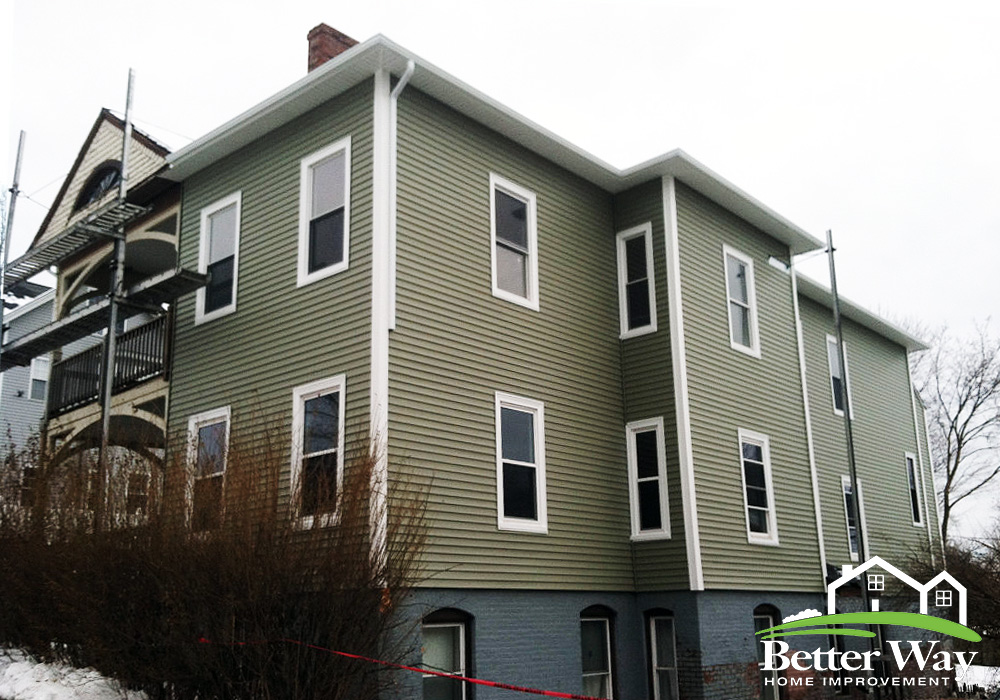
What James Hardie Siding looks like in Uxbridge
Fiber cement is a cement, sand, and cellulose fiber board. It’s roughly four times the weight of vinyl per square, which matters on the old worker cottages and triple-deckers where the original framing was sized for wood clapboard and nothing heavier has been hung on it since. We check the wall assembly before we quote the job, not after the crew shows up with material on the truck.
Cutting fiber cement throws silica dust, and on pre-1978 Uxbridge housing that dust is very likely mixed with old lead paint dust once we’re into the existing siding. We cut outside with shears or dust-collecting saws, we contain the work zone, and we follow EPA RRP lead-safe practices as a matter of course, not as an upcharge. This is one of the real cost differences between fiber cement and vinyl on this housing stock — the prep and containment take longer.
On finish, we install mostly ColorPlus prefinished boards. The factory finish is baked on and carries its own warranty against fade and peel, which matters on south- and west-facing walls that get full sun off the open lots along Route 16 and Mendon Street. Field-painted Hardie is available where a custom color is needed, but it puts the paint life back on you the way the original clapboard did. We also address undersized rakes and window returns that show up constantly on this era of house — Hardie trim boards get built out properly instead of butted tight the way older retrofits sometimes did.
What we account for on Uxbridge homes
Older clapboard behind the existing exterior
One of the first things to check on an older Uxbridge house is what sits behind the current siding. A 1970s or 1980s exterior may have been installed over original wood clapboard. Removing it can reveal damaged boards, uneven areas, or sections that need repair before the new siding can be installed. The condition of that layer is part of the project, not something to ignore until the end.
Heavy material on an older wall
Fiber cement is heavier than the lightweight siding it may be replacing. That means the wall surface and fastening locations need to be considered before installation. The crew accounts for the existing substrate, checks areas where the old exterior has failed, and plans the installation around the actual condition of the house rather than assuming every wall is sound.
Cutting and dust control
Fiber cement needs to be cut to fit around windows, doors, corners, and other details. Cutting produces dust, so the work area has to be managed accordingly. That means using appropriate cutting methods and keeping dust from spreading unnecessarily around the property. The goal is to keep the installation controlled while producing accurate cuts for the exterior details.
ColorPlus or field-applied paint
Uxbridge homeowners have two basic finish approaches to consider. ColorPlus siding arrives with a factory-applied finish, while primed siding can be painted after installation. James Hardie says ColorPlus finishes are cured in a controlled factory environment and are designed to provide consistent color and improved resistance to UV-related fading. The right choice depends on the look you want, the available colors, and how you want the finished project handled. We can price the options as part of the estimate.
What we account for on Uxbridge homes
Site visit and scope
Board sheathing with no housewrap
Most of the pre-1950s stock in Uxbridge was built with skip or solid board sheathing and no water-resistive barrier at all. We install a modern housewrap under the Hardie during tear-off, which gives the wall a drainage plane it never had and helps the fiber cement perform the way it’s rated to.
Lead paint on anything pre-1978
A large share of the housing near the Uxbridge mill villages predates 1978. We assume lead paint on any exposure we haven’t tested, work lead-safe under EPA RRP rules, and handle disposal properly instead of letting debris pile in the yard.
Sill rot from grade creep
Decades of driveway repaving, mulch beds, and yard fill have pushed grade up against a lot of Uxbridge sills. When we pull the old siding we’re finding soft sill and band board more often than not on these lots. We cut it out, install pressure-treated or engineered replacement stock, and flash it correctly before the new siding ever goes up — it’s not something we paper over.
Tight lots and narrow driveways
Uxbridge’s older neighborhoods, especially near the village centers, were platted for horses and buggies, not 40-yard dumpsters. We walk the driveway and yard before the job starts to figure out where staging, scaffolding, and the dumpster can actually sit without blocking a neighbor in or crushing a septic line most of these lots weren’t designed around.
Remove, Prepare, Install
How the job runs
Assessment and quote
We walk the exterior, check the sheathing where we can access it, note trim and window condition, and give you a written quote. On older Uxbridge homes we flag likely lead paint and sill issues up front so there’s no surprise change order mid-job.
Tear-off and prep
Old siding comes off, sheathing gets inspected and any rot repaired, housewrap goes on, and trim is built out to proper dimensions. This stage runs longer on pre-1978 homes because of lead-safe containment requirements.
Installation and cleanup
ColorPlus boards go up with the fastening pattern Hardie specifies for New England wind and freeze-thaw exposure. A full job on an average Uxbridge single-family runs roughly 5 to 9 working days depending on size, trim detail, and what we find once the old siding is off. We haul debris daily and do a final walkthrough with you before we leave.
Detail work and final check
Fiber cement isn’t the cheapest option and we don’t pitch it as one. What it buys an Uxbridge homeowner is a Class A fire rating, impact resistance that stands up to hail and the odd stray branch off a mature yard tree, and a board that doesn’t warp or bow the way vinyl can on a wall with real thermal movement. If your main concern is matching a lower quote, vinyl is still a solid product and we install plenty of it — Hardie is the answer when you want the closer-to-wood look and the longer material life and you’re planning to stay in the house.
Recent work in and around Uxbridge
We also get asked whether Hardie is worth it on a triple-decker where only one unit is being resided. It can be — matching ColorPlus color across units later is straightforward since it’s a factory-controlled finish, unlike trying to match faded field paint years down the road.
Recent work in and around Uxbridge
A typical job we run in this area is a full tear-off on a two-story worker cottage or cape near one of the old mill villages, where the existing clapboard is original wood over board sheathing with no wrap. We find lead paint on most of these, budget for RRP containment from the start, and usually find at least some sill or band board rot once the siding comes off — grade has crept up on these lots for over a century. The scope typically includes housewrap, trim buildout at undersized rakes and returns, and ColorPlus prefinished Hardie board siding. We don’t publish customer names or addresses, but if you want to see finished work in Uxbridge specifically, ask when you call and we can point you to a nearby job.
Frequently Asked Questions
Why does James Hardie siding cost more than vinyl in Uxbridge?
The board itself costs more per square, it's heavier so it takes longer to hang, and on Uxbridge's pre-1978 housing stock the tear-off usually involves lead-safe containment that vinyl jobs on the same house wouldn't require. You're also getting a Class A fire rating and a factory ColorPlus finish that outlasts field paint.
Will you find lead paint behind my old siding?
On anything built before 1978, which describes a lot of the housing near Uxbridge's mill villages, we assume yes and price the job lead-safe under EPA RRP rules from the start. If it turns out clean, that's a bonus, not a surprise fee later.
What if you find rot or bad sheathing once the old siding comes off?
It happens often on this housing stock, usually sill or band board rot from grade that's crept up over the decades. We stop, show you what we found, and quote the repair before continuing — it's a common add, not a rare one, so budget some contingency going in.
How long does a James Hardie siding job take on a typical Uxbridge house?
Most single-family jobs run 5 to 9 working days from tear-off to final cleanup, depending on size and trim detail. Triple-deckers and homes with extensive rot repair run longer.
Can you get a dumpster and scaffolding onto a tight Uxbridge driveway?
Usually yes, but we walk the lot first. A lot of the older village lots were built for a different era, so we plan staging and dumpster placement before scheduling rather than showing up and improvising.
Other services we provide in Uxbridge
Not every Uxbridge home is a fiber cement candidate, and not every siding job is a full replacement. If the existing siding is sound and the damage is localized, our Uxbridge siding contractor team can scope a repair instead. If you’re set on vinyl for cost reasons, we install that too. We also handle seamless gutters, sized and hung to match whatever siding profile you choose, and replacement windows and doors — both worth pricing at the same time as siding since they share staging and scaffolding costs on the same job. Ask about bundling when you call for your estimate.