


James Hardie Siding in Southbridge, MA
Southbridge homeowners asking about James Hardie siding are usually looking at one of two things: a Victorian or Colonial Revival near the village center with original wood clapboard buried under a layer of vinyl that went up in the 1970s or 80s, or a ranch or split-level on the outskirts where that same first-generation vinyl is now cracked, faded, or bowing off the wall. Both situations point the same direction. Fiber cement holds paint, holds shape, and doesn’t oil-can in the sun the way that old vinyl does. It’s why we get more Hardie calls out of Southbridge’s older housing stock than almost anywhere else in our service area.
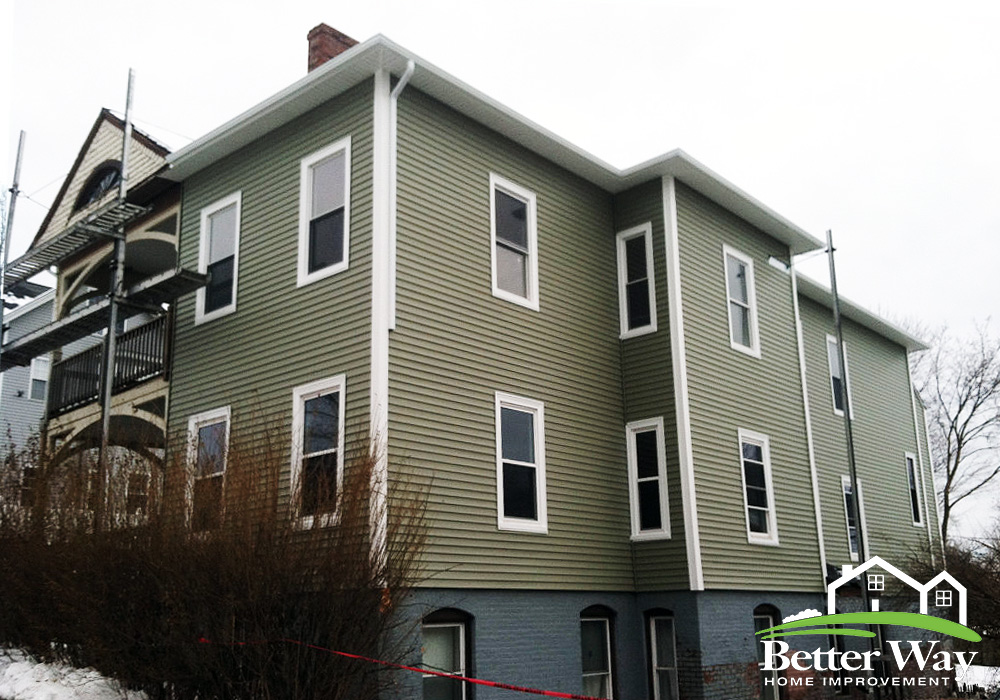
What James Hardie Siding looks like in Southbridge
On the mill-town Victorians and Colonial Revivals near downtown, most owners go with HardiePlank lap siding in a 7-inch or 8.25-inch exposure to match the original clapboard reveal, plus HardieTrim board stock around the windows and corners to keep the detail that vinyl flattened out over the years. Cedar Mill texture is the common choice — it reads as painted wood from the street without the maintenance.
On the ranches and split-levels further from the center, the calculus is different. These houses usually have plain fields with less trim detail, so the decision comes down to weight, wind performance, and paint life rather than matching historic profiles. HardiePlank in a smooth or lightly grained finish handles that job without drawing extra attention to itself.
Almost every quote we write in Southbridge starts with what’s actually on the wall now — old vinyl over original wood clapboard is the single most common condition we find here. That changes the tear-off scope, the sheathing inspection, and sometimes the trim carpentry, so we look at it in person before we give a number rather than guessing off a drive-by.
What we account for on Southbridge homes
Older clapboard behind the existing exterior
One of the first things to check on an older Southbridge house is what sits behind the current siding. A 1970s or 1980s exterior may have been installed over original wood clapboard. Removing it can reveal damaged boards, uneven areas, or sections that need repair before the new siding can be installed. The condition of that layer is part of the project, not something to ignore until the end.
Heavy material on an older wall
Fiber cement is heavier than the lightweight siding it may be replacing. That means the wall surface and fastening locations need to be considered before installation. The crew accounts for the existing substrate, checks areas where the old exterior has failed, and plans the installation around the actual condition of the house rather than assuming every wall is sound.
Cutting and dust control
Fiber cement needs to be cut to fit around windows, doors, corners, and other details. Cutting produces dust, so the work area has to be managed accordingly. That means using appropriate cutting methods and keeping dust from spreading unnecessarily around the property. The goal is to keep the installation controlled while producing accurate cuts for the exterior details.
ColorPlus or field-applied paint
Southbridge homeowners have two basic finish approaches to consider. ColorPlus siding arrives with a factory-applied finish, while primed siding can be painted after installation. James Hardie says ColorPlus finishes are cured in a controlled factory environment and are designed to provide consistent color and improved resistance to UV-related fading. The right choice depends on the look you want, the available colors, and how you want the finished project handled. We can price the options as part of the estimate.
What we account for on Southbridge homes
Site visit and scope
Every Hardie job in this town runs into a handful of conditions specific to the local building stock. Here’s how we plan around them.
Weight on older framing
Fiber cement runs roughly two to three times heavier per square than vinyl. On Victorian-era homes with original balloon framing, we check sheathing condition and fastener spacing before we start rather than assuming the wall can take the load the same way modern construction would. It usually can — but we confirm it instead of hoping.
Lead paint under old siding
Southbridge’s pre-1978 housing stock means lead paint is a real possibility once we pull vinyl or old clapboard off the wall. Our crews are trained to handle it under EPA RRP work practices — plastic containment, HEPA vacuum cleanup, no dry sanding or grinding on suspect surfaces. This adds time to a tear-off but it’s not optional and we don’t skip it.
Cut and dust control on site
Fiber cement generates silica dust when cut with a standard saw blade. On tighter village lots where houses sit close to neighbors, we use shear-style cutters or saws fitted with HEPA dust collection instead of dry-cutting in the yard. It keeps the site cleaner and it’s a lot more considerate on streets where the next house is thirty feet away.
Field paint vs. ColorPlus finish
Most of what we install carries the factory ColorPlus finish, which is baked on and backed by its own finish warranty — no repainting for years. On restoration-style jobs where a homeowner wants a custom historic color that isn’t in the ColorPlus lineup, we install primed Hardie panel and coordinate field painting. We tell people upfront which option they’re getting and why, because the maintenance schedule is different.
Remove, Prepare, Install
How the job runs
Walkthrough and tear-off plan
We inspect the existing siding, check for lead paint risk on anything built before 1978, and confirm what’s under the current wall covering. This is where we scope sheathing repair if the old vinyl was hiding rot or damage.
Tear-off and substrate prep
Old siding comes off, sheathing gets repaired or replaced where needed, and a weather-resistive barrier goes on before a single piece of Hardie touches the wall. A standard single-family home in Southbridge runs 3 to 5 days for this stage depending on how much of the original wall needs work.
Installation, trim, and final walkthrough
Panels, trim, and flashing detail go up per James Hardie’s fastening and clearance specs. Most full-house installs finish in 4 to 7 working days from start, weather and substrate condition permitting. We walk the job with the homeowner before we call it done.
Detail work and final check
Southbridge sits at the edge of a housing pattern that repeats across southern Worcester County — dense village construction from the mill era next to newer, simpler outbuilding around it. That mix is exactly why we treat every quote as its own project instead of pricing off a template. A Hardie job on Main Street’s Victorian stock and a Hardie job on a 1978 ranch off Route 131 are not the same scope, even if the square footage on paper looks close.
Recent work in and around Southbridge
Fiber cement isn’t the right call for every house, and we say so when it isn’t. It costs more per square than vinyl up front, it takes longer to install because of the weight and cut handling, and it needs a crew that’s actually done the lead-safe tear-off work before, not just watched a training video. What you get back is a wall material that doesn’t soften in July heat, doesn’t crack in a hard January freeze, and carries a fire and impact rating vinyl doesn’t come close to.
Recent work in and around Southbridge
A typical recent job in this area: a Colonial Revival within walking distance of the village center, original clapboard under two layers of aged vinyl, sheathing sound but the original wood siding split and cupped in several spots from decades of trapped moisture. We stripped both layers, replaced the damaged clapboard sections, confirmed no lead abatement was needed after testing, and installed HardiePlank in a Cedar Mill texture with matching HardieTrim to keep the window and corner detail the house was built with. That sequence — old vinyl over original wood, moisture damage discovered on tear-off, trim rebuilt to match — is the most common job profile we see in Southbridge, not the exception.
Frequently Asked Questions
Is James Hardie siding worth the extra cost over vinyl in Southbridge?
For older village homes with wood clapboard underneath and real trim detail, most owners think so — it holds paint-quality finish and handles freeze-thaw cycles better. For a plain ranch where budget is the main driver, vinyl is often the more sensible call. We'll give you real numbers for both during the estimate.
Will you find lead paint when you tear off old siding in Southbridge?
On anything built before 1978 — which covers a lot of Southbridge's village housing — it's a real possibility. We test before disturbing painted surfaces and follow EPA RRP lead-safe work practices if it's present. It's factored into our process, not an unpleasant surprise mid-job.
What happens if you find rot or damage once the old siding is off?
On this housing stock, we find something under the old siding more often than not — usually moisture damage in the sheathing or original clapboard from decades of trapped water behind failed vinyl. We stop, show you what we found with photos, give you a price to repair it, and don't proceed until you approve it. It's not automatically added to the bill.
How long does a James Hardie install take on a typical Southbridge home?
Tear-off and substrate prep usually runs 3 to 5 days, and full installation with trim adds another 4 to 7 working days. A straightforward single-family home is often done inside two weeks; older homes needing sheathing repair or trim rebuild take longer.
Do you install ColorPlus panels or paint on site?
Most jobs use factory ColorPlus panels, which come with a baked-on finish and its own warranty. If you want a custom historic color for a restoration-style house, we can install primed panel and coordinate field painting instead — we'll tell you which route you're getting before the job starts.
Other services we provide in Southbridge
Not every Southbridge home needs fiber cement. If your siding budget points toward a lower-cost, lower-maintenance option, our vinyl siding installation service covers new construction and full replacements at a different price point. If your existing siding just has isolated damage — a cracked panel, storm damage, a section pulling loose — siding repair is usually the faster and cheaper fix. For homes that need a full tear-off and rebuild rather than a patch, see our siding replacement page. We also handle seamless gutters and replacement windows and doors, both of which we’re happy to bundle into a siding project since the scaffolding and access work overlap.
For the general overview of how James Hardie siding works across our whole service area, visit our James Hardie siding page. For a broader look at what we do in this town, see our Southbridge siding contractor page.
Free estimates in Southbridge
Our shop is in Southbridge, 9.1 miles from Southbridge — close enough that we’re not adding travel time to your quote or your schedule. We give free, in-person estimates, we’re licensed and insured, and we’ve held Angie’s List Super Service Awards from 2013 through 2019. Call (508) 506-8957 to set one up. We’ll come look at what’s actually on your wall, tell you honestly whether fiber cement makes sense for your house and budget, and give you a written number before we leave — no follow-up call needed to get a price.