


James Hardie Siding in Millbury, MA
Millbury’s housing stock runs from Victorian and Colonial Revival homes near the town common and old mill village blocks along the Blackstone, out to ranches and split-levels built during the postwar push toward Route 146. A lot of that in-between housing got re-sided once already, sometime in the 1970s or 80s, and that first layer of vinyl is now brittle, faded, or bowing off the wall. Homeowners calling us about James Hardie siding are usually comparing it against another round of vinyl and want to know if the extra cost actually buys them something on a house like theirs.

What James Hardie Siding looks like in Millbury
On the Victorians and Colonial Revivals near Millbury center, fiber cement gets used to keep the trim detail these houses were built with — deep window casings, frieze boards, corner boards sized to look right under a lap profile instead of the thin stock that comes standard with vinyl. James Hardie’s HardiePlank in a 7-inch or 8.25-inch reveal reads close to the original clapboard spacing on these homes, which matters on streets where the neighboring houses still have their wood siding intact.
On the ranches and split-levels further out toward Riverlin Street and the outskirts near Sutton and Auburn, the job is more straightforward: strip the failed vinyl, check the sheathing, and run a smooth or cedar-mill panel that holds paint and screws down instead of clipping loose in wind. We see a fair number of these homes where the original builder-grade siding underneath the vinyl was never removed, just covered — so part of every quote on this housing type includes an honest look at what’s actually on the wall before we commit to a number.
The other piece homeowners ask about is weight and fastening. Fiber cement is roughly three to four times heavier than vinyl per square foot. That’s not a downside — it’s part of why it doesn’t rattle or oil-can in wind — but it means the crew is fastening into studs on a tighter, more consistent pattern, and older homes with irregular framing get checked for that before installation, not after.
What we account for on Millbury homes
Older clapboard behind the existing exterior
One of the first things to check on an older Millbury house is what sits behind the current siding. A 1970s or 1980s exterior may have been installed over original wood clapboard. Removing it can reveal damaged boards, uneven areas, or sections that need repair before the new siding can be installed. The condition of that layer is part of the project, not something to ignore until the end.
Heavy material on an older wall
Fiber cement is heavier than the lightweight siding it may be replacing. That means the wall surface and fastening locations need to be considered before installation. The crew accounts for the existing substrate, checks areas where the old exterior has failed, and plans the installation around the actual condition of the house rather than assuming every wall is sound.
Cutting and dust control
Fiber cement needs to be cut to fit around windows, doors, corners, and other details. Cutting produces dust, so the work area has to be managed accordingly. That means using appropriate cutting methods and keeping dust from spreading unnecessarily around the property. The goal is to keep the installation controlled while producing accurate cuts for the exterior details.
ColorPlus or field-applied paint
Millbury homeowners have two basic finish approaches to consider. ColorPlus siding arrives with a factory-applied finish, while primed siding can be painted after installation. James Hardie says ColorPlus finishes are cured in a controlled factory environment and are designed to provide consistent color and improved resistance to UV-related fading. The right choice depends on the look you want, the available colors, and how you want the finished project handled. We can price the options as part of the estimate.
What we account for on Millbury homes
Site visit and scope
Original clapboard hiding under old vinyl
Most of the re-siding calls we get in Millbury are homes where 1970s or 80s vinyl went straight over the original wood clapboard. We pull test sections before quoting so the homeowner knows whether that clapboard is coming off or staying as a nailing base — it changes both the price and the wall thickness at window and door returns.
Lead paint on pre-1978 housing
A good share of the village-center homes and older farmhouses on the outskirts were painted before 1978. When we’re removing old siding down to original wood on these houses, we follow lead-safe work practices — containment, plastic ground cover, and cleanup protocol — rather than just stripping and bagging debris like it’s a newer house.
Board sheathing instead of plywood
Homes built before the 1960s in this area were often sheathed in horizontal board, not plywood or OSB. It doesn’t take fasteners the same way, and it can have gaps or soft spots from decades of moisture behind failed siding. We check sheathing condition on every tear-off and replace or shim sections as needed before the Hardie panels go up, instead of fastening over a problem.
Cut dust and job-site control
Fiber cement has to be cut with a saw fitted for it — a shear or a blade rated for fiber cement with dust collection — because the silica dust from dry-cutting is a real jobsite hazard, not just a nuisance. On tighter Millbury lots close to neighboring houses, we set up cutting stations away from windows and outdoor living space and keep it consistent for the length of the job.
Remove, Prepare, Install
How the job runs
Walkthrough and tear-off scope
We start with a walkthrough that includes pulling test sections of the existing siding to see what’s underneath — old clapboard, board sheathing, or a prior repair. This decides whether it’s a full tear-off or a strip-and-replace, and it’s why our estimates on older Millbury homes take a little longer than a five-minute drive-by quote.
Prep, flashing, and install
Once the wall is open we address flashing at windows, doors, and roof lines, repair or replace damaged sheathing, and install a weather-resistant barrier before the Hardie panels go on. This stage is where most of the labor time goes on an older house — a straightforward ranch might take a day and a half to prep, while a Victorian with more trim detail can take three or four.
Finish and cleanup
Trim, corner boards, and caulking get finished to match the home’s existing details, and the crew does a full site cleanup including a magnetic sweep for nails and cut-offs. A typical single-family Hardie install in Millbury runs one to two weeks depending on square footage, trim complexity, and weather — we’ll give a specific window once we’ve scoped the job.
Detail work and final check
ColorPlus versus field-painted Hardie
James Hardie siding comes two ways: ColorPlus, which is factory-finished with a baked-on finish backed by its own warranty, or primed panels that get painted on site after installation. Most Millbury homeowners doing a full re-side go with ColorPlus because it holds color longer than field paint and there’s no repainting cycle to plan for. Field-painted panels still get used when a homeowner wants a custom color match to existing trim, or on partial repairs where matching an already-painted section is easier than introducing a factory color break.
Fire and impact performance on older housing
Fiber cement doesn’t ignite or contribute fuel the way vinyl does, and it holds up to hail and wind-driven debris without cracking or denting the way older, brittle vinyl does. On Millbury’s tighter village lots, where houses sit closer together than out on the newer subdivision streets, that fire performance is part of why some homeowners choose Hardie specifically over another vinyl re-side, even at a higher upfront cost.
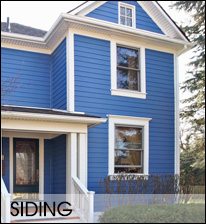
Recent work in and around Millbury
A common job we run in this area is a full tear-off on a 1980s ranch or split-level where the original vinyl has gone brittle and cracked at the corners, with the original builder-grade siding still underneath. We strip both layers down to the sheathing, address any soft board sheathing we find, and install HardiePlank lap siding in a factory finish. On the older village homes closer to downtown, the more typical job is a partial re-side around an addition or a full re-side that keeps the original trim proportions, done with lead-safe practices where the paint history calls for it. We don’t publish customer names or addresses, but if you want to see finished work near your street, we can point you to comparable jobs during your estimate.
Frequently Asked Questions
Is James Hardie siding worth the extra cost over vinyl on a Millbury home?
It depends on the house. On village-center Victorians and Colonial Revivals where trim detail and fire performance matter, most homeowners find it worth it. On a plain ranch where budget is the main driver, a quality vinyl re-side can be the more practical call. We'll give you both numbers during the estimate.
Our house was built before 1978 — how do you handle lead paint during tear-off?
We use lead-safe work practices on any pre-1978 home where we're removing siding down to original wood: containment, plastic ground cover, and proper cleanup and disposal. It adds some time to the job but it's not optional on this housing stock.
What if you find rotted sheathing or old clapboard once you open up the wall?
It's common on Millbury's older housing, since a lot of it has original clapboard or board sheathing under a layer of 1970s or 80s vinyl. We stop, show you what we found with photos, and give you a firm price to repair or replace it before continuing. It's not billed as a surprise add-on after the fact.
How long does a full James Hardie re-side take on an average Millbury house?
A straightforward ranch or split-level usually runs one to two weeks from tear-off to finished trim. A Victorian or Colonial Revival with more detailed trim work can run closer to three weeks. Weather and what we find behind the old siding are the two biggest variables.
Do you install ColorPlus siding or do you paint on site?
Both, depending on the job. Most full re-sides use factory-finished ColorPlus because it holds up longer without repainting. Field-painted panels are more common on partial repairs where we need to match existing painted trim.
Other services we provide in Millbury
If your siding still has some life left but needs patch work, our siding repair service handles cracked panels, water damage, and localized fixes without a full tear-off. When vinyl is the better fit for the budget, we also run straight vinyl siding installation and full siding replacement jobs. A lot of Millbury re-sides happen alongside failing gutters or old windows — we install and repair seamless gutters and handle replacement windows and doors as part of the same project when it makes sense to bundle the work.
Free estimates in Millbury
Millbury is about 7.5 miles from our shop in Millbury, so getting a crew out for a walkthrough isn’t a scheduling problem. Call (508) 506-8957 for a free estimate. We’ll set a time to walk the house, pull a test section of the existing siding if there’s a question about what’s underneath, and give you a written quote with a real timeline — not a range that changes once the crew shows up. Better Way is licensed and insured, and has won Angie’s List Super Service Awards from 2013 through 2019.