


James Hardie Siding in Sutton, MA
If you’re pricing James Hardie fiber cement for a Sutton house, you already know it costs more than vinyl and you want to know why anyone pays it. The short answer: on the old mill-town housing stock around Manchaug and Wilkinsonville, and on the newer colonials off Boston Road, fiber cement holds paint, resists impact from tree limbs and hail, and doesn’t soften or buckle in direct summer sun the way vinyl can on a south wall. It’s heavier, it cuts differently, and it goes on differently. That changes how we plan the job, not just what material shows up on the truck.
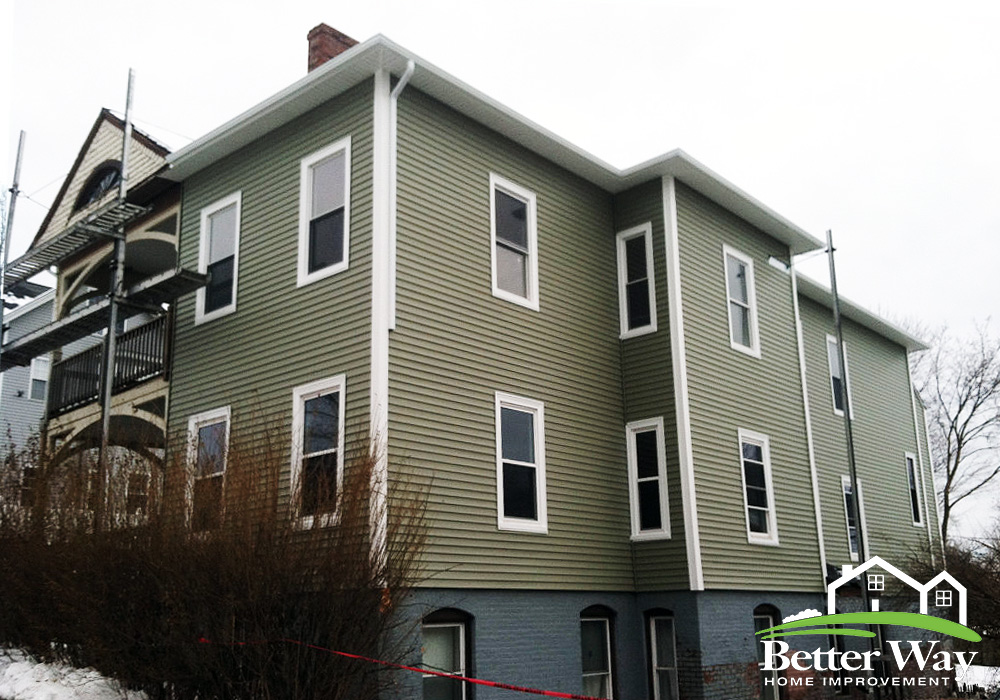
What James Hardie Siding looks like in Sutton
Most of the calls we get in Sutton fall into two camps. The first is a colonial or raised ranch built from the 1970s through the 1990s where the original vinyl has chalked, cracked, or blown off in a windstorm and the owner has decided not to replace vinyl with vinyl. The second is an older farmhouse or converted mill worker’s cottage near the village center where the siding underneath is original wood clapboard, and the owner wants something that looks like wood but doesn’t need scraping and repainting every five to seven years.
James Hardie board is roughly two to three times the weight of vinyl siding per square, so the first thing that changes is the crew and the equipment. We run it with a full framing crew, not a two-man siding install, because sheets and planks need to be carried, cut, and set without flexing or cracking. Cutting fiber cement throws silica dust, so we cut outside with shears or a saw fitted with a HEPA-rated dust collection shroud — not a standard blade on a table saw in the driveway. That matters on the tighter Sutton lots near the village where a neighbor’s window is thirty feet away.
We also talk owners through ColorPlus versus field-applied paint before we order material. ColorPlus is baked on at the factory, carries its own warranty against fading and peeling, and holds up better on south- and west-facing walls that get full sun most of the day — common on the more open lots along Route 146 and the newer subdivisions off Central Turnpike. Field-painted Hardie costs less upfront but the paint job is only as good as the primer and the painter, and it will need a repaint on the same cycle as wood. Most Sutton homeowners who choose Hardie for the long-term walk away from that repaint cycle, so we lean toward ColorPlus unless there’s a specific color match reason not to.
What we account for on Sutton homes
Older clapboard behind the existing exterior
One of the first things to check on an older Sutton house is what sits behind the current siding. A 1970s or 1980s exterior may have been installed over original wood clapboard. Removing it can reveal damaged boards, uneven areas, or sections that need repair before the new siding can be installed. The condition of that layer is part of the project, not something to ignore until the end.
Heavy material on an older wall
Fiber cement is heavier than the lightweight siding it may be replacing. That means the wall surface and fastening locations need to be considered before installation. The crew accounts for the existing substrate, checks areas where the old exterior has failed, and plans the installation around the actual condition of the house rather than assuming every wall is sound.
Cutting and dust control
Fiber cement needs to be cut to fit around windows, doors, corners, and other details. Cutting produces dust, so the work area has to be managed accordingly. That means using appropriate cutting methods and keeping dust from spreading unnecessarily around the property. The goal is to keep the installation controlled while producing accurate cuts for the exterior details.
ColorPlus or field-applied paint
Sutton homeowners have two basic finish approaches to consider. ColorPlus siding arrives with a factory-applied finish, while primed siding can be painted after installation. James Hardie says ColorPlus finishes are cured in a controlled factory environment and are designed to provide consistent color and improved resistance to UV-related fading. The right choice depends on the look you want, the available colors, and how you want the finished project handled. We can price the options as part of the estimate.
What we account for on Sutton homes
Site visit and scope
Sutton’s mix of older farmhouses and newer builds means every siding job starts with a close look at what’s underneath. We factor in framing age, moisture patterns, roofline details, and how the home has weathered New England seasons before recommending a James Hardie approach.
- Existing wall structure and framing condition
- Trim, window, and door detailing
- Drainage and moisture exposure points
Remove, Prepare, Install
Lead paint on pre-1978 siding
A good share of Sutton’s older housing — the cottages near the center, some of the farmhouses on Boston Road and Manchaug Road — was built or painted well before 1978. When we tear off the original clapboard or an older vinyl overlay that was installed over painted wood, we assume lead is present until testing says otherwise. Our crew is set up for EPA RRP lead-safe work practices: containment, wet cutting or dust extraction on removal, and disposal that follows the rules, not shortcuts that leave a homeowner holding the liability later.
Detail work and final check
Board sheathing with no housewrap
A lot of pre-1960s Sutton homes were built with board sheathing — horizontal wood boards nailed directly to the studs — and no housewrap or synthetic barrier behind the original siding. When we strip a wall down to that sheathing, we don’t just re-side over it. We add a code-compliant weather-resistant barrier and, where the sheathing has gaps or checking, we assess whether it needs supplemental sheathing before the Hardie goes on. Skipping this step is how you get moisture problems behind new siding in five years.
Sill rot from grade creep
On older lots where decades of mulching, paving, and lawn buildup have raised the grade toward the house, we routinely find soft or rotted sill plates and bottom plates once the old siding comes off. We flag this before we close the wall back up, not after. Rotted framing gets cut out and spliced with treated or matched dimensional lumber, and where possible we recommend regrading or adding a drip edge to keep the new problem from becoming the old one again in another twenty years.
Narrow driveways and tight staging
Sutton’s older neighborhoods, especially near the mill village areas, were laid out for horse-and-buggy lots, not modern trucks and dumpsters. Before material orders go in, we walk the driveway and yard with the homeowner to plan where the dumpster sits, where material gets staged and covered, and how we keep a path clear for the homeowner’s own car during the job. On the tightest lots we sometimes stage material in the garage or under a tarp on the lawn rather than block the driveway for two weeks.
Frequently Asked Questions
How much does James Hardie siding cost compared to vinyl in Sutton?
Fiber cement generally runs higher than vinyl for material and installed cost, since the boards are heavier, cutting takes longer, and the crew size is bigger. Exact pricing depends on the profile, whether you choose ColorPlus or field-paint, and how much wall prep your house needs — we give a written range after walking the job, not before.
Will you find lead paint on my Sutton house?
If your home was built or last painted before 1978, we assume lead is present until testing proves otherwise, which describes a lot of the older housing near Sutton's mill village and farmhouse areas. We follow EPA RRP lead-safe practices for containment and disposal, which is standard on this kind of work, not an upcharge we spring on you mid-job.
What happens if you find rot or bad sheathing once the old siding is off?
On homes with board sheathing and no housewrap, or where grade has crept up over the years, finding some soft framing or rotted sill boards once we strip the wall is common, not rare. We stop, show you what we found, and give you a price to repair it before we close the wall — we don't hide it and we don't proceed without telling you first.
How long does a James Hardie install take on a typical Sutton home?
A single-family house usually runs one to two weeks from tear-off to final cleanup. That stretches if sheathing or framing repair turns up, or if a ColorPlus color has a longer factory lead time than field-paint stock.
Do I need to move my car or clear the driveway during the job?
On Sutton's tighter older lots, yes, usually for at least part of the job. We walk the driveway and yard with you before material orders go in to plan dumpster placement and material staging so your daily routine is disrupted as little as possible.
How the job runs
Assessment and material order. We walk the house, check the sheathing where we can access it, measure for waste factor, and order the specific Hardie profile, texture, and color — ColorPlus or field-paint — the homeowner picked. Lead time on some ColorPlus colors runs a few weeks longer than field-paint stock.
Tear-off and wall prep. Old siding comes off, sheathing gets inspected and repaired, housewrap goes on where it’s missing, and any rot at sills, corners, or window returns gets cut out and rebuilt before a single Hardie board is hung. This stage runs one to three days depending on how much repair turns up.
Installation, trim, and cleanup. Fiber cement goes up with the fasteners and clearances Hardie’s install guide specifies — this isn’t optional on a product with a workmanship warranty attached. Trim, flashing, and caulking get finished, and the crew hauls debris and does a magnetic nail sweep of the yard and driveway before we call it done. A typical Sutton single-family job runs one to two weeks total from tear-off to final cleanup, longer if we find significant sheathing or framing repair.
Recent work in and around Sutton
A common job type in this area is a 1980s or 1990s colonial where the original vinyl has failed on the sun-exposed side and the owner wants to switch to fiber cement for the whole house rather than patch vinyl on one wall. We tear off completely rather than side over, because mixing materials and substrates on one house rarely ages well and it makes future repairs harder to match. On the older cottages and farmhouses closer to the village, the more common job is a full strip to board sheathing, lead-safe removal of the original painted clapboard, sill and corner repair, and a switch to Hardie lap siding in a profile that keeps the traditional clapboard look the house was built with.
Other services we provide in Sutton
Fiber cement isn’t the right call for every house or every budget, and we quote both. If you want a lower-cost option, our vinyl siding installation service covers the same tear-off and wall-prep standards at a lower material cost. If your siding is sound but has isolated damage, ask about siding repair before committing to a full siding replacement. We also handle seamless gutters and replacement windows and doors — worth bundling with a siding job since scaffolding and staging are already set up, which usually saves on labor versus doing them as separate projects.
Free estimates in Sutton
Our shop is 5.6 miles from Sutton center, on Sutton Ave in Sutton, so getting a crew out to look at your walls and give you a real number isn’t a scheduling problem. Call (508) 506-8957 for a free estimate. We’ll walk the house, tell you honestly whether we expect sheathing or framing repair once the old siding is off, and give you a written quote with ColorPlus and field-paint pricing broken out. No pressure, no obligation to sign that day. If you’re comparing quotes, ask any contractor whether they test for lead on pre-1978 homes and what dust control they use for cutting — the answer tells you a lot before you even get to price.