


James Hardie Siding in Charlton, MA
Charlton’s housing runs from Colonial Revivals near the town common to ranches and split-levels out toward Sturbridge Road, and a lot of it got sided once in the late 1970s or 1980s with vinyl that never fit the original clapboard profile underneath. That first-generation vinyl is failing now — cracking, bowing, gapping at the corners — and when we pull it off we usually find old-growth wood clapboard or board sheathing that’s worth protecting properly this time. James Hardie fiber cement is the material homeowners in this part of Worcester County ask for when they want something heavier and more fire-resistant than another round of vinyl, and want it to still look right in twenty years.
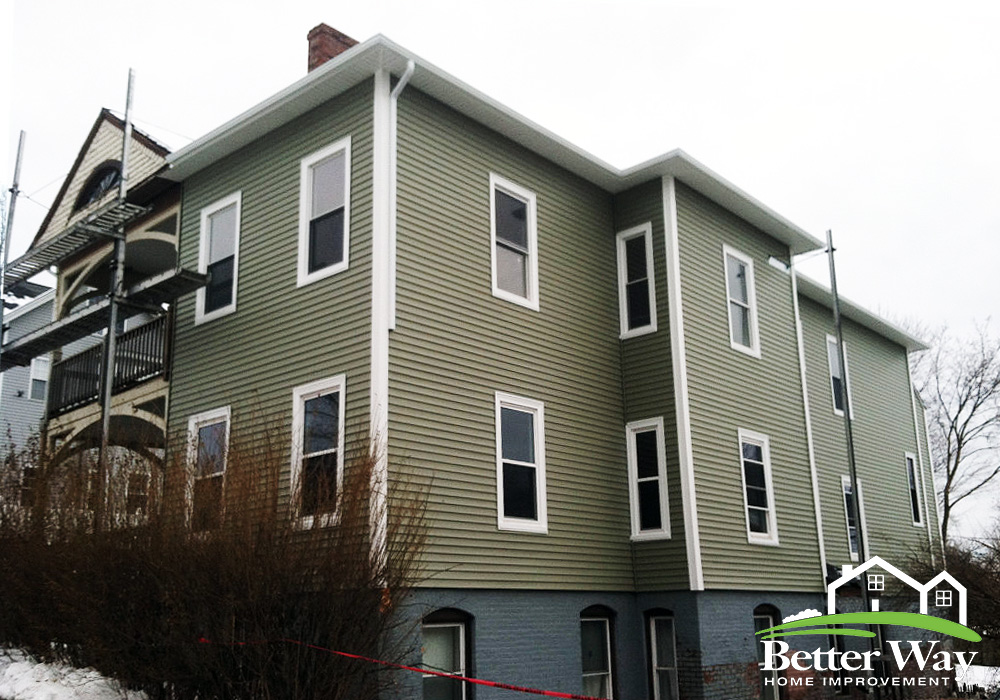
What James Hardie Siding looks like in Charlton
James Hardie is fiber cement, not vinyl, and that difference matters most on a house like the ones scattered through Charlton’s older sections. It’s made from cement, sand, and cellulose fiber, pressed and cured into planks that weigh close to three times what vinyl panels weigh. On a Victorian or Colonial Revival near the center, that weight and rigidity let the siding hold a straight, flat line the way the original wood clapboard did — vinyl almost never manages that on an older, slightly out-of-square wall.
We install primarily in HardiePlank lap siding, matched to the reveal that’s already on the house whenever we’re replacing failed vinyl over old clapboard. For the ranches and split-levels further out toward the Charlton City and Fay Mountain areas, where the wall lines are flatter and more modern, either the ColorPlus factory-finished boards or field-painted Hardie panels work, depending on what color commitment the homeowner wants to make. ColorPlus comes with a baked-on finish and its own 15-year finish warranty, which means no repainting for a long time. Field paint gives more color flexibility later but is another maintenance item down the road.
Fire performance is a real reason people choose it here — Charlton has a mix of wooded lots and older wiring in some of the mill-era housing stock, and fiber cement doesn’t feed a fire the way vinyl can. Impact resistance is the other draw: fiber cement takes a hailstone or a stray baseball better than vinyl, which can crack or punch through.
What we account for on Charlton homes
Older clapboard behind the existing exterior
One of the first things to check on an older Charlton house is what sits behind the current siding. A 1970s or 1980s exterior may have been installed over original wood clapboard. Removing it can reveal damaged boards, uneven areas, or sections that need repair before the new siding can be installed. The condition of that layer is part of the project, not something to ignore until the end.
Heavy material on an older wall
Fiber cement is heavier than the lightweight siding it may be replacing. That means the wall surface and fastening locations need to be considered before installation. The crew accounts for the existing substrate, checks areas where the old exterior has failed, and plans the installation around the actual condition of the house rather than assuming every wall is sound.
Cutting and dust control
Fiber cement needs to be cut to fit around windows, doors, corners, and other details. Cutting produces dust, so the work area has to be managed accordingly. That means using appropriate cutting methods and keeping dust from spreading unnecessarily around the property. The goal is to keep the installation controlled while producing accurate cuts for the exterior details.
ColorPlus or field-applied paint
Charlton homeowners have two basic finish approaches to consider. ColorPlus siding arrives with a factory-applied finish, while primed siding can be painted after installation. James Hardie says ColorPlus finishes are cured in a controlled factory environment and are designed to provide consistent color and improved resistance to UV-related fading. The right choice depends on the look you want, the available colors, and how you want the finished project handled. We can price the options as part of the estimate.
What we account for on Charlton homes
Site visit and scope
Charlton properties range from older farmhouses to newer builds, each with their own quirks. We look at wall orientation, tree cover, and moisture exposure, along with roofline details and existing drainage, before recommending a James Hardie siding plan suited to that particular house.
Remove, Prepare, Install
Substrate condition on pre-1900 village homes
Houses near Charlton Center and along Main Street often have the original wood clapboard still under that failed 1980s vinyl. We check it board by board once the vinyl is off. Sound clapboard gets left as backing; rotted or delaminated sections get cut out and replaced with strapping before Hardie goes up, so the new siding has a flat, solid surface instead of telegraphing every old dip and warp.
Detail work and final check
Cutting and dust on occupied lots
Fiber cement cutting produces silica dust, and Charlton’s lots are close enough together in the village sections that dust control isn’t optional. We cut with HardieBlade saws fitted to shop vacs or dust-collecting shears, and we set up the cut station downwind of the house and away from gardens, decks, and neighboring yards.
Weight on older framing
Fiber cement is heavier than vinyl, and on some of the older balloon-framed homes near the common the sheathing hasn’t been checked in decades. We confirm the wall can take fastener load and add furring or replace sheathing where it’s soft, rather than nailing over a problem and hoping.
Trim and profile matching on Colonial Revivals
A lot of Charlton’s Colonial Revival housing has corner boards, frieze boards, and window trim details that a flat vinyl retrofit already flattened out once. When we install Hardie, we rebuild that trim in matching fiber cement or PVC trim boards so the profile reads correctly again instead of looking like a plain box.
Frequently Asked Questions
Why choose James Hardie fiber cement over vinyl for a Charlton home?
Fiber cement is heavier, holds a flatter line on older, slightly out-of-square walls, and resists fire and impact better than vinyl. It costs more up front and takes longer to install, but it holds its shape and finish longer, which matters on the village homes with real trim detail worth preserving.
What's usually found behind old vinyl siding on Charlton's older homes?
Most often original wood clapboard, sometimes board sheathing, in mixed condition. Areas near old flashing, sills, and corners tend to have rot; the rest is often sound. We check it once the vinyl is off and repair only what needs it before installing Hardie.
Is lead paint a concern on Charlton's pre-1978 homes during a siding tear-off?
It can be, on the older wood clapboard under first-generation vinyl. We follow EPA RRP lead-safe work practices on any home built before 1978, which covers containment and cleanup during removal.
How much does James Hardie siding cost compared to vinyl in this area?
Fiber cement generally runs higher per square than vinyl siding, largely due to material cost, weight, and installation labor. Exact pricing depends on the home's size, trim complexity, and substrate condition, which is why we give a written quote after seeing the house rather than a number over the phone.
How long does a James Hardie siding project take on an average Charlton house?
Most single-family homes run 5 to 9 working days from tear-off to finished cleanup, depending on substrate repairs and whether trim needs to be rebuilt to match the original profile.
How the job runs
Walkthrough and measure
We walk the exterior with you, note trim details, check the substrate where we can see it (usually at a corner or below a window), and measure for material. This is also when we talk through ColorPlus versus field paint and lap size. Same visit as the estimate, usually 30-45 minutes.
Tear-off and substrate repair
Old siding comes off, house wrap goes on, and any soft sheathing or damaged clapboard gets addressed before a single Hardie board goes up. On an average Charlton house this stage runs one to two days depending on what we find underneath.
Installation and trim
Hardie planks go up with the correct fastener pattern and gapping per manufacturer spec, trim gets rebuilt to match, and everything gets caulked and, if field-painted, primed and finished. A typical single-family home in Charlton runs 5 to 9 working days total from tear-off through cleanup, weather permitting.
Recent work in and around Charlton
A common job type in Charlton is a mid-size Colonial Revival near the village center where 1980s vinyl is coming off over original wood clapboard. We typically find the clapboard in fair shape at the top of the walls and rotted at the sill and around old flashing details, so the job becomes part siding install and part carpentry repair before the Hardie goes on. On the ranch and split-level side of town, the jobs run more straightforward — flatter walls, less trim rebuilding, and often a switch from field-painted vinyl to ColorPlus Hardie so the homeowner is done painting the exterior for good. We don’t publish customer names or addresses, but these two job profiles cover most of the Hardie work we’ve done through Charlton and the surrounding villages.
Other services we provide in Charlton
Not every Charlton home is a fiber cement fit, and not every job on a Hardie house is siding. We also handle vinyl siding installation for homeowners who want a lower-cost re-side, siding repair for spot damage instead of a full replacement, and full siding replacement when tear-off is the right call regardless of material. We also install and repair seamless gutters and replace windows and doors, which often get bundled into a siding project since the trim work overlaps.
Free estimates in Charlton
Our shop is at 152 Sutton Ave in Charlton, about 5.5 miles from most of Charlton. We give free, no-pressure estimates and we’re licensed, insured, and an Angie’s List Super Service Award winner from 2013 through 2019. Call (508) 506-8957. We’ll set a time to walk your house, look at what’s actually under the current siding where we can, and give you a written quote before we leave. No obligation, no follow-up pressure calls.