


Siding Replacement in Sturbridge, MA
If you own a home on or near one of Sturbridge’s lakes and ponds, chances are your siding is failing on the water side first. Full replacement makes sense when the vinyl on that elevation has cracked, bowed, or pulled away from the nailing strip, and when you have already patched it more than once. Sturbridge has a lot of year-round houses that started life as seasonal camps, and a lot of those conversions have thin framing and no vapor barrier behind the siding. That combination is why we look at the water-facing wall before we quote, not after we start tearing it off.
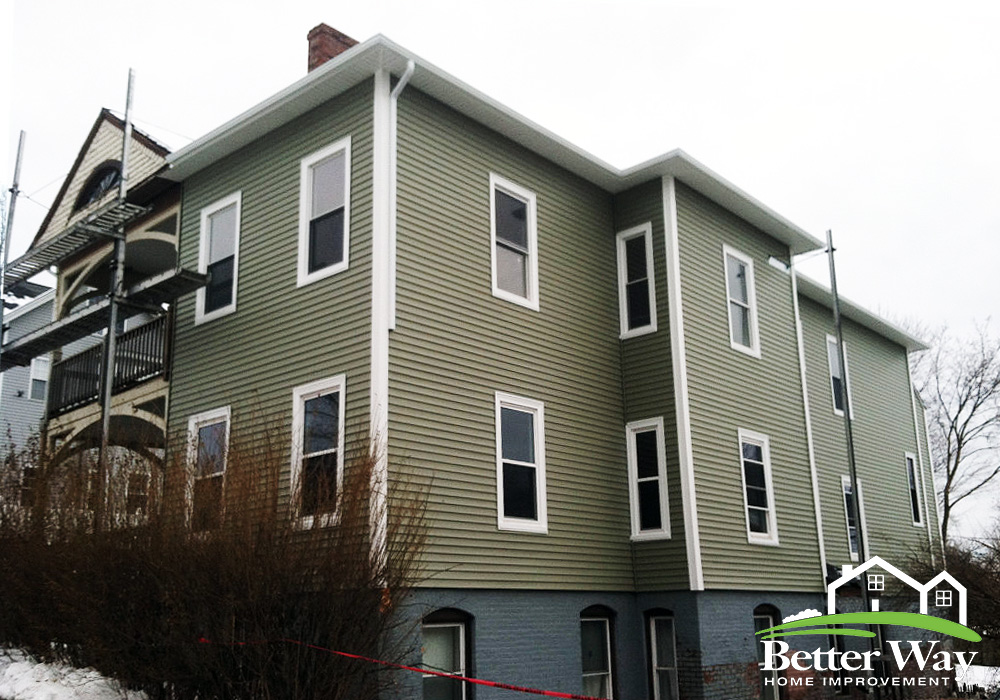
What Siding Replacement looks like in Sturbridge
A full re-side on a Sturbridge home usually starts with the elevation that catches the wind off the lake, because that’s where the old siding tells you the most. We pull the panels there first and check the sheathing, the framing, and whatever insulation is or isn’t behind it before we commit to a plan for the rest of the house. On a lot of the converted cottages we find board sheathing with wide gaps, or plywood that was never sealed at the seams. Neither is a reason to panic, but both change what goes back on the wall.
Once we know what we’re working with, the job is a straight tear-off: strip the old vinyl or clapboard down to the sheathing, pull the trim and any old furring strips, and haul it off site as we go instead of piling it in the yard. We check every window and door opening for water staining, because on lake-facing walls that’s where driven rain finds its way in over the years. Rot at sill plates and corner boards is common enough on these homes that we build it into how we talk about the quote, not as a surprise change order after demo.
From there it’s sheathing repair where needed, a proper weather-resistant barrier, and new siding installed to spec — usually vinyl, sometimes James Hardie fiber cement for owners who want a heavier, more wind-resistant product on the exposed side of the house. We flash every window and door as we go. This is a decision-driven job: what we find during tear-off determines the scope, and we walk you through that before any extra work happens, not after.
What we account for on Sturbridge homes
Older vinyl over original clapboard
A common Sturbridge replacement starts with vinyl that was installed over older wood siding. During removal, the crew checks what is underneath rather than assuming the original siding can simply be covered again. If the old clapboard is sound and the planned siding system allows it, it becomes part of the preparation decision. If it is damaged or no longer suitable as the base, the affected material is dealt with before the new siding goes on.
Sheathing and hidden wood damage
Water can reach the wall through failed siding, trim, flashing, or openings around windows and doors. By the time the exterior looks damaged, some deterioration may already be behind it. Tear-off provides an opportunity to inspect those areas. Soft or damaged sheathing and localized rot are repaired before the replacement siding covers the wall again. The purpose is simple: do not put a new exterior over a problem that should have been fixed first.
Older village homes and exterior details
Sturbridge's village areas include older Victorian and Colonial Revival housing with more trim and architectural detail than a basic ranch. Those details affect removal, preparation, measurements, and installation. The replacement plan accounts for corners, window and door openings, trim, transitions, and other areas where a simple wall panel approach does not work. Older homes also deserve a closer look before removing material that may be part of the original exterior.
Removal, disposal, and site access
Replacement creates a different cleanup requirement from a repair. The old siding has to be removed, sorted and taken away, and the work area has to remain accessible while the exterior is open. The estimate accounts for removal and disposal rather than treating tear-off as an afterthought. On a typical Sturbridge home, the crew works through the exterior in sections so the project can move from removal to preparation and then into the replacement phase.
What we account for on Sturbridge homes
Site visit, replacement estimate
Sturbridge’s older colonials and farmhouses each bring their own quirks, so we look closely at wall structure, existing insulation, trim details, and moisture damage hidden behind the current siding. Historic-style homes near the village center may need matched profiles, while newer builds focus more on energy performance.
- Sheathing and framing condition
- Trim, corners, and window detailing
- Moisture or rot beneath old siding
- Insulation and energy goals
Tear-off and wall inspection
How the job runs
Replacement and cleanup
What a typical quote looks like
We price a Sturbridge re-side after we’ve seen the water-facing wall, because that’s the elevation most likely to change the scope. A quote breaks into three pieces: tear-off and disposal, sheathing and framing repair (priced by the linear foot of bad wood we actually find, not estimated in advance), and the new siding install itself. Homes with sound sheathing and no rot run toward the lower end of what a full re-side costs; converted cottages with soft sheathing or undersized framing at the water side run higher because that repair work has to happen before a single new panel goes up. We give you a number for the base job and a clear per-foot rate for anything found once the old siding is off, so there’s no guessing at final cost.
Recent work in and around Sturbridge
A common job on the Sturbridge lakes is a full re-side on a house that was built as a seasonal cottage in the 1960s or 70s and converted to year-round use later. The water-facing wall usually shows the most wear — vinyl that has bowed or cracked from decades of wind and driven rain — while the other three sides are in better shape. Tear-off on that lake wall typically turns up thin or ungapped board sheathing, sometimes no housewrap at all, and occasional soft framing at a sill or corner. We repair what’s compromised, add a proper weather barrier, and re-side the whole house to match, so the water side holds up the same as the rest of it going forward. We don’t publish customer names or addresses, but this is the shape of the work we do most often around the lakes.
Other services we provide in Sturbridge
Not every home needs a full tear-off. If the siding is only failing in a few spots, our siding repair service in Sturbridge handles that without touching sound walls. If you’re set on the product and want to talk options before deciding whether to repair or replace, see our vinyl siding installation page for Sturbridge. We also install and repair seamless gutters, which matters on lake-facing roofs where runoff volume is higher, and we handle replacement windows and doors — often bundled into a re-side when old openings are found to be leaking during tear-off. For a broader look at who we are and what we cover in town, visit our Sturbridge siding contractor page.
Frequently Asked Questions
How much does siding replacement cost in Sturbridge?
Most full re-sides in Sturbridge run in the range typical for Worcester County, but converted lake cottages tend toward the higher end because of sheathing and framing repair on the water-facing wall. We give you a firm number for the base tear-off and install, plus a clear per-foot rate for any rot repair found once the old siding comes off.
How long does a full siding replacement take?
A typical single-family home in Sturbridge takes 3 to 5 working days from tear-off to finished trim, weather permitting. Homes needing significant sheathing or framing repair on the water side can run a few days longer, since that work has to be done and inspected before new siding goes on.
What happens if you find rot or bad sheathing behind my old siding?
We stop and show you before we cover it up. On Sturbridge's older cottage conversions we find soft sheathing or undersized framing at the water side often enough that it's part of the plan, not a shock. We quote the repair by the linear foot of bad material, you approve it, and then we move forward.
My house was originally a seasonal cottage — does that change the job?
Yes. Many of these conversions have thin board sheathing, no vapor barrier, and minimal insulation behind the old siding. During tear-off we address what's there: repair or replace bad sheathing, add a proper weather-resistant barrier, and make sure the new siding is fastened to sound framing, not just nailed over the same problems.
Does the lake or pond side of my house need anything different?
Often, yes. Water-facing walls take sustained wind and driven rain that the other elevations don't see. We check that wall first during the estimate, and depending on condition we sometimes recommend a heavier product like James Hardie fiber cement on that side even when the rest of the house stays vinyl.
Free estimates in Sturbridge
We’re based at 152 Sutton Ave in Sturbridge, about 11.0 miles from Sturbridge. That’s a short drive for us, so we can get out to look at your water-facing wall and give you a real number, not a phone quote. Call (508) 506-8957 for a free estimate. When you call, tell us whether the house was originally a seasonal cottage and whether the failing siding is on the lake side — it helps us plan the visit. We’ll walk the exterior, check the worst elevation first, and give you a written estimate broken into removal, any repair we find, and the new siding install. No pressure to decide on the spot.