


Siding Repair in Blackstone, MA
If a panel blew off your house on Elm Street or Main Street during the last nor’easter, or you’ve got a cracked section on a triple-decker near the Blackstone River, the fix depends on what’s underneath. A lot of Blackstone’s housing stock is nineteenth-century mill worker cottages and multi-family triple-deckers built with wood clapboard directly over board sheathing, no housewrap, no modern drainage plane. When we pull a damaged section here, we’re often looking at bare sheathing that’s been exposed to whatever moisture got behind the siding for decades. That changes what “repair” means before we ever quote a price.
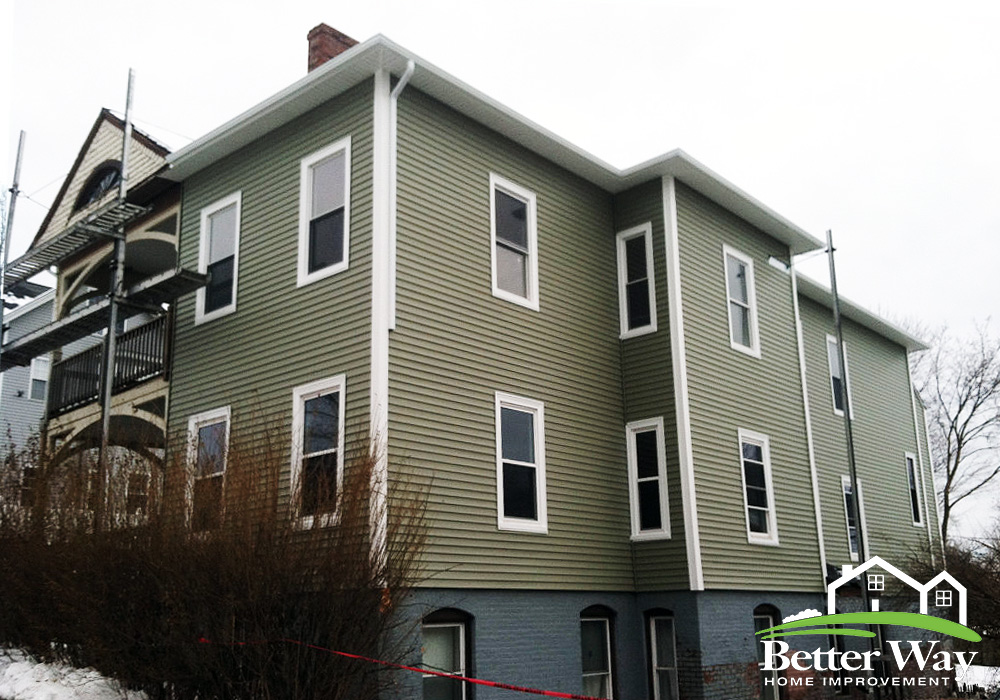
What Siding Repair looks like in Blackstone
Most repair calls we get in Blackstone start with wind or impact damage — a panel cracked by a falling branch, a section peeled back in a storm, or hail dents that opened seams. On the mill houses and worker cottages near downtown, we’re also called out for panels that have simply failed with age: chalked-out color, brittle vinyl that snaps when you touch it, or clapboard that’s rotted through at the bottom courses.
The first question we answer on site is whether repair is even the right call. If the damage is isolated to one or two panels and the rest of the siding is sound, a patch repair or panel swap makes sense. If we find rot spreading along a wall, sheathing that’s soft to the touch, or damage on a house where the siding is 25-plus years old and already brittle throughout, we say so plainly. Patching one wall on siding that’s failing everywhere else is a short-term fix that costs you twice. We’d rather tell you that up front than sell you a repair that won’t hold.
Color matching is its own problem here. A lot of Blackstone’s vinyl went up in the 1980s and 90s, and those exact profiles and colors are discontinued. We carry a range of manufacturer stock to get close, but on an older wall we’re usually looking at either a near-match on a less visible elevation, or reworking a full wall so the seam falls somewhere the eye won’t catch it. We’ll show you actual samples against your existing siding before you commit, not a swatch card.
What we account for on Blackstone homes
Older vinyl over original clapboard
Some Blackstone houses have several layers of exterior work, including older vinyl installed over original clapboard. We do not assume that the material underneath is sound. When the damaged section comes off, we check what is exposed before closing the wall back up. If the original wood is sound, the repair can continue. If there is deterioration, the affected area needs to be addressed before the new siding goes back on.
1970s and 1980s vinyl
A large amount of older vinyl siding around Blackstone is now well into its service life. Years of sun, cold, snow, and temperature changes can make panels brittle. That affects the repair itself. Older panels may break while being removed, and replacement material may not match the original profile exactly. We look at the existing reveal, texture, colour, and profile before selecting replacement material.
Victorian and Colonial Revival details
Village-centre homes can have more exterior detail than a basic ranch. Corners, trim, windows, additions, and changes in wall depth can make a small siding repair more complicated. The repair needs to follow those existing lines rather than treating the damaged area as a flat section of wall. We take the surrounding trim and siding layout into account before replacing the damaged material.
Storm and impact damage
Wind, branches, ladders, equipment, and other impacts can crack or remove individual panels. Leaving the opening exposed can allow water to reach the wall behind the siding. For storm-related repairs, we first determine how much material is actually affected. A small damaged section may be repaired without touching sound siding around it. If the damage extends farther than it first appears, we explain that before the work proceeds.
What we account for on Blackstone homes
Inspect the damaged area
Blackstone’s mix of older mill-district houses and mid-century additions means siding conditions vary block to block. We factor in existing material, past patch jobs, drainage patterns, and sun exposure before recommending a repair approach that holds up long term.
Match repair, complete work
Original wood clapboard with no housewrap
Plenty of Blackstone’s oldest homes still have their original wood clapboard, sometimes under a later vinyl overlay, with board sheathing and nothing resembling a modern moisture barrier behind it. When we open a wall here, we plan for the possibility of trapped moisture damage before we quote the job, and we price the repair with that contingency spelled out rather than surprising you mid-project.
Check the finished section
Lead paint on anything pre-1978
A large share of the housing stock in this town predates 1978, which means lead paint rules apply to any disturbance of the original wood or old paint layers underneath siding. Our crew follows EPA RRP lead-safe work practices on these jobs — containment, specific cleanup protocols, no dry sanding or open flame removal. It adds a step to the job but it’s not optional, and we build it into the schedule rather than treating it as a surprise change order.
Undersized rakes and returns
The trim details on these mill-era houses — the rake boards along the gable ends, the returns at the eaves — were often built to dimensions that don’t match modern stock trim. We custom-cut or special-order rake and return pieces rather than forcing a standard size that leaves gaps or an obvious mismatch at the roofline.
Rot at the sill where grade has crept up
On a lot of these older lots, decades of soil buildup, mulch, and paving have raised the ground level right up against the sill. That means the bottom courses of siding are sitting closer to grade than they were built for, and we routinely find rot right at that line when we pull panels. We address the water source — not just the wood — or the same rot comes back in a few years.
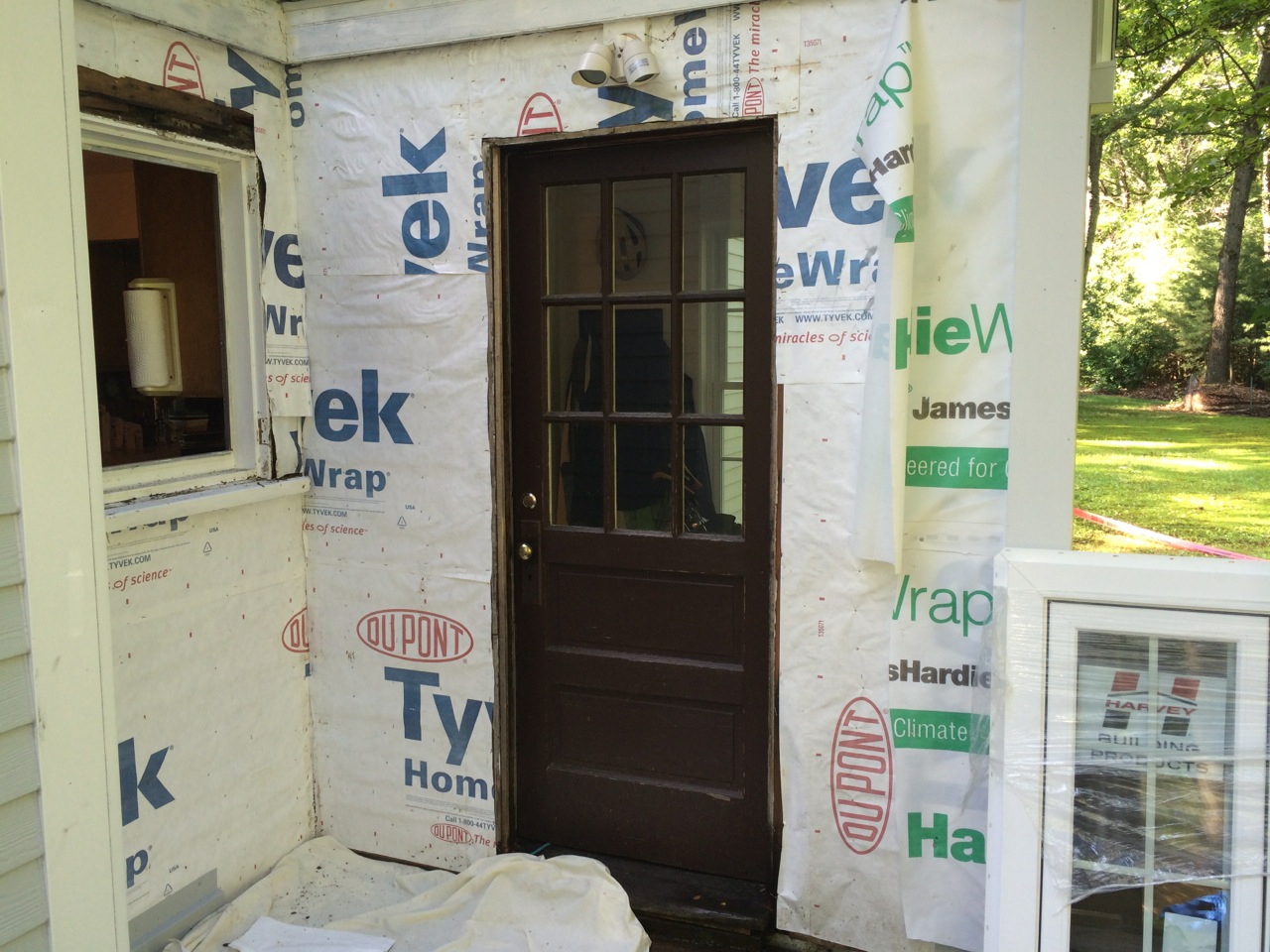
How the job runs
Site walk and diagnosis (day 1 of the estimate): We look at the damaged area, check what’s behind it where we can, and tell you honestly whether this is a repair or the start of a bigger conversation. On tight Blackstone lots, we also work out where the crew truck parks and where any debris staging goes — narrow driveways near downtown and along the river are often the first practical problem to solve, before the siding itself.
Material match and scheduling (1-2 weeks out, depending on backlog): If we need to source a matched panel or trim piece, we order it before we schedule the crew so there’s no gap day waiting on materials. Most straightforward panel repairs get scheduled within a couple weeks of the estimate.
The repair (typically a half-day to two days): A single-wall panel repair usually wraps in a few hours. A job that uncovers rot or requires sheathing replacement runs one to two days. We clean up daily — this isn’t a job site we leave open overnight on a tight residential lot.
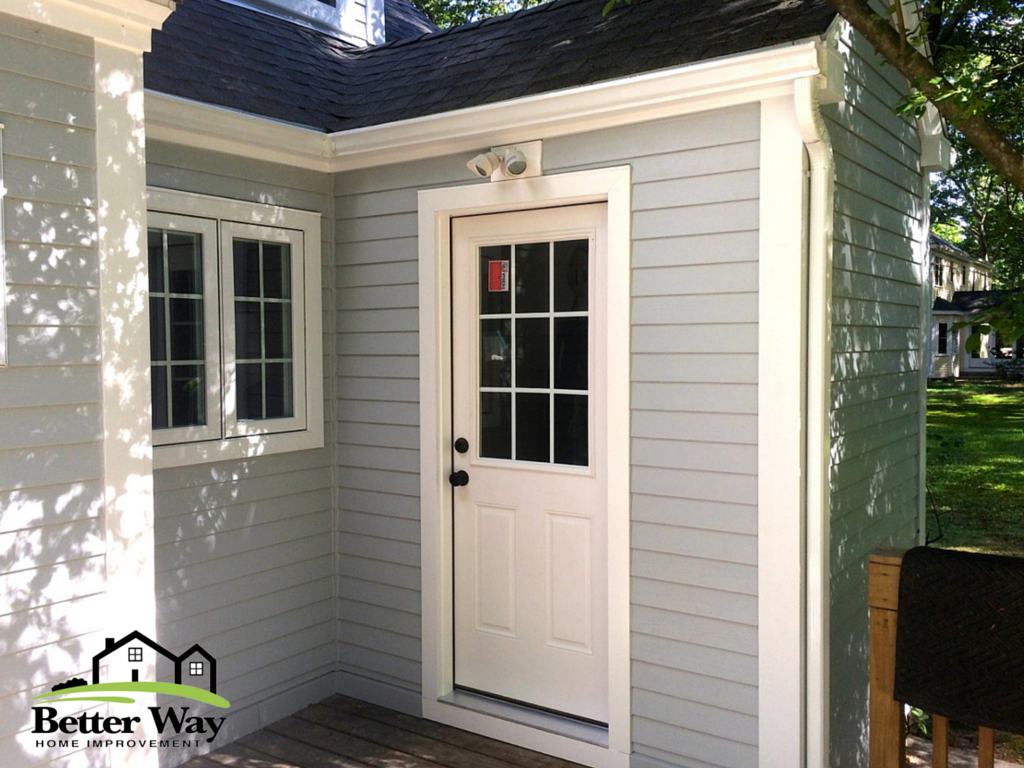
Recent work in and around Blackstone
A common job type in this area: a triple-decker or worker cottage with storm-cracked panels on the street-facing wall, where pulling the damaged siding turned up soft sheathing along the bottom two courses. The fix isn’t just swapping panels — it’s cutting out the compromised sheathing, replacing it, correcting the flashing at the sill, and then matching the vinyl as close as the discontinued profile allows. We’ve also handled straightforward jobs that were exactly what they looked like: a single panel cracked by a tree limb, replaced in an afternoon with an exact stock match, no surprises behind the wall. Both are normal here. The point of the site visit is finding out which one you’ve got before we quote it.
Frequently Asked Questions
Can you match vinyl siding from a house built in the 1980s or 90s?
Sometimes exactly, often closely. Many of those profiles and colors are discontinued. We bring current manufacturer stock to compare against your existing siding on site and show you the real match before you decide, rather than working off a color chart.
Do you handle lead paint when repairing siding on an older Blackstone house?
Yes. A lot of this town's housing predates 1978. Our crew follows EPA RRP lead-safe practices whenever a repair disturbs old paint or original wood behind the siding — containment and cleanup included, not billed as a surprise add-on.
What happens if you find rot or damage behind the old siding?
We stop and tell you before going further. On this housing stock, especially clapboard over board sheathing with no housewrap, finding some degree of rot or moisture damage behind an old panel is common rather than rare. We'll show you what we found, explain the options, and price the additional work separately so you're deciding with full information.
How much does siding repair cost in Blackstone?
A single panel or small-section repair with an available match often runs a few hundred dollars. Jobs that uncover rotted sheathing or require custom trim work cost more, generally in the low thousands, because they involve carpentry and material sourcing, not just a panel swap. We give you a firm number after the site visit, not a phone estimate.
How long does a typical repair take?
A straightforward panel replacement usually takes a few hours to half a day. A repair that involves sheathing replacement or custom trim matching runs one to two days. We'll give you a specific timeline once we've seen the damage.
Other services we provide in Blackstone
Not every job on these houses is a repair. If your siding is failing across multiple walls rather than in isolated spots, our siding repair crew will tell you straight when a full siding replacement makes more financial sense than patching. We also install James Hardie fiber cement for homeowners who want to move off vinyl entirely, particularly on the older wood-clapboard homes where a repair would mean matching a material that’s no longer practical to source. Beyond siding, we handle seamless gutters — repair and full installation — and replacement windows and doors, which often come up together on these older mill-town houses where the trim, siding, and window flashing all meet at the same failure points.
Free estimates in Blackstone
We’re based in Blackstone, about 18.0 miles from Blackstone, and we cover this whole stretch of the Blackstone Valley regularly. Estimates are free and there’s no pressure to book on the spot. Call (508) 506-8957, tell us what you’re seeing — cracked panel, missing section, or damage you found when a piece blew off — and we’ll set a time to come look. After the visit, you get a written quote that spells out whether you’re looking at a repair or something bigger, with a price and a timeline, so you can decide with real numbers in hand.