


Siding Repair in Hopedale, MA
If a storm cracked a panel, a branch punched a hole in your siding, or you pulled off a piece near the foundation and found soft wood underneath, you don’t need to redo the whole house. Hopedale’s postwar streets, and the newer condo and townhouse clusters near the Milford and Bellingham line, are full of homes with siding that’s failing in one spot, not everywhere. Most of the calls we get from this end of town are about a single wall, a section behind a downspout, or trim around a bay window that finally gave out. We’ll tell you straight if a patch will hold or if you’re better off replacing a run of panels.
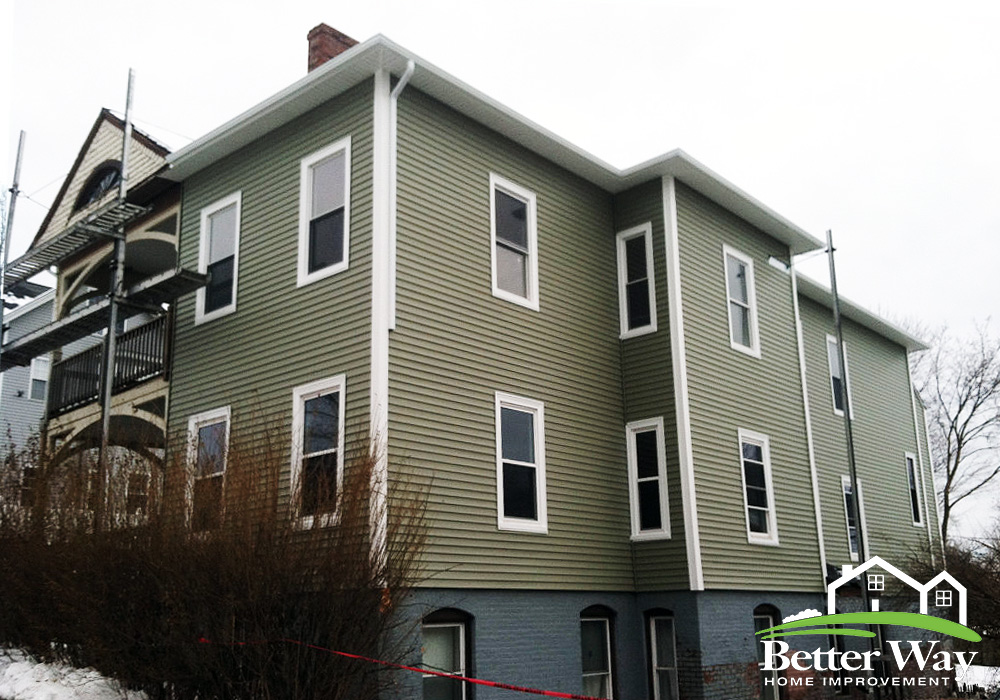
What Siding Repair looks like in Hopedale
A lot of Hopedale’s housing went up in the postwar building push and again during the townhouse and condo development that filled in lots toward Milford and Bellingham through the 70s, 80s, and 90s. That means two different repair problems on the same street. The older single-family homes often have original or first-replacement vinyl that’s brittle from decades of sun, and finding a matching profile can be the whole job. The condo and townhouse units built later usually have siding that’s structurally fine but governed by an association — meaning the fix isn’t just technical, it’s also a paperwork step.
Repair work here usually falls into a few buckets: wind and impact damage from the storms that come through the Blackstone Valley corridor, panels that have popped loose from nail strips that dried out, cracked corner posts, and rot discovered once a damaged section is pulled back. On the condo side, we also get calls where a resident wants one damaged panel swapped and the association wants to know the replacement matches the approved color and material before anyone touches a wall.
We inspect before we quote. That means pulling back adjacent panels to see how far the damage or rot actually goes, checking the house wrap or building paper behind it, and confirming whether the existing siding is even still manufactured close enough to match. If it’s discontinued — which is common on homes from the 80s and 90s — we’ll say so up front rather than order something and hope it blends in.
What we account for on Hopedale homes
Older vinyl over original clapboard
Some Hopedale houses have several layers of exterior work, including older vinyl installed over original clapboard. We do not assume that the material underneath is sound. When the damaged section comes off, we check what is exposed before closing the wall back up. If the original wood is sound, the repair can continue. If there is deterioration, the affected area needs to be addressed before the new siding goes back on.
1970s and 1980s vinyl
A large amount of older vinyl siding around Hopedale is now well into its service life. Years of sun, cold, snow, and temperature changes can make panels brittle. That affects the repair itself. Older panels may break while being removed, and replacement material may not match the original profile exactly. We look at the existing reveal, texture, colour, and profile before selecting replacement material.
Victorian and Colonial Revival details
Village-centre homes can have more exterior detail than a basic ranch. Corners, trim, windows, additions, and changes in wall depth can make a small siding repair more complicated. The repair needs to follow those existing lines rather than treating the damaged area as a flat section of wall. We take the surrounding trim and siding layout into account before replacing the damaged material.
Storm and impact damage
Wind, branches, ladders, equipment, and other impacts can crack or remove individual panels. Leaving the opening exposed can allow water to reach the wall behind the siding. For storm-related repairs, we first determine how much material is actually affected. A small damaged section may be repaired without touching sound siding around it. If the damage extends farther than it first appears, we explain that before the work proceeds.
What we account for on Hopedale homes
Inspect the damaged area
Hopedale’s mix of older mill-era houses and newer builds means siding, trim, and flashing details vary block to block. We factor in existing panel profile, exposure to weather, and how nearby sections were installed before recommending a repair approach.
Match repair, complete work
Color and material matching on older runs
Vinyl fades unevenly and manufacturers change profiles every few years. On a home with siding from the 80s or 90s, an exact match is often not possible. We bring physical samples to the estimate, show you the closest options, and talk through whether a partial repair will be visible enough to bother you, or whether it makes more sense to re-side the affected elevation instead.
Check the finished section
Association approval before we touch anything
Hopedale has a real concentration of condo and townhouse associations, especially in the newer developments near the town line. Many have specific rules on approved colors, materials, and sometimes even which contractor can do exterior work. Before we schedule anything on association-governed property, we confirm what’s allowed — in writing if the board requires it — so the repair isn’t flagged after the fact.
Rot found once we open the wall
Pulling a cracked panel off a postwar home sometimes reveals soft sheathing or water-stained framing behind it, usually where flashing failed years ago or a J-channel let water track down instead of out. We stop, show you what we found with photos, and give you a straight number for the additional repair before we close it back up. We don’t quote blind and we don’t hide it in the invoice.
Storm and insurance timing
When damage comes from wind or a fallen limb, we document it the way most insurance adjusters want to see it — photos of the damage, the surrounding panels, and any exposed sheathing — before we start work. If you’re filing a claim, we can time the repair around the adjuster’s visit so nothing gets covered up before it’s inspected.
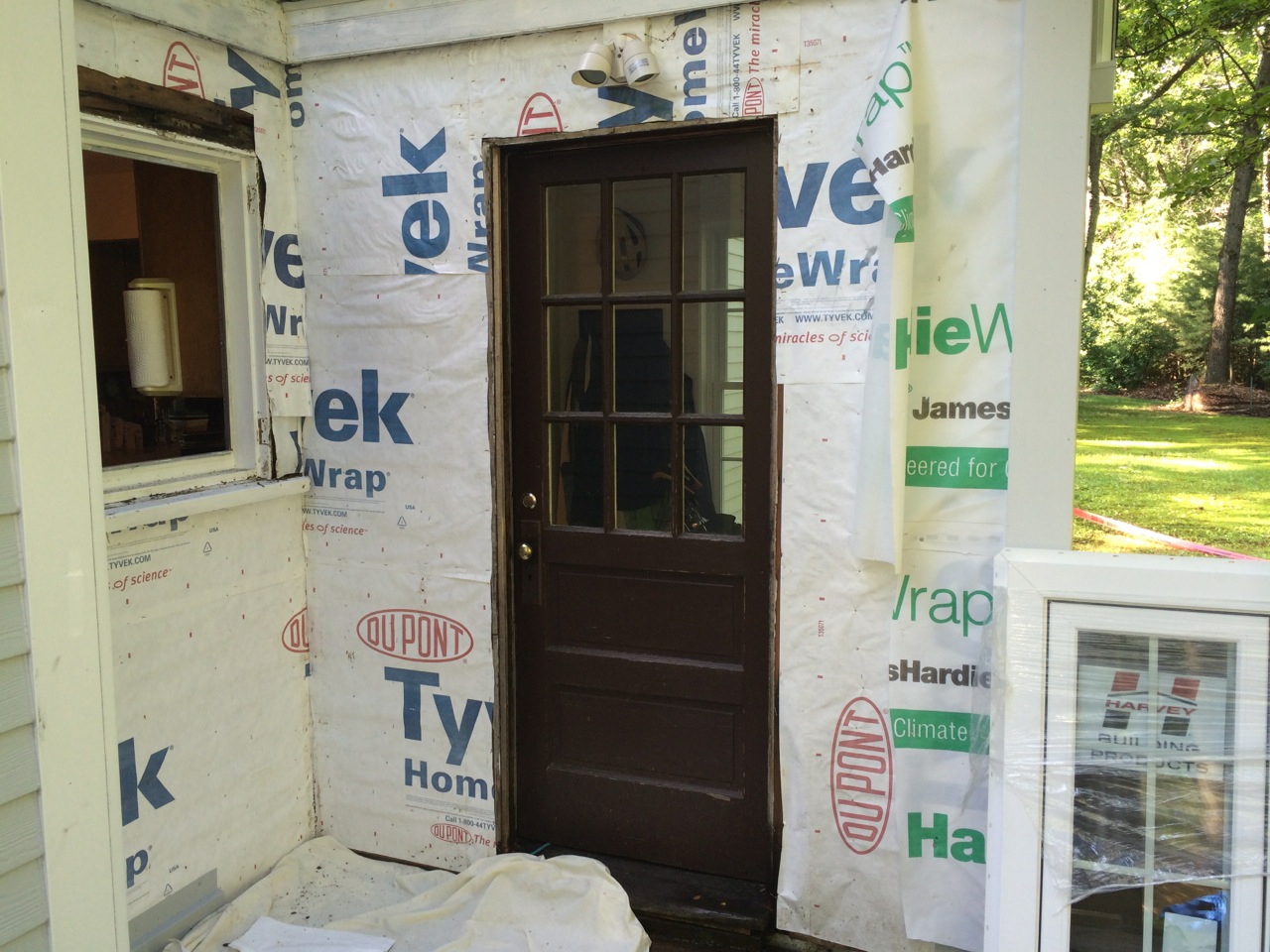
How the job runs
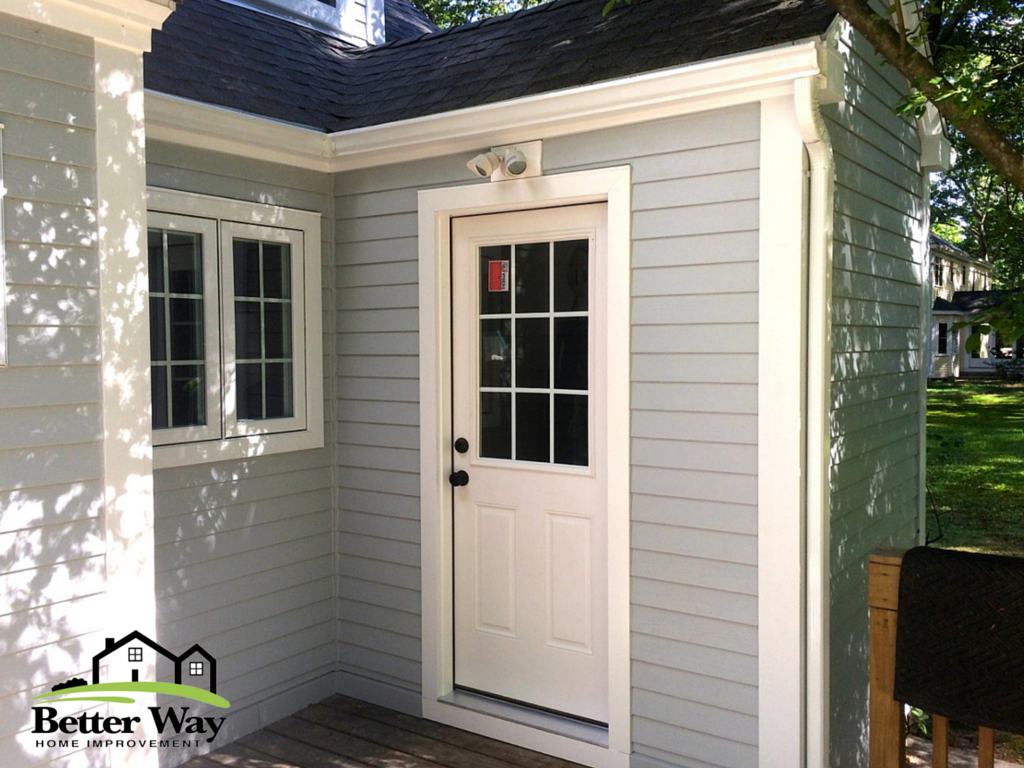
Inspection and quote
We come out, pull back the damaged area, check for hidden rot, and confirm whether the existing panel profile is still available. If the property is association-governed, we note what needs sign-off. You get a written quote the same visit in most cases.
Frequently Asked Questions
Can you match siding that's no longer manufactured?
Sometimes, but not always. Vinyl profiles change every few years and colors fade unevenly, so an exact match on 1980s or 1990s siding is often not possible. We bring samples to the estimate and show you the closest option before you decide whether a visible partial repair works for you or whether replacing the elevation makes more sense.
Does my condo or townhouse association need to approve a siding repair?
Many Hopedale associations require approval on color, material, or even which contractor does the work. We confirm this before scheduling. If your association has a documented process, bring it to the estimate so we can build the timeline around it instead of finding out mid-job.
What if you find rot or water damage behind the old panel?
We stop, show you photos of what we found, and quote the additional repair before closing anything back up. On this housing stock it's common to find some soft sheathing behind a cracked panel, especially near failed flashing or gutters, so we build inspection time into every repair quote.
How much does siding repair cost in Hopedale?
A single-panel or small-section repair with no hidden damage typically runs a few hundred dollars. Jobs involving rotted sheathing, multiple panels, or association-required material upgrades run higher. We give you a firm written number after inspecting the damage in person, not a phone estimate.
How fast can you get to storm or impact damage?
Non-emergency repairs usually get scheduled within one to two weeks. If you have active water intrusion or you're coordinating with an insurance adjuster, tell us when you call and we'll move faster and document the damage the way most adjusters expect to see it.
Approval and scheduling
If an association needs to approve color or material, we wait for that before we schedule. For non-association homes, most repair jobs go on the calendar within a week or two, faster if there’s active water intrusion.
Repair and cleanup
A single-panel or small-section repair is usually a half-day job. Larger sections with hidden rot take longer since we’re replacing sheathing or house wrap along with the siding. We haul away the old material and don’t leave debris in yards or shared parking areas.
Recent work in and around Hopedale
A typical job on this end of our territory is a townhouse unit where a downspout failed and pushed water behind three or four panels near a corner. The homeowner noticed a soft spot when leaning a ladder against the wall. We pulled the panels, found the sheathing had absorbed water but hadn’t rotted through, dried and treated it, replaced the panels with an association-approved match, and fixed the downspout gasket that caused it. Total repair, including the association’s 48-hour notice period, ran about a week from first call to finished wall. That sequence — a small leak, a hidden problem, an approval step, then a contained repair — is close to what most Hopedale calls look like.
Other services we provide in Hopedale
Not every job on this end of town is a repair. If your siding is failing across more than one wall, or the repair math stops making sense, our siding replacement service handles a full tear-off and re-side. If you’re building new or doing a full exterior overhaul, we also install vinyl siding and James Hardie fiber cement siding for homeowners who want a different material profile. We also handle seamless gutter repair and installation — worth checking if a failed gutter caused your siding damage in the first place — along with replacement windows and doors. For general questions about who we are and what we cover in town, see our Hopedale siding contractor page, or our main siding repair page for how we handle this across our whole service area.
Free estimates in Hopedale
We’re based in Hopedale, about 17.0 miles from Hopedale, and we work this end of the county regularly — including the condo and townhouse developments near the Milford and Bellingham line. Estimates are free and we’ll tell you honestly if repair is the right call or if you’re better off replacing a section. Call (508) 506-8957. After you call, we schedule a visit, inspect the damage in person, and give you a written quote before anything gets touched. If your property is association-governed, bring us the color and material guidelines, or we’ll help you get them, before we lock in a repair date.