


Siding Repair in Sturbridge, MA
If a panel on your Sturbridge home cracked in a wind storm, blew off the water-facing wall, or you pulled a piece loose and found soft wood behind it, you don’t automatically need a full re-side. Most of the calls we get from around Cedar Lake, Big Alum, and the Fiskdale side of town are single-elevation problems — usually the side that takes the weather off the water. We patch what can be patched, match what can be matched, and tell you straight when the damage means more than a repair.
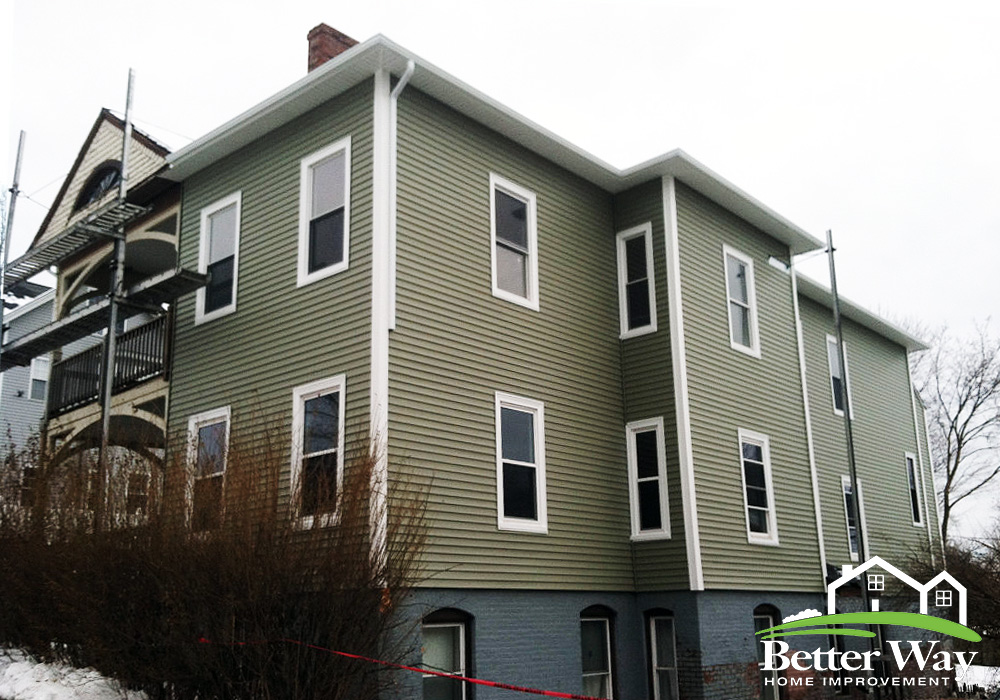
What Siding Repair looks like in Sturbridge
Sturbridge has two different housing stories sitting side by side, and it changes how we approach a repair call. There’s the year-round colonial or cape on a town road, built or re-sided sometime in the 80s or 90s, where a repair is usually straightforward: a few panels cracked by a fallen limb, a corner post knocked loose by a plow, or trim that’s pulled away from the fascia. That work is quick — cut out the damaged section, snap in new panel, match the color as close as the sun-fading allows.
Then there’s the lake and pond stock — camps and cottages around Cedar Lake, Long Pond, and the Quinebaug shoreline that were built as three-season places in the 1950s through 70s and later closed in with vinyl over whatever framing was already there. On these, a repair call often starts as “one cracked panel” and turns into something bigger once we pull it off. Water-side walls on these lake homes take sustained wind and driven rain for years, and the siding is frequently the only thing standing between that weather and framing that was never built for four-season exposure.
We treat every repair call the same way: pull the damaged panel first, look at what’s behind it before quoting a fix, and tell you what we find. On a straightforward job that’s a five-minute check. On a lake-facing wall with a history of leaks, it can change the whole scope — and we’d rather tell you that on the estimate than after we’ve already ordered material.
What we account for on Sturbridge homes
Older vinyl over original clapboard
Some Sturbridge houses have several layers of exterior work, including older vinyl installed over original clapboard. We do not assume that the material underneath is sound. When the damaged section comes off, we check what is exposed before closing the wall back up. If the original wood is sound, the repair can continue. If there is deterioration, the affected area needs to be addressed before the new siding goes back on.
1970s and 1980s vinyl
A large amount of older vinyl siding around Sturbridge is now well into its service life. Years of sun, cold, snow, and temperature changes can make panels brittle. That affects the repair itself. Older panels may break while being removed, and replacement material may not match the original profile exactly. We look at the existing reveal, texture, colour, and profile before selecting replacement material.
Victorian and Colonial Revival details
Village-centre homes can have more exterior detail than a basic ranch. Corners, trim, windows, additions, and changes in wall depth can make a small siding repair more complicated. The repair needs to follow those existing lines rather than treating the damaged area as a flat section of wall. We take the surrounding trim and siding layout into account before replacing the damaged material.
Storm and impact damage
Wind, branches, ladders, equipment, and other impacts can crack or remove individual panels. Leaving the opening exposed can allow water to reach the wall behind the siding. For storm-related repairs, we first determine how much material is actually affected. A small damaged section may be repaired without touching sound siding around it. If the damage extends farther than it first appears, we explain that before the work proceeds.
What we account for on Sturbridge homes
Inspect the damaged area
Every town has its own version of what goes wrong behind the siding. In Sturbridge, these are the four things we check before we ever write up a repair quote.
Match repair, complete work
Water-facing elevations
Homes on Cedar Lake, Long Pond, and the smaller ponds around town catch wind and rain off open water that a house set back in the woods never sees. That elevation ages faster — more fading, more panel warp, more nail-slot fatigue. We check that wall separately from the rest of the house, even if the original complaint was a single cracked panel on the other side.
Check the finished section
Cottages closed in without proper wall assembly
A lot of the lake-area homes started as seasonal cabins and got vinyl-sided and winterized later, sometimes decades ago. Behind that siding you can find undersized studs, no housewrap, little or no insulation, and no vapor control at all. That combination traps moisture against the sheathing, and it’s the single most common reason we find rot on what looked like a simple repair. We don’t guess at this — we open the wall at the damaged spot and look.
Discontinued panel profiles
Vinyl siding profiles and colors get discontinued regularly, and a lot of Sturbridge homes were sided 15 to 25 years ago in a run that’s no longer made. When we can’t get an exact match, we tell you upfront, and we usually pull replacement panels from a less-visible elevation — a back wall or under a deck — and use new material where it’s noticeable, so the color break is somewhere nobody looks.
Insurance-related storm damage
Fallen limbs, wind-lifted panels, and hail nicks are common enough here that we get insurance-driven calls every storm season. We document the damage with photos before we touch anything, give you an itemized estimate your adjuster can work from, and do the repair once the claim is settled. We don’t inflate scope to chase a bigger check — we quote what’s actually damaged.
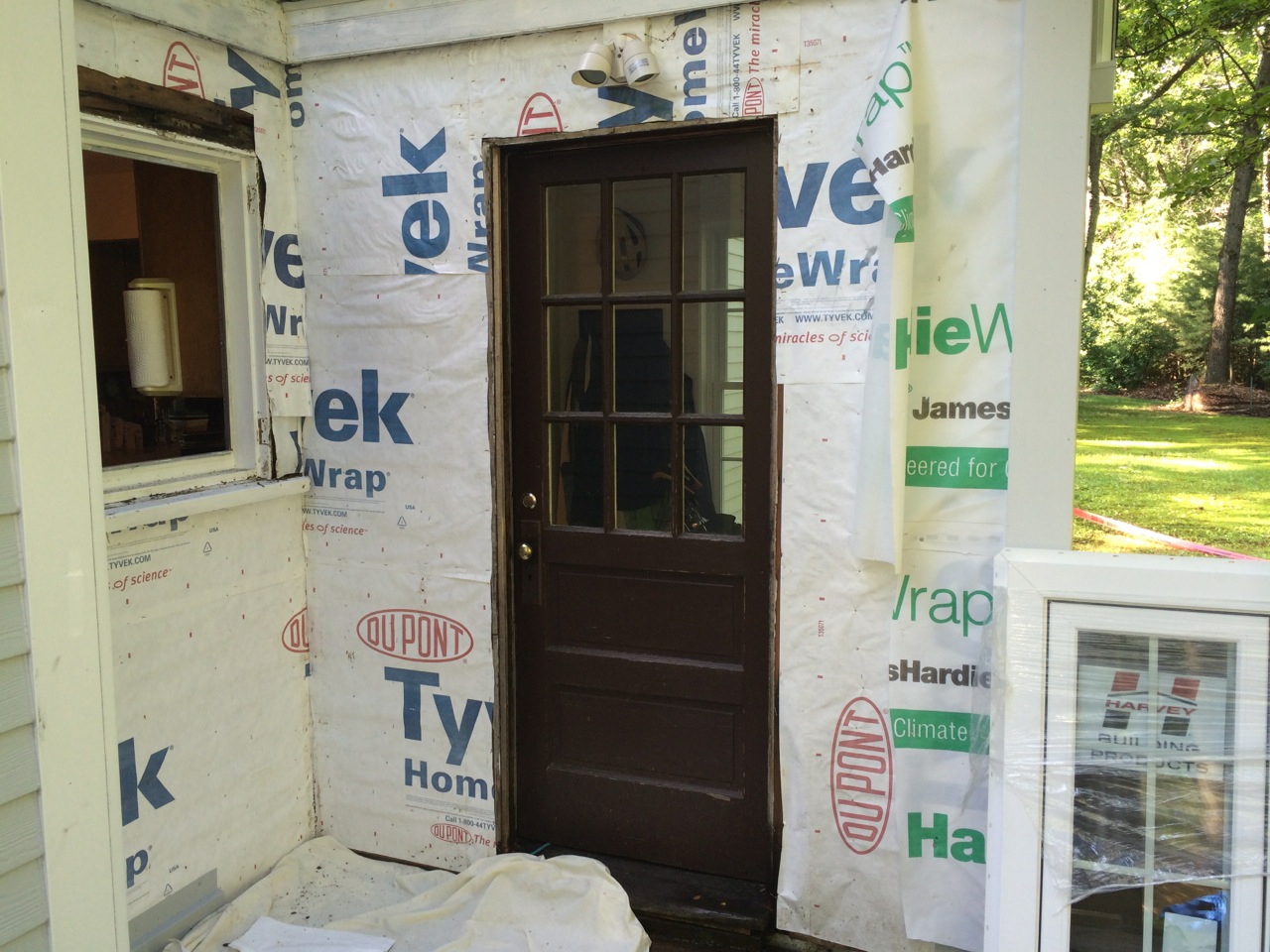
How the job runs
A repair call is not a project on the scale of a full re-side, and the timeline reflects that. First, we come out and inspect — that means pulling the damaged panel or trim piece, not just eyeballing it from the ground, so we can see what’s underneath before we commit to a price. Second, we quote the actual scope: panel and trim replacement if the sheathing’s dry, or a wider repair if we find rot or wet insulation behind it. Third, we schedule and do the work. A single-elevation panel repair on a standard home is usually a one-day job. A repair that turns up rotted sheathing on a lake-facing wall takes longer — typically two to four days depending on how much framing needs attention — and we’ll give you that number in writing before we start, not after.
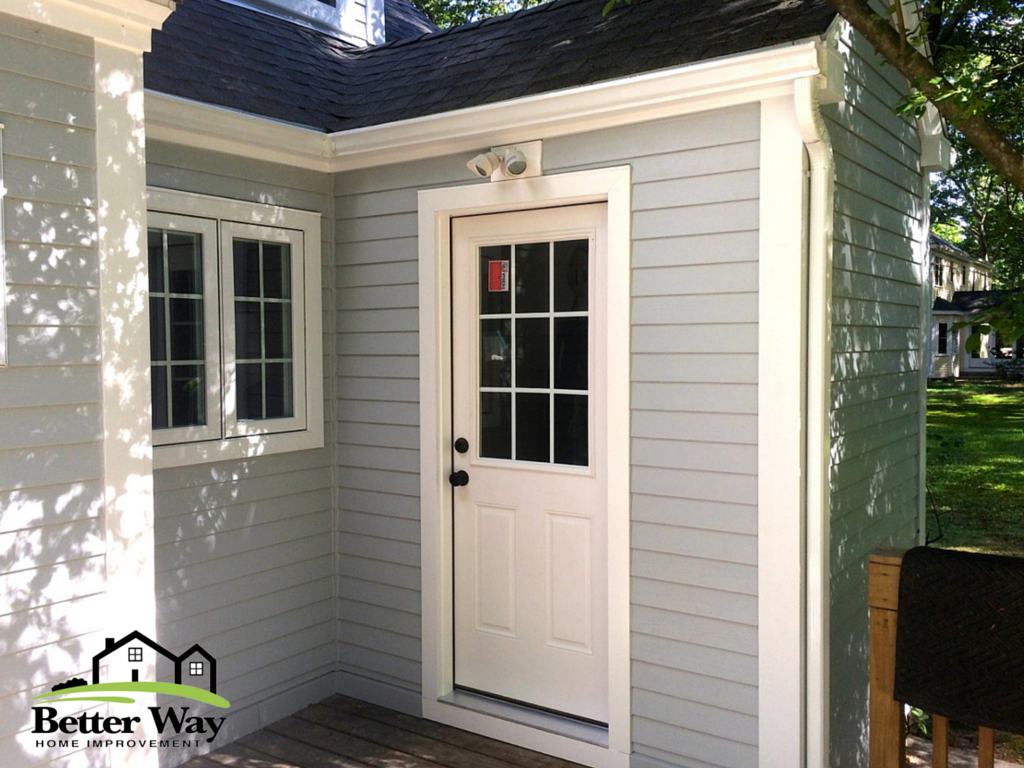
Recent work in and around Sturbridge
A typical repair call we run in this area is a homeowner near one of the ponds who noticed a bowed or cracked panel on the water side of the house after a windy stretch. We pull that panel and the two or three around it, and more often than not find the housewrap missing or torn and a section of sheathing gone soft. The fix is to cut back to solid wood, replace the damaged sheathing section, add proper wrap and flashing, and re-side that section with matched or near-matched panel. On the town-road colonials, the more common call is simpler — storm-damaged trim or a cracked corner post from a plow or a fallen branch, swapped out in an afternoon. We quote both types honestly on what we find, not what we assume.
Frequently Asked Questions
How much does siding repair cost in Sturbridge?
A single-panel or trim repair on a dry wall typically runs a few hundred dollars. If we open the wall and find rotted sheathing or missing insulation, which happens more often on lake-facing homes here, cost goes up based on how much framing needs replacing. We give you a number after the inspection, not before.
Will you match the siding on an older lake cottage?
We try. A lot of lake-area homes have profiles and colors that are no longer manufactured. When we can't get an exact match, we source replacement panel from a less visible wall and put new material there instead, so any color difference isn't on the elevation people see from the road or the water.
What if you find rot behind the siding on my house?
We stop and show you before doing anything else. On the cottage-conversion homes around the ponds, it's common to find undersized framing or no vapor barrier once we pull a panel. We'll quote the sheathing and framing repair separately from the siding patch so you know exactly what you're paying for and why.
Does homeowners insurance cover storm-damaged siding?
Often, if the damage is from wind, hail, or a fallen limb. We document the damage with photos and give you an itemized estimate that your adjuster can use to process a claim. We don't pad the scope — we quote what's actually damaged.
How do I know if I need a repair or a full re-side?
If the damage is isolated to one or two elevations and the rest of the siding is in good shape, repair is the right call. If we find rot spreading across multiple walls, or the siding is old enough that matching panel is impossible everywhere, we'll tell you a repair isn't worth it and point you to replacement instead.
Other services we provide in Sturbridge
If a repair inspection turns up more damage than patching can fix, or your siding is old enough that repair is throwing money at a wall that needs a full re-side, we’ll say so and walk you through siding replacement instead. For homes ready for new material altogether, including James Hardie fiber cement, see our vinyl siding installation page. We also handle seamless gutters — a common companion repair on lake homes where a failed gutter has been dumping water straight down a wall — and replacement windows and doors for older cottages being brought up to year-round standard.
Free estimates in Sturbridge
We’re based in Sturbridge, about 11.0 miles from Sturbridge, and we run repair calls out this way regularly, including the lake and pond neighborhoods. We’re licensed, insured, and an Angie’s List Super Service Award winner from 2013 through 2019. Call (508) 506-8957 for a free estimate. We’ll set a time to come look at the damage, pull the panel to check what’s behind it, and give you a written price before any work starts — repair if repair makes sense, or a straight answer if it doesn’t.