


Siding Repair in Douglas, MA
If a section of your Douglas house lost siding in a storm, or you found soft wood when a panel came loose, the first question is whether it’s worth fixing or whether it’s time to stop patching. Douglas has a lot of nineteenth-century mill housing and worker cottages with original wood clapboard nailed straight to board sheathing, no housewrap behind it, later covered over with vinyl at some point in the last 40 years. That combination means damage often isn’t just cosmetic. We look at what’s actually behind the panel before we quote anything, and we’ll tell you straight if patching is the wrong move.
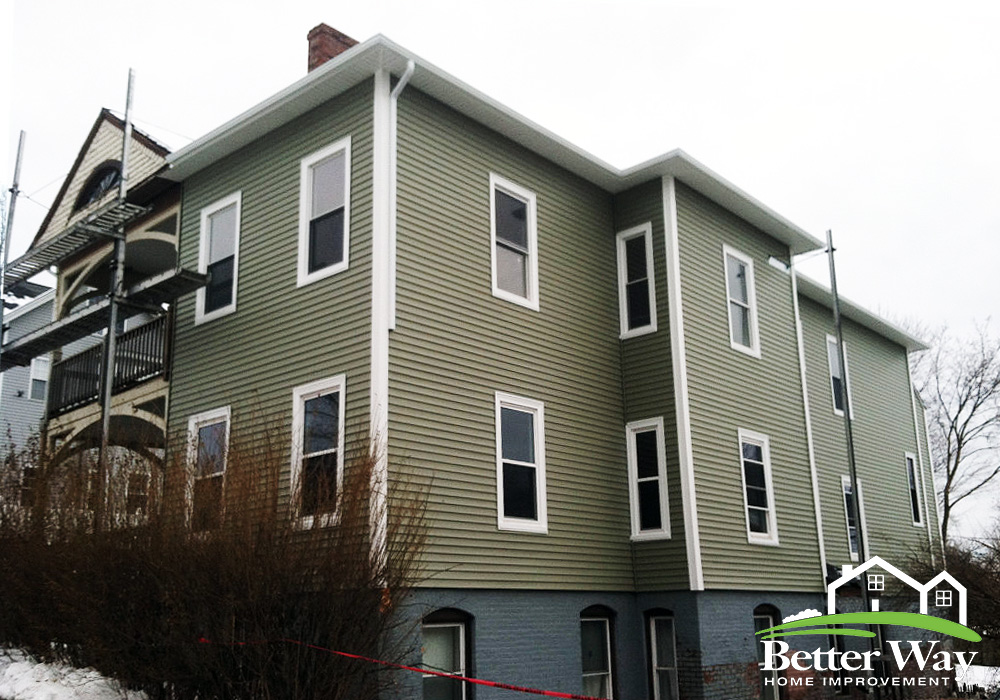
What Siding Repair looks like in Douglas
Most of the repair calls we get in Douglas start with one of three things: wind ripped a panel or two off a gable end, a tree limb or ladder cracked a section near a downspout, or someone doing a paint estimate found rot at a corner post and called us instead. On the triple-deckers and worker cottages near the village and along Route 16, the siding is often 20 to 35 years old vinyl installed over original wood clapboard. Finding an exact color and profile match gets harder every year, since many of those runs are discontinued. We keep a stock of common New England profiles and, when we can’t match exactly, we’ll tell you honestly whether a near-match on a rear or side elevation is acceptable or whether you’re better off re-siding that full wall.
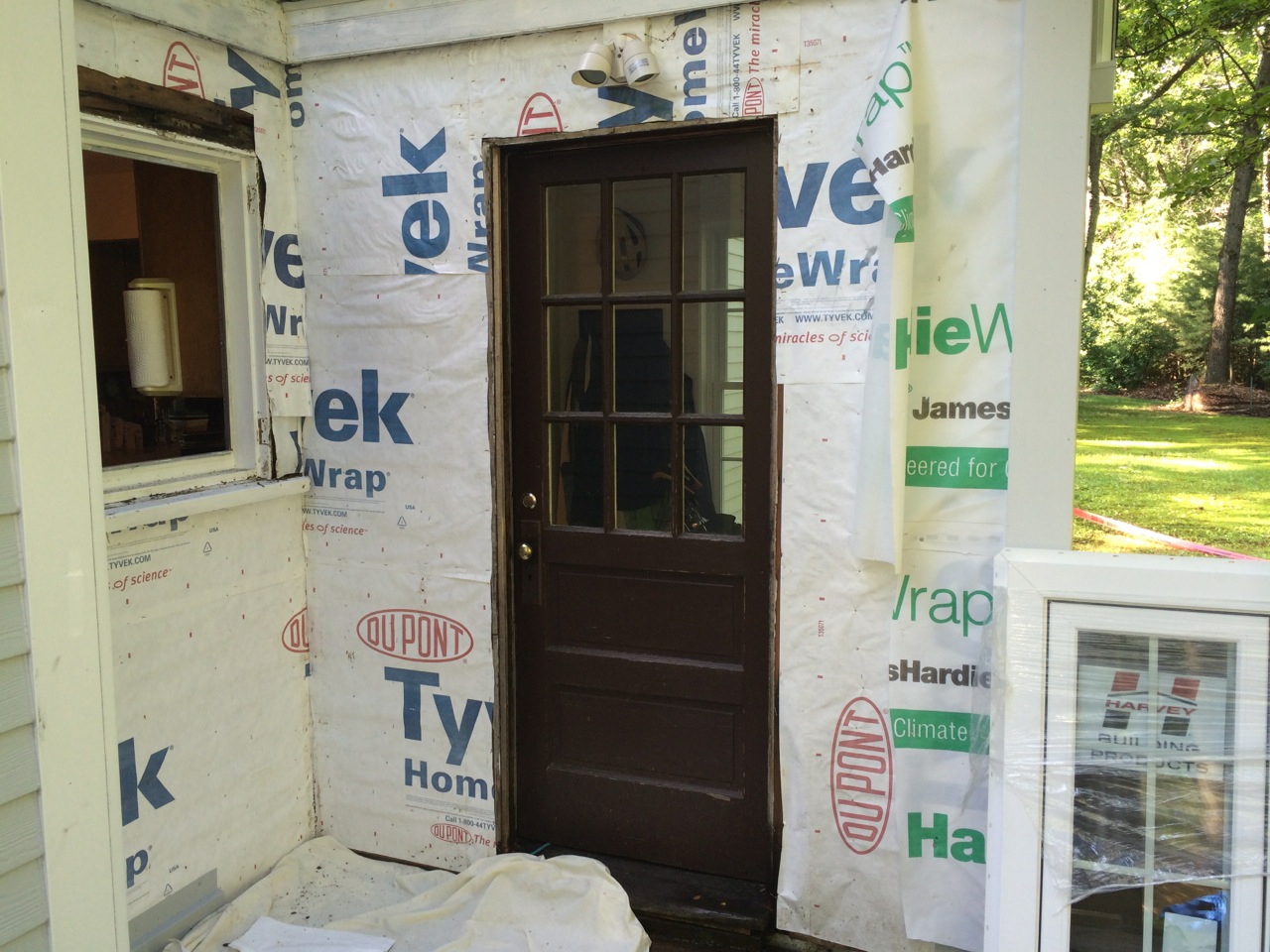
Repair work here also means dealing with what’s underneath. Because so much of the original construction has no housewrap and board sheathing that’s absorbed decades of moisture at the sills and corners, pulling one bad panel frequently reveals a second problem: soft sheathing, old nail holes that let water track down inside the wall, or insulation that’s wet and compressed. On pre-1978 homes we also assume lead paint on any original wood trim or clapboard until tested otherwise, which changes how we handle removal and disposal. None of this is a reason to panic. It’s a reason to get someone out to actually open up the wall before quoting a number over the phone.
What we account for on Douglas homes
Older vinyl over original clapboard
Some Douglas houses have several layers of exterior work, including older vinyl installed over original clapboard. We do not assume that the material underneath is sound. When the damaged section comes off, we check what is exposed before closing the wall back up. If the original wood is sound, the repair can continue. If there is deterioration, the affected area needs to be addressed before the new siding goes back on.
1970s and 1980s vinyl
A large amount of older vinyl siding around Douglas is now well into its service life. Years of sun, cold, snow, and temperature changes can make panels brittle. That affects the repair itself. Older panels may break while being removed, and replacement material may not match the original profile exactly. We look at the existing reveal, texture, colour, and profile before selecting replacement material.
Victorian and Colonial Revival details
Village-centre homes can have more exterior detail than a basic ranch. Corners, trim, windows, additions, and changes in wall depth can make a small siding repair more complicated. The repair needs to follow those existing lines rather than treating the damaged area as a flat section of wall. We take the surrounding trim and siding layout into account before replacing the damaged material.
Storm and impact damage
Wind, branches, ladders, equipment, and other impacts can crack or remove individual panels. Leaving the opening exposed can allow water to reach the wall behind the siding. For storm-related repairs, we first determine how much material is actually affected. A small damaged section may be repaired without touching sound siding around it. If the damage extends farther than it first appears, we explain that before the work proceeds.
What we account for on Douglas homes
Inspect the damaged area
No housewrap behind the original clapboard
Homes built before the 1960s in Douglas typically have board sheathing with clapboard nailed directly to it, no moisture barrier. When we open a wall for repair we check for staining or soft spots on the sheathing itself, not just the siding. If the sheathing is compromised we address it before any new panel goes back up, otherwise you’re trapping the same moisture problem under a fresh piece of vinyl.
Lead paint on pre-1978 trim and clapboard
A large share of Douglas’s housing stock predates 1978. Any original wood trim, corner boards, or clapboard we disturb during a repair is treated as lead-safe work: containment, HEPA vacuum cleanup, and disposal that follows EPA RRP rules. This adds a step to the job but it’s not optional and it protects your family and ours.
Undersized rakes and returns on older cottages
Worker cottages and older mill housing were often built with narrow rake boards and tight eave returns that were never sized for modern vinyl trim coil. When we’re matching a repair into an existing installation, we check these dimensions before ordering material so the new piece actually sits flush instead of gapping at the corner.
Rot at the sill where grade has crept up
On a lot of these older lots, decades of mulch, pavement, and yard grading have raised the ground level closer to the sill plate than it was originally. That traps moisture against the bottom courses of siding and starts rot from the bottom up. We check sill height as a standard part of any repair estimate near ground level, and we’ll flag grading issues even when they’re outside the scope of the repair itself.
Match repair, complete work
How the job runs
Assessment and material sourcing
We come out, pull the damaged panel or open the affected section, and check the sheathing and framing behind it. If a color match is needed on an older or discontinued profile, we source it before scheduling the crew so there’s no delay once we start.
Repair or targeted replacement
Straightforward panel swaps on a single elevation usually run a half day to a full day. Jobs that uncover rot or require reframing a section of wall run longer, typically one to three days depending on how much sheathing needs replacing.
Site logistics on tight lots
Many Douglas properties, especially the older cottages and triple-deckers near the village, have narrow driveways and small yards. We plan staging and any dumpster or trailer placement before the crew arrives, so we’re not blocking a shared driveway or a neighbor’s access mid-job.
Check the finished section
Insurance claims come up often with storm-related siding damage. If a limb, hail, or straight-line wind took out a section, we’ll document the damage with photos and a written scope that you can hand to your adjuster. We don’t inflate estimates to match a claim number, but we will make sure the scope reflects everything that’s actually damaged, including anything found once the wall is opened.
Recent work in and around Douglas
Not every repair should be a repair. If more than a third of a wall’s siding is failing, if the color is so faded or discontinued that new panels will always stand out, or if rot has spread beyond one or two stud bays, patching becomes a short-term fix that costs money now and again in a few years. We’ll say so directly rather than sell you a repair that won’t hold.
Recent work in and around Douglas
A typical repair call in Douglas involves a gable-end section on an older cottage where wind pulled two or three courses loose. Once we open it up, we often find the original board sheathing has taken on moisture around the exposed nail holes over the years. The fix is usually replacing a few square feet of sheathing, felt or housewrap where there was none, and matching in new panels as close to the existing color as the profile allows. On triple-deckers, the more common job is at a corner where a downspout has been discharging against the wall for years, causing rot at the base course. That’s a smaller repair in scope but it always includes checking the sill and grade before we close it back up.
Other services we provide in Douglas
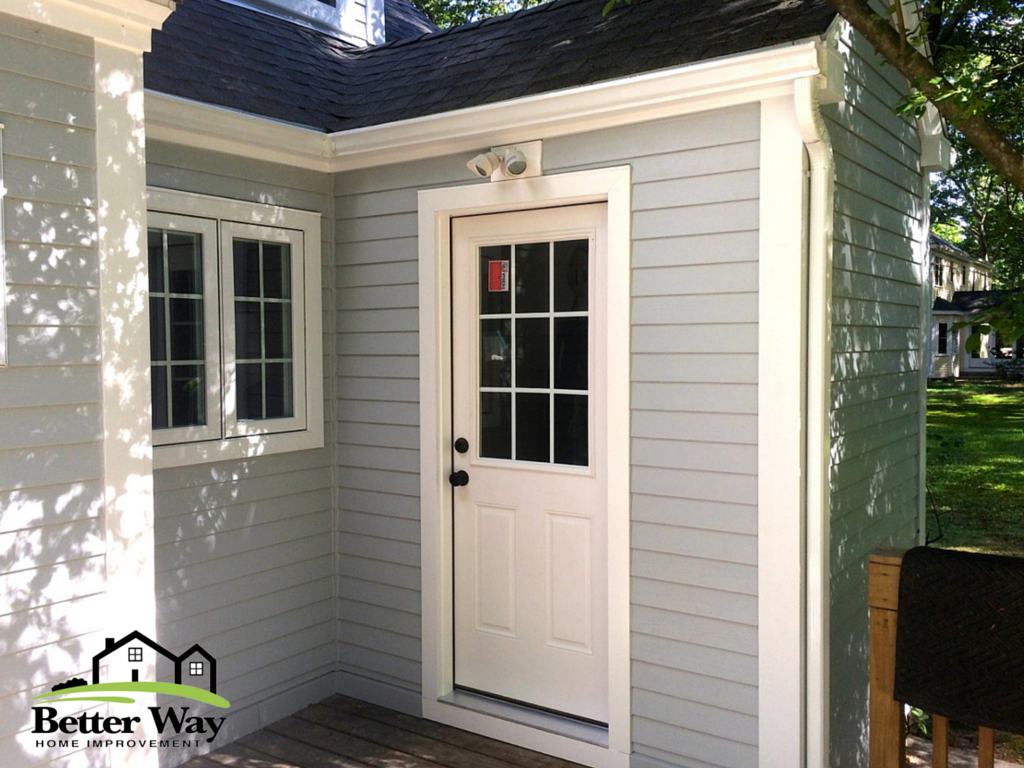
If your siding is past the point of patching, we handle full siding replacement for Douglas homes, including tear-off, housewrap, and new panels sized correctly for older trim. For homes ready for a full re-side rather than a color match, we also install vinyl siding and James Hardie fiber cement siding, which holds up well on the exposed gable ends common in this area. We also handle seamless gutter repair and installation — a leaking or misdirected gutter is a common cause of the sill rot we find during siding repairs — and replacement windows and doors, often bundled with a siding repair when trim around an opening needs attention anyway. For general questions about any of these, our Douglas siding contractor page has the full rundown, and our main siding repair page covers the service across our whole coverage area.
Free estimates in Douglas
We’re based in Douglas, about 7.8 miles from Douglas center, and we get out to Douglas jobs quickly. Estimates are free and there’s no obligation. Call (508) 506-8957 and tell us what you’re seeing — missing panels, a soft spot, storm damage. We’ll set a time to come look at it, open up the affected area if needed, and give you a written scope and price before any work starts. If we open a wall and find something worse than expected, we stop and talk to you before doing anything more.
Frequently Asked Questions
Can you match old or discontinued vinyl siding on a Douglas home?
Sometimes exactly, sometimes only closely. A lot of Douglas homes have vinyl that's 20 to 35 years old, and many of those profiles and colors are no longer made. We keep stock of common New England profiles and will tell you honestly whether a close match will blend in on a side or rear wall, or whether the mismatch will be visible enough that re-siding that elevation makes more sense.
Do you test for lead paint before starting repair work?
On any Douglas home built before 1978, we treat original wood trim and clapboard as presumed lead-containing unless tested otherwise, per EPA rules. That means containment and HEPA cleanup whenever we're disturbing that material, which is standard practice for us, not an upcharge surprise.
What if you find rot or wet sheathing behind the siding?
On this kind of housing stock, we usually do. If we open a wall for repair and find soft board sheathing or wet insulation, we stop and show you before proceeding. We'll quote the additional sheathing repair separately so you know exactly what changed and why.
How much does siding repair cost in Douglas?
A simple panel swap on one elevation often runs a few hundred dollars. A repair that includes sheathing replacement or a full corner rebuild runs higher, generally in the low thousands, depending on how much of the wall has to come apart. We give a firm number after we've actually looked at the damage, not before.
How long does a typical siding repair take?
Straightforward panel replacement is usually a half day to a full day. Jobs that uncover rot or need sheathing work typically take one to three days. Tight driveways and small lots common in Douglas can add planning time up front but don't usually slow down the actual work.
Get a straightforward siding repair quote
We’re licensed and insured and ready to help Douglas homeowners deal with cracked, warped, or missing siding before small problems turn into bigger ones. Reach out to schedule a visit, and we’ll take a close look at the damaged sections, check for moisture or rot underneath, and give you an honest read on what’s actually needed.
- Clear explanation of the damage found
- Straightforward quote for the repair
- Heads-up on any larger issues before you commit
No pressure, just a plan.