


Siding Repair in Millbury, MA
A cracked or missing panel on a Millbury house usually traces back to one of two things: wind catching a corner that was never face-nailed right the first time, or thirty-year-old vinyl that’s gone brittle and just gives up in a storm. Millbury’s mix of village-centre Victorians and Colonial Revivals near the canal, plus the ranches and split-levels out toward Route 122A, means we see both original clapboard hiding under old siding and straight vinyl-over-vinyl failures. Before we talk about replacing anything, we look at whether repair actually solves the problem or just delays a bigger one.
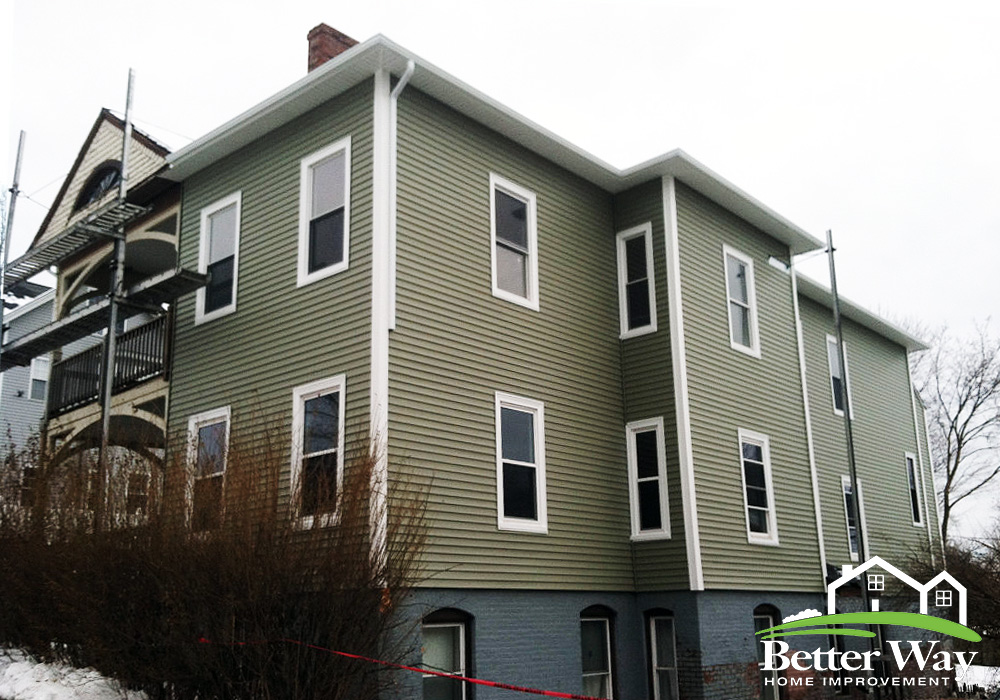
What Siding Repair looks like in Millbury
Most repair calls in Millbury fall into a few categories. Storm damage is the most common — wind off the Blackstone Valley corridor will pop panels loose or crack them at the lock, especially on the west and south faces of a house where gusts hit hardest. We also get a steady run of impact damage: a ladder, a baseball, a tree limb, sometimes a plow that clipped the corner of a garage. Those are usually straightforward one-panel or one-section fixes if we can source a matching profile.
The harder cases are color and profile matching. A lot of Millbury’s vinyl went up in the late 1970s through the 1990s, and manufacturers have discontinued dozens of those double-4 and double-5 profiles since. If your siding has faded for twenty years in the sun, a brand-new panel next to it will look like a patch no matter how well it’s installed, even if the profile still exists. We’re honest about that up front — sometimes the right answer is repairing the damaged section and accepting a slight color break on a back wall, and sometimes it’s replacing the whole elevation so it reads as one job.
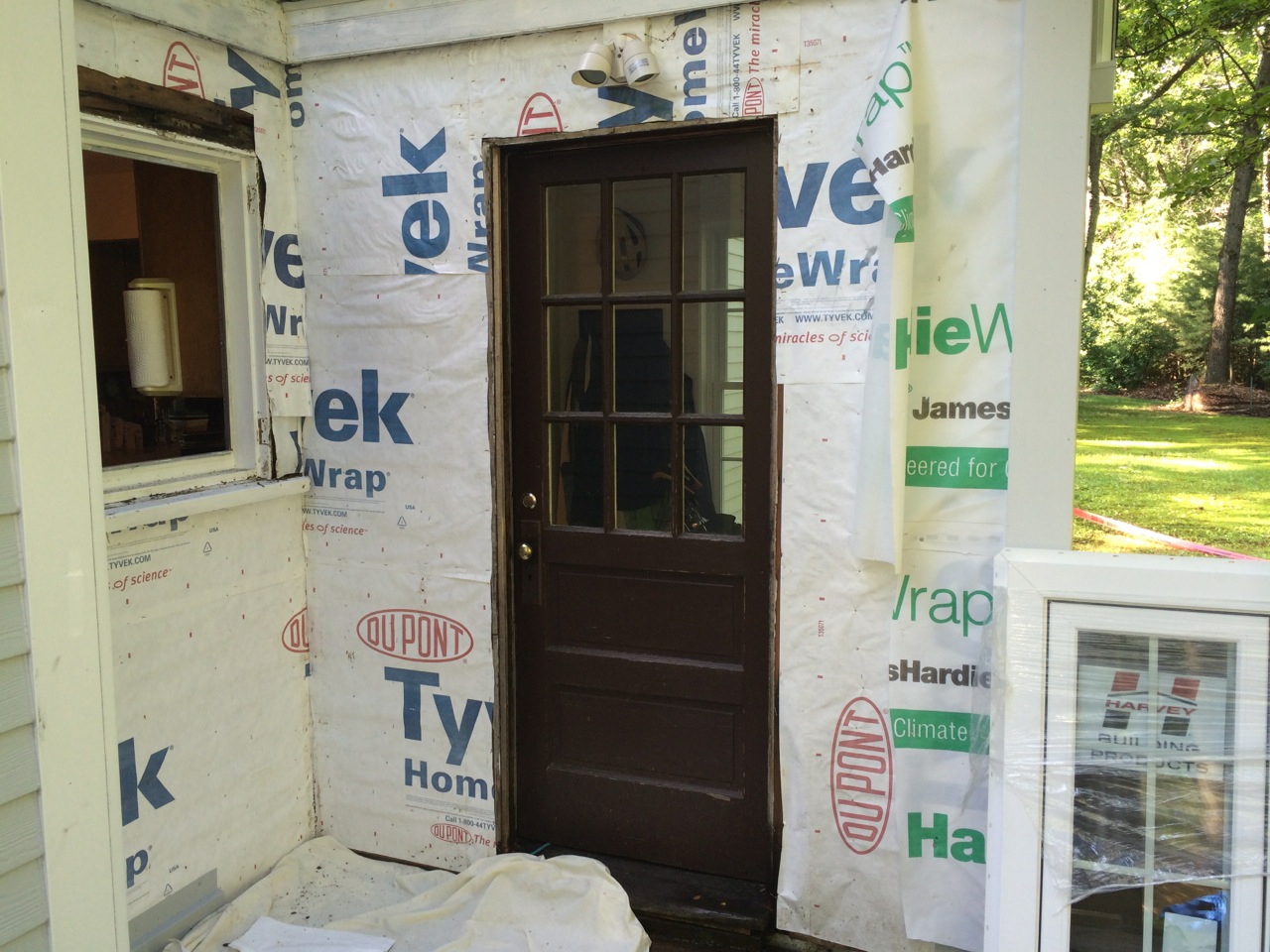
Then there’s what we find once a damaged panel comes off. On the older village homes especially, pulling vinyl to fix a crack often exposes soft board sheathing, old asbestos-cement shingles that were sided directly over, or moisture staining that means water’s been getting behind the wall longer than the owner knew. That changes the scope of the job, and we stop and talk it through rather than just nailing new vinyl over a problem.
What we account for on Millbury homes
Older vinyl over original clapboard
Some Millbury houses have several layers of exterior work, including older vinyl installed over original clapboard. We do not assume that the material underneath is sound. When the damaged section comes off, we check what is exposed before closing the wall back up. If the original wood is sound, the repair can continue. If there is deterioration, the affected area needs to be addressed before the new siding goes back on.
1970s and 1980s vinyl
A large amount of older vinyl siding around Millbury is now well into its service life. Years of sun, cold, snow, and temperature changes can make panels brittle. That affects the repair itself. Older panels may break while being removed, and replacement material may not match the original profile exactly. We look at the existing reveal, texture, colour, and profile before selecting replacement material.
Victorian and Colonial Revival details
Village-centre homes can have more exterior detail than a basic ranch. Corners, trim, windows, additions, and changes in wall depth can make a small siding repair more complicated. The repair needs to follow those existing lines rather than treating the damaged area as a flat section of wall. We take the surrounding trim and siding layout into account before replacing the damaged material.
Storm and impact damage
Wind, branches, ladders, equipment, and other impacts can crack or remove individual panels. Leaving the opening exposed can allow water to reach the wall behind the siding. For storm-related repairs, we first determine how much material is actually affected. A small damaged section may be repaired without touching sound siding around it. If the damage extends farther than it first appears, we explain that before the work proceeds.
What we account for on Millbury homes
Inspect the damaged area
Every repair job here runs into a handful of conditions that are specific to this town’s housing stock. We plan around these before we quote the work, not after.
Pre-1978 lead paint and old sheathing
Millbury has a good stock of homes built well before 1978, many with original wood clapboard still under a layer of aluminum or first-generation vinyl. When we open up a wall on one of these houses, there’s a real chance of lead paint on that original wood. We follow EPA RRP lead-safe work practices for containment and cleanup on any house where it’s a possibility — this isn’t optional and it isn’t an upsell, it’s how the job has to be done.
Discontinued vinyl profiles
A big share of Millbury’s repair calls are on siding installed 25-40 years ago. We keep relationships with regional distributors and salvage suppliers to track down close matches, but we tell customers plainly when an exact match isn’t out there anymore so they can decide between a visible patch or a fuller re-side of that wall.
Canal-side and low-lying moisture exposure
Parts of town sit close to the Blackstone River and old mill canals, and homes in those pockets tend to hold more ground moisture. We check house wrap and flashing condition whenever we open a wall in these areas, because damaged siding here is more likely to have wet sheathing behind it than the same damage would be on higher, drier ground.
Mixed architecture, mixed trim details
Village-centre Victorians often have decorative trim, corner boards, and window casings that a repair has to work around without disturbing. Ranches and splits on the outskirts are simpler in profile but often have aluminum trim coil that’s aged differently than the vinyl body — we match fasteners and trim pieces to what’s actually there instead of a generic kit.
Match repair, complete work
How the job runs
Repair jobs in Millbury generally move in three stages.
Site visit and diagnosis
We look at the damaged area from both sides — outside for the visible break, and where possible a peek behind it — to see if this is cosmetic or if there’s rot, moisture, or lead paint involved. Most diagnostic visits take under an hour and we’ll tell you on the spot whether it’s a repair or something bigger.
Sourcing and scheduling
If the panel is a current profile, we can usually schedule the fix within a week or two. If it’s discontinued and we need to source a match or agree on an alternate plan with you, this stage can take one to three weeks depending on supplier stock.
Repair and cleanup
Small jobs — a panel or two, a corner post, a section of trim — are typically done in a single day. Anything that turns into a partial re-side of a wall because of hidden rot runs two to four days. We haul off old material and don’t leave debris for you to deal with.
Check the finished section
If a storm just came through and you’re dealing with an insurance claim, we can document the damage with photos and a written scope that your adjuster can work from. We’re not a public adjuster and we won’t promise a claim outcome, but we’ve done enough of these in Worcester County to know what documentation an adjuster actually wants to see.
Recent work in and around Millbury
A typical recent job in this area: a split-level near the Route 146 side of town lost a section of siding on the gable end during a spring windstorm. The panels themselves were a common double-4 profile still in production, but pulling the damaged run exposed a stretch of house wrap that had torn years earlier and never been fixed. We repaired the wrap, replaced the affected panels, and matched the trim coil at the rake. Total time on site was about a day and a half once the material was in hand. That’s a fairly representative example of what a repair call turns into once we’re actually inside the wall — the visible damage is rarely the whole story, and we’d rather find that out on day one than leave it for the next storm.
We don’t push a full re-side when a targeted repair will hold up. But we also won’t patch over sheathing rot or a moisture problem just to make a quote look smaller — that costs you more later and it’s not work we’re willing to stand behind.
Other services we provide in Millbury
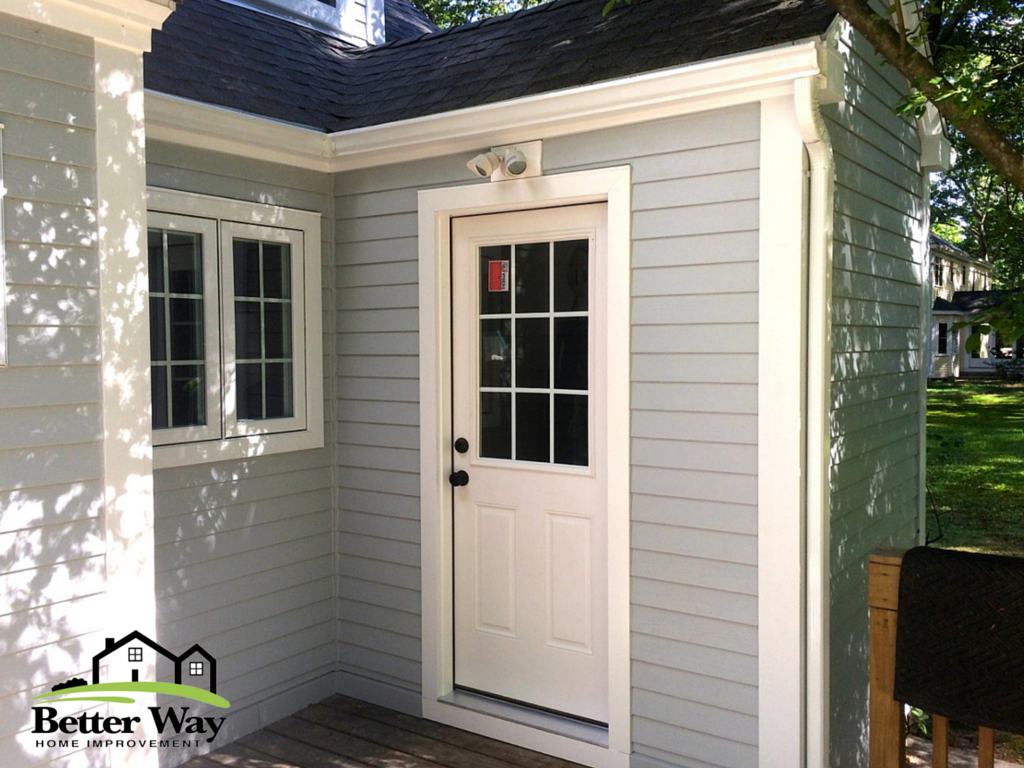
If the damage turns out to be more than a repair can fix, we handle full siding repair and replacement work with vinyl and James Hardie fiber cement, along with seamless gutters and replacement windows and doors — most Millbury homes we work on end up needing at least one of those addressed at the same time, especially where old gutters have been dumping water against the wall we’re repairing. For a broader look at what we handle in town, see our siding contractor in Millbury page.
Free estimates in Millbury
We’re based at 152 Sutton Ave in Millbury, about 7.5 miles from Millbury center. Estimates are free and we’ll tell you honestly whether you need a repair or something more. Call (508) 506-8957. After you call, we’ll set up a site visit, look at the damage from both sides where we can, and give you a written scope and price before any work starts. Licensed, insured, and an Angie’s List Super Service Award winner from 2013 through 2019.
Frequently Asked Questions
How much does siding repair cost in Millbury?
A single-panel or small-section repair typically runs a few hundred dollars. If we find rot or moisture damage behind the panel and have to open up a wider section, costs climb from there. We give a firm price after the site visit, not before.
Can you match siding on an older Millbury house if the profile is discontinued?
Sometimes. We search regional distributors and salvage stock first. If we can't find an exact match, we'll show you the closest option and let you decide between a visible patch on a low-traffic wall or a fuller re-side so the whole elevation matches.
My house is older — will you find lead paint under the siding?
It's possible on any Millbury home built before 1978, especially in the village center where original clapboard is common under old vinyl or aluminum. When there's a chance of it, we follow EPA lead-safe work practices for containment and cleanup as standard procedure.
How long does a repair take?
A straightforward one- or two-panel repair is usually done in a day. Jobs that uncover rot or a torn house wrap behind the panel run two to four days once we're sourcing material and fixing what's underneath, not just what's visible.
What if you find rot or water damage once the old siding is off?
We stop and show you what we found before doing anything else. We repair the sheathing or wrap first, then reinstall or match the siding. We won't cover over a moisture problem just to close up the wall faster.
Getting Millbury siding back in shape
Cracked panels, warped boards, and gaps around trim don’t fix themselves, and leaving them alone usually lets moisture get behind the wall. We repair the specific section that’s failing rather than pushing a full replacement when it isn’t needed, matching material and color as closely as possible so the fix blends in.
- Cracked, split, or warped panels
- Loose or missing sections
- Impact damage from storms or debris
- Gaps and separation at corners and trim