


Siding Repair in Auburn, MA
If a wind storm peeled a section of siding off your split-level near the Auburn Mall area, or you found a cracked panel on the sunny side of a ranch off Southbridge Street, the question is whether that section can be patched or whether the whole wall needs to come off. On Auburn’s mix of Route 12 ranches, 1970s and 1980s split-levels, and the older Colonial Revival homes near the town common, the honest answer usually depends on what’s behind the panel, not just what you can see from the driveway. We look at both before we quote anything.

What Siding Repair looks like in Auburn
Most repair calls we get in Auburn fall into three groups. First, storm and impact damage — a branch off an oak takes out two or three courses, or hail dents a run on the north wall. Second, panels that have simply given up: first-generation vinyl from the late 1970s and 1980s goes brittle, cracks along the nail hem, or blows off in a stiff nor’easter because the old nailing pattern was never right to begin with. Third, we get called out after a homeowner notices a soft spot, a stain, or a smell near a window or spigot and wants to know what’s going on before it gets worse.
Repair is the right call when the damage is isolated — a few panels, one wall, one corner — and the siding behind it and around it is still sound. We can usually match newer profiles exactly, since most manufacturers keep colors and lock styles consistent for years. Where repair gets complicated is on homes with siding installed before 2005 or so. Colors fade, profiles get discontinued, and a patch job can leave a visible seam even with a perfect physical match. We’re straight with Auburn homeowners about this before we start: if we can’t match it close enough to be invisible from the street, we say so and give you the option to replace the elevation instead of patching it.
We also handle the insurance side. If a storm took siding off your Auburn home, we’ll document the damage with photos and a written scope your adjuster can use, and we’ll point out anything the claim might be missing — like wall sheathing that got wet during the time the panel was off.
What we account for on Auburn homes
Older vinyl over original clapboard
Some Auburn houses have several layers of exterior work, including older vinyl installed over original clapboard. We do not assume that the material underneath is sound. When the damaged section comes off, we check what is exposed before closing the wall back up. If the original wood is sound, the repair can continue. If there is deterioration, the affected area needs to be addressed before the new siding goes back on.
1970s and 1980s vinyl
A large amount of older vinyl siding around Auburn is now well into its service life. Years of sun, cold, snow, and temperature changes can make panels brittle. That affects the repair itself. Older panels may break while being removed, and replacement material may not match the original profile exactly. We look at the existing reveal, texture, colour, and profile before selecting replacement material.
Victorian and Colonial Revival details
Village-centre homes can have more exterior detail than a basic ranch. Corners, trim, windows, additions, and changes in wall depth can make a small siding repair more complicated. The repair needs to follow those existing lines rather than treating the damaged area as a flat section of wall. We take the surrounding trim and siding layout into account before replacing the damaged material.
Storm and impact damage
Wind, branches, ladders, equipment, and other impacts can crack or remove individual panels. Leaving the opening exposed can allow water to reach the wall behind the siding. For storm-related repairs, we first determine how much material is actually affected. A small damaged section may be repaired without touching sound siding around it. If the damage extends farther than it first appears, we explain that before the work proceeds.
What we account for on Auburn homes
Inspect the damaged area
Auburn’s mix of older neighborhoods and newer builds means siding conditions vary block to block. We factor in the home’s age, existing material, exposure to wind and storms, and any signs of underlying moisture before recommending a repair approach.
Match repair, complete work
1970s and 1980s vinyl at the end of its life
A large share of Auburn’s housing stock — the split-levels and ranches built out along Auburn Road, Millbury Street, and the neighborhoods off Auburn Street — got its siding thirty to forty-five years ago. That first generation of vinyl was thinner, held on with fewer or misplaced nails, and it’s brittle now. When we open up a wall on one of these homes, we expect to find panels that crack when unhooked rather than release cleanly, which changes whether a clean patch is even possible.
Check the finished section
Original clapboard hiding underneath
A good number of Auburn’s older homes, especially the Colonial Revivals and farmhouses near the town center, had vinyl installed directly over the original wood clapboard in the 1970s or 80s instead of tearing it off. When we pull panels for a repair, that clapboard is what we find underneath — sometimes solid, sometimes not. We check its condition before we button anything back up, because siding over rotten wood just hides the problem for another owner to find.
Sun and weather exposure on south and west walls
Auburn sits open enough that south- and west-facing walls take real sun and take the brunt of wind-driven rain off passing storms. We see more fading, warping, and cracked panels on those elevations than on the shaded sides of the same house. If we’re patching a south wall, we tell you up front that a perfect color match is less likely, because that wall has faded more than the siding we’d be matching it to.
Older fastening and trim details
Homes built or re-sided before the mid-1990s often used trim and J-channel details that current manufacturers don’t stock anymore. We carry a range of trim stock and can fabricate transitions where the exact piece isn’t available, so a repair doesn’t turn into a full trim replacement just because one channel is discontinued.
How the job runs
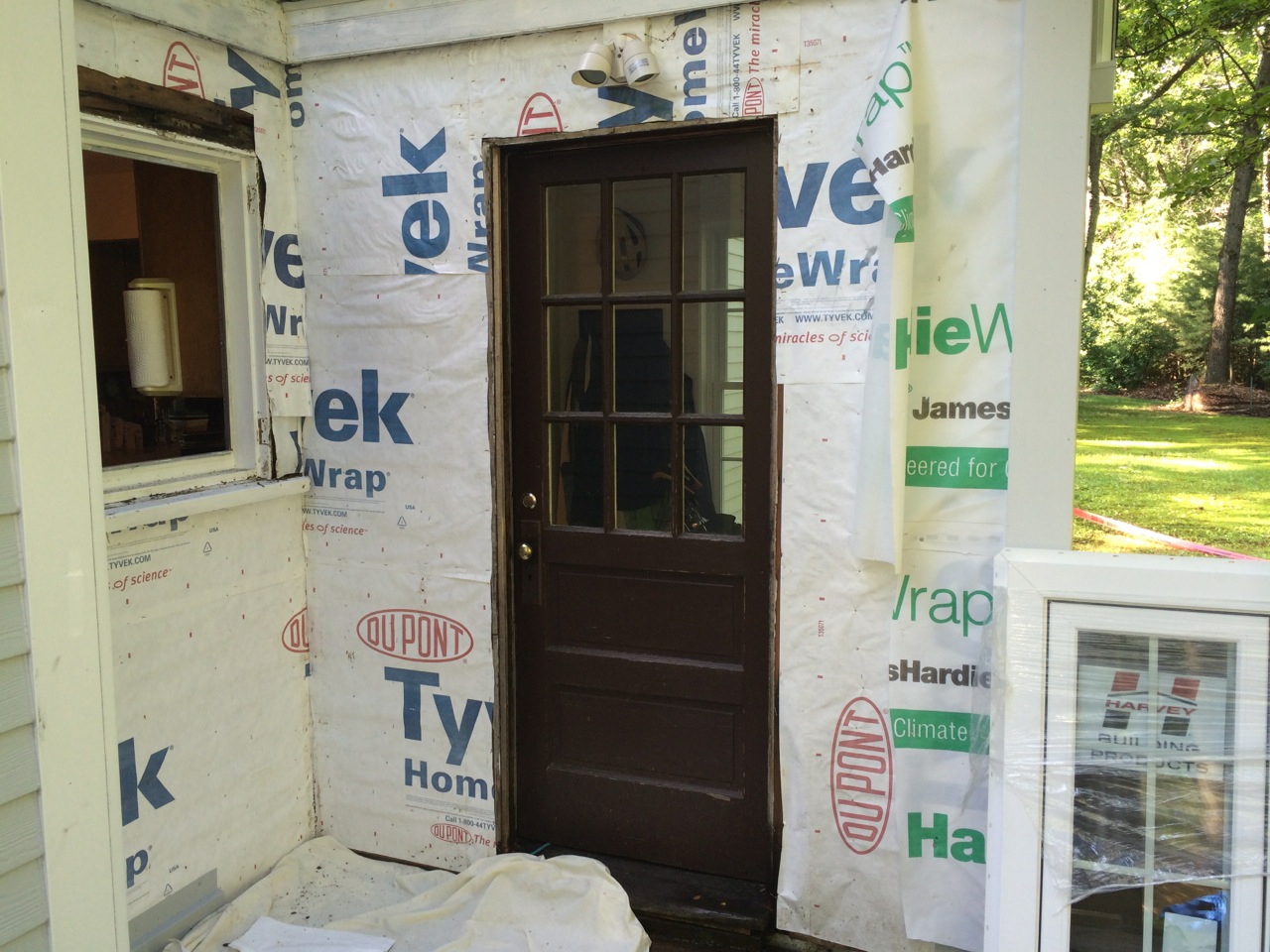
Estimate and inspection. We come out, look at the damaged area from the ground and up close, and where it makes sense we pull a panel or two to see what’s behind it. You get a written quote the same visit in most cases, with repair and — if it comes to it — replacement pricing side by side.
Material match and order. If your siding is a current profile, we order the exact match, usually in stock within a few days. If it’s discontinued, we tell you that at the estimate and show you the closest available option so you can decide before we schedule anything.
Repair day. Most isolated repair jobs — a wall, a corner, storm damage to a section — run one day, sometimes finished by early afternoon. If we find rot or wet sheathing behind the panel, we stop, show you what we found, and quote that separately before going further. We don’t just cover it back up.
Recent work in and around Auburn
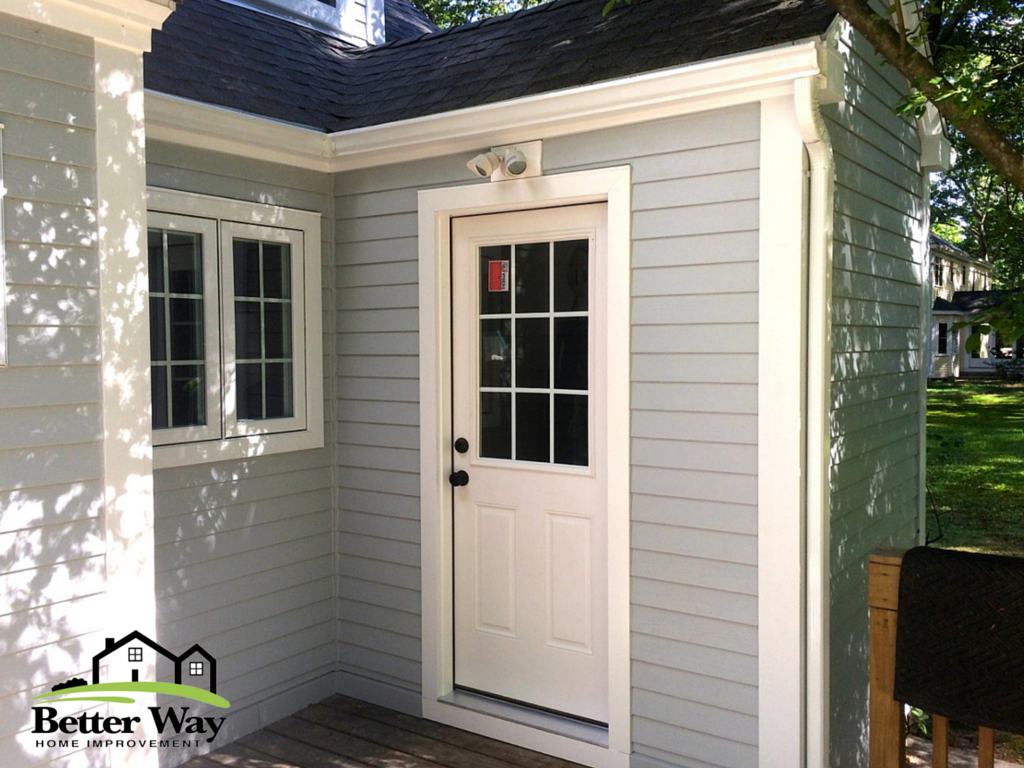
A typical call in Auburn is a homeowner on one of the town’s older ranch streets who lost a run of siding along the garage wall in a windstorm and wants it matched, not replaced, because the rest of the house is only fifteen years old and in good shape. We pull the damaged panels, check the sheathing underneath — usually fine on homes this age — and replace the run with matching stock, generally in half a day. On the older side of town, closer to the common, we more often get called for a soft spot near a window where water’s been getting behind the panel for a while; those jobs run longer because we’re dealing with wet sheathing and sometimes trim replacement, not just vinyl.
Frequently Asked Questions
Can you match the siding on an older Auburn home, or will the patch be visible?
It depends on the age of the siding. If your panels are a current or recent profile, we can usually match color and lock style exactly and the patch is invisible. On homes with siding from before the mid-2000s, fading and discontinued profiles make a perfect match less likely — we tell you this at the estimate so you can decide whether to patch and accept some visible difference or replace the elevation instead.
I found soft or discolored wood when a panel came loose. What happens now?
We stop and show you what's there before doing anything else. On Auburn's older homes, especially where vinyl was installed over original clapboard decades ago, we do find rot or water damage behind panels fairly often. We'll quote the wood repair or sheathing replacement separately, in writing, before we close the wall back up.
How much does siding repair cost in Auburn?
A small storm-damage patch on a single wall often runs a few hundred dollars in materials and labor. Jobs that involve pulling multiple panels, matching discontinued trim, or repairing rotted sheathing underneath cost more and take longer. We give you a firm written number at the estimate, not a phone quote.
How fast can you get to a storm-damaged house in Auburn?
Usually within a few days of your call, sooner if panels are actively hanging loose or exposing the wall to weather. Auburn is a short drive from our Auburn shop, which helps us get estimates and repairs scheduled quickly after a storm comes through.
Will you help with an insurance claim for storm-damaged siding?
Yes. We document the damage with photos and a written scope of work your adjuster can use, and we'll flag anything the claim should include, like sheathing that got wet while the panel was missing.
Other services we provide in Auburn
Not every job in Auburn is a repair. When the siding on a whole elevation — or the whole house — has reached the point where patching doesn’t make sense anymore, that’s a siding replacement job instead, and we’ll tell you plainly when a repair estimate has crossed that line. For homes going from old clapboard or worn vinyl to a full new exterior, we also install vinyl siding and James Hardie fiber cement. If your gutters got bent or pulled loose in the same storm that damaged your siding, we handle seamless gutter repair and installation too, and we install replacement windows and doors for homes where the trim work around openings needs attention alongside the siding. Ask about any of it when we’re out for the repair estimate — no separate visit needed.
Free estimates in Auburn
Auburn is about 5.5 miles from Auburn, so we’re out to look at your siding the same week in most cases, sometimes sooner if it’s storm damage. The estimate is free, and it includes an honest answer on whether repair is the right move or whether you’d be better off putting that money toward replacement instead. Call (508) 506-8957 to set up a time. We’ll look at the damage, check what’s underneath if needed, and give you a written quote before we leave.