


Siding Repair in Webster, MA
Cracked panels near Webster Lake and French River usually trace back to the same cause: wind-driven rain hitting the water-facing side of the house harder than any other wall. If you own one of the old seasonal cottages around the lake that got converted to year-round living, the damage often runs deeper than the panel itself. Call us before you patch anything yourself — what looks like a cracked piece of vinyl is sometimes the first sign of a wall that was never built to be lived in during a New England winter.

What Siding Repair looks like in Webster
Most repair calls we get in Webster fall into three buckets. First, storm damage — a branch or wind gust cracks or tears loose a section of siding, usually on the side of the house that faces the lake or an open field. Second, discontinued color matching — homeowners who bought a lakefront place with siding from the 1980s or 1990s and now need three or four panels replaced without the whole wall looking patched. Third, and most common on the cottage conversions, rot found once we pull the damaged panel and see what’s behind it.
That third bucket is why we don’t quote Webster repair jobs sight unseen, and why we don’t quote them from a photo. A lot of these homes started as summer camps — small footprint, minimal framing, no vapor barrier, sometimes no real insulation cavity at all. When the siding failed on the water side over the years, moisture got behind it and sat there, because there was nothing to stop it and no easy way for it to dry out. We’ve opened up walls on Bates Point Road-type lots and found sheathing that crumbles when you touch it, sitting behind vinyl that looked fine from the street.
Repair is the right call when the damage is isolated — a handful of panels, a corner post, trim around a window that took a hit — and the wall behind it is sound. It’s the wrong call when we find soft sheathing, stained framing, or insulation that’s wet and compressed. At that point patching the surface just seals the problem back up. We’ll tell you straight if that’s what we’re looking at, and we’ll show you what we found before we recommend replacing the whole elevation instead of repairing it.
What we account for on Webster homes
Older vinyl over original clapboard
Some Webster houses have several layers of exterior work, including older vinyl installed over original clapboard. We do not assume that the material underneath is sound. When the damaged section comes off, we check what is exposed before closing the wall back up. If the original wood is sound, the repair can continue. If there is deterioration, the affected area needs to be addressed before the new siding goes back on.
1970s and 1980s vinyl
A large amount of older vinyl siding around Webster is now well into its service life. Years of sun, cold, snow, and temperature changes can make panels brittle. That affects the repair itself. Older panels may break while being removed, and replacement material may not match the original profile exactly. We look at the existing reveal, texture, colour, and profile before selecting replacement material.
Victorian and Colonial Revival details
Village-centre homes can have more exterior detail than a basic ranch. Corners, trim, windows, additions, and changes in wall depth can make a small siding repair more complicated. The repair needs to follow those existing lines rather than treating the damaged area as a flat section of wall. We take the surrounding trim and siding layout into account before replacing the damaged material.
Storm and impact damage
Wind, branches, ladders, equipment, and other impacts can crack or remove individual panels. Leaving the opening exposed can allow water to reach the wall behind the siding. For storm-related repairs, we first determine how much material is actually affected. A small damaged section may be repaired without touching sound siding around it. If the damage extends farther than it first appears, we explain that before the work proceeds.
What we account for on Webster homes
Inspect the damaged area
Webster’s mix of lakeside cottages and older neighborhood homes means siding conditions vary block to block. We factor in sun and wind exposure, existing panel age, wall structure, and how prior repairs were fastened before recommending a fix.
Match repair, complete work
Water-facing elevations take the worst of it
The wall facing the lake or pond takes sustained wind and driven rain that the street-facing side never sees. We inspect that elevation first and separately from the rest of the house, because damage there is rarely limited to what’s visible — fasteners loosen, seams open, and water tracks sideways behind the panel before it ever shows up as a crack.
Check the finished section
Cottage conversions hide undersized framing
A house built as a three-season camp and later winterized often has framing that was never sized for insulation or a proper wall assembly. Before we quote a repair, we check what’s behind the damaged section on these homes specifically, because a small crack up front can be sitting on a stud bay with no vapor control at all.
No insulation means condensation gets blamed on leaks
On uninsulated cottage walls, interior moisture condenses on the back of cold siding and gets mistaken for a roof or window leak. We look for the pattern of the damage — is it isolated to one impact point, or spread out in a way that points to condensation — before we tell you what’s actually causing it.
Discontinued profiles need an honest color plan
Vinyl fades unevenly over 20-30 years, and manufacturers drop old colors and profiles regularly. We keep a working knowledge of what’s still in production and what isn’t, and we’ll tell you upfront if a perfect match isn’t possible — the honest options are usually a near-match on one wall, or pulling replacement panels from a less visible elevation.
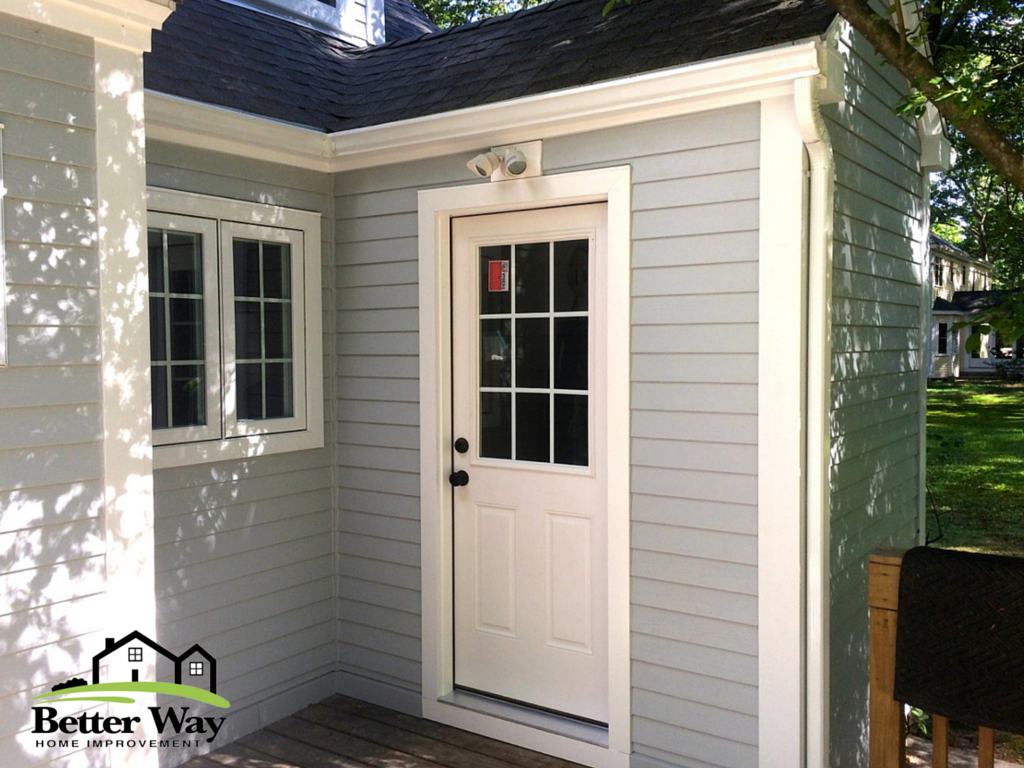
How the job runs
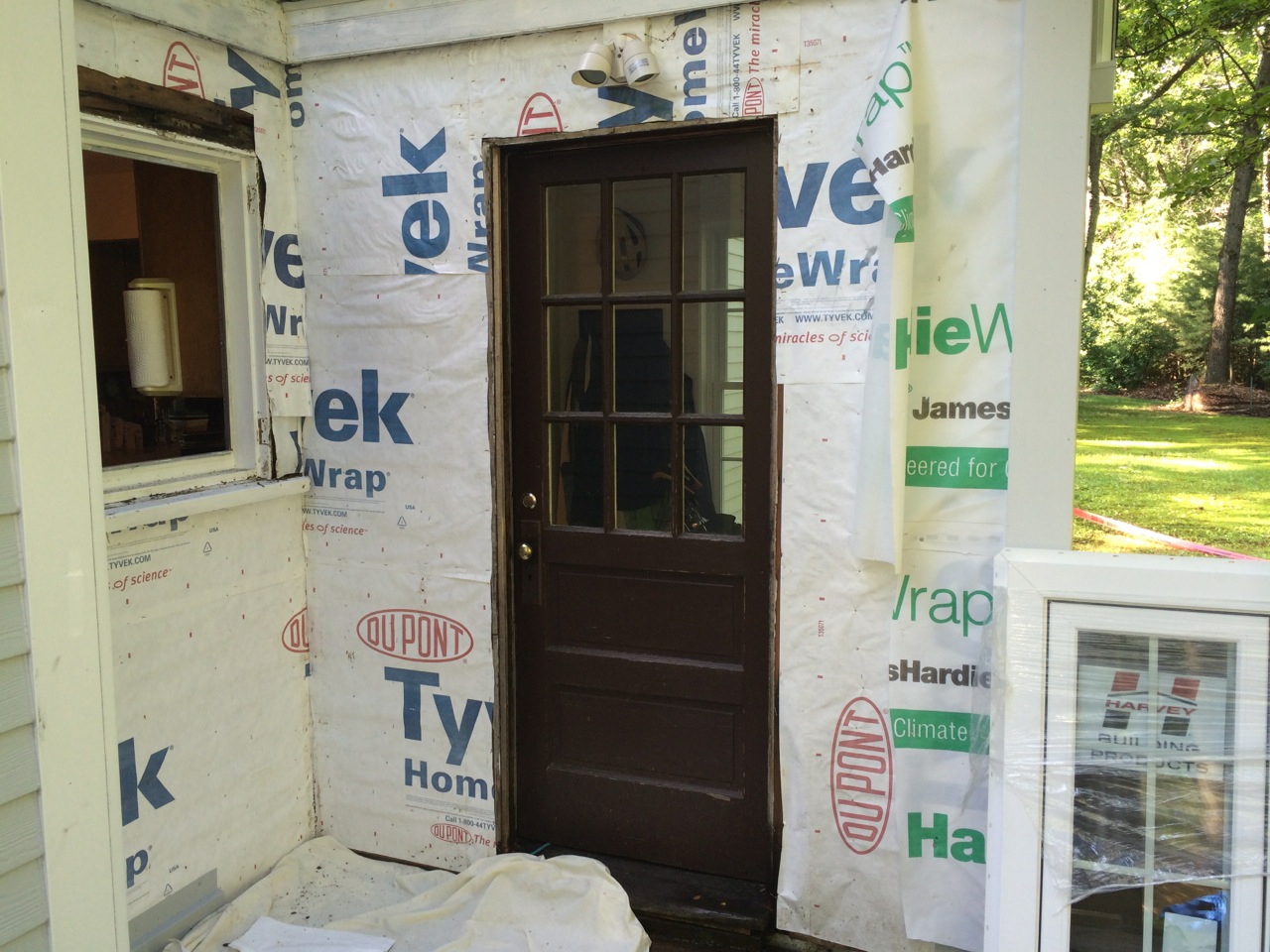
Inspection and what's behind the panel
We start by pulling the damaged section, not just looking at it from the ground. On Webster’s lake homes this step tells us whether we’re repairing siding or rebuilding a wall, and we won’t quote a final number until we’ve seen the sheathing.
Frequently Asked Questions
Can you match siding that's been discontinued?
Sometimes, if the manufacturer still has close equivalents in stock, but a lot of siding from the 1980s and 90s around Webster Lake is no longer made. We'll tell you honestly whether we can get a close match or whether the better plan is pulling panels from a less visible wall to patch the damaged one.
Why does the lake side of my house get damaged more than the rest?
Wind-driven rain hits water-facing walls harder and more often than street-facing ones. Over time that loosens fasteners, opens seams, and pushes water behind panels in spots that don't show damage from the ground. We check that elevation separately from the rest of the house on every Webster inspection.
What if you find rot or wet insulation behind the siding?
On Webster's older cottage conversions, we usually do find something once we pull a damaged panel — soft sheathing, wet insulation, or framing that was never sized for a real wall assembly. We stop, show you what we found, and give you a revised quote before doing any further work. We don't seal moisture problems back up under new siding.
How much does siding repair cost and how long does it take?
A straightforward repair — a handful of panels or a damaged corner with sound sheathing underneath — is often a one-day job in the low hundreds to around a thousand dollars depending on materials and access. If we find rot or framing damage behind the panel, cost and timeline go up because that repair happens before new siding goes back on. We give you a firm number after we've looked behind the damage, not before.
Is my homeowner's insurance likely to cover storm-damaged siding?
Storm and impact damage — a branch strike, wind tearing off panels — is often covered, but coverage depends on your policy and the cause. We document the damage with photos and a written scope you can hand to your adjuster, though we're not the ones who decide what the claim pays.
Matching or sourcing panels
If your siding is still in production, we order matching panels. If it’s discontinued, we source the closest match available and walk you through where it will and won’t blend, so there are no surprises on install day.
Repair and cleanup
Most isolated repairs — a few panels, a corner, trim around an opening — run one day. Jobs where we find rot behind the panel take longer, because sheathing and framing repair happens before any new siding goes back on. Either way we clean up debris and old material before we leave.
Recent work in and around Webster
A typical call in this part of Webster is a homeowner on the lake side of a converted cottage who’s had a few panels crack or blow loose after a windstorm. We pull the affected section, find the sheathing underneath damp or soft from years of undetected moisture, and end up scoping out the repair to include a section of wall rebuild rather than a straight panel swap. We’ve done the same kind of job on year-round homes near the French River where storm impact combined with older, brittle vinyl led to a bigger repair than the homeowner expected walking in. We always show what we find before we change the scope or the price.
Other services we provide in Webster
When repair isn’t the right fix — because the damage is too widespread, or the siding is old enough that matching panels isn’t practical — we handle full siding replacement in Webster, including tear-off and a look at what’s under the old wall system. For homes ready for an upgrade rather than a repair, we also install vinyl siding and James Hardie fiber cement siding, which holds up better against sustained wind-driven rain on lake-facing walls. Beyond siding, we do seamless gutter repair and installation — gutters that dump water against the wall are a common contributor to the rot we find behind siding — and replacement windows and doors for homes where trim and flashing around openings need attention alongside the siding work.
Free estimates in Webster
We’re 4.7 miles from Webster, out of our shop in Webster, so getting a crew out to look at your siding doesn’t take a special trip. Call (508) 506-8957 and tell us what you’re seeing — cracked panels, a section blown off in a storm, or something you found when a panel came loose. We’ll set up a free estimate, and if it’s a lake-facing wall or a converted cottage, we’ll plan to open up the damaged area on site so you get a real number instead of a guess. After that, you’ll get a written quote before we touch anything, and a straight answer if repair isn’t the right call for what we find.