


Vinyl Siding Installation in Union, CT
Union sits on the far northeast corner of the Quiet Corner, and most of the houses we get called to are set back on long dirt or gravel drives under a full canopy of oak and pine. That tree cover means algae streaking and moss on the north face of older vinyl, and it means our trucks sometimes need a wider turnaround area than a standard driveway job. A lot of the housing stock is antique or built to look it — capes and farmhouses with additions bolted on over the decades — so the wall behind the siding is rarely one consistent material from corner to corner.
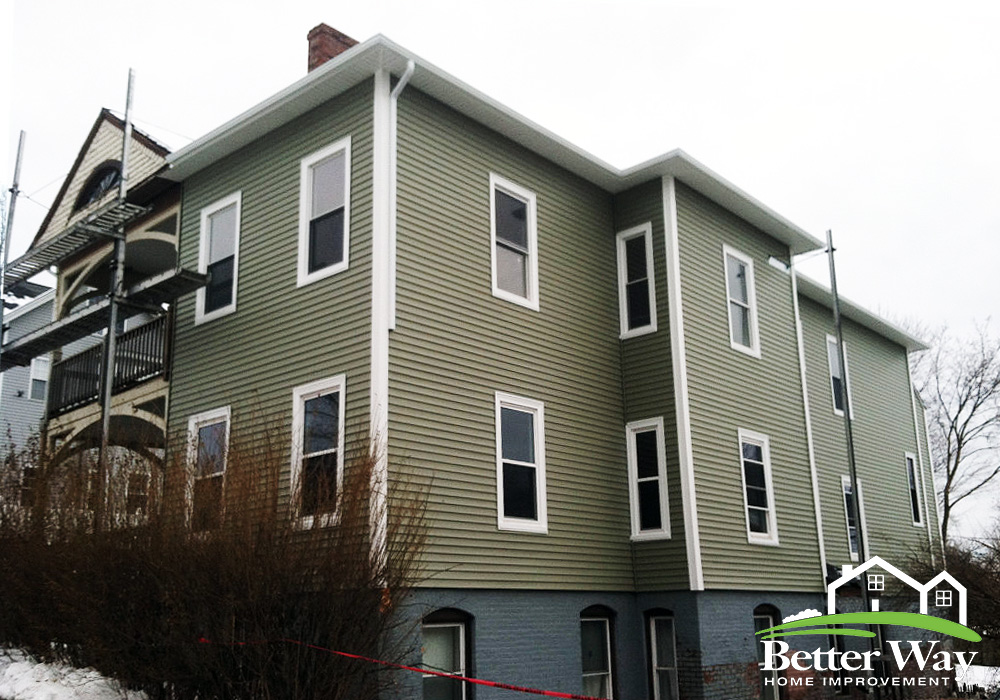
What Vinyl Siding Installation looks like in Union
New installation on a Union home starts with the panel itself. We install .044 and .046 gauge double 4 and double 5 clapboard profiles, and we push insulated panel (foam-backed) on homes where the sheathing is original board and the owner wants a real bump in R-value without touching the interior walls. Standard hollow-back panel still makes sense on additions or outbuildings where the budget is tighter and the wall is already insulated.
Color retention matters more out here than in a typical suburban install. These lots don’t have next-door shade from a neighboring house, so a south or west wall can take full sun for most of the day even with tree cover on the other sides. We spec panel with a baked-on color and fade warranty backing rather than a cheaper coextruded color coat, because a faded south wall next to a shaded north wall is the callback we’re trying to avoid before it happens.
Detail work is where a lot of installers cut corners, literally. We run new J-channel at every window and door, not just where the old channel happened to still fit, and we use one-piece corner posts sized to the wall thickness rather than shimming a stock size to make it work. Housewrap goes on before panel on every full-wall job, lapped and taped at every seam, with new flashing at window heads and any roof-to-wall transition. On a lot of these older Union homes that flashing was never there to begin with, so this step alone fixes water problems the homeowner didn’t know they had.
What we account for on Union homes
Original clapboard under older vinyl
One common condition on older Union homes is original clapboard underneath later vinyl siding. The existing layers need to be checked before new siding is installed. If the underlying material is sound and suitable, the installation can be planned around it. If there is deterioration or an uneven surface, that condition needs to be addressed before the new siding goes on.
Victorian and Colonial Revival details
Village-center homes often have more exterior details than a basic ranch. Porches, trim, windows, and changes in wall depth can affect how siding panels and accessories need to be laid out. J-channel, corner posts, and other trim are installed around those features so the new siding follows the house instead of making the house conform to a generic layout.
Aging 1970s and 1980s vinyl
Older vinyl can become brittle, faded, warped, or difficult to match. Replacement siding also gives homeowners an opportunity to update the panel profile, color, insulation, and exterior trim. The crew checks the existing siding and the areas around windows, doors, corners, and other transitions before establishing the installation plan.
Housewrap and flashing
Vinyl siding is not the waterproofing layer of the wall. Proper flashing and housewrap help manage water behind the siding. Before the panels are installed, the wall assembly and openings are considered so moisture problems are not simply hidden behind a new exterior.
What we account for on Union homes
Measure and plan
Union’s older farmhouses, wooded lots, and rural properties each present different wall conditions. We check for aging sheathing, uneven framing, moisture behind old siding, and trim details around windows and doors before recommending panel thickness, insulation, and installation approach.
Prepare the exterior
Original board sheathing behind old vinyl
A good share of Union’s older homes have board sheathing under the siding rather than plywood or OSB. Board sheathing shifts and gaps more with the seasons, so we check for rot and confirm nailing surface before panel goes up, and we add furring or replacement sheathing sections where the boards have gapped too far to hold a nail reliably.
Complete the details
Long tree-shaded drives and equipment access
Heavy tree cover on rural lots means our lift and material trailer sometimes can’t get as close to the house as they would on a village street. We walk the access route during the estimate, not the day of the job, so we know ahead of time whether we’re hand-carrying panel bundles an extra fifty or hundred feet.
Wide lot spacing and full sun exposure
Houses on acre-plus lots with no neighboring shade take direct sun differently than tighter village lots. We spec fade-resistant panel with a real warranty behind it for south and west walls, and we talk homeowners through darker color choices honestly — dark panel runs hotter and can bow on unshaded walls if it’s a cheaper product.
Connecticut licensing and permitting
Union is Connecticut, not Massachusetts, and the rules are different. Connecticut Home Improvement Contractor (HIC) registration and the local building permit both have to be in place and confirmed before we quote the job, not after. We check this every time rather than assuming our Massachusetts paperwork carries over, because it doesn’t.
Frequently Asked Questions
How much does vinyl siding installation cost in Union, CT?
Most full-house installations run in the mid to high five figures depending on square footage, panel gauge, and whether you go insulated or standard panel. Board sheathing repairs found during tear-off add to the number. We give a firm written quote after the walk-through, not a ballpark over the phone.
Does Massachusetts or Connecticut licensing apply for a Union job?
Connecticut licensing applies. Union is in Connecticut, so the job falls under Connecticut Home Improvement Contractor (HIC) registration and local Connecticut permitting, not Massachusetts rules. We confirm this coverage before we quote any Union job.
What if you find rot or bad sheathing behind my old siding?
On homes this age it's common, especially with original board sheathing. We stop, show you what we found with photos, and quote the repair separately before covering it with new panel. We don't seal over rot to save a step.
How long does a full re-side take on a typical Union home?
Most single-family homes take 3 to 5 working days from tear-off to finished trim, depending on wall complexity, sheathing repairs, and access. Homes with limited equipment access due to tree cover or long drives can run a day longer.
Is insulated vinyl siding worth it on an older Union home?
Often yes. Homes with original board sheathing and no wall insulation see a real difference from insulated panel's foam backing, especially on the sides that take the most winter wind. We'll tell you honestly if your wall doesn't need it.
How the job runs
Estimate and wall assessment
We walk the exterior, check the sheathing type where we can access it, measure for panel and trim, and talk through insulated versus standard panel based on the wall condition and your budget. This visit is free and usually runs 30 to 45 minutes depending on the house.
Tear-off and prep
Old siding comes off, sheathing gets inspected and repaired where needed, and new housewrap goes up with flashing at every window and roof transition. This is the stage where hidden problems show up, and we stop and talk to you before covering anything questionable.
Panel installation and trim
New J-channel, corner posts, and starter strip go on first, then panel courses run level across the wall. A full single-family home in Union typically takes 3 to 5 working days depending on wall complexity, tree-access limits, and weather. We clean up and walk the finished job with you before we call it done.
Recent work in and around Union
A common job type out here is a full re-side on a cape or farmhouse-style home where the original siding is 1970s or 1980s vinyl that’s gone brittle and faded unevenly between the shaded and sun-exposed walls. We typically find at least one section of board sheathing that needs partial replacement once the old panel comes off, and we build that possibility into the estimate up front rather than surprising the homeowner with a change order mid-job. On additions, we often match new insulated panel to an existing profile on the older section of the house so the transition isn’t obvious from the road.
Other services we provide in Union
Vinyl isn’t the only option we bring to Union jobs. Some homeowners want James Hardie fiber cement siding instead, especially on street-facing walls where a heavier, non-combustible product makes sense. We also handle seamless gutter installation and repair, which we’ll often quote alongside a siding job since the fascia and drip edge get touched during install anyway, and replacement windows and doors when the new J-channel reveals frames that should be swapped before we panel around them. If you’re not sure which service fits your house, our Union siding contractor page is a good starting point, and our main vinyl siding installation page covers the product line in more depth.
Free estimates in Union
Union is about 17.8 miles from our shop in Union, Massachusetts. That’s further than most of our calls, so we schedule Union estimates in blocks with other Quiet Corner jobs to keep drive time reasonable and keep our pricing straight. Call (508) 506-8957 for a free, no-pressure estimate. We’ll walk your house, check the sheathing where we can, and give you a real number in writing before we leave — not a phone quote. If you decide to move forward, we’ll confirm the Connecticut HIC and permit paperwork before we schedule the crew.