


Vinyl Siding Installation in Douglas, MA
Most of the siding calls we get out of Douglas start the same way: original wood clapboard, put up sometime before 1978, nailed straight over board sheathing with no housewrap underneath. That was standard construction for the mill housing and worker cottages that make up a lot of this town, and it means a vinyl siding job here is rarely a simple wrap. We’re solving for lead paint, missing air/moisture barriers, and sills that have been sitting close to grade for eighty years or more before a single panel goes up.
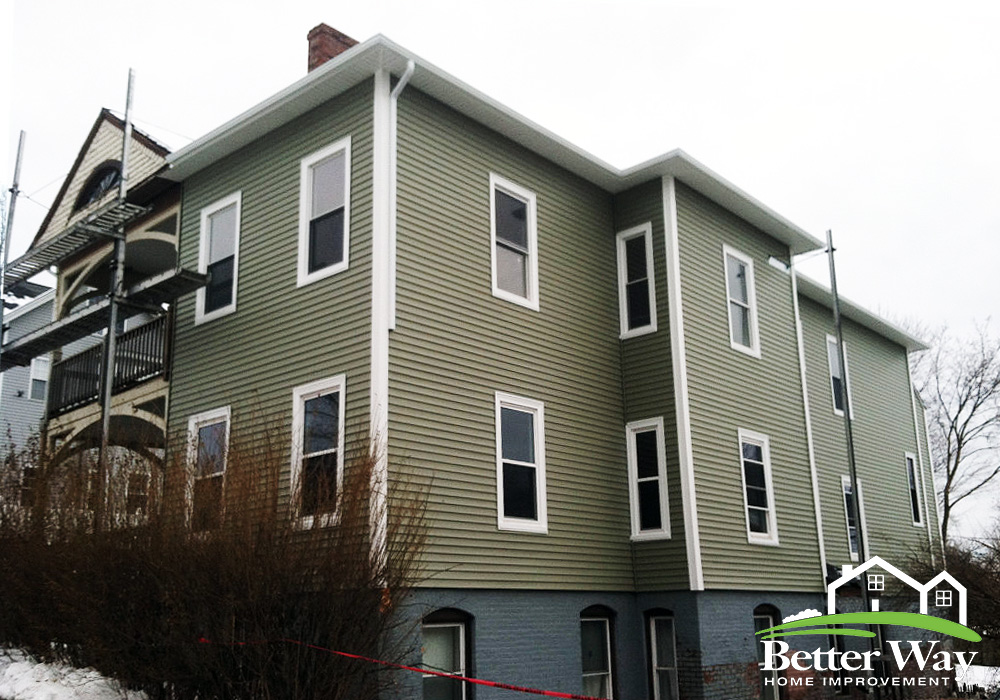
What Vinyl Siding Installation looks like in Douglas
On a Douglas job we’re almost always starting from bare or near-bare wood sheathing once the old clapboard comes off, not a clean modern substrate. That changes the install order. Housewrap goes on first, taped and lapped correctly, because the original build usually skipped it entirely. Flashing gets set at every window head, sill, and door before trim goes on — on a lot of these houses that flashing never existed in the first place, so we’re adding a moisture barrier the home never had, not just replacing one.
Panel choice matters more here than on newer construction. We install .044 to .046 gauge panels on these older homes rather than the thinner builder-grade stock, because the wall lines on a 19th-century cottage or triple-decker are rarely perfectly true, and a heavier panel hides that instead of rippling in the sun. Insulated vinyl is worth discussing on the triple-deckers and worker cottages that were never insulated behind the original clapboard — it adds R-value and stiffens the panel against the wavy sheathing underneath. Color retention matters on a 30-50 year fade warranty, so we walk homeowners through which lines hold their color longest before they pick a shade, especially on darker colors that take more sun exposure on south- and west-facing walls.
J-channel and outside corner detailing get extra attention on these lots too. Original trim widths on 1900s-era cottages are often undersized by modern standards, so we either build out the trim or use a wider corner post so the reveal looks right and the channel isn’t fighting an undersized rake.
What we account for on Douglas homes
Original clapboard under older vinyl
One common condition on older Douglas homes is original clapboard underneath later vinyl siding. The existing layers need to be checked before new siding is installed. If the underlying material is sound and suitable, the installation can be planned around it. If there is deterioration or an uneven surface, that condition needs to be addressed before the new siding goes on.
Victorian and Colonial Revival details
Village-center homes often have more exterior details than a basic ranch. Porches, trim, windows, and changes in wall depth can affect how siding panels and accessories need to be laid out. J-channel, corner posts, and other trim are installed around those features so the new siding follows the house instead of making the house conform to a generic layout.
Aging 1970s and 1980s vinyl
Older vinyl can become brittle, faded, warped, or difficult to match. Replacement siding also gives homeowners an opportunity to update the panel profile, color, insulation, and exterior trim. The crew checks the existing siding and the areas around windows, doors, corners, and other transitions before establishing the installation plan.
Housewrap and flashing
Vinyl siding is not the waterproofing layer of the wall. Proper flashing and housewrap help manage water behind the siding. Before the panels are installed, the wall assembly and openings are considered so moisture problems are not simply hidden behind a new exterior.
What we account for on Douglas homes
Measure and plan
Douglas properties vary in age and construction, so we check wall square footage, roofline transitions, window and door trim depth, and existing drainage paths before quoting. Soil grade, tree cover, and exposure to weather also factor into material and installation choices.
Prepare the exterior
Lead paint on pre-1978 siding
If your house was built or last painted before 1978, we assume lead paint until testing says otherwise, which is nearly every job we run in Douglas’s older neighborhoods. Our crew follows EPA RRP-compliant work practices — containment, wet removal methods, and proper cleanup — so the tear-off doesn’t spread lead dust around the yard or into the soil near a garden or play area.
Complete the details
Board sheathing with no housewrap
Pulling the old clapboard off a Douglas cottage usually exposes bare board sheathing, not plywood or OSB with a barrier already in place. We treat that sheathing on a case-by-case basis — sound boards get housewrap installed directly over them, while any soft or delaminated sections get replaced before we wrap, because vinyl siding over a compromised substrate just hides a problem instead of fixing it.
Undersized rakes, returns, and trim
A lot of the worker cottages and mill-era triple-deckers in Douglas were trimmed thin by today’s standards. We either furr out the existing trim boards or install a wider J-channel and corner post so the new siding has a proper reveal and doesn’t look pinched against the roofline or window returns.
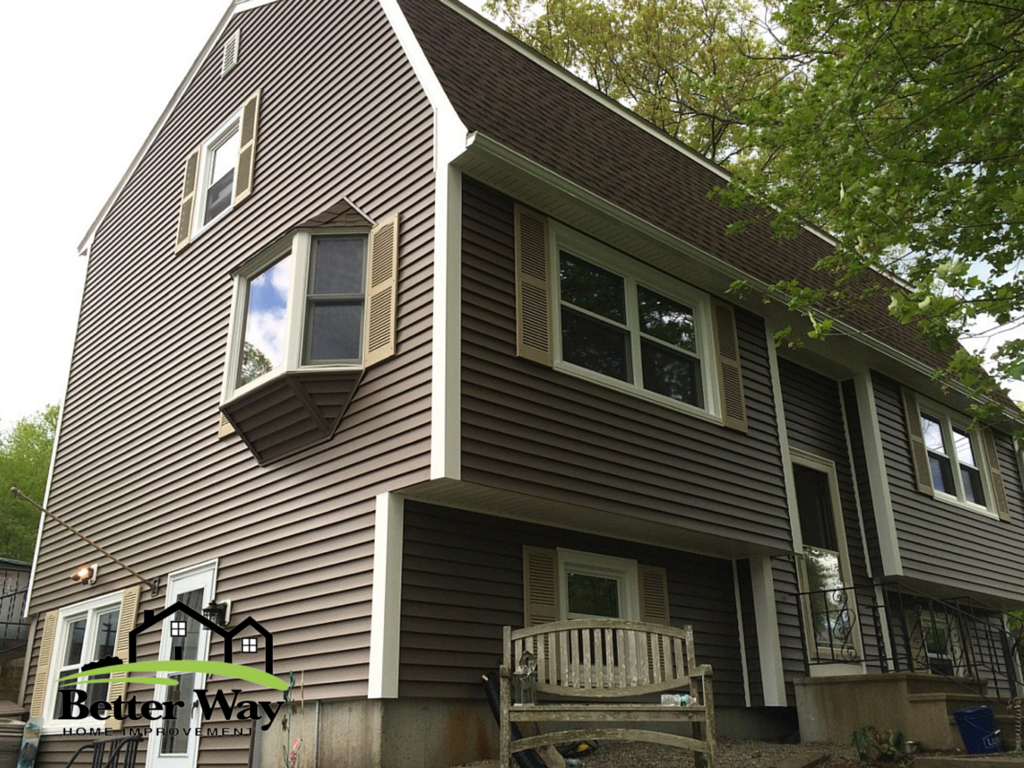
Sill rot from decades of grade creep
Grade has crept up against a lot of foundations in this town over a century of yard work, mulch, and pavement changes, and that means the bottom of the wall — sill and starter course — is where we most often find soft or rotted wood once old siding comes off. We cut out and replace rotted sections before starting the starter strip so the new panel isn’t fastened to compromised wood.
Frequently Asked Questions
Do you test for lead paint before removing old siding in Douglas?
Yes. Any home built or painted before 1978 gets treated as presumed lead-positive unless testing says otherwise, which covers most of the older housing stock in Douglas. Our crew follows EPA RRP-certified work practices for containment and cleanup during tear-off.
What's behind my old clapboard, and what happens if you find rot or no housewrap?
On most pre-1980s Douglas homes we find bare board sheathing with no housewrap or flashing at all. If we find rot at the sills or soft sheathing, we replace those sections before wrapping and siding, and we'll show you what we found and price the repair before moving forward — it's rarely a surprise given the age of the housing stock here.
How much does a full vinyl siding installation cost in Douglas?
It depends on square footage, panel gauge, and how much wall repair is needed once old siding comes off, but most full installs on single-family homes and cottages in this area run from the mid-teens into the mid-twenty-thousands. Older homes with rot or missing housewrap cost more because of the added prep. We give firm numbers after a free on-site estimate.
How long does a vinyl siding installation take?
A typical single-family or cottage-size home in Douglas takes three to five days once prep work is done, plus one to two days for tear-off and substrate repair if the sheathing needs attention. Triple-deckers and larger homes take longer.
Insulated or standard vinyl siding — which is right for an older Douglas home?
Insulated panels add R-value and stiffen against wavy old sheathing, which helps on cottages and triple-deckers that were never insulated behind their original clapboard. Standard panels cost less and work fine on walls that are already insulated or straight. We'll tell you honestly which one fits your house after we see the wall.
How the job runs
Site setup and staging
Douglas has a lot of tight, narrow driveways, especially around the older village lots, so staging and dumpster placement get worked out before the crew shows up, not on day one. We plan material drop and debris containers around what your driveway and street actually allow.
Tear-off and wall prep
Old siding comes off, sheathing gets inspected and repaired as needed, and housewrap and flashing go on. This is the stage where rot or lead issues get found and dealt with, and it typically runs one to two days depending on how much of the wall needs repair underneath.
Panel installation and trim
Starter strip, corner posts, J-channel, and panels go up in sequence, with window and door trim detailed as we go. A full-wall install on an average single-family or cottage-size Douglas home usually runs three to five days total once prep is done; triple-deckers and larger homes run longer.
Recent work in and around Douglas
A typical job we run in Douglas is a full tear-off on a wood-sided cottage or small single-family home where the owner is dealing with peeling lead paint, drafts around old window trim, or visible rot at the bottom courses. We pull the old clapboard, address whatever the sheathing and sills turn up, install housewrap and flashing that likely never existed on the house before, and finish with insulated or standard vinyl depending on the homeowner’s budget and how much extra R-value the wall needs. We don’t publish customer names or addresses, but this is the job we’re doing on repeat across the older sections of town.
Other services we provide in Douglas
Vinyl isn’t the only option we install in Douglas. If you want a heavier, more rigid product with a longer paint-cycle interval, we also install James Hardie fiber cement siding on the same wall types. If your existing siding just needs patching rather than a full wall replacement, our siding repair service in Douglas handles isolated panel damage, and our siding replacement service in Douglas covers the tear-off decision when repair no longer makes sense. We also install seamless gutters sized to shed water away from those same sill areas that tend to rot, plus replacement windows and doors that pair with a new wall system. For a full look at what we do across the wall, siding, and building envelope in this town, see our Douglas siding contractor page.