


Vinyl Siding Installation in Millbury, MA
If your Millbury home still has the vinyl that went up in the 1970s or 80s, you’re looking at siding that’s likely oil-canned, chalked out, or cracking at the corners after forty-plus summers. Millbury’s mix of Victorian and Colonial Revival homes near the village center, plus ranches and split-levels out toward the Blackstone River side, all got hit with that first wave of vinyl at some point, and a lot of it was installed straight over original wood clapboard without much thought for what was underneath. A full vinyl siding installation replaces that failing skin, panel and trim, and gives you a wall system built for the next several decades, not just a fresh coat of color.
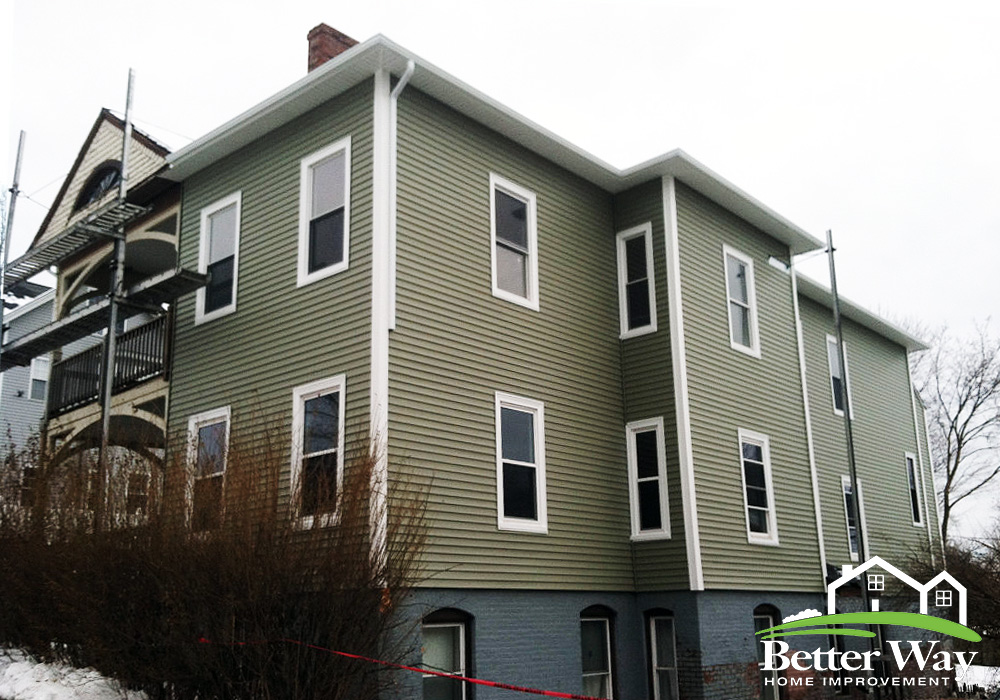
What Vinyl Siding Installation looks like in Millbury
Most Millbury jobs start the same way: we pull the old panels and find original clapboard or board sheathing underneath, sometimes both, depending on when the house was built and what got added on later. That old wood is usually dry and sound in the village center homes, but out toward the outskirts where houses got remodeled more casually, we sometimes find gaps, old nail holes, or sections where insulation was never added at all.
We install .044 to .046 gauge panel, thicker than the builder-grade stuff that’s failing on most Millbury streets right now, in either a standard hollow-back profile or an insulated panel with a rigid foam backer. Insulated panel makes the most sense on the split-levels and ranches with thin original wall insulation, since it adds R-value without touching the interior. On the Victorians and Colonial Revivals near downtown, we typically match a traditional double-4 or double-5 clapboard profile so the proportions read right against the trim and window casings already on the house.
Every job gets new J-channel at window and door returns, new corner posts, and starter strip set level around the whole perimeter, since a siding job is only as straight as its starter course. We wrap the house in housewrap before panel goes up, flash every window and door head properly, and use a color-retention panel with a manufacturer fade warranty rather than a bargain-line product, because Millbury’s full sun exposure on south and west walls is exactly what breaks down cheap resin over time.
What we account for on Millbury homes
Original clapboard under older vinyl
One common condition on older Millbury homes is original clapboard underneath later vinyl siding. The existing layers need to be checked before new siding is installed. If the underlying material is sound and suitable, the installation can be planned around it. If there is deterioration or an uneven surface, that condition needs to be addressed before the new siding goes on.
Victorian and Colonial Revival details
Village-center homes often have more exterior details than a basic ranch. Porches, trim, windows, and changes in wall depth can affect how siding panels and accessories need to be laid out. J-channel, corner posts, and other trim are installed around those features so the new siding follows the house instead of making the house conform to a generic layout.
Aging 1970s and 1980s vinyl
Older vinyl can become brittle, faded, warped, or difficult to match. Replacement siding also gives homeowners an opportunity to update the panel profile, color, insulation, and exterior trim. The crew checks the existing siding and the areas around windows, doors, corners, and other transitions before establishing the installation plan.
Housewrap and flashing
Vinyl siding is not the waterproofing layer of the wall. Proper flashing and housewrap help manage water behind the siding. Before the panels are installed, the wall assembly and openings are considered so moisture problems are not simply hidden behind a new exterior.
What we account for on Millbury homes
Measure and plan
Millbury’s housing stock throws a few specific problems at a siding crew, and we plan for each one before the trucks show up.
Lead paint under old clapboard
Homes built before 1978 near the village center almost always have lead-based paint on the original wood siding, even under a layer of vinyl. We follow EPA RRP lead-safe work practices on tear-off, containing and disposing of debris properly instead of just pulling panels and bagging scrap loosely.
Board sheathing instead of plywood
A lot of the older Millbury homes were built with horizontal board sheathing, not plywood or OSB. That surface doesn’t always give nailing the same holding power, so we check fastener spacing and pattern against that substrate rather than assuming a modern base.
Uninsulated 1970s-80s wall cavities
The ranches and split-levels put up during Millbury’s postwar and suburban growth years often have minimal or settled fiberglass batt behind the old vinyl. Insulated siding panel is the practical fix here, since it adds a continuous thermal layer over the existing wall without opening it up.
Mixed architectural detail
Between the ornate trim on the Victorians downtown and the plainer lines on newer ranches, panel profile and trim width need to match the house, not a one-size template. We size J-channel, corner posts, and frieze boards to the existing casings so the finished wall looks built for the house, not bolted onto it.
Prepare the exterior
How the job runs
A typical Millbury full-wall installation runs three to six working days depending on square footage, wall complexity, and whether we’re adding insulated panel or replacing trim throughout. Here’s the general order of work.
Walkthrough and tear-off
We strip old panel and trim down to the sheathing, checking for rot, lead paint, and any soft spots as we go. This is also when we find out what’s really behind the old vinyl, which on a lot of Millbury homes is a surprise nobody budgeted for until it’s uncovered.
Housewrap, flashing, and panel install
Once the wall is exposed, we repair any bad sheathing, wrap the house, flash every opening, and start hanging panel from a level starter course. Corners, J-channel, and trim go in alongside the panel, not as an afterthought at the end.
Trim, cleanup, and walk-through
Final day covers fascia and trim details, a full site cleanup including magnet sweep for nails, and a walk-through with the homeowner before we call the job done.
Complete the details
We’re licensed and insured and have won Angie’s List Super Service Award every year from 2013 through 2019, which tells you crews show up, do the work as quoted, and stand behind it after the truck leaves the driveway. That track record matters more on a full-wall siding job than almost anything else we install, since it’s a multi-day project happening at your house while you’re still living in it.
Recent work in and around Millbury
We price every Millbury siding job after seeing the actual wall condition, not off a phone estimate, because what’s underneath the old panel changes the scope more often than not on this housing stock. What we quote is what you pay, and if we find something during tear-off that changes the job, we stop and talk it through with you before any extra work happens.
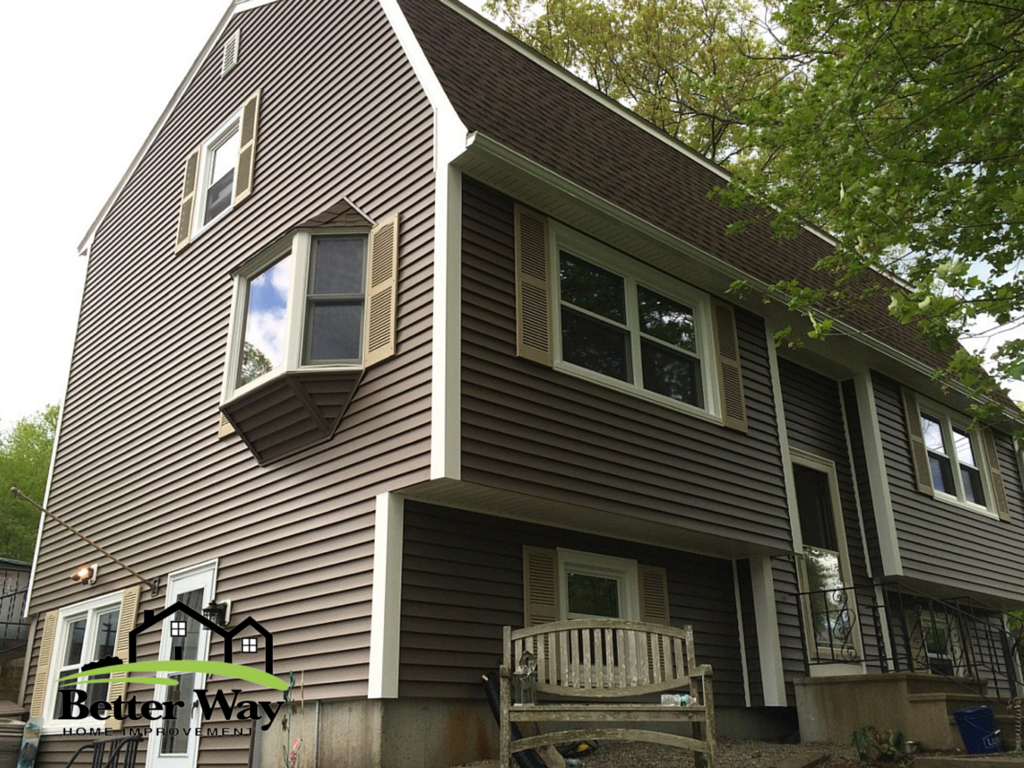
Recent work in and around Millbury
A common job type we run in Millbury is a full tear-off and re-side on a split-level or ranch from the 1970s or 80s, where the original vinyl has gone brittle and started separating at the seams. These jobs usually turn up thin or settled wall insulation, which is when we walk the homeowner through insulated panel as an upgrade rather than defaulting to standard hollow-back. On the older homes closer to the village center, the more typical call is a Victorian or Colonial Revival with vinyl installed directly over original clapboard decades ago, where tear-off reveals lead paint on the wood underneath and requires lead-safe removal before any new panel goes up. Both job types end the same way: a fully wrapped, flashed, and re-sided exterior with a fade-warrantied panel matched to the house’s existing trim lines.
Frequently Asked Questions
How much does vinyl siding installation cost in Millbury?
Most full-wall installations in Millbury run in the range of typical New England single-family homes, with the final number depending on square footage, panel gauge, whether you choose insulated panel, and how much trim and corner detail work is involved. We give firm numbers after an on-site look at the wall, not a phone quote, because what's under the old siding often changes the scope.
What happens if you find rot or lead paint behind my old siding?
On Millbury's older housing stock, finding something behind the old vinyl is common rather than rare, especially lead paint on original clapboard in homes built before 1978. We follow EPA lead-safe work practices for removal and disposal, and if we find rotted sheathing we stop, show you what we found, and get your sign-off on the repair before continuing.
Is insulated vinyl siding worth it for a 1970s or 80s ranch?
Usually yes on this housing stock. A lot of Millbury's postwar ranches and split-levels have thin or settled wall insulation, and insulated panel adds a continuous foam layer over the existing wall without opening up the interior. It costs more than standard panel but often pays back through comfort and energy savings on these older wall assemblies.
How long does a full vinyl siding installation take?
Most Millbury homes take three to six working days from tear-off through final trim and cleanup, depending on square footage and how much of the original wall needs repair once the old siding comes off.
Will new siding match the trim on my Victorian or Colonial Revival home?
We size J-channel, corner posts, and frieze boards to match the existing trim width and profile on older Millbury homes, so a double-4 or double-5 clapboard panel reads correctly against the casings and detail already on the house instead of looking like a generic vinyl box.
Other services we provide in Millbury
Not every Millbury home needs a full re-side. If your siding is mostly sound with a few damaged panels or storm-cracked corners, our siding repair service may solve it without a full tear-off. If you’re already leaning toward a complete replacement and want to weigh the tear-off decision itself, our siding replacement page covers that side of the project. Some Millbury homeowners choose James Hardie fiber cement siding instead of vinyl for a heavier, more rigid material with a different look and price point. We also handle seamless gutter installation and repair and replacement windows and doors, both of which often get scheduled alongside a siding job since the crew is already on site and the scaffolding is already up.